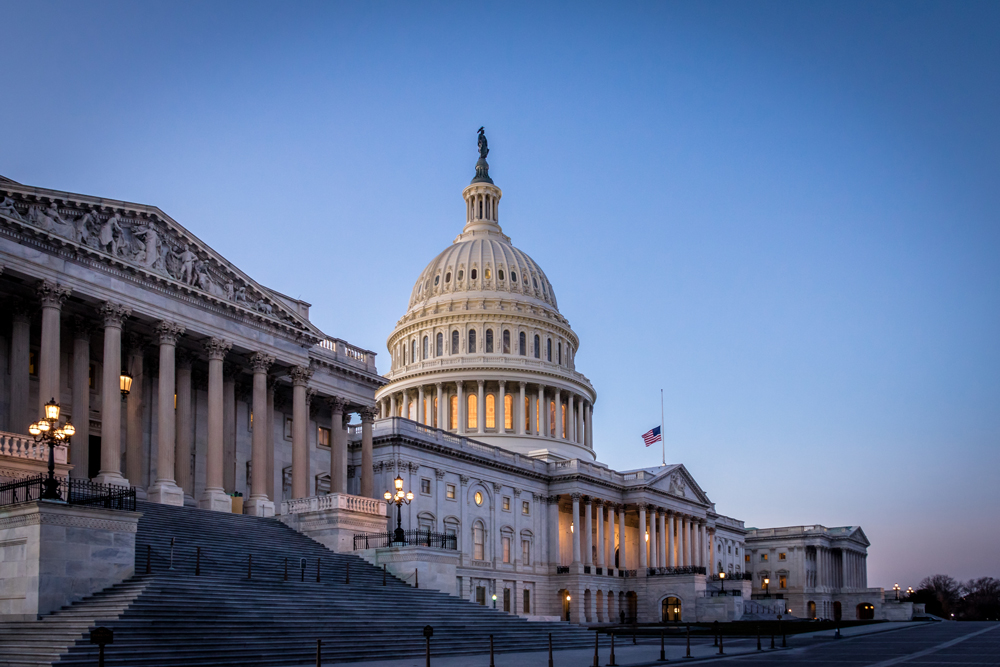
Several laws are up for discussion in Congress this year that will affect patients with neurologic disorders. Take, for example, the Telehealth Modernization Act and Connect for Health Act, two bills that extend an emergency removal of restrictions on telehealth delivery enacted in 2020, ensuring reimbursement for providers for virtual care and increasing patients’ access to it.
In the early months of the pandemic, telehealth was the only way doctors could see patients. Even with restrictions lifted, many patients and neurologists would like to continue using telehealth. Approval of this bill would allow for continued reimbursement. Without it, health care providers may have to discontinue telehealth or pass the costs on to their patients.
A third bill, the RISE (Research Investment to Spark the Economy) Act, authorizes approximately $25 billion in funds for federal science agencies, including $10 billion for the National Institutes of Health. This will allow for new funding for trials that were put on hold during the pandemic says Barbara S. Giesser, MD, FAAN, a neurologist specializing in multiple sclerosis at the Pacific Neuroscience Institute in Santa Monica, CA. Without research funding, scientists can’t expand their knowledge of neurologic disorders and possible therapies.
Cuts in Medicare, which are scheduled to go into effect January 1, 2022, will be addressed in another crucial bill. Congress has to act before the end of the year to prevent a series of automatic cuts related to policies that are due to expire in December, says Allan Wu, MD, FAAN, professor of neurology at Northwestern University’s Feinberg School of Medicine in Chicago.
During a recent virtual advocacy conference called Neurology on the Hill, Dr. Wu and Dr. Giesser and 185 other members of the American Academy of Neurology (AAN), met with lawmakers to persuade them to pass the first three bills and to not reinstate cuts for Medicare. The annual advocacy event, organized by the AAN, is usually held in person in Washington, DC, where neurologists meet with their state legislators. Both virtually and in person, the neurologists wear signature green bow ties or scarves (green is the official color of the AAN).
At the virtual event, Dr. Wu described to legislators how Medicare cuts could affect one of his patients with Parkinson’s disease. She developed depression and was unable find a psychiatrist in her area whose services were covered by Medicare. Untreated, she eventually had to be hospitalized. “If she had had access to appropriate treatment,” Dr. Wu told members of Congress, “her decline to the point of hospitalization could have been averted.”
Dr. Giesser pointed out to lawmakers that telemedicine has been a boon for her patients who have mobility and cognitive impairments, especially when they need to see specialists who may practice far from where patients live. “For some patients, travel is often a hardship,” she notes.
Attending Neurology on the Hill makes participants like Dr. Wu and Dr. Giesser more aware of the power and importance of advocacy. “Many of us neurologists go on to become more involved on the local as well as the national level,” says Dr. Giesser. For Dr. Wu, the event is a chance to speak up on behalf of his patients and be heard. “Being an advocate provides a different perspective. It gives us hope that the system can be improved.”