Sigma Gamma Rho and the Alzheimer’s Association Partner to Advance Brain Health Equity
These organizations have been teaming up to bring culturally relevant Alzheimer’s education and support directly into Black communities.
These organizations have been teaming up to bring culturally relevant Alzheimer’s education and support directly into Black communities.
When Alzheimer’s disease enters a family, it rarely arrives all at once. It begins with small changes—missed appointments, repeated questions, subtle personality shifts, a moment of confusion. Understanding early signs of Alzheimer’s disease may help slow the progression and give families and caregivers more time to prepare.
For decades, the Alzheimer’s Association has been providing resources to promote risk reduction and early detection to end Alzheimer’s disease. The Alzheimer’s Association recognizes the long-standing inequities in health care access, education, and preventive care measures in underserved communities, so it is on a mission to support and expand culturally relevant resources and information to ensure intentional inclusion for all people.
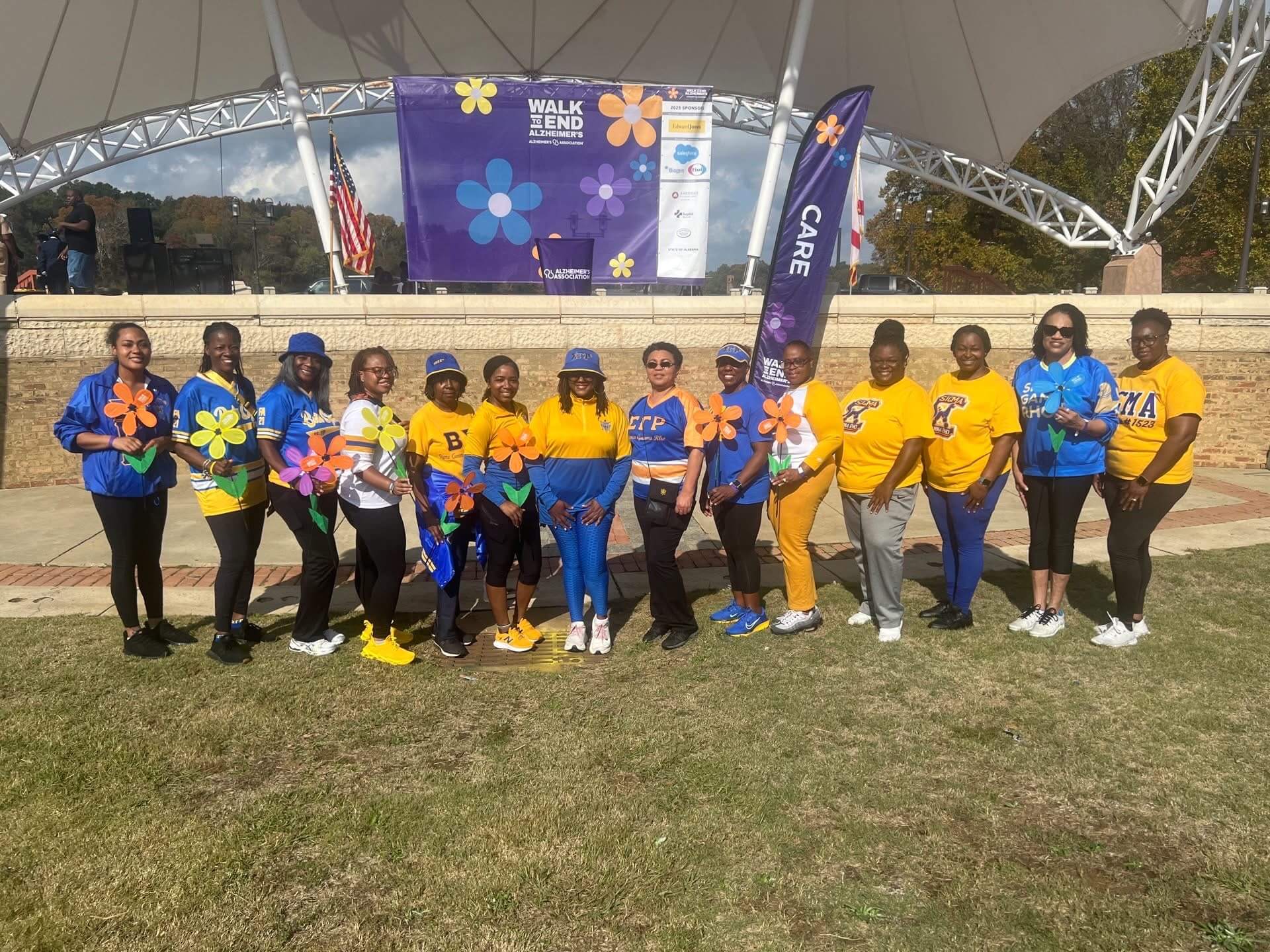
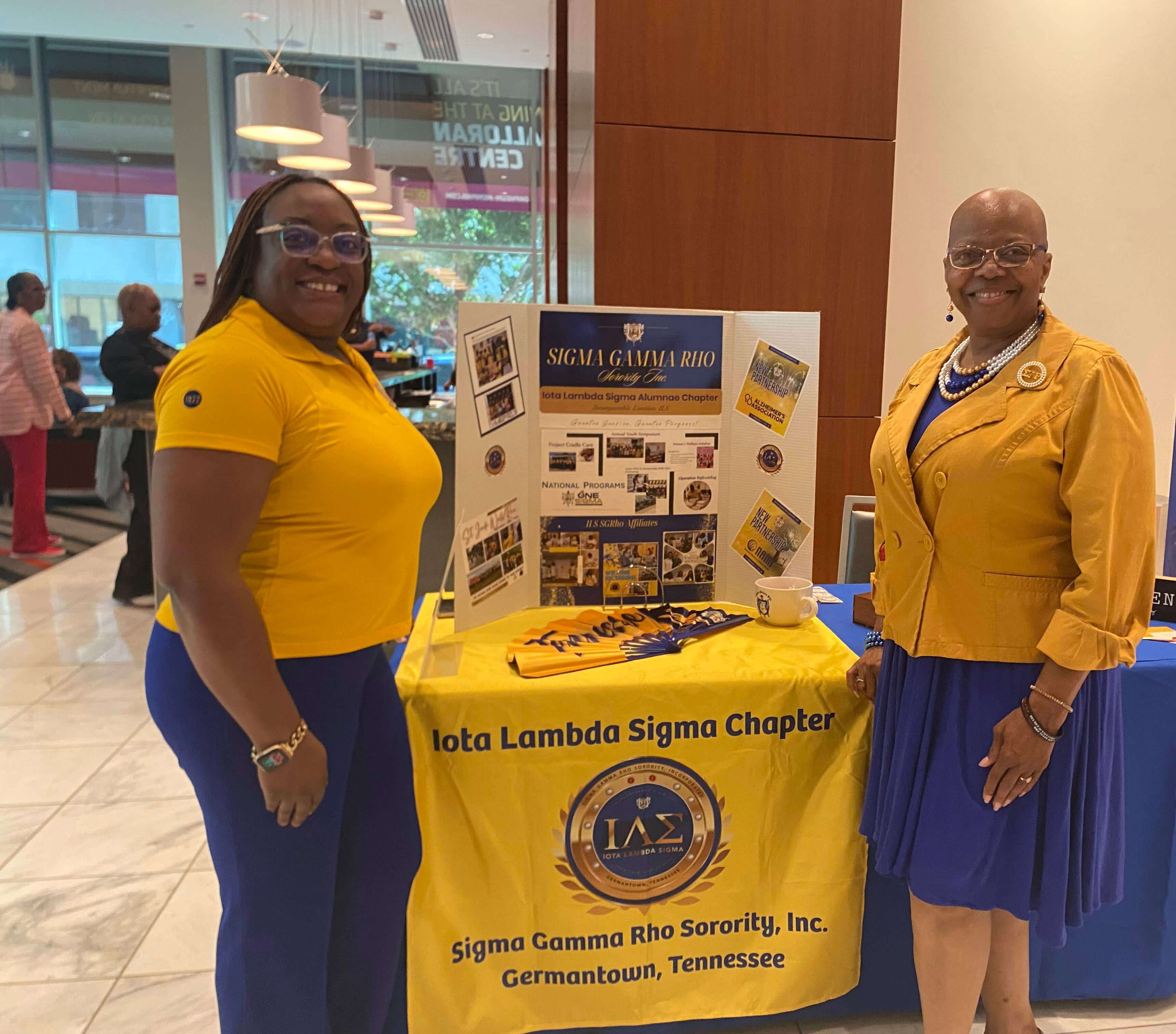
To address these health care disparities and advance their mission, in early 2025, the Alzheimer’s Association began a two-year national partnership with Sigma Gamma Rho sorority—an historically Black organization with a century-long legacy of service and advocacy. Sigma Gamma Rho chapters have supported the Alzheimer’s Association’s mission in their local communities for years. Expanding to a national partnership enables the Alzheimer’s Association to provide more Black and African American families with disease information, care, and support resources. Together, their partnership is a shared commitment to advance brain health equity in Black and African American communities.
Carl V. Hill, PhD, MPH, Alzheimer’s Association’s chief diversity, equity, and inclusion officer says, “Improving access for all communities is essential to changing health outcomes nationwide.” He adds, “With rapid advancements in Alzheimer’s and dementia research including earlier diagnosis, biomarker blood tests, and emerging treatments, it is critical that communities disproportionately impacted by the disease receive accurate, timely, and culturally relevant information.”
Throughout the first year of their partnership, Sigma Gamma Rho chapters across the nation have been working with Alzheimer’s Association chapters in their region, creating opportunities for joint programming, community education, and volunteer engagement. They have offered webinars about understanding the differences between Alzheimer’s disease and dementia and early warning signs of Alzheimer’s disease. Sigma Gamma Rho members have also participated in Alzheimer’s Association’s signature events such as Walk to End Alzheimer’s.
Marica T. Harris, Sigma Gamma Rho’s international president, explains that the sorority’s programs like the Women’s Wellness Initiative and community education offerings have aided their partnership efforts in reducing stigma, encouraging early conversations about cognitive health, and supporting caregivers navigating Alzheimer’s disease and related dementias. “These sustained local actions laid a strong foundation of trust, service, and advocacy, making the transition to a national partnership both natural and impactful,” Ms. Harris says. Additionally, Sigma Gamma Rho uses its global platform to raise awareness and provide culturally relevant education and resources to underserved communities.
For many Black and Latino families, emerging Alzheimer’s disease concerns are compounded by additional factors: limited access to information, delayed diagnoses, and a health care system that doesn’t always meet their needs. Studies have shown that older Black Americans are about twice as likely as older White Americans to develop Alzheimer’s disease and related dementias, yet less likely to receive a timely diagnosis. Latino Americans face roughly a one-and-a-half times greater risk.
Delayed diagnoses—11 percent longer for Black Americans and 40 percent longer for Latino Americans compared to White Americans—is a “suggestion of biased assessment tools with higher false positive rates for Black and Latino patients and lower rates of neuropsychological testing and treatment with existing therapies,” notes Charles C. Flippen II, MD, FAAN, FANA, a neurologist at UCLA Health.
Gregory S. Day, MD, MSc, MSCI, FAAN, a dementia specialist at the Mayo Clinic College of Medicine in Jacksonville, Florida, explains, “prevalence rates are the most pressing and least understood factor…potentially modifiable dementia risk factors seem to be represented in higher numbers in underrepresented groups.”
“Differences among ethnic groups are not explained by genetics alone. They stem from social determinants of health: unequal access to quality education, health care, and healthy living environments across the lifespan,” adds Roy Hamilton, MD, MS, FAAN, a professor of neurology at the University of Pennsylvania School of Medicine.
Dr. Hamilton explains, “lower income and educational attainment correlate with reduced cognitive reserve, making individuals more vulnerable to dementia symptoms.” Cultural and linguistic barriers, combined with systemic bias, also contribute to the inequities.
Addressing these disparities requires a multi-level approach—expanding community-based education, improving access to preventive care, and ensuring inclusive research participation. “Without [addressing] these inequities, efforts to reduce the burden of Alzheimer’s disease will fall short of achieving true health equity,” Dr. Hamilton says.
This inspires Sigma Gamma Rho sorority and the Alzheimer’s Association as they enter their second year of partnership to transition from “learning to implementation—activating informed members to deliver community education, strengthen local engagement, and translate knowledge into measurable impact,” says Ms. Harris.
Sigma Gamma Rho is also attuned to how an individual’s Alzheimer’s disease diagnosis reshapes entire families, because loved ones often step into caregiving roles requiring emotional resilience, financial sacrifice, and long-term support. “By increasing awareness, supporting research, promoting early detection, and expanding access to education and resources, we can reduce stigma and improve quality of life for those affected,” Ms. Harris says.
Of note, Sigma Gamma Rho sorority is one of the Divine Nine Black Greek-letter fraternities and sororities. The Divine Nine are known for their outstanding community service at the core of their mission, which is reflected in their shared slogan, "greater service, greater progress."
“The Divine Nine organizations are valuable and under-utilized conduits into communities of color. Their combined undergraduate and graduate chapters have established networks into low health [care] access communities and their robust education programs make for great partnership opportunities with advocacy and academic organizations focused on health equity and population health work,” Dr. Flippen says.
Ms. Harris advises other organizations seeking to champion brain health equity to be mindful that Alzheimer’s disease is a growing public health challenge affecting individuals, families, and communities in every race, ethnicity, and country. For Ms. Harris, the work carries urgency. More than 55 million people worldwide live with dementia—a number expected to nearly triple by 2050, placing an unprecedented strain on health care systems, caregivers, and global economies.
“More partnerships like that between the Alzheimer’s Association and the Sigma Gamma Rho Sorority are needed,” Dr. Day says. “This is a great first step forward and may be a blueprint for what we as large clinical research organizations can do in our own programs to try to engage more of our community members and get people thinking about their health and taking positive steps forward.”