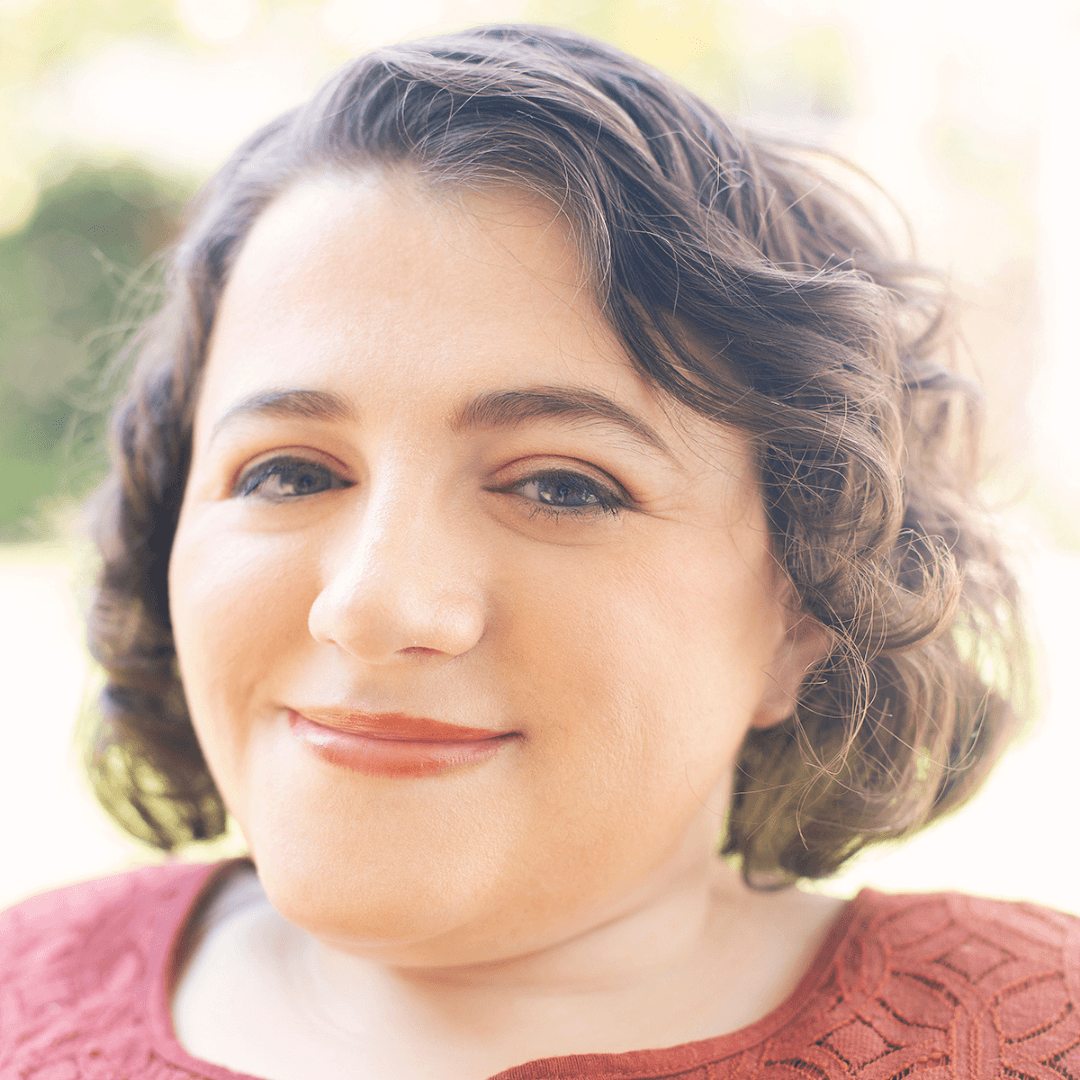
In this week's episode of the Brain & Life Podcast, host Dr. Daniel Correa is joined by award-winning film critic, journalist, and author Kristen Lopez. They discuss how movies shape public understanding of disability, identity, and belonging, and why storytelling can both reinforce harmful stereotypes and open the door to more honest representation. Kristen shares insights from her book, Popcorn Disabilities, including the power of media to influence how disabled people are seen and how they see themselves, and the importance of authentic casting.
Follow and subscribe wherever you get your podcasts!
Apple Podcasts Spotify Libsyn
Additional Resources
- Kristen Lopez
- The Keys to Overcoming the Stigma of a Disability
- How Cosmetic Brands Are Creating More Accessible Makeup
Brain & Life Podcast Episodes on Similar Topics
- Acute Flaccid Myelitis and Disability Advocacy with Sarah Todd Hammer
- How Paula Carozzo is Redefining Disability and Advocating for Her Community
- Unseen: Molly Burke's Retinitis Pigmentosa Journey
Follow us!
- Guest: Kristen Lopez @KristenLopez88
- Hosts: Dr. Daniel Correa @NeuroDrCorrea; Dr. Katy Peters @KatyPetersMDPhD
- X: @BrainandLifeMag
- Instagram: @BrainandLifeMag
- Facebook: Brain & Life Magazine
We want to hear from you!
Have a question or want to hear a topic featured on the Brain & Life Podcast?
Record a voicemail at 612-928-6206, or email us at BLpodcast@brainandlife.org.
Episode Transcript
Dr. Correa:
From the American Academy of Neurology, I'm Dr. Daniel Correa.
Dr. Peters:
And I am Dr. Katie Peters, and this is the Brain & Life podcast.
Dr. Correa:
Saludos, and welcome back to the Brain & Life podcast. Now, Katie, I know you love movies. You've talked about neurologic conditions, and neurology, and movies, and TV. Today's guest is not just a film buff, but also a journalist and film critic that lives with disabilities. If you think back, are there any movies that you remember that you first noticed, or made you question how they showed living with a disability, or a neurologic condition?
Dr. Peters:
I keenly remember Awakenings with Robert De Niro and Robin Williams. That was just such an amazing movie. It's a medical movie. It was so heartwarming and hopeful, and then it becomes tragic at times. I really thought it got people talking about Parkinson's disease. Of course, I believe that was more of a post-viral encephalitity that led to Parkinson's. And also, it was a long-term care facility where those patients were living. I think there was a lot that I synthesized from that, and a lot of discussion came out of that when I first saw the movie.
Dr. Correa:
I could see how for the community at the time it really helped people think about these kinds of possibilities of medical interventions, and really looking closely at the possibilities for an individual person, along with understanding about all these different kinds of facilities. But then, I worry that people who have stuck with that idea of Awakenings might have a misconception of what Parkinson's is like in the modern day when now treatments and science have advanced so much.
I remember enjoying the movie Rain Man, but also feeling a bit confused by the depiction of this narrow stereotype of a male with autism who had this weird association of some almost magical abilities. And in my family, we had a cousin with autism, and I remember feeling like I know each person's story and experience is different, but I've never seen anything like that. But, I didn't necessarily know specifically enough to really get a sense, was this an actor truly depicting someone's perspective, and where this story came from, but it just didn't seem right, although it was an enjoyable movie. What do you remember about Rain Man?
Dr. Peters:
I agree with you. People always said you had that special ability that would come out, and almost like they were used in a way for that special ability. It was an enjoyable movie. I think one of the things that resonates for me now that you can look back at it, and your question is that those are really 2D depictions.
Dr. Correa:
Ha, yeah.
Dr. Peters:
And so, they can't go to the 3D, which is I think what we really want to get at, right, that understanding people in three dimensions is much better than understanding them in a 2D finite experience.
Dr. Correa:
Yeah, and I think that gets to one of the other things I was thinking about. I remember when I was at Walter Reed, and training as a neurologist, and working with patients who were dealing with or recovering from spinal cord injuries, and there were several. These are young guys and stuff, so not that far away from remembering their childhood movies. And there were several of these guys that referred back to it, would ask questions about their future from stories from their childhood. And a lot of them would anchor on that story of the Hunchback from Notre Dame, and the sense of like, oh, what was their mobility limitations going to be like? And there's this image almost like a hunchback of a person being the association of someone with a spinal cord injury. But also, they had this villainous character and things like that.
And they just thought, and a lot of times, and especially veterans coming back from injuries, or amputations, and combat trauma, there's just this already internalization I think in our storylines of how they're broken, or they're bad in some way, and really trying to help them come to terms with who they are, and they didn't have to lose aspects of themselves, and they weren't fully defined necessarily by their movement, and ability, or mobility, and physical abilities from before, and they could still retain who they were. I think sometimes there, there are those kinds of stories and movies that really insert a sense of a type of character, like villain or character with certain types of abilities or disabilities.
Dr. Peters:
And I think that goes far back even to Richard III and that he had a walking problem and was the villain. But then, if you can think about maybe some more modern depictions, Captain Dan is beloved from Forrest Gump. But, with him, his character has an arc, right, and going through it, and going through the signs of PTSD in addition to having the physical injury of losing his legs. I think one of the things that I've learned from just this podcast, and talking to so many actors, is when they have experiences of their own with a neurologic condition, whether it's a migraine, to a brain tumor, to having MS, or maybe they have a family member who has Alzheimer's, or Parkinson's disease that it helps them shape their characters and the scenarios that they're in their craft with.
And so, it lends itself to a notion that really, actors and actresses of all abilities should be represented in film. And if we're an actor that is playing someone that has a disability or is differently abled, that they should be represented in a appropriate manner. And when appropriate, I would say true to life matter in that 3D manner as best you can.
Dr. Correa:
Yeah. And I like that we're starting to see and notice more movies and TV shows that are starting to include either consultants with the perspective of different abilities in their storyline, or giving feedback on the characters, and the design, and story arc for that character so they have more of that 3D perspective. And thankfully, now, even more actors who they themselves have truly had a personal experience with different abilities, and sometimes very similar to the character that they're depicting. But, I think we have a long way to go, and we'll continue this discussion now with our guest today, Kristen Lopez, to hear about her own story, and the stories that she and example she uncovers in her book, Popcorn Disabilities.
For this episode, we've had a little bit of a discussion now. We're going to hear now, and actually, our guest at both being a film critic and expert along with someone with the lived experience is also in effect our expert today. And as we continue this, we've had several episodes discussing the experiences with different abilities and disabilities. We'd love to hear what other topics you want to hear in this direction and kinds of stories around living with different abilities and neurologic conditions.
Welcome back to the Brain & Life podcast. Today's guest is Kristen Lopez, an award-winning film critic, journalist, lifelong cinephile, and author of a book, Popcorn Disabilities. Her book is a deeply personal and culturally essential examination on disability representation in Hollywood. Kristen was born with Osteogenesis Imperfecta, or as others might refer to it as a brittle bone disorder, and is a lifelong wheelchair user. She brings both lived experience and her professional film criticism to conversations about how movies shape the public's understanding of disability, identity, beauty, independence, and belonging in our discussion today, and in her book. If you want to check that out, she explores everything from classic Hollywood and Oscar films, the horror movies, the superhero genre, and rom-coms, with the everyday impact of media on how disabled people and their community are seen and how they see themselves. Kristen, thank you so much for joining us and the audience on the Brain & Life podcast.
Kristen Lopez:
Thank you for wanting to chat with me.
Dr. Correa:
In this situation, we're coming from a different perspective. We're not necessarily centering on your own experience with disorder or neurology condition, really an observation on our community and culture. And it goes to your book. What made you decide to write this book and step a little bit outside all the rest of the scope of film criticism that you do?
Kristen Lopez:
Yeah. I always joke that my agent was like, "You should write another book." That was definitely about at least 50%. But no, no, I had been thinking of ideas for a second book. My first book was a commissioned book by Turner Classic Movies that I had loved doing, and I figured that would probably be the only book I'd ever write, and then I would just move on with my life. And the kind of impetus, like you should try to come up with a second idea that you actually sell. I come up with a couple ideas that were more film-centric that had not really gone anywhere. And around this time, I'd started a full-time job. I knew that if I wanted to write a second book, it had to be something that I couldn't necessarily spend a ton of time diving deep into a new subject.
And I was like, "What do I know like the back of my hand?" I'm like, "Well, I write a lot about disability in film. I could definitely do that bare minimum. All of the years of discourse that I've done across the entertainment sphere in my writing, I'd have a place for all my terms, all my thoughts to rest in one book." The publisher was a little like ... I think that the concept of a disability in film book, there's very much a stigma of like, "Well, this is going to be talking about how horrible it is. It's going to be really academic and florid." And I was like, "No, I want something that not only is looking at the history of film, but more importantly is aimed at how disabled people see themselves."
I'm a film lover. I've spent several decades of my life watching film, and through those movies, I've seen how I'm supposed to be viewed in society as a disabled woman, or how I'm not being seen as a disabled woman based on these movies. I think they were really interested more so in the element of it's not just looking at how film portrays disability, but how a generation of film lovers with disabilities have now grown up to see themselves because of these movies.
Dr. Correa:
Yeah. One of the things you write about that I really connected with was how movies themselves become a code of conduct within our culture and our whole framework. And not in the context that you end up leading into, but, I understand this. I feel like I understood the genre of sports, and the hero from watching Rudy, and everyone has a chance, and the adventurism from watching He-Man as a kid. But also, you talk about, and as you were just setting up, how we as a community might learn or internalize how to treat disabled individuals from movies. What are some of the areas that you've seen in real life, and outside the books, and in the movies this impact, things that if people have internalized and learned about how to treat people who might be living with a neurologic or a physical disability in real life?
Kristen Lopez:
Yeah. I've experienced, I think, bad representation firsthand. I have brittle bone disease, and I remember hearing from ... And I heard it recently, a couple of years ago, I told my diagnosis to a doctor, and he was like, "Oh, have you ever seen Unbreakable, the Samuel Jackson movie?" I'm like, "Yeah, I have. I know he's got the same thing." I have so many stories of people that'll come out, and they'll be like, "It's so great to see someone like you out and about in the world." And I'm like, "Why?" And they're like, "Well, because we don't see a lot of disabled people." And I'm like, "Well, that's because movies have told you that our lives are sad, and we're very isolated, and stuff like that."
But, then there's other things. I always am struck by how when I do videos online, people are ... I'll get a comment that's like, "You speak so articulately, you're so erudite." And I'm just like, "Right, why do you anticipate" ... I think people don't realize that film has created these expectations that people then internalize, and if they don't interact with disabled people on the regular, all they really have is film to kind of emphasize that to them certain things. I know a lot of people with neurodivergence and autism that have said that people will expect them to have some sort of magical power, because they saw Rain Man, or because all these movies have situated autism as the savant. There's a lot of unlearning that I think a lot of able people and neurotypical people are having to realize that, as much as they are aware that movies are not real, that they are internalizing things based on what they've seen in film.
Dr. Correa:
And then, there's the extension to the people, and how they see themselves, as you said, describe also, but when you aren't represented on the screen by more than an actor who's putting on a persona, you describe how those codes of context can leave you as an individual, adrift, trying to figure out your place in the world. I'm wondering for both the able-bodied community, those living alongside people who are disabled, but also, for those in the community who are living with a disability, what are some good examples of-
Kristen Lopez:
Oh, gosh.
Dr. Correa:
... Hollywood that might feel you actually, make you feel seen, represented, and those of us could go and look as a cultural reference?
Kristen Lopez:
Yeah. I preface it in the book and I preface it now, no movie is perfect, unfortunately. No movie is perfect, and I'm definitely one of those that does not immediately discount a film purely because an able person is playing the role. Some people do, and that's fine. That's their prerogative. For me, there are movies that I do enjoy, or at least feel have some sort of interesting element to them. Best Years of Our Lives from 1946 is one of the seminal ones. Harold Russell, two time Oscar winner, first disabled person to win an Academy Award. And that movie is still relevant in terms of both the need for authenticity in storytelling, and also Hollywood ableism. Harold Russell did not get to make another film after this until the 1980s when he came back for Inside Moves, and he was a two-time Oscar winner.
You'd think that he would've cleaned up, and Hollywood was very much like, "Well, the war's over. We don't really need you anymore." But, it's still a fantastic film, and it's a fantastic performance that rightfully deserved the award. Another war movie that I think is also really good is Coming Home from 1976, John Voight, not a wheelchair user at all and yet Hal Ashby, the director, Jane Fonda, was the producer. They were very much interested in the authentic, disabled experience in the sense that they get a lot of the little bits of business very, very well. It's great to watch to see a pre-ADA. It's made in '76, set in '68, or it's made in '78, excuse me, set in '68. And you can see how many steps, just like John Voight's character goes over in a day. He spent a lot of time with wheelchair, men who were in rehab as wheelchair users so much so that he called them the boys. He would hang out with them after the movie was finished.
He spent a lot of time in the wheelchair just because he felt like everybody had community. He felt like he definitely understood the kind of awareness of how a wheelchair was utilized, and the movie I think is brilliant, not only in how Voight plays the character, but in how it emphasizes his character is not someone to be pitied. He has a cool car, he has his own house, he's a jerk, and you also just watch him navigate this world that is not accepting of people coming back from Vietnam, people coming back with disabilities. It's also one of the few films to have a really progressive and authentic sex scene between an inter-abled couple. That's a big one that I continue to say how much I love.
Dr. Correa:
A few, and many of our listeners might think of other ones that they feel like really they connected with, but we're not talking about a long list. And so, how for you, and for some of the community that you've connected with, how does the absence of representation affect your own identity, confidence, your mental health in living in this able-bodied community?
Kristen Lopez:
That was the hardest part, I think for me in writing the book is putting myself into it, because I have a master's in English, so one of the first things you're always told is like, no one wants you statements. And journalism too, you're supposed to be objective. And so, doing the more authentic moments talking about for me growing up as a disabled girl, I was the only disabled person in my family for a long time. I was one of the few disabled people at the schools I attended. I didn't have a real disabled community until later in life, and watching movies, and seeing disabled men, white men mostly, I was just like, "Okay." I didn't think it would bother me until you get to the awkward teenage years. And I talk about this in the book, not seeing disabled girls go through those rites of passage, going to prom, dating, getting married, all of these things where you're just ... And I started to realize like, "Huh, okay. Well, is it because people just assume that disabled women don't do any of those things?"
And seeing disabled women in the few movies that they exist in, again, it's a lot of sexual violence, a lot of victimization. For me, I talk very frank in the book about how I really worry about the disabled girls of today, because I didn't grow up with any disabled female characters to gravitate to. And you add ableism with the whole self-esteem spectrum of just growing up as a girl in America, it's tough and I worry that they don't have, they have the same feelings that I probably did, that I still do in a lot of ways, even though I'm a woman in my 30s. That's definitely something, because when you see disabled women on screen, they're often very aesthetically pleasing that the disabilities are invisible, so it's usually blindness, deafness, nonverbal.
If they are in a wheelchair, they're usually a five, six woman who's proportionate, and can pass for abled if she were sitting in a chair. And again, for me, as somebody that can not pass for able, that is very short, very compact, you watch that as a kid, and you're like, "Well, if the only disabled women that exist are hot girls sitting in a wheelchair, what the hell am I going to do? How does that work?"
I think there are a lot of young disabled girls right now who I do worry about their self-esteem, and their mental health, because I certainly worried about it as a kid, and a lot of the people that I would go to and bring it up, because they were able, they didn't really have that ability to talk me through like, "You're always going to be different. You're always going to have a body that unfortunately is not the norm, and all you can do is just celebrate it, and celebrate that it's healthy, and just go with it." And it's taken me a long time to get to that point, let alone when I was 13, 14 years old.
Dr. Correa:
Yeah, so a lot of our community also, and listeners are care partners, and caregivers of those living with neurologic conditions, and some of those may be disabled. How would you further empower them, and tell them, whether it's you're the auntie of a teenage girl or boy growing up with a disability, or someone who is a care partner for someone who's newly a disabled adult, how can we help them see beauty in themselves and their abilities?
Kristen Lopez:
Yeah, I always say it's important to listen to the disabled person. And one of the things that I live with my family, and one of the things they've really had to unlearn over the years is their own ableism, and talking about where things are in a space. It may be something that's in a space that's good for an abled person, but having to explain, for me, it doesn't work that way. And ultimately, them just kind of being like, "Okay, you know what's best for you. I don't agree with it, but it's also not me that has to deal with it," which is good. Movies really, I think, talk about caregivers a lot, but I think they also do caregivers a disservice, because really, creatives, when they talk about a caregiver relationship on screen, it's because they don't know how to deal with the disabled person, so the caregiver becomes the star, and it's their story of learning about life through this disabled person's life.
And I think that's really the caregiver/disabled person, that's a partnership. That's not one person is more important than the other or one person is using another to see the world. And I don't think movies discuss that enough that sometimes my mom will just look at me, and be like, "I don't understand." And that's, I think, the hardest thing sometimes for caregivers to be like, "I don't have the experience, and I don't have the ability to help you with this decision, or talk to you in the way that you need, because I have a lived experience that's different." Caregivers in films also too often are presented as sex workers. There's this romantic angle in some of these movies, Me Before You does it, The Sessions does it.
And I think that sets a really dangerous precedent for disabled people as well as caregivers, not only in terms of blurring boundaries, but these expectations that the only romantic relationship is going to be somebody that understands your medical needs. I think that for me, I always tell caregivers who read that section and they're like, "So what do we do?" I always say, "It's a partnership. It's about communicating with each other, and understanding that at the end of the day, the disability or the neurodivergence you don't understand, and you're never going to understand it." And so, even just telling that person, "I don't understand what you're feeling, because I don't live that, but let's talk about it some more. Let's have a conversation. Let's start breaking it down and finding solutions." I think that's really, really important.
Dr. Correa:
It always comes back to more humility, curiosity, and conversation.
Kristen Lopez:
Yeah, yeah. And I think that's hard for film. Film is very much Joseph Campbell's The Hero's Journey, you have to have conflict, and too often, disability is presented as conflict, or neurodivergence is presented as conflict, and that's not what it is. That's not what it should be. Yes, there are issues in society that can create those conflicts, but just boiling down disability or neurodivergence equals conflict, that's so belittling I think to everybody involved.
Dr. Correa:
Yeah, and you pointed out as a conflict, or whether it's a tragedy, suffering, something to overcome, but you also introduced in the book, and you were hinting and suggesting about it before, the concept of pretty disabilities, that there are these trends towards desirability, and beauty standards, and gender around disabilities. What are some of the most concerning ones that you have been seeing in the media lately?
Kristen Lopez:
Oh, gosh. When it comes to disabled women, I always say the emphasis on sexual violence is a huge problem. Disabled women and neurodivergent women are at a higher risk of sexual assault than abled women. And when the only movie you're seeing with the few disabled female characters we get are like, "You're going to be assaulted." All that does is just create this narrative that stay inside, don't go out, don't interact, don't live your life because the threat of assault is always around the corner. Outside of that, I think the biggest thing that I'm seeing right now, and it's something that I think affects everybody, is movies really sell this concept that disabled people are independently wealthy, that we have no money concerns, that Bryan Cranston's The Upside does this. He's like an Uber producer that lives in a penthouse. Me Before You does this, the guy lives in a literal castle in England. Even if they're not independently wealthy, money in these movies is really never discussed.
It's just they have things, and that I think creates a lot of problems, because I know that one of the things that confuses so many abled people is the social security system, the SSI, SSDI system. And I've had more than one friend or relative tell me, "Well, Kristen, you don't have to work. You get money from the government. You're fine." Not knowing the hoops that one has to jump through in order to maintain those benefits, not being aware of how much those benefits actually are, and right now, with so much of that under threat, anytime I watch a movie where a disabled person is just blithely going through life, and their conflict is something that isn't financial, I always roll my eyes, because I'm like, the majority of disabled people live below the poverty line. Most of them live with family, because they can't afford to live independently.
That's a conflict we should be talking about. That's what we should be seeing in movies, not this false narrative that disabled people have this built-in financial safety net. But, I think it goes to the bigger point, which is that there's this belief that somebody is always taking care of, and I put that in air quotes, disabled people. Somebody's always going to be there to make sure that you're taken care of. And I think those are ... Taken care of is the two most frightening words that I've heard when it comes to disability, because I'm like, "I don't need somebody to take care of me. I can take care of myself. I'm good." Not to say that there aren't people in the community that need more help, but I think that when the only narrative you're seeing is that somebody else is handling the disabled person's issues, it creates a society that now thinks that disabled people have no problems, and if anything, are getting something that able people feel that they should be getting.
Dr. Correa:
Yeah, just even more areas where there's breaks in barriers to access, and breaks in representation, and really understanding of actual people's challenges and problems. Many people living with neurologic conditions say others make assumptions about their abilities, independence, equality of life. How do media portrayals reinforce that misconception, and what would you want audiences to understand differently?
Kristen Lopez:
Yeah. I did a section on neurodivergence, and cognitive disabilities, and it was something I was very, very afraid to do, because I have ADHD, but I would not at all go so far as to say I have a cognitive disability, or be on the same level as somebody with autism, or anything else. But, I knew that if I didn't talk about it, I would also be doing a disservice to those narratives that permeate and sell this bill of goods about people with neurodivergence. I explain my limitations in the book, but then, look at some of these movies. And I think for me, it's frightening to see, how when it comes to the autism spectrum, how often it is that these characters are useful to abled people.
As I talk in the book, I talk about how when it comes to cognitive disabilities, there has to be two things to make it palatable to a neurotypical audience. Because remember, movies are not made for us in mind. They're made for the majority, which is able neurotypical. And so, when you see these movies, the character is usually conventionally able to pass for quote/unquote normal, and has to be of use to the abled person who is usually the star. In Rain Man, Dustin Hoffman's character is conventionally just looks like Dustin Hoffman, and is also of use to Tom Cruise's character. They go to Vegas, and they cheat at cards, and they win a lot of money. And of course, Charlie, the Tom Cruise character, learns to be a better person through kidnapping Dustin Hoffman's character, of course. Forrest Gump, same way. Tom Hanks, facially nothing is different, so he just looks like Tom Hanks. And of course, we watch this zealogesque story of him literally influencing life events. Again, he's of use to society, which is important.
But then, you get movies that are not like that, that don't go with the norm. And those are harder sells, and usually are the ones that when people talk about bad portrayals, those are the ones that they point out. And I think that that's false, because some of them are questionable, but they have interesting stories. I Am Sam is the one that gets thrown around the most. Tropic Thunder has that whole speech that Robert Downey Jr. gives. And while people were focused on his use of the R word, they weren't really listening to the content of the speech, which is 150% true, which is that the character has to be useful, has to be charming in order for the Oscars to respond. Now, Sean Penn did get nominated for an Oscar. He didn't win it, but he got nominated for I Am Sam. And I Am Sam is not a good movie. Let me be clear, it's not a great movie.
Sean Penn's performance is aggressively over the top, but he's also doing the physical characteristics of somebody with IDD. And that's something that I think for a lot of abled people turns them off, because they're confronting their own ableism. And yet, the movie has a very fascinating plot about a man with neurodivergence and cognitive disabilities trying to raise a child, and having the court system want to take that child away, which happens to a lot of families. We don't see that story. And unfortunately, because I Am Sam didn't make any money, we're not going to see that story in the same way that it was. I include Gary Marshall's The Other Sister in the book, which was a movie I had been told for years, it's a terrible movie. Don't go see it. It's one of the worst movies ever.
And I finally watched it, and I was like, I feel like collectively abled society decided it was a bad movie, because Juliette Lewis is playing the physicality of somebody with IDD and is not attractive. And the movie is very much a very saccharin story about a woman with cognitive disabilities who wants to be independent, who wants to get a job, who wants to fall in love, and is meeting resistance from her family who believe that she can not do these things.
Now, should these characters have been played by people without those disabilities? Of course, they should have cast authentically. At the same time, I think that we are not ready as a society to confront how abled people who are neurotypical have a very clear definition of what neurodivergence looks like. And the minute you present some sort of physicality to it, they are completely turned off. I don't think people are ready to have that conversation. And Hollywood is certainly in the business of saying, "Well, nobody saw those movies, so we don't need to ever try again."
Dr. Correa:
Yeah. There are so many people that are, I think, and communities, I think that are just cut out from social discourse in our culture, whether it's Hollywood or otherwise, just at times because it's not what's de rigeur, and popular, and beautiful at the time.
Kristen Lopez:
Yeah. It's one of the things where Glee is not a great example of disabled discourse, but yet the fact that they had Becky Jackson who has Down syndrome, and is able to be integrated into the narrative, and is such a fun character, and is again, unable to hide her disability is a big deal. Reminders of Him, the new Colleen Hoover movie that came out a couple of months ago, also has a character that has Down syndrome, and she's one of the best parts of the film. I think there's a little bit of a door opening, but again, only so much. Down syndrome has now been perceived as acceptable on screen. And I'm like, "Okay, but then how do we get the rest of disabled people who maybe don't look like they can pass?" We're not ambulatory. I think that's another big thing. You can have cognitive disabilities as long as you're ambulatory in film.
The minute you're also a wheelchair user with IDD, they're like, "No, we can't. That's too many things to navigate." It's a lot like race. That's why we don't get a lot of disabled people of color because Hollywood is very much like, "Well, we can deal with racism, or we can deal with ableism." You can't do both. Intersectionality is the next frontier I think for film, and I have no idea how long it's going to take us to get there, but that is where we need to start going.
Dr. Correa:
We need intersectionality in our culture in so many ways.
Kristen Lopez:
So many ways.
Dr. Correa:
And for our listeners, I want to tell you, even just hearing you talk through, and give these examples, and these images in our head of movies throughout the years, this is the journey of going through and reading the book, really enjoyed it. And you wrote that you hope that this book is a launchpad for you, the reader, for the book, and our listeners to find more disabled narratives to watch, enjoy, and deconstruct specifically for our listeners who are living with neurologic conditions, or caring for someone who is, what do you hope they feel after this episode, and hopefully reading Popcorn Disabilities?
Kristen Lopez:
I want the same things I tell everybody who reads it, to look at movies and ask questions. Why is that character like that? Why is this character a white man? Why is this character disabled late in life? Why is it always an accident? Why is it always a weird accident? Just like really, I want people to be more invested in being aware. I know a lot of people, and I'm sure people that are listening that are caregivers or living with people with these differences. I have a lot of friends that are like, "I didn't realize these things until I met you. I didn't realize how few curb cuts there are in my neighborhood. I didn't realize" ... It really does take an awareness of the issues, and film has the ability to create global awareness, and I think it just requires people that want to be more media savvy about those things.
Next time you're watching a disabled movie, and there's a caregiver, be like, why is that caregiver actually the star of the movie? Why is that caregiver having to have some sort of romantic relationship? I don't presume that this is going to change Hollywood, but I think that just having awareness that movies are selling a false narrative, and wanting to learn more about what the truth is, I think is a huge thing.
Dr. Correa:
And as we said, a lot of this starts with our own humility, curiosity, conversations. And so, what kind of conversations do you hope it starts within the family or healthcare even more broadly?
Kristen Lopez:
Yeah. I think it would ... I always say people focus on casting. Authentic casting, we should always be asking about what's it going to take to cast authentically. For me, I want to go well beyond that. Casting is the floor. It's so easy. I would think that Hollywood would just litter the frame with disabled people, and then we'd shut up about it. For me, I think having those conversations about why do movies tell these stories? What can I do to go beyond the movies? Can I be reading more books? Can I be talking to more people? I've had a lot of people that have said, "I don't know anybody that's disabled." And I'm like, "Cool. Well, now you know that you have this gap in your awareness, and your friendship group. Maybe start bringing up disability in conversation more often, because people with invisible disabilities often don't feel comfortable disclosing."
I think also not being afraid of the word disabled or neurodivergent, I think that's a huge thing, because too often, I'll bring up, "Oh, I'm disabled." And I've had this happen more than a few times where people will be like, "No, you're not disabled. Disabled is a negative." And I'm like, "I don't see it as a negative. It's part of who I am. It's no different than I'm a brunette." We need to stop being afraid of that. I think asking those questions, and also just wanting to do more research. If you're watching a movie and you're seeing a disabled person that's wealthy, you're like, "I don't actually know anything about how disabled people get jobs or things like that." And if that sends you down a rabbit hole about learning about the SSI system, or vocational rehabs, or things like that, I just want people to have more awareness. I tell people in the book, if you love Forest Gump, I do not judge you. I love Forest Gump. I enjoy these movies.
This is not a book about how you should hate every disabled movie. But, you should be asking more questions about the things you're consuming, and the things you're learning. I think one of the biggest things people can be asking is, where do I exhibit ableism? What are the things that I'm doing subconsciously, or physically that could be perceived as ableist? I think that ableism and microaggressions, that's the next thing. Too often, people do not realize that they are exhibiting these things. And then, when I tell somebody like, this actual ableism, they get very defensive. Be open to that conversation.
Dr. Correa:
Yes. We all bring bias. It's just a standard.
Kristen Lopez:
100%.
Dr. Correa:
There are so many more questions and conversations we should be having. In addition to looking at your book, Popcorn Disabilities, are there other resources that you recommend people look at that we can include in our show notes for narratives around the disabled community, or maybe you have some other projects that are coming up?
Kristen Lopez:
Yeah, so I'm part of Lights! Cameras! Access!, which is in the hope of getting more disabled people interested in media. They have a journalism component for disabled women who want to be journalists. I always say that's a great resource to look at and support outside of the other great organizations that are out there like the Ruderman Foundation and RealAbilities. For me, I still am talking about disability in film. I'm a journalist by trade, so you'll usually see my bylines all over the place, but I have a dedicated Popcorn Disabilities section on my newsletter, The Film Haven, which is thefilmaven.com.
I'm talking about other movies that maybe aren't even in the book as I continue to be sent films where people want opinions. I definitely recommend going over there, and subscribing, and reading some more of my work. And then, I have another book, it's not disabled centric, but it's about literary adaptations. It comes out July 28th. It's called, But Have You Read The Book? Romance Edition. If you like my writing style, and want to learn about literary adaptations, and like romance, definitely consider pre-ordering it.
Dr. Correa:
Well, thank you so much, Kristen, for joining us today, for sharing your experiences, your life perspective. We look forward to seeing more of your work coming out, and for our listeners, we'll make sure to include some of those details and other resources in our show notes.
Kristen Lopez:
Thank you.
Dr. Correa:
Thank you again for joining us today on the Brain & Life Podcast. Follow and subscribe to this podcast so you don't miss our weekly episodes. You can also sign up to receive the Brain & Life Magazine for free at brainandlife.org.
Dr. Peters:
Also, for each episode, you can find out how to connect with our team and our guests along with great resources in our show notes. We love it when we hear your ideas or questions. You can send these in an email to blpodcast@brainandlife.org, and leave us a message at 612-928-6206.
Dr. Correa:
You can also find that information in our show notes, and you can follow Katie and me and the Brain & Life Magazine on many of your preferred social media channels. We're your hosts, Dr. Daniel Correa, connecting with you from New York City and online at neurodoctorcorrea.
Dr. Peters:
And Dr. Katie Peters joining you from Durham, North Carolina, and online at katiepetersmdphd.
Dr. Correa:
Most importantly, thank you, and all of our community members that trust us with their health, and everyone living with neurologic conditions.
Dr. Peters:
We hope together we can take steps to better brain health, and each thrive with our own abilities every day.
Dr. Correa:
Before you start the next episode, we would appreciate if you could give us five stars, and leave a review. This helps others find the Brain & Life podcast. See you next week.