In part one of this two-part episode, Brain & Life Podcast host Dr. Daniel Correa is joined by Molly Burke. Molly shares her journey of navigating life with retinitis pigmentosa (RP), and how it led her to create online content and write a book. She shares the importance of representation, advocacy, and rethinking societal perceptions of disability to create a more inclusive world. Dr. Correa is then joined by Dr. Brittni Scruggs, a vitreoretinal surgeon and physician-scientist at Mayo Clinic. Dr. Scruggs explains inherited retinal diseases and how they are diagnosed and treated. Come back next week for part two to learn about the importance of advocacy and upcoming research!
Follow and subscribe wherever you get your podcasts!
Apple Podcasts Spotify Libsyn
Additional Resources
- At a glance: Retinitis Pigmentosa
- Customers and Professionals Weigh in on How to Make the Beauty World More Accessible
- What Causes Color Blindness?
- Molly Burke Official
Other Brain & Life Episodes on this Topic
- Exploring Accessibility and the Arts at the Lincoln Center
- Making the Years Count with Brooke Eby, Influencer Living with ALS
- Parenting and Writing While Disabled with Jessica Slice
Follow us!
- Guest: Molly Burke @MollyBurkeOfficial; Dr. Scruggs @MayoClinicEye
- Hosts: Dr. Daniel Correa @NeuroDrCorrea; Dr. Katy Peters @KatyPetersMDPhD
- X: @BrainandLifeMag
- Instagram: @BrainandLifeMag
- Facebook: Brain & Life Magazine
We want to hear from you!
Have a question or want to hear a topic featured on the Brain & Life Podcast?
Record a voicemail at 612-928-6206, or email us at BLpodcast@brainandlife.org.
Episode Transcript
Dr. Correa:
From the American Academy of Neurology, I'm Dr. Daniel Correa.
Dr. Peters:
And I am Dr. Katie Peters, and this is the Brain & Life podcast.
Dr. Correa:
Saludos, and welcome back to the Brain & Life podcast. Now, Katie, how much of your day do you get to spend beyond the office or just some logistics around the house in just enjoying the beauty and life and the world around us?
Dr. Peters:
It's definitely not enough, Daniel. It's just not enough. We need more hours. I wish there was more time, but I think it's really important for me. I really love to get outside, enjoy nature, fresh air. Always find a way, like a path, if I'm going through on the hospital campus, to find a way to get outside and hopefully soon it will be spring. I did in a recent, I guess it was a silent auction, I registered for what is called a nature bath, and it's not one that you take in a tub. It's actually just an immersive trip and a forest to bathe all your senses in nature. And as soon as spring hits, we're going to schedule it. So I'm really excited about that.
Dr. Correa:
Oh, jealous. It makes me already thinking about getting more time to spend time outside in a variety of seasons beyond just the snow and ice that people are struggling with. Those in a sunny place, we're jealous. And I love that you included auditory, smell, and other sensory experiences and pleasures. I initially, I thought about this. I just thought of really vision-specific things.
It's wild that many of us and most people would think of photos and looking out at nature on a bench or watching an amazing and beautiful performance or something that is experienced primarily through vision. But there are so many other ways that we get to enjoy, interact with our colleagues, friends, and the world around us. And it's good to get a chance to remember that. What else do you do to relax?
Dr. Peters:
So it's all about motion. It's not just about seeing.
Dr. Correa:
Me too.
Dr. Peters:
What I really think about is swimming. And a lot of the times, it's either done with goggles, where your vision is not crystal clear or your eyes are closed. And it's about feeling your space in the water. It's very relaxing how you're part of the water and how you're also going through the motions and you can feel the temperature and how it almost cradles you. And I think swimming is my zen. I've never been a very good practitioner of yoga, but swimming makes me feel that way. And I am just so done with winter and I feel so sorry for all the people in the Northeast. It's just so tough right now. So I, like them, I'm ready for spring. I'm ready for pool time, and then I'm even ready for summertime.
Dr. Correa:
Our guest today, in my discussion with her, really made me think about the ways we sensorially get to interact with the world around us. And she's been living with vision loss and impairment since her teenage years and is an advocate for others with low vision and other disabilities. If you don't know her already, I'm sure each of you will be inspired and learn more about how others experience the world from Molly Burke. Stay tuned at the end of the episode for my discussion with a retina specialist, an ophthalmologist or an eye doctor, Dr. Brittany Scruggs, to help us understand this and other retinal conditions, how it's a sign of what might be going on in the brain and other parts of the body and the options for support and treatment.
We're excited that this episode online, on social media, in various places you might see some video clips and highlights from our interview with our guest. But before we do that, I'd like to ask you to just try something out. Take a moment, close your eyes, and think about how many things around you are dependent on sight without some adaptation. Whether it's your phone, computer, how you would get in and out of the room you're in. How do you know you're safe? And what does that mean without sight? Our guest today is Molly Burke, and if you've ever wondered what people get wrong about disability or what independence really looks like, you're going to connect really well with your story.
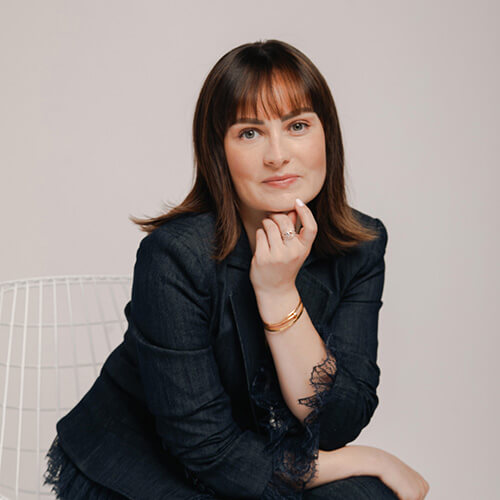
Molly is a creator, speaker, author, and advocate who is diagnosed with retinitis pigmentosa at age four. After losing most of her sight at age 14, she found her voice, sharing the realities of growing up in a sighted world, including bullying, mental health challenges, and everyday problem solving that most people never even realize. She has a bestselling memoir titled Unseen and has shared her perspective and advocacy in media and online with over five million people, along with speaking on major stages for health and public wellness, including the UN and the World Economic Forum. Molly, thank you so much for joining us here on the podcast.
Molly Burke:
Thank you for having me. I'm looking forward to chatting.
Dr. Correa:
So sometimes with the stories and with our interviews, we like to start with the before and not necessarily starting and defining with condition, but as I said, you were age four. So let's start in a different spot. And I like the way that you started in your book. Backstage, your cane in hand, coming out onto a big stage to a media audience, literally choosing whether or not you walked out alone. What did that moment represent for you and that transition for your life?
Molly Burke:
I grew up not seeing myself represented. And I think honestly, that was one of the most devastating parts of going blind at 14. Before I ever knew my diagnosis, before I understood what living with RP meant, I told my parents at five years old, "I'm moving to Los Angeles and I'm going to be an actress." And then at 14, losing the majority of my vision, I came to that realization that people like me don't exist in Hollywood. I don't hear myself on the radio. I don't see myself in movies and on TV, in billboards and commercials. And that was really devastating, to realize that maybe my vision loss was also taking my dreams from me. And so flash forward years, over a decade to be backstage on The Daily Show, walking out to celebrate the anniversary of the Americans with Disabilities Act with Trevor Noah was such a huge moment.
And they had offered to me, the day before, I had spoken with producers and they said, "We're happy. Your interview starts after a commercial break so we could bring you out. You can sit down and we just start the interview with you there or you can walk out. It's up to you." And while I knew that starting sitting down would be a much easier task for me, it also took away that moment of representation for other people who haven't yet seen themselves. So I made the scary decision to walk out in six inch heels with my cane and completely independently find my seat, which was a scary task. At any moment, I could trip, I could have gotten lost navigating and get disoriented, but thankfully I made it to my seat and that felt like such a powerful moment for myself and hopefully for other people in my community.
Dr. Correa:
And at that point, was that even also still a discussion with your family and your parents in making that decision? Or had you already started to make some of that transition about personal independence from your family?
Molly Burke:
My family always jokes. They learned a long time ago that when I say I'm going to do something, just believe me because I'm not going to stop till I get it done so there's no point in doubting or trying to tell me not to. And I think for me, at this point in my life, and even then, I no longer am making decisions centering my own comfort. Sometimes I'm making the decision that actually makes me more uncomfortable or more scared because I believe it's what's best for my community. And that was one of those moments. If I was just making the decision for me, to be honest, I would've started sitting on stage because doing a live TV interview to that kind of audience is already scary enough. There's already a lot of intimidation of doing a live interview. There's no take backs, but I knew that I really needed to do this for young Molly, for other people to have that moment of seeing themselves.
Dr. Correa:
I mean, it's amazing to hear, and I'm glad to see many more people stepping out and representation in media and all kinds of other settings, but I want to know just for yourself, when do you get a break from it? As you said, you often are making choices to be there and to be a representative and you're putting yourself in an uncomfortable position and not necessarily for what you would want.
Molly Burke:
To be honest, I don't think I do ever get a break from it. And it is one of the challenging parts of my work because it isn't a job. Yes, this is how I pay my bills, but I'm not doing it for that reason. That's a necessary evil of living, is I need to pay bills. But this is my calling. This is my purpose and it does not feel like a choice. The advocacy I do feels like a mission and I truly feel like I can't rest until I see the change that we need to see in the world for my community, but unfortunately we're very far off from that.
Dr. Correa:
I think that is often a place where many people living with different disabilities and abilities, neurologic conditions or otherwise, sometimes question and judge themselves. Are they putting themselves in that position to represent and support others? But I think should they be judging themselves and questioning if they're always making that choice to be there as opposed to supporting themselves?
Molly Burke:
What I think is really important is that not all disabled people need to be advocates. I do it because this is who I was born to be. I genuinely believe that. My work is a culmination of my passion, of what I believe is my natural talents as an entertainer. And so for me, it really was the right path, but I do this so that not every blind person has to. I do this so not all disabled people have to. And I think my friends in the disability advocacy space would say the same, that we don't think all disabled people should have to do this, which is why we do.
Dr. Correa:
And I think, as you were pointing out, you are making this choice for advocacy and in some ways, it's not your job. It's always there, as your life. And one of the things you pointed out in the book is the symbology of some of the aspects of your tools and the things you use. And when you realized that the cane was not just a mobility tool, but in a way also a social label, how did that change your interactions with others around you?
Molly Burke:
That was another one of the hardest moments of my vision loss journey. I had an accident around nine years old where it was a white, snowy day and I was on the schoolyard during recess and the bell rang and I started running back inside like all the other kids and I ran straight into a fence and I split my face open. I was pouring blood, as we know head wounds tend to do, and I was completely disoriented and confused. I couldn't figure out where I was because I had no depth perception. So when everything is just white and snowy, I couldn't see enough detail to understand where I was or what happened. And that was a really scary moment for me, but also for my family and my whole team.
And I was young enough that it really wasn't my choice to start using the cane. I was told by family and the team that, "It's time. You need this because even though you think you can see, clearly you can't see enough at all times to stay safe." So I started using my cane. The next day is the first day I went to school with it and I've used the mobility aid full-time ever since. And that was such a huge shift because all of a sudden I went from being able to hide my disability and essentially live in the world as a sighted, non-disabled person. That's how people perceived me, and now they perceived me as disabled. But that perception completely changed how they treated me and how they interacted with me. And I always say that was one of the other hardest parts of my vision loss because it did start to feel like I was invisible. It wasn't just that I could no longer see the world, it was the world could no longer see me.
It went from being able to go to a restaurant with my family and be asked, "What do you want for lunch?" To having my parents be asked in front of me, "What does she want for lunch?" My parents being asked in front of me, "What happened to her? What's wrong with her?" People staring at me, people jumping out of my way and scattering like they'd seen a cockroach, and that doesn't feel good. And I knew that I was the same person. I had the same humor, the same intelligence, the same sass, the same passions and interests and hobbies. I was just as bubbly as I'd always been, but nobody saw any of that anymore. All they saw is a disability.
Dr. Correa:
And what did you learn and your family learn over time to help advocate for people really seeing you and interacting and talking directly to you?
Molly Burke:
It's a big part of why I started social media almost 12 years ago. I was so sick of answering the same questions every single day. How do you do your makeup? How do you use a cane? How do you get dressed? How do you text? I literally had almost scripted answers because I had answered them so many times and I just wanted to be able to say, "Go watch this video." But those videos didn't exist yet on the internet. There wasn't a makeup tutorial of a blind woman putting on makeup. There wasn't a video showing how that we use technology as blind people, with a screen reader. And I thought if I don't see it, I need to become it.
So I just started making these videos and all of a sudden I could say, "I made the video go onto YouTube and watch it." And I didn't have to spend 20 minutes out of my interaction at Sephora to explain how I did my makeup. And yes, I still like makeup as a blind woman. I could just buy my lipstick and move about my day and it was so freeing. And I loved the idea that other blind people, other disabled people could have that representation that mainstream media still lacked. I loved the idea that it could become a space where non-disabled people could feel safe asking questions and learning because society had never had those spaces. I think so many of us come from generations where, when it comes to disability, we were told as children, "Don't look, don't point, don't stare, don't ask." And what that inherently teaches us is to ignore. And that is incredibly dangerous because that continues to isolate and other disabled people.
And then as we grow older, we've never had representation in mainstream media. We were never taught in our community about it. So we continue to ignore it, which leads to discrimination in the workplace. It's easier to hire the non-disabled candidate than the disabled one because it's in our comfort zone. It's what we know. It's easier to date the non-disabled person than the disabled person because it's in our comfort zone. So it continues to further the ableism in society and the discrimination we, as disabled people, face. And so I really felt like this was a tool I could use to really break all of that down. And it's been incredible in these 12 years to see how it's grown, five million followers across my platforms, but also the community in general. As I said, when I started on social media, there wasn't really a big thriving community of disabled creators, but now I can so happily say there is.
Creators with all different diagnoses and lived experiences sharing their different perspectives and the way that they live their lives, that parents of newly diagnosed kids can watch to get hope, that other disabled people who maybe have never met somebody else with their diagnosis can find that community and that non-disabled people who have never known anything about this community can finally learn and that doctors and nurses and teachers and people who do interact with our community regularly can also learn because I think that is so important. And I think we often, unfortunately, do see ableism in the medical spaces. So having messages from doctors and nurses telling me that they do watch my content to gain more confidence when they interact with blind patients or have a service dog in their hospital room, it makes me so proud.
Dr. Correa:
Yeah. I'm really interested in that aspect. You said this community has grown so much online. And you started by talking about really answering those plethora of questions you kept getting with how you do these things. But over time now, as that community has grown, I'm sure you have learned such a broad perspective that how you do something, how you put on makeup, how you interact with things in your different vision impairment may not necessarily be the same way that others who are visually impaired. Tell me some about the types of things that you've learned that are different among the community that is vision impaired on how they navigate the world around them. I think so many people just think, "Oh, it's just one." This is the way to interact when you lose sight.
Molly Burke:
Absolutely. I always try to be so clear with my audience that I don't represent blindness. I represent Molly, who's blind. And that's all I can do is share my one lived experience and try to use my platform to help uplift the voices of others in my community. But the reality is there's such a misconception that blindness is darkness, that to be blind means you see nothing at all, but 90% of blind people have some remaining vision. The blindness spectrum starts at legally blind and, of course, ends at complete total blindness, but there's so much in between. And that means we all need to accommodate and adapt in different ways that meet our vision loss and that meet our needs. So for me, on the far end of the spectrum of vision loss, I do use a screen reader. I do use braille. I use a guide dog or cane full time and I am navigating essentially majority of my life using my hearing and my touch.
But there's people at the beginning of that spectrum who are using magnification, who are using large print, who are doing other kinds of adaptive things. And there's actually a lot of people in our community who don't use any mobility aid. So I always remind people that you may be interacting with low vision people on a daily basis and have no idea. Give people the grace. You never know if that person cut you off in line at the grocery store because they actually just didn't see you. They're not trying to be a jerk, they just didn't realize that you were there.
Dr. Correa:
Thanks, Molly. That was such a great start to our conversation, and I can't wait to continue it in part two, next week. We'll be hearing more from Molly, her story, along with additional information from our medical expert about so much of her experience and how it relates to other individuals in similar situations or with different disabilities related to low vision challenges. Thank you so much for joining us here on the Brain & Life Podcast.
Molly Burke:
Thank you so much for having me.
Dr. Correa:
On the Brain & Life Podcast and online, we share stories from people living with neurologic conditions and the science that helps them navigate everyday life. Behind that progress, are researchers working on ideas that could lead to better treatments, better understanding, and better care.
Dr. Peters:
The AAN Research Program has supported this kind of work for more than 30 years, but each year, far more researchers apply for funding than we're able to support.
Dr. Correa:
So if you're someone who values neuroscience that makes a real difference for patients and families and all of our communities, we invite you to join this effort. A donation to the AAN Research Program helps more promising research move forward. Learn more about this at aan.com/donate.
It's so great getting a chance to speak with Molly. Her story really highlights the lived reality of vision loss and a low vision condition and how it affects independence, mental health, the relationships she has in her life and everyday logistics moving through the world that's been designed, really, for fully vision capable individuals and isn't necessarily designed for everyone's accessibility. To help us understand the medical side of inherited retinal conditions and how she supports person's transition to a low vision condition and what supports and advances are available now or on the horizon, we're joined by Dr. Brittany Scruggs.
Dr. Scruggs is a vitreoretinal surgeon. I know that's a funny term, we'll get to it in a moment, and a physician scientist at Mayo Clinic in Rochester, Minnesota. She cares for both adults and children with complex retinal conditions, including inherited retinal diseases. She also researches possible ways to regenerate the retina or even prevent retinal degeneration. Her work includes trying to make the possible efforts and treatments safe, more effective, including therapies in the area of gene and cell-based treatments through her clinical work, research, and teaching. She helps families and individuals navigate both today's complex care and the future of retinal medicine. Dr. Scruggs, I'm so inspired by this work and your time with the community. Thank you so much for joining us.
Dr. Scruggs:
Yeah, thank you for having me. I'm excited to discuss all of these topics and I appreciate the invitation.
Dr. Correa:
So anyone who's ever had to wear glasses or been assessed for glasses, they go see an optometrist, but they don't always necessarily understand the difference between the optometrist, who's fitting you for your glasses, and ophthalmologists. So what drew you to working in ophthalmology and in vision health?
Dr. Scruggs:
Yeah, I think it's common to not really know the difference between optometry and ophthalmology. So we can start with the definition. So an ophthalmologist is a medical doctor who went to medical school and you go through all of the different rotations, including neurology and neurosurgery, and you have to make a decision at the end of the day, do you want to do eye health? I did not know until my very final year of medical school. In fact, I didn't really even know what ophthalmology was until I did a rotation and realized it's amazing to give back vision and to be able to provide people with that type of quality of life and protect them, especially these children that we treat. We can protect them for the rest of their lives. So it just felt like a very rewarding, very practical specialty. I knew I wanted to be a surgeon, and so ophthalmologists, in general, are usually surgeons.
There are some medical specialties within ophthalmology, but in general, all of us are trained as surgeons. And so I'm a retina surgeon, and I know a lot of people listening to this podcast are used to listening to neurology and neuroscience-related topics. The retina is the brain, right? It's the part of the brain that we can see. And I like to think about it like that because it really is an amazing structure. So the retina is the film of the camera. It just happens to sit inside of the eye, but it is actually connected by the optic nerve to the brain. And it's a beautiful organ to be able to focus on.
So that was one of the reasons I went into it, but I also had done a PhD before I made that decision to go into ophthalmology. And my PhD was in neurodegenerative diseases, specifically stem cell and gene therapy. And I realized that ophthalmology would allow me to do stem cells and allow me to do gene therapy and regenerative medicine so I could still use those skills, just with a different type of medicine. So that was my interest and my passion, and I'm so glad I went into it.
Dr. Correa:
And I think some people have heard that different parts of our body, the skin, our nails, our oral health can be features that tell us about our body's systemic health or be affected by so many other medical conditions. Really no organ in our body is completely isolated off and has its own separate conditions. It's all a balance, but I don't think always that many people realize how much the eyes are affected by the health of the rest of our body and can really be signs or even almost cameras into what may be going on by other medical conditions. What's your perspective on that, both in thinking of the retina and the overall ocular health that you guys assess?
Dr. Scruggs:
Yeah. I love this topic because the eye is the window to the body and to the soul. I can look inside of the eye and I can diagnose thousands of diseases from infectious diseases to inflammatory diseases, cancer, I can diagnose blood pressure issues, diabetic problems. Honestly, I can be the person that says, "I am really concerned that potentially you're about to have a stroke. You're starting to have, you have a plaque here or you have an ocular, like an area of ischemia, where there's decreased blood flow, and I think you need to go to the emergency room to get scanned." So the eye gives us those red flags, those signals that really help us treat patients.
So I love being an ophthalmologist because I feel like we get to be really good diagnosticians. And it's amazing that we went through medical school too. We didn't just go to eye school because looking in the back of the eye, we have to make sense of how does that relate to the rest of the body and then we actually have to treat patients systemically. And I treat a lot of autoimmune retinopathy and that's a systemic disease. Same thing with inherited retinal diseases. It's often not just an eye-related issue. A lot of my patients have syndromic forms of inherited retinal diseases, and we certainly can get into that too. But yeah, just looking at the blood vessels gives me a lot of information about the blood pressure and what the systemic health is of that patient.
Dr. Correa:
Yeah. I wanted to start there because yes, we're going to have a discussion about an inherited retinal disease and someone with a change or loss of vision as an example, but just wanted to encourage everyone, don't skip out on seeing the ophthalmologist. There can be so many aspects of your health that can be assessed and/or even predicted from that kinds of setting. But you mentioned that, now there's lots of different parts of the eye and it's an amazing space where it's a very small amount of real estate and portion of the body that there are so many different subspecialists in just one section or part of the eye. And the retina is one of those. And particularly, you have specialized training in understanding and treating and diagnosing inherited retinal diseases. So I'd love to hear some more about what's included in that broader category.
Dr. Scruggs:
Yeah. And you're right. We have 12 or 13 subspecialties of ophthalmology. And I think people will get a little bit confused. Why do I have to see a glaucoma specialist and a retina specialist and a corneas? All of the different specialties. It's because it's so complex and we have so many different types of surgery for all of these different parts of the eye. So for the retina, that's what I deal with. And I do have to look at all of the other parts of the eye as a comprehensive specialist, but I also do retina surgery. And so just to think about the eye anatomy. So when you go inside of the eye, it's full of jelly, essentially. We call that the vitreous. It's the vitreous humor. And it's just proteinaceous material. And it really is like jelly.
And then behind that, it's attached to a film, which is the retina, and it's really, really thin. It's only 200 microns thick. And that's attached to the optic nerve, which then goes to the brain. And so as a retina surgeon, I go into the back of the eye, so actually enter the eye. So if you think of the eye as like a beach ball, I'm going in and I'm removing that jelly. So that's my number one surgery is a vitrectomy, removal of the jelly. And this will be important to know when we talk about gene therapy, because the gene therapy surgeries that I perform, in order to do those, I have to remove the jelly, which gives me access to the retina. And then my instruments can get to the retina and do whatever I need to do, whether that's repair it. Say they have a retinal detachment. A retinal detachment's essentially a blister. It's like fluid that's accumulating under the retina and I have to pop it.
So I have to flatten it and make sure the retina's flat again and then spot weld it down with laser. And that's what I do for detachments. But for gene therapy, I have to get to the retina to treat it in a different way, actually with the medication of interest to give back the gene that the patient is potentially missing. And there are a lot of other surgeries that I do, but in general, every surgery is similar, where I'm dealing with the vitreous and I'm dealing with the retina, which is why we're called vitreoretinal surgeons, going back to that term that you use in the biography. That's literally what I do for a living is I deal with the jelly and the retina of the eye.
Dr. Correa:
Wow. And the structure of the retina that you described as 200 microns thick. Now, if my recollection, we're talking basically like stacking two grains of table salt or maybe two or three grains of hair. This is so tiny.
Dr. Scruggs:
It's so tiny.
Dr. Correa:
Is all the vision that we get through the eye going through the retina or is there another pathway that people see things or see light?
Dr. Scruggs:
Yeah, the retina is the film. So without the retina functioning and present, there's no vision. So yeah, the macula, which is the-
Dr. Correa:
A necessary step.
Dr. Scruggs:
Very necessary. And you have to make sure that the cells are functional, and we'll obviously get to that with the inherited retinal disease. They can be present, but if they're not working at a high level, then you're also not going to get that signal appropriately to the brain. But the macula is the most important part of the retina. And a lot of people have heard that term macula, like macular degeneration. The macula is just the central part of the retina. So we all have a macula, and that gives us our central vision and our central 30 to 40 degrees of vision. But then all of the rest of the periphery gives us our peripheral vision. And that's also important. And different inherited retinal diseases affect different things, whether it's the macula or the peripheral retina or potentially both.
Dr. Correa:
I want to hear more about how you would describe to someone what is retinitis pigmentosa, but also let us know, what are some of the other most common, although some of these are very uncommon, but most common inherited retinal diseases that people might hear about.
Dr. Scruggs:
Yeah. So inherited retinal diseases in general are pretty common, so one in 1,000, one in 2,000 live births. And retinitis pigmentosa is absolutely the most common inherited retinal disease. So it's about one in 4,000. And so I see patients with retinitis pigmentosa several times a week. I have a dedicated inherited retinal disease clinic on Wednesdays, and we have another inherited retinal disease specialist at Mayo as well. And RP certainly is something that we see often, but it's like saying, "I'm a woman." That doesn't tell you much about me as a person, who I am, what my name is. Same thing about RP. It's an umbrella diagnosis. So saying someone has RP doesn't give you a lot of information. And so just to explain that a little bit, I can have a patient who has a very early onset severe form of retinal dystrophy. Retinal dystrophy, meaning that the photoreceptors are dysfunctional, both the rods and the cones, and maybe they have an advanced form of RP and they potentially could be blind as an infant or a toddler or early elementary school.
And so for those patients, they might never know life with vision, but I've also diagnosed RP in someone's 80s and they don't even know they have it. So there's this huge spectrum. Saying someone has RP does not tell you anything about their vision, doesn't tell you about their visual acuity or what they're experiencing in the world. And there are over 400 genes that we now know are associated with RP. So it used to be a diagnosis that we would give and we wouldn't be able to really define it, but now it's a specialty where we can actually identify the genes in a lot of these cases. The statistics is somewhere between 50 and 65% of the time. When we do genetic testing for patients with inherited retinal diseases, we're going to get an answer, a genetic testing result that's positive or conclusive. And that gives us information.
It gives us information about what this patient potentially can expect, giving us a little bit of prognosis. It can give us an understanding of how can we connect these patients, not just with patients with RP, but with patients who have their specific gene related retinal dystrophy. So we're getting down to like a cohort of patients that maybe look and act the same and experience life the same. And then even further, having a genetic diagnosis is important because we can start to offer solutions. Now there are clinical trials. There's an FDA approved gene therapy. The first FDA approved gene therapy in all of medicine was for a retinal dystrophy, and that's RPE65, related retinal dystrophy, which is similar to retinitis pigmentosa, but more of an early onset retinal dystrophy that affects vision and in early infancy.
So there's so much to explore here, but I wanted to start with a definition of RP is not the same for every patient. It certainly is something that we see commonly and every patient is different. I have so many patients with other non-RP-related inherited retinal diseases, and I'm happy to talk about as much as we have time to go into. I will say the second most common in my clinic and most IRD clinics is Stargardt disease, and that is because the carrier rate is about one in 50, and that's true in the United States. So 50 people around you, one person is going to have a variant for ABCA4, which is the gene for Stargardt disease. And if two carriers have a child, there's going to be a 25% chance of Stargardt disease.
So it's common. It's one in 10,000 live births. And it's really exciting all the science that is growing, and I hope we get to talk about that because it's not just gene therapy. There are oral agents and there are even some gene-agnostic solutions that we're starting to get into and some antioxidant solutions that are oral and some really creative ways to get around some of these visual process disturbances. So I can stop there and see what questions you want to ask.
Dr. Correa:
And for our listeners, we've mentioned before, rare diseases and rare diseases in the United States is one in 100,000, usually around that range. So these are far more common and are not rare conditions. We just sometimes may not have commonly heard about them. And for someone who hears Molly's story or has looked at her story online or read her book and is wondering, could that be me or someone I love? Can you explain at that more higher lay level, like what is going on in retinitis pigmentosa and how can it progress? All knowing, as you said, there are so many different gene types, the nuances of each one can be very different.
Dr. Scruggs:
Yeah, absolutely. So let's talk about it. So retinitis pigmentosa is a genetic condition, which we've talked about a little bit, where the light sensing cells in the retina, which we call the photoreceptors, are gradually losing function over time. So people often first notice difficulty seeing at night. That is often the first symptom, or in dim light. And as you know, restaurants and businesses often don't have great lighting. You walk in and the ambiance is great, but it's dim and you can't read the menu. And patients with retinitis pigmentosa, this is very anxiety provoking because you go into a situation with not good contrast, not good lighting, and their vision goes away. They really can't see. So that would be the child that really needs a flashlight when they're going trick or treating on Halloween, where they look at the sky and they don't see the stars. They truly are nightblind a lot of the times.
And then, yeah, the important thing is that we're entering this time in medicine where we're starting to understand the pathophysiology, the genetic makeup of these diseases, and it's opening doors to real treatments. So I would say there might be anxiety of people listening to this, especially if they have RP, we're starting to have some hope, some real things, treatments to offer patients. And for people who are having symptoms, whether it's nightblindness or difficulty in different situations, see your friendly eye doctor. All it takes is a dilated eye exam and it's something that can be immediately diagnosed. So I can look inside of the eye and within five seconds, determine if there are signs of RP. So what we look for is the blood vessels. We've talked about that already, is we look at the blood vessels specifically for systemic health reasons, but also is there narrowing of the blood vessels, which we call attenuation, but they're just a little bit constricted. And that's one sign, clinical sign and finding of RP.
And then we look in the periphery of the retina and we look for pigmentary changes, where there's actually like black pigmentary spots. Sometimes they're small and subtle and sometimes they're a little bit larger, but that is a sign that the retina is not healthy in that area and that the light sensing cells are starting to have problems. And usually the rods are affected first. So it's more of a rod dystrophy. That's why the night vision issues come first. The rods are important for your night vision, and those are mostly in the periphery. And retinitis pigmentosa really depends on the gene in terms of the progression and the tempo, because every gene is a little bit different. Some are a little bit more progressive, and we know that those patients are going to lose vision by their 20s or 30s, and other people were reassured by their genetic testing because we're like, "Oh, you'll probably maintain your central 20/20 vision for the rest of your life."
And I think that's important because you think about 20/20 and you're like, "Oh, that person has good vision. They don't have any problems." That's not true. So someone could be 20/20 and legally blind. And legal blindness in this country, the definition is 2,200 or worse, visual acuity in the better seeing eye or the visual field is constricted, very, very narrow, but you can still maintain your 20/20 vision centrally. So really it's two parts. Either your central vision is affected or your peripheral vision is affected enough that you're legally blind. So all this to say, night blindness is the number one symptom, to answer your question.
Dr. Correa:
Yes. Okay. And you started and you were sharing that there are so many other possibilities now in terms of treatments and where things are moving forward. But I wanted to, before getting to that, get to one of the things that Molly brought up, and this is years ago when she was a child, but there was such a focus on not just the diagnosis, but trying every possible treatment and that engendered for her, as she was a child and growing up, this sense of deficiency, this sense of enhancing the sense of disability. Now, as things are moving forward and there is a chance to some more treatments, how do you balance that sense for people, that you want to give them opportunities for diagnosis and possibilities for treatment, but that's not really a sign that they are less than in any way?
Dr. Scruggs:
Oh, for sure. So as an inherited retinal disease specialist, I am not working so low. This is a team effort and we think about so much more than just what the eyes look like, right? We're thinking about the person as a whole and we're making sure that they are supported and that they have the resources that they need. And so going back to the genetic testing, 40% or more of patients aren't even going to get a genetic testing result, right?
So there are plenty of patients we go through the diagnosis and we go through the workup and we still don't have something to hang our hat on. Do we say, "There's nothing to do for you, there's no hope?" Absolutely not. That would be doing a disservice to the patient. And that's why seeing someone who's a specialist who sees patients with these disorders and diagnoses often is really important because if you go to a comprehensive eye doctor who maybe hasn't seen RP in a few years, it's going to be a different experience because maybe they're not plugged in with the resources and the mobility specialist and everyone who really makes this a better experience.
So for our team, we make sure that our patients get the low vision services that they need and that can look very different across the different spectrum of diagnoses, but that could be white cane training, that could be guide dog training. That could be having an occupational or mobility specialist, making sure that you have the right resources, connecting them with the state services for the blind, making sure that they have reading systems, good lighting, good magnifiers, wearable devices, right? The adaptive technology has gotten so good recently. And then mental health, we've talked about that already. We want to make sure we're connecting them with people who can understand. And so we make sure that they have the resources they need. There's a foundation in the United States called Hadley Foundation. Mr. Hadley himself was blind bilaterally, in both eyes, and he decided this country doesn't do a very good job of supporting people who have low vision.
And so he took it among himself to form this foundation, which is now 100 plus years strong. And this foundation teaches patients how to learn braille. They have audio support groups that call you at a certain time on a week and there're hobby groups and they have low vision resources as well, 500 plus videos about how to maximize and optimize vision in low vision settings. So that's the start of this. And then genetic counseling and understanding what the genetic test means. I mean, there's a lot of anxiety that goes into doing these workups and getting the results back. So I have a genetic counselor I work with every week. He's amazing. I couldn't do my job without him. And I work with the genetics team here. I work with the ... We have a multidisciplinary approach for my patients who have other non-ophthalmic related issues related to their disease.
I need to make sure that I'm leaning into that too. So there's so much to explore here, but it's not just diagnosing the eye, it's treating the person, understanding what they need, what hobbies are they struggling with, what are they not doing anymore that was bringing them joy and seeing like how do we get that back into their lives? That's really important to me.
Dr. Correa:
It's amazing that it starts with their quality of life and the things that matter to them, that their symptoms are directly impacting. Brittany, thank you for leading with that passion, that humility that we're all a work in progress and your dedication to the community. We really enjoy having you here today.
Dr. Scruggs:
Yeah. Thanks for having me.
Dr. Correa:
Thank you again for joining us today on the Brain & Life Podcast. Follow and subscribe to this podcast so you don't miss our weekly episodes. You can also sign up to receive the Brain & Life Magazine for free at brainandlife.org.
Dr. Peters:
Also, for each episode, you can find out how to connect with our team and our guests along with great resources in our show notes. We love it when we hear your ideas or questions. You can send these in an email to blpodcast@brainandlife.org and leave us a message at 612-928-6206.
Dr. Correa:
You can also find that information in our show notes and you can follow Katie and me and the Brain & Life Magazine on any of your preferred social media channels. We're your hosts, Dr. Daniel Correa connecting with you from New York City and online @NeurodoctorCorrea.
Dr. Peters:
And Dr. Katie Peters joining you from Durham, North Carolina and online @KatiePetersMDPhD.
Dr. Correa:
Most importantly, thank you and all of our community members that trust us with their health and everyone living with neurologic conditions.
Dr. Peters:
We hope together we can take steps to better brain health and each thrive with our own abilities every day.
Dr. Correa:
Before you start the next episode, we would appreciate if you could give us five stars and leave a review. This helps others find the Brain & Life Podcast. See you next week.