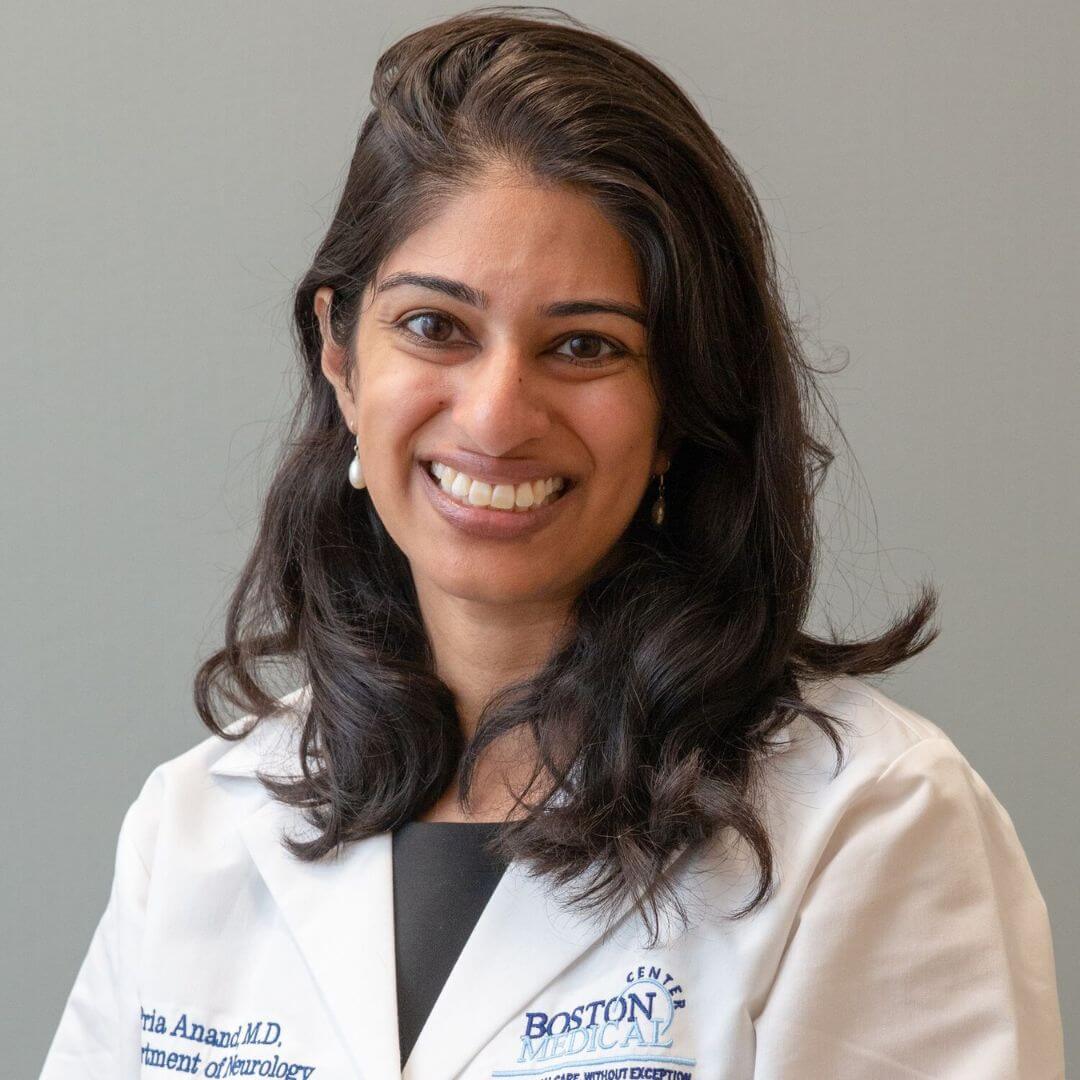
In this week's episode of the Brain & Life Podcast, co-hosts Drs. Daniel Correa and Katy Peters are joined by author, educator, and neurologist Dr. Pria Anand. Together, they discuss the wonder and complexity of the human brain and how storytelling, culture, and curiosity shape our understanding of neurologic illness and identity. Pria shares insights from her book, The Mind Electric, including the role of narrative in medicine, the resilience of memory, and why humility matters in neurologic care. They also explore the future of neurology, the importance of sleep and self-care, and how science and the humanities can work together to improve patient care.
Follow and subscribe wherever you get your podcasts!
Apple Podcasts Spotify Libsyn
Additional Resources
- The Mind Electric: A Neurologist on the Strangeness and Wonder of Our Brains
- How are Mental Health and Brain Health Connected?
- Healing Words: Writing About Her Traumatic Brain Injury Helps the Author Make Sense of Her Recovery
Brain & Life Podcast Episodes on Similar Topics
- Exploring the Science of Everyday Wonder with Dacher Keltner
- The Secrets of Synesthesia with Dr. Joel Salinas
- Memory and Your Brain, Explained
Follow us!
- Guest: Dr. Pria Anand @BMCNeurology
- Hosts: Dr. Daniel Correa @NeuroDrCorrea; Dr. Katy Peters @KatyPetersMDPhD
- X: @BrainandLifeMag
- Instagram: @BrainandLifeMag
- Facebook: Brain & Life Magazine
We want to hear from you!
Have a question or want to hear a topic featured on the Brain & Life Podcast?
Record a voicemail at 612-928-6206, or email us at BLpodcast@brainandlife.org.
Episode Transcript
Dr. Correa:
From the American Academy of Neurology, I'm Dr. Daniel Correa.
Dr. Peters:
And I am Dr. Katy Peters, and this is the Brain & Life Podcast.
So in our recent episode, Daniel, I asked you about whether you wanted to write the great novel. We have so many wonderful storytellers on the podcast, but most of our storytellers focus on real experiences that lend themselves more through the nonfiction realm. So rather than fiction, do you ever wonder what you would bring to an audience on nonfiction?
Dr. Correa:
I mean, for me, it would definitely be discussions on cooking, food, and culture. I think it's just... Because, as I'm thinking about it, it's things that would be a break. For day-to-day and on weekends with friends, I love to explore recipes in the Caribbean and across regions with cuisines and ingredients that fit well within the Mediterranean and MIND diet, just because I'm trying to stay healthy but still be delicious. I think, regularly, food, cooking, restaurants, hosting, really are all topics that live rent-free in my head especially when I need that cognitive break from some of our science research work, education work, or time in the hospital. What about you?
Dr. Peters:
Well, I think that Cooking with Dr. Correa sounds like a great title, or Dishing it Up with Daniel. I feel like I can come up with a lot of great ideas for your cookbook.
Dr. Correa:
Years ago, I had this idea, whether it was a cookbook, a website, blog, podcast, that I was thinking, it was Cooking with Brains.
Dr. Peters:
No.
Dr. Correa:
It's a little bit of a tongue-in-cheek, literally.
Dr. Peters:
All I can think of is that scene from Temple of Doom. Oh, my gosh. I can't handle it.
Dr. Correa:
Yeah. That's the problem.
Dr. Peters:
I can't, that would be... But no, I think Cooking with Dr. Correa or Dishing it with Daniel would be good. Actually, when I was in my medical school, I did restaurant reviews.
Dr. Correa:
Fun.
Dr. Peters:
I was able to go around in the Bay Area. First of all, being a restaurant reviewer, you get lots of free stuff, and it was a lot of fun. It was a lot of fun. That was a good gig.
Dr. Correa:
Yeah. I wish I had the time for that, especially in New York. It'd be such a fun thing to explore.
Dr. Peters:
That reminds me of residency, and I would even say medical school. It's such a unique experience. You transition from being a student to actually working and taking responsibility for patients. It was a profound shift for me personally, particularly coming also out of my PhD time where I was solely in the laboratory working just on cells rather than human beings, and the learning curve is so steep. And personally, I have a great list of experiences and patients and situations that I think would be great to put down in prose, but I don't know where we would find our time.
Dr. Correa:
That little thing called time.
Dr. Peters:
Oh, yeah, that little thing called time.
But our guest today has really excelled in both medicine and writing and also education, in particular, neurology education. It's Dr. Pria Anand. She's an assistant professor of neurology at the Boston University School of Medicine. She recently authored the book The Mind Electric: A Neurologist on the Strangeness and Wonder of Our Brains. And in this book, she explores the fascinating intersection of neuroscience, medicine, and human storytelling, and through intimate patient cases and medical history, she reveals how our brains rely on narrative to make sense of illness and reality. And another great thing about this episode is both Dr. Correa and I had an opportunity to interview her together, so check it out.
Welcome again to the Brain & Life Podcast, and we have triple delight, triple threat, or whatever you want to call it, but three neurologists here on the podcast this morning or, if you're listening in the evening, during your day.
First of all, I'm honored to have my co-host Dr. Daniel Correa joining us. Daniel, you ready?
Dr. Correa:
I'm so ready. This is going to be a fun discussion. And as you said, just all the extra neurology dosage that you could possibly get this morning.
Dr. Peters:
Yes, yes. It's three neurologists in one podcast. Yay. So again, our clinical expert today is Dr. Pria Anand and she wears many different hats. She's a neurologist, she's an educator, and she's also a book author. And her recent book, The Mind Electric: A Neurologist on the Strangeness and Wonder of Our Brains and she's showing it right there. It is the winner of the 2026 PEN American/EO Wilson Literary Science Writing Award. Yay, yay. And Best Book of 2025 by Publishers Weekly, Barnes & Noble, the Observer, The Globe and Mail, Book Riot, and others. She's written for the New York Review of Books, Boston Globe, Washington Post, New York Times. Wow. Los Angeles Review of Books, Time Magazine, and Ploughshares. She's a graduate of Yale University, then went to Stanford Medical School. I went there also. She trained in neurology at Johns Hopkins for her residency.
I also did my residency there. And then did some specialization in neuroinfectious diseases and neuroimmunology. I think she did a fellowship at Massachusetts General Hospital, which is a great hospital. She's now stuck around Boston and she's an assistant professor of neurology at Boston University School of Medicine and she cares for patients there. She is also the program director of the neurology residency at Boston Medical Center. We are delighted to have Dr. Anand here and we're going to discuss her book, neurology and neurology education. Welcome.
Dr. Pria Anand:
Thank you so much for having me. It's such an honor to be here. I hope everyone kept the podcast on after hearing it was going to be three neurologists. I promise that we will try not to be too nerdy.
Dr. Correa:
I'm sure Pria along the way, you probably got the question we all get. It's like we know from family members, those close to you. When are you going to stop going to school? Yeah.
Dr. Pria Anand:
It's funny. We just had the residency graduation. I foolishly scheduled it when I was on the hospital service. We just had it on Friday and one of the things I said to everyone's family was, "Thank you so much for attending millions of graduation ceremonies. I can't even imagine what number this makes for all of you." Everyone was still proud.
Dr. Correa:
Absolutely.
Dr. Peters:
And congratulations to your residents for graduating and spreading their wings. I just attended, yesterday, Duke's neurology graduation. So it's graduation season for the residencies. And so Pria, thank you again for being here. Are you in Boston today?
Dr. Pria Anand:
I am. I'm just coming off of a busy hospital service, but yes, I'm based in Boston now, although I miss California and Baltimore every day, especially every day of the winter.
Dr. Peters:
So what you wrote your book about, I wanted to start with this question because it's definitely a neurology-type question. What is strange and wonder inspiring about our brains?
Dr. Pria Anand:
So it's interesting. I feel like when you are a neurologist, when you're a doctor, you spend so much time at the hospital, you go through this residency training where you're 80 hours a week for 30-hour shifts, you're exposed to all of these different illnesses and also recoveries. And essentially our bodies are really miraculous and you witness all this and you forget what's incredible about our brains and bodies. And so writing this book was a way to remind myself of something that I had gotten used to over years of practicing. One of the things I was really interested in when I was writing the book was, something that has always struck me caring for people with neurologic illness is the way that our brains can lose so much but still cling to this ability and desire to tell a story. Our brains really hold onto narrative when everything else gets lost.
I was just at the hospital over the weekend caring for someone who has a Korsakoff's dementia and so he's completely amnestic. He can't remember why he's in the hospital, but if you ask him a question, he will tell a really beautiful and elaborate story about how we met before we met in high school. He is here in this building because he's getting ready to play in the big football game. I mean, really detailed stories that any novelist would envy. And it's something that I think is incredible, strange, and wonderful about the brain that we have the ability to tell stories even when we lose so much else. It kind of speaks to how essential stories are to humanity and to the way that we move through the world.
Dr. Correa:
And along that history within neurology and over the years, there's a long history of many storytellers and writers really telling a variety of perspectives within neurology both as physicians or the stories of perspectives of the community. I'm wondering what were some that inspired you, and how did you decide to approach your book differently?
Dr. Pria Anand:
I'm a reader. I was a reader first and foremost and before I ever became a doctor or neurologist, I actually wanted to be a journalist for many, many years. I wasn't a pre-med student when I was in college and it took me a while to figure out exactly how I was going to approach stories in the world. When I was a kid, I loved reading Sir Arthur Conan Doyle, The Adventures of Sherlock Holmes. As all neurologists, I think, have as part of their story, this idea of being really attentive to the trifles that crack the whole case open. And I think most neurologists know that Sherlock Holmes is actually based on a doctor, Dr. Joseph Bell. He was a surgeon from Edinburgh and he, really famously among his trainees, they would have a patient come into the room and he would, just by seeing the way that the dirt under their fingernails, the way that they had worn out the treads of their shoes, the lilt of their accent, the particular kind of mud that had splashed onto their coat, he would know before they even sat down what they were suffering from and where they had come from.
He would be able to tell their story. And I love this idea that neurology is really about searching for stories in those tiny little clues. Stories are really powerful, stories matter, and who tells a story matters a lot too. And I think in the history of neurology, there are certain voices that predominate and other voices that tend to get lost. And so I was really interested in the story of neurologic illness in women. I loved reading. I have all of Charcot's lectures and I find them fascinating. So he was a neurologist in France at the Salpêtrière in this, essentially an institution that cared for women. And he was one of the first neurologists to describe the physical wounds of multiple sclerosis, the way that it could leave scars in the nervous system. And he described it in his patients.
It was an asylum for women. All of his patients were women. But for years after the disease was described, we thought it was a disease of men because men would come to a doctor and say, "I can't move my hand," or, "I can't see out of my right eye." And the doctor would say, "What's wrong with your eye?" And women would come to the doctor with the same complaint and the doctor would say, "You're hysterical." And it wasn't until we had more advanced imaging, we could understand the physical wounds of multiple sclerosis before waiting to do a biopsy or an autopsy that we started to understand the disease a little bit better and we understand now that it's much more a disease of women than it is of men. And I think that really speaks to how having more people be able to tell their story or broadening the story allows science to advance and allows us to understand illness so much better.
Dr. Correa:
I-
Dr. Peters:
And what do you... Oh, go ahead, Daniel.
Dr. Correa:
No, no, go ahead, Katy.
Dr. Peters:
You're too excited about what makes it-
Dr. Correa:
No, I guess I was just going to wonder, it's a big step to take from just inspiration on these stories and just delving more into it, reading about it, and wanting to share it in some way to saying, "Okay, now I'm going to organize all of this into the work of a book." So what really inspired you to continue that next step and work forward?
Dr. Pria Anand:
It's really interesting. I'm curious to hear of how you guys experienced your residency training, but even though I had wanted to be a writer before I wanted to become a doctor, I didn't write at all, especially when I was a resident and a fellow. I think I was just so in it and I feel like rounds in a hospital really scratched that storytelling itch for me. It's about hearing and telling stories and it just felt like this sort of, it was capturing everything that I had loved about journalism and everything I loved about science all in one package. And so I started writing the book. It took me being away from the hospital, I had my first child, and a couple of weeks after I gave birth, I was not sleeping. He's one of those babies who had to be physically on a parent in order to sleep.
So we were not sleeping, he was not sleeping. And I was so reminded of my experience of residency training at good old Johns Hopkins. It was just so interesting. I think pregnancy was the first time that I had really... I had been thinking a lot about other people's bodies and brains, but it was the first time that I was really forced to reckon with these transformations in my own body and brain. And even something as seemingly minor as restless legs, which I had never had before I experienced pregnancy, vivid dreams, all of these things that I had never experienced before, that I was experiencing in my pregnant body. And I wanted to remember what those experiences felt like because I felt like I could read a thousand textbooks and still never understand it the way that I had when I felt my own body changing.
And so a few weeks after I gave birth to my first son, I was not sleeping anyway, so I wrote a chapter of the book that is about sleep that would be the first chapter of what would ultimately be the book. And a lot of it was really just about feeling a transformation of my own body and feeling like it was fleeting and wanting to remember what that felt like because I thought it was going to make me a much better doctor.
Dr. Peters:
Well, where did the title Mind Electric come from? We all talk about the electricity of the brain, but what inspired you to give it that title?
Dr. Pria Anand:
So we went through many titles. Actually, when I first found a publisher for the book, the title was Sleep No More, which tells you what my headspace was at. And they're like, "This is bleak. We have to rethink this title." The title of the book was actually the idea of my brilliant editor. We went through many different iterations, but it's an homage to the Walt Whitman poem, I Sing the Body Electric. And this idea that I think there is still room for... Even as neurologists who really strive to see and witness and understand the brain, there's still room for mystery. And I think there's this way in which our brains are really just this collection of circuitry and electricity, but somehow that gives rise to memory and consciousness and all of these profoundly essentially human things. And I think the mystery is in between those two things, the electricity and the stories and the humanness.
And so the book does talk a lot about there's a lot of electricity in the book. The book is really interested in how to make the complexities and mysteries of the brain legible to anyone who has a brain or who has experienced illness. But I was really interested in the way that there is really a mystery in how the electricity translates to stories.
Dr. Correa:
For listeners and readers who may not have a medical background, what do you hope they come away from, understanding differently about their brain, our brains within the community, or even for people who are themselves living with neurologic symptoms?
Dr. Pria Anand:
Absolutely. So I'll say there are many, many people whose stories I think have enriched my understanding of neurologic illness, whose stories of their own symptoms and the phenomenology of their own symptoms has really enriched my understanding of neurologic disease. And I think there's this way in which you can explain the circuitry of something until you're blue in the face, but hearing someone describe the experience of... An example I use often is sleep paralysis, because it's something so many people have experienced and you can describe what's happening in someone's brainstem and their spinal cord and their neuromuscular junction, but to hear someone say, "I had this experience where I felt this weight on my chest and I felt the breath sucked from my body and I saw this shadowy figure in the room," that phenomenology, really the description of what you're experiencing in your body, I think that really is an important way of understanding illness just as much as science. And you might hear my toddlers in the background as well.
Dr. Correa:
Don't worry.
Dr. Pria Anand:
They have something to say about neurology, too. This book is not just... It is about science and neurology, but it also draws on mythology and folklore. It draws on my own family stories. I talk a lot about many of my relatives and the way that they understood their own neurologic illness within the context of the cultural stories that they use to understand their illnesses. And so it draws on poetry, it draws on fiction, it draws on mystery novels. And so I hope there's something in it for everyone regardless of what your interest is. And I hope that... Part of this book was essentially this idea that as neurologists, we are interested in neurologic symptoms, not because we're voyeuristic or we want to see something that is unusual or esoteric. We're interested because symptoms like the way that someone can lose their language tells us something about language that's universal to every single human being.
I wanted to capture that connection between unusual symptoms and universality. So I hope everyone can see themself in this book regardless of what their experience has been.
Dr. Peters:
You mentioned telling stories and having a narrative and I think that's part of neurology is like listening to the patient, finding out their history, and those subtle nuances. Since you are a program director, how do you bring narrative medicine to your residents?
Dr. Pria Anand:
That's such a great question. So first of all, I think you don't have to be... If you're a neurologist, it doesn't matter whether you're a writer or not, you're still a person who cares a lot about stories. I think that just is baked into our DNA and I hope that everyone listening has had that experience with their neurologist. So one of the things that we've started doing is we have... This was actually dreamed up by one of our residents who was an artist and she came up with this idea of having some of our didactic sessions at a local art museum. So we go to the Harvard Art Museum and we meet with this curator, and we walk through this idea of close observation. I think that's one of the things that we can learn from art and literature about neurology, but also this idea of broadening our perspective on how we think about death and dying and mortality and empathy and connection.
These are things that not just neurologists but artists and anyone who's lived in a body has been trying to understand for a long time. So for instance, we recently had a session where we spent time with the curator who's an Ancient Egyptologist by training and we looked at all of these things that people who died in Ancient Egypt had placed in their tombs as indications of what they wanted their afterlife to look like. And it just really resonated I think across the board with the residents who have been with people at the end of their lives thinking about what constitutes a good life and what constitutes a good death. And so just trying to expand the viewfinder and see different ways of experiencing illness and realizing that there's not just one true story. There's many, many different ways of writing your story, I think is something that I try and remind the residents.
Dr. Peters:
That sounds like an amazing activity. I'd love to attend that because first of all, there's great museums in Boston.
Dr. Correa:
Yeah, definitely.
Dr. Peters:
The idea of Egyptology and what is important to the person is so... But I want you to solve the mystery of the Isabella Gardner Museum. That would be... Since you're into mysteries, where are those Rembrandts? That's what we need to know. Sorry.
Dr. Pria Anand:
I have to get back to you on that one.
Dr. Peters:
Yeah.
Dr. Correa:
I wanted to hear, you told us that you initially were thinking about a career and journalism and it's so interesting, your path and all the different steps. We heard all the different academic steps and the accomplishments, but tell us about that beginning. What made you make a transition from writing and journalism to a career and a path into training for medical school?
Dr. Pria Anand:
When I was in college, I had a summer job in New Haven where I was essentially medical case manager for people who were living with HIV in the Connecticut prison system who were coming out of prison and transitioning back into the community. And I got that job because I was interested in interviewing. I was interested in talking to people who had had very, very different experiences from me. I was interested in the criminal justice system as a journalist. But walking through that, I think what I loved about journalism is this idea that you could tell someone's really particular story in a way that it could resonate with many, many other people. And I think having that job, I realized that if there is a universal story, it is the story of bodies and illness and this idea that I could connect with someone who had such a different experience from me and one of the things that we could connect on was what they were experiencing in their body and these really human frailties. That really changed the course of my life.
And then I was one of those people who in medical school, I didn't come to medical school knowing I wanted to be a neurologist. I was one of those people who went through every rotation thinking, "Oh, this is amazing. This is what I'm going to do." My first rotation was transplant surgery. I was like, "I'm going to be a transplant surgeon." And then 40 hours later, I fainted in the operating, I was still awake, I fainted in the operating. I was like, "I guess I'm not going to be a transplant surgeon." When I was in my fourth year of medical school, I had this experience, a personal experience, which is that my grandfather, who's this really amazing, larger-than-life figure in my childhood, he was living in Mumbai, but he was just this amazing, adventurous guy. He made movies and in the '40s, he had talked his way onto an American troopship, bringing troops home after the war and spent a couple of months traveling around Los Angeles and the American South.
He had just all these wild stories about the adventures he had, he was really a larger-than-life figure in my childhood. And when I was in medical school, he started to get sick and the way he started to get sick was he started to physically vanish. He lost his voice, he lost his muscles, he became really reclusive. He stopped being able to stand up. He was this really tall guy who became really stooped and smaller than he had been. And I went with him to the neurologist and the neurologist examined him and saw the fasciculations of his muscles and saw the way that he had atrophied and was able to, from examining him, tell this part of my grandfather's story that I... Who I thought I knew. I was his granddaughter, I thought I knew all of his stories, but a part that I hadn't heard, which was he had grown up in this really rural village in North India.
He had left school and he was a young teenager to work in a factory and he had contracted polio at some point in that childhood and he had recovered. He always walked with a limp, but years later he developed a post-polio syndrome, this childhood infection. It just struck me that your whole life is really written into your body in a way and we carry our stories with us. And then there was this other part of me that thought that it was like a magic trick. I'm sure all of us have had that experience of watching a neurologist examine someone and realize something about their story or realize something about... Even have a crystal ball into their future. And I thought that was just such a profound magic trick and I wanted to be able to do that for other people. And I came home from India.
It was like the first day of my fourth year of med school and I emailed Dr. Jeffrey John at the Stanford Medical School and said, "Can I do a neurology sub-internship? I think I want to be a neurologist."
Dr. Peters:
Well, that's great. I think it's always wonderful to hear about how people come to their careers. And I, too, did not start out in neurology, thought I was going to do something completely different, but it does take... I think one of the things, neurology, when you really want to be a neurologist, finding that spark of interest and an understanding and it's definitely a language. And that really brings us to the really important hat you wear of educating future neurologists. What do you think is in there in the future of educating neurologists and what is so important about training neurologists for years to come?
Dr. Pria Anand:
It's interesting. I think it's so interesting because neurology is in this funny gray area where I feel like in some ways so many of the advances in medical technology are around neurology. We are so much more advanced at treating strokes. We have all of these immunomodulatory medications. We have all these new advanced imaging techniques, but in some ways what drew a lot of us to neurology is probably what is old-fashioned about it. You have to lay your hands on someone to make a diagnosis. And I think as the technology advances, I think there's this risk of losing that old-fashioned part of neurology. But the thing about neurology is that it will always throw you curveballs. There are diseases that you still cannot diagnose unless you watch someone walk and shake their hand and touch their body. And so I think our residents are growing up in a time where they're really assisted by technology in so many ways.
And I think making sure that for them, there's still an old-fashioned exercise in neurology and they still see that there's some sanctity in examining someone carefully and that there are things you can learn by talking to someone or looking in their eyes that you can't learn from looking at a screen. If my residents remember that, I will have done my job.
Dr. Correa:
And Pria, I was struck to hear the story of your grandfather and how much you learned about his past. And then I was thinking of, as you were telling us about the Egyptology exhibit and how you guys had a chance to reflect on how people thought about their future and their afterlife. But I'm wondering, are there some things you learned from your grandfather, from the patient stories that you delve into in the book, or even those living in your family who live with neurologic conditions about how they live and what they want for their life today?
Dr. Pria Anand:
I think what has been so interesting about the process of writing this book and trying to honor these stories is tha as neurologists, we often talk about confabulations in our patients. So these stories that injured brains construct, but I think neurologists, doctors are just as much telling a story with the tools that we have available to us. And so I practice at a big safety net hospital in Boston where a lot of my patients arrive as refugees and asylees and bring with them all kinds of different cultural contexts and life experiences and traumas and histories. And there's so many different ways of understanding the same set of symptoms and there's so many different ways of framing it. And I think it's given me this real humility around saying that, yes, I have one story that I think is true in this one way about what is causing your vision loss or what is causing your weakness, but there are so many different ways to make sense of that same set of symptoms and to make it make sense for you.
And I think a lot of this reading history has given me a tremendous amount of humility because it is so useful to look at how doctors in the past understood certain diseases or certain illnesses and realized that, "Oh, those doctors really thought that they were absolutely right." And there was this one true story to explain this illness. It gives you a real sense of humility and it really gives you a sense of openness to how people understand their story and their illness. And I think it's like made me really want to meet people where they're at in their journey with their illness.
Dr. Peters:
So Pria, we're making really history right now with new ways to treat neurologic disease that we haven't been able to do before with things like ataxia telangiectasia with new therapies that we're seeing at the AAN along with new ways to detect early disease. If you were to write the book, I guess 30 years from now, what do you think will be included in it?
Dr. Pria Anand:
That's such an interesting question. I mean, I think that there are all of these new frontiers in neurology, so exactly as you said, thinking about new ways of rewriting... I think, for instance, genetic illnesses and neurology, we have always thought of as being like your fate is already written into your genes and this idea that you can rewrite that I think is so powerful and the really beautiful thing about a lot of those stories is it comes from patient scientists and patient advocates who had this experience and care deeply about this illness and there's so many wonderful examples of that. But one of the things I think... Well, it's interesting, when I was a medical student, I think a lot of people would say, "I don't want to be a neurologist because it's about diagnose and adios." You diagnose things, but we don't have any treatments for these devastating illnesses.
And I think I have a different perspective on it in the sense that I think hearing about all these amazing new treatments coming out for genetic illnesses and for autoimmune illnesses and for even vascular diseases, my perspective is that it actually makes the diagnosis that much more important because it matters so much more that you get it right if there is a way that you can treat it if you catch it early. If you really attend to those details, if you ask about someone's sleep before they develop motor symptoms and you can diagnose them with their synucleinopathy or whatever it is, this idea that the stories matter even more because suddenly the stakes of getting it right are so much higher. So I hope that some of that story will still be there even if the endings are more hopeful and even if people can rewrite the endings to their disease.
Dr. Correa:
And I mean, if we were to go back, I mean, we talked some about how you are involved in the training of neurologists or residents who are training to become specialists in neurology. But even earlier along the line, if you were giving advice to pre-med medical students or medical students that are thinking about going into neurology, what's the number one piece of advice you would tell them?
Dr. Pria Anand:
That is a great question. I'm trying to think of what I wish someone had told me. I think the humility is a big one because I think actually paradoxically, I think in medicine, the less that you see and the less that you know, the more confident you feel. And then your assumptions get challenged again and again, you get things wrong and again and again, the brain surprises you again and again. And so just I think an openness to being wrong and to rewriting your own story and then an openness to uncertainty. I think one of the things that's hardest for my trainees, and for me personally, is there's so much uncertainty in neurology around prognosis and diagnosis and there's so much that we don't have language for yet. And I think being able to meet that with a sense of curiosity and interest and openness rather than a sense of frustration I think is the key to those people who wind up practicing neurology well into their later decades and enjoying it for all those years.
Dr. Peters:
So on the podcast, Pria, you mentioned thinking about the brain and what we do with our brains. We also hear about promoting brain health awareness. What do you think is the most important thing that you do for your own brain health?
Dr. Pria Anand:
That is a great question. I think notoriously doctors are really bad at taking care of their own health. I think the biggest thing... So I mentioned that the first chapter of this book that I wrote was a chapter about sleep and I got into this... I was so interested. Every living organism has some version of sleep. It is so essential to life and there are all of these like... I've got into these studies, hundred-year-old studies where we first started... For the longest time, I think we didn't realize that sleep was important. Textbooks would call sleep what happens when people stop being awake, and then the interesting stuff happens when people wake up. And it took us a long time to realize that sleep is really essential to our physiology. There are these studies that couldn't be done now, but studies that would... Animals with puppies where they would see what happened when an animal didn't get sleep versus when they didn't get food.
And it's devastating. It's horrifying to hear about because it turns out that depriving someone of sleep actually does something even more profound to their brain than starving them of the things that we think are even more essential like food. All of which to say, I think I, especially as a resident, I had no understanding of the sanctity of sleep or how essential it is for our brain health. And now I'm the biggest proselytizer about sleep. As a parent of young children, I know that it's a hard thing to receive advice on, but I think if there's one thing that I have done a bad job of prioritizing in the past, but that I think is really essential for brain health and that we're understanding leaps and bounds more about how important it is, it's sleep.
Dr. Correa:
I'd love to talk and see about the practicality of these things. I mean, we talk all the time. We make recommendations to community members, to patients, and sometimes on the podcast, but we don't always get to really practical examples and how we've explored or tried to adapt to some of the challenges with that. And you talked about how starting this book in a way started when you were sleepless as a young parent. How have you tried to put in practice this work of prioritizing sleep for you and your family?
Dr. Pria Anand:
So this is a great question. I think about this all the time. I take care of lots of patients who work the third shift or who have young kids who are taking care of grandkids or nieces or nephews or have life circumstances that make it really hard for them to... I think the trap of brain health or wellness culture is essentially like there's this risk of making it feel like it's your responsibility or your fault if you're not able to do the things that you know are good for your brain health, but all of us are experiencing barriers to getting the sleep or the good things that we need. A big thing for me is I think trying to let go and being okay with imperfection in a lot of aspects of my life in order to make sure that I can get at least a little sleep.
When I'm on call for the hospital, I obviously have to have my pager and my phone on me in my bedroom at all times. But something I really, really try and do is sleep on a different floor of my house from my phone and my computer on those nights when I don't have to be on call. And that's been life changing for me because I think it's so hard for us to actually allow our brains to rest. That's one of the big challenges is sometimes people, even when they have the time to sleep, it's really difficult to turn your brain off and that's made a big difference for me. So that's a small piece of actionable advice. If you're not carrying a pager, try and separate yourself from your electronics and see if that helps.
Dr. Correa:
Yeah. I remember the other day I'd come home from work, I had very much this intent of relaxing and transitioning on my day and was discussing this with my wife and she was just pointing out, it's like, "If you really want to relax, maybe one thing you should do is just turn off or put away your phone." And I was looking up things related to the Knicks game and things that I thought were fun and things like that was still, I think not realizing how much it also made me aware of thinking about the email and the other things and the other things that that phone attaches to, these other aspects of my work and life and how once she'd said that and I was like, "Oh, yeah." And I went and hooked it up to a charger in a different room in our apartment. We don't have different floors in our place. If my phone's on a different floor, I accidentally left it in the lobby. But yeah, it just made such a difference.
Dr. Pria Anand:
I was just going to say, it's interesting, since becoming a parent, I feel like I sometimes think about things that would horrify me if my toddler... I don't want my toddlers to be looking at a phone all the time, but it's so interesting to extrapolate that to your own brain.
Dr. Peters:
And Pria, how do you... I mean, again, the onus sometimes feels like it's on us to practice better sleep practices and to turn off the gadgets and everything, but how do you educate those residents that maybe are having to have those longer shifts? Because that's one of the parts of being a program director. I run our fellowship in neuro-oncology here at Duke and one of it is how do you balance wellness? I mean, one of them is I'm always chasing them down to take their vacation, but it's like you must go somewhere fun and do something. But I mean, I think that our culture, for being a resident, is often having those sleepless nights. What can we do to be better?
Dr. Pria Anand:
It is so hard and it's imperfect. It's so interesting. This is a Johns Hopkins story, but one of the things I fell down the rabbit hole of researching this book is the story of how we came to have residency and really the two grandfathers of residency are these two doctors, William Osler and William Halsted at the good old Johns Hopkins. And William Osler had his, they were called residents because they lived at the hospital full-time for eight years for the duration of their training. So he was really like, "You should be self-sacrificing for your patients," which I think is beautiful and still is part of medicine. And then William Halsted was this cancer surgeon and he famously would have a clinic in the morning, operate in the afternoon, round in the evening, go back to the OR. At one point he held jobs at seven different hospitals in New York and you read his schedule and you're like, "How did this man sleep?" And years after he died, we realized that he was actually addicted to cocaine and that's how he was able to get through all of these years.
But the thing is that we held him up as this ideal and we crafted residencies around this idea that doctors could function without sleep. And that idea, it's really hard to shake. It's really hard to reshape our... So just even understanding what the history of this is and the reason that we think doctors should be able to function without sleep, it's not because it's virtuous, it's because there's a historical reason for it and it's really hard to rethink it. It's so interesting because I don't know, we've made changes to the... We know our residents no longer work 27 or 30-hour shifts. They can, but for the most part they have night and day shifts. And I think there's this culture around signing out, this idea that when you leave the hospital, you hand your burden to someone else so that you can go home and turn your brain off.
But I think it's so hard because when you're taking care of people, you feel the weight of that responsibility and that never really goes away. And one of my residents was describing that she feels like she becomes a doctor the moment she puts on her scrubs and her ID and she walks out of her house and she says, "Anything that happens as I'm walking, if I see someone who overdoses in front of me just on the street in Boston, I'm already a doctor before I enter the walls of the hospital." So in some ways, the thing that is beautiful about being a doctor is that it's really, really hard to turn it off. One thing that I do try and tell my residents is that we all do the best we can with the information we have in the moment because I think something that keeps a lot of us up at night is like worrying that we've done the wrong thing or worrying that something that happens is on our shoulders.
And I think it's really good to feel that responsibility, but none of us is perfect, none of our choices is perfect. And so I think even just that aspect of sleeplessness, I feel like that was really difficult for me as a resident, and I try and remind my residents now.
Dr. Correa:
Yeah. This challenge of like when you are the position and the role of your job, whether it's as a doctor or not and whether you're putting it on almost as a costume like your resident mentioned with scrubs, the other side is the transitioning off that we talk about and people have this as a challenge with all kinds of jobs in their life. I'm wondering how you discuss this with the residents and maybe in a way that is applicable to all of our listeners who have that experience of whether they're the accountant and then it seems like within their family, they're always the family accountant. We're talking with our residents and students often about this, balancing this role of the knowledge we have with not always necessarily taking on the role of being the family physician, sharing that information, but still making a place to be a son and a daughter and an uncle.
Dr. Pria Anand:
That's such a great question and I can imagine for listeners who have had the experience of advocating for their family member or for themselves, when you're living with neurologic illness in your family or personally, it's not a career that you chose that you get to turn off at the end of the day. It's something that lives with you always and how do you make sure that you have space for another identity? So I mentioned that I started writing this book after I had my first child and I think I had this terror of having children because I feel like I had this experience of residency and I was really good at working 30-hour shifts and I was okay with not coming home because I didn't have children and I wasn't struggling, like I wasn't balancing competing things on my time. I was like, "This is who I am and I'm really good at it. And I'm going to do this thing of becoming a mother that is maybe going to make me not as good at working these long shifts and it's going to make me want to turn off at the end of the day or make me want to be present with my family and not present and switch off the doctoring side of my brain."
And I was so terrified and I had a baby and I went back to the hospital and it had never occurred to me that having this really human experience in my life of pregnancy and having a baby would actually make me in some ways a better doctor, this idea that I could relate to patients that I understood what's at stake when someone gets sick in a different way, having had this human transformation in my life. And I think it doesn't have to be having a kid, it doesn't have to be... For some people, it's having a loved one who experiences an illness. For some people, it's experiencing your own illness, but being open to those things that make you not just a doctor but human and realizing that those things actually will make you a better doctor. They'll make you more attentive to other people's stories. They'll help you to understand other people's stories instead of being a liability. I think we have to make space for doctors to be human, or else they're not going to be very good doctors.
Dr. Peters:
That is a great quote. We have to make space for doctors to be human. I think that's absolutely true. Now we're so excited about your book, The Mind Electric. What is next? What are you writing next?
Dr. Pria Anand:
So this is a great question. I'm interested in the intersections between culture, stories, and illness, and I think hopefully everything I write will exist at that intersection. I've been thinking a lot about how I want to think about... I'm sure all of us have read a lot of Oliver Sacks and obviously his story is really complicated and tragic for many reasons, but one of the things I love about Oliver Sacks is he talks about how the reason he could write was because he was at this hospital that no one else cared about or thought about, this chronic care hospital. And I think about that sometimes. I feel like I'm practicing in a place that's at a crossroads in medicine or in the margins of medicine. And so I want to think about stories that other people aren't telling and other people aren't seeing.
So hopefully future writing will continue to bring to light stories that are not part of the national consciousness even though they're affecting a lot of people in hospitals around the country.
Dr. Peters:
Well, we want to thank you so much for chatting with us today, Dr. Pria Anand. The book is The Mind Electric: A Neurologist on the Strangeness and Wonder of Our Brains. Thank you so much and thank you to my co-host, Dr. Correa.
Dr. Correa:
Thank you, Pria.
Dr. Pria Anand:
Thank you both so much. This conversation was such a joy and I'm a huge fan, so feeling very excited that I got to be sitting here with you.
Dr. Correa:
Thank you again for joining us today on the Brain and Life Podcast. Follow and subscribe to this podcast so you don't miss our weekly episodes. You can also sign up to receive the Brain and Life Magazine for free at brainandlife.org.
Dr. Peters:
Also, for each episode, you can find out how to connect with our team and our guests along with great resources in our show notes. We love it when we hear your ideas or questions. You can send these in an email to blpodcast@brainandlife.org and leave us a message at 612-928-6206.
Dr. Correa:
You can also find that information in our show notes and you can follow Katy and me and the Brain and Life Magazine on any of your preferred social media channels. We're your hosts, Dr. Daniel Correa, connecting with you from New York City and online @neurodrcorrea.
Dr. Peters:
And Dr. Katy Peters joining you from Durham, North Carolina and online @katypetersmdphd.
Dr. Correa:
Most importantly, thank you and all of our community members that trust us with their health and everyone living with neurologic conditions.
Dr. Peters:
We hope together we can take steps to better brain health and each thrive with our own abilities every day.
Dr. Correa:
Before you start the next episode, we would appreciate it if you could give us five stars and leave a review. This helps others find the Brain and Life podcast. See you next week.