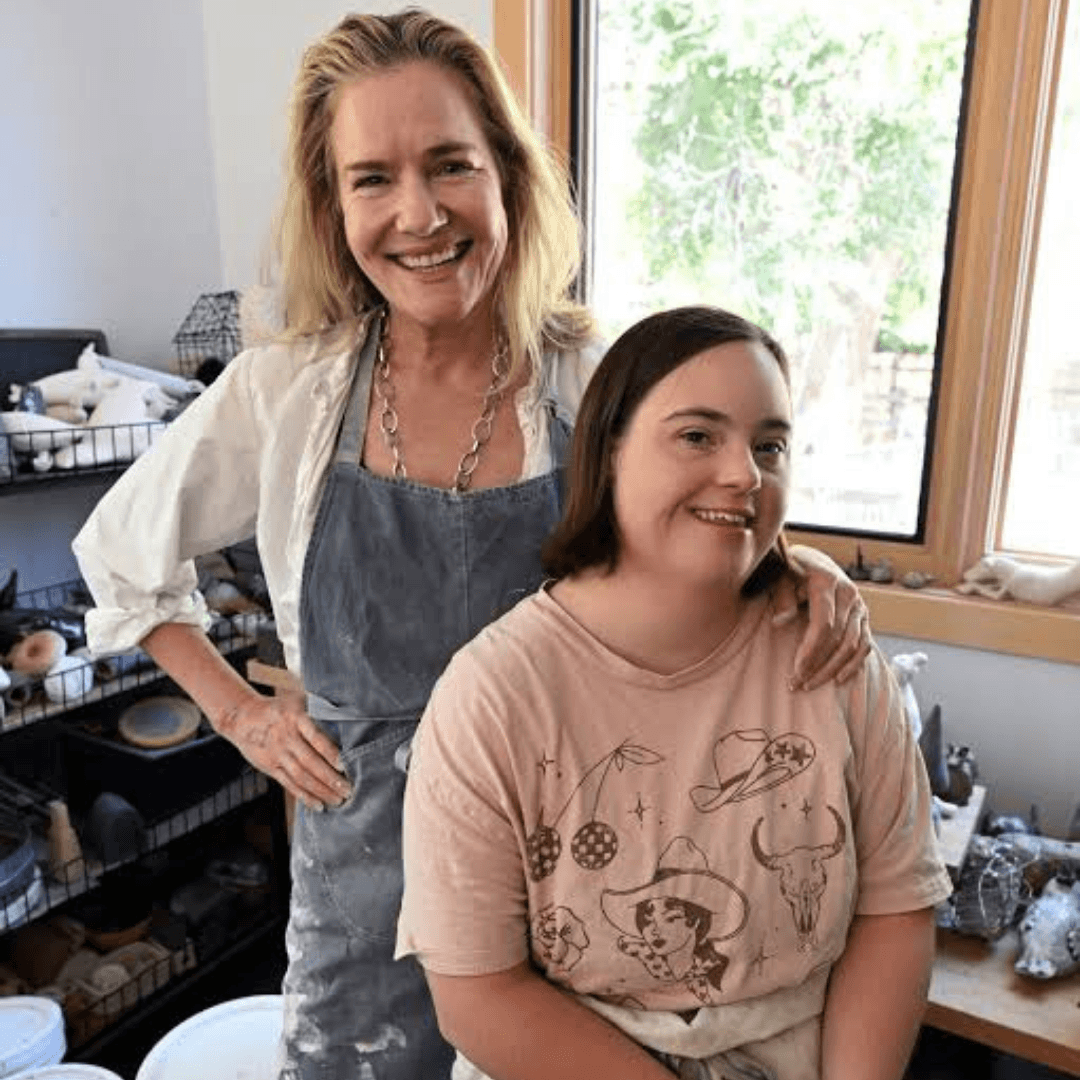
In this episode of the Brain & Life Podcast, co-host Dr. Daniel Correa is joined by Isabelle Woloson and her mother, Eliza, to talk about Izzy’s work to promote inclusion, challenge stereotypes, and embrace individuality as a young woman with Down syndrome. Together, they share practical insights on self-advocacy, community acceptance, and creating meaningful opportunities. Dr. Correa is then joined by Dr. Seth Keller, a nationally recognized leader in developmental neurology, for a conversation about supporting meaningful and fulfilling transitions into adulthood.
Follow and subscribe wherever you get your podcasts!
Apple Podcasts Spotify Libsyn
Additional Resources
- My Friend Isabelle- Book
- 8 Questions to Ask Your Doctor When Moving Out of Pediatric Care
- How Parents Advocate for Their Children with Rare Diseases
Other Brain & Life Episodes on this Topic
- Exploring Nutrition, Lifestyle, and Pediatric Multiple Sclerosis with Dr. Emmanuelle Waubant
- Author Samantha Lee Schmall on Life Beyond the Shunt
- Raising Awareness for a Rare Cancer with Love4Lucas President Hide Harashima
Follow us!
- Guest: Izzy Woloson @AskIZZE ; Eliza Woloson @ElizaWoloson
- Hosts: Dr. Daniel Correa @NeuroDrCorrea; Dr. Katy Peters @KatyPetersMDPhD
- X: @BrainandLifeMag
- Instagram: @BrainandLifeMag
- Facebook: Brain & Life Magazine
We want to hear from you!
Have a question or want to hear a topic featured on the Brain & Life Podcast?
Record a voicemail at 612-928-6206, or email us at BLpodcast@brainandlife.org.
Episode Transcript
Dr. Correa:
From the American Academy of Neurology, I'm Dr. Daniel Correa.
Dr. Peters:
And I am Dr. Katy Peters, and this is the Brain & Life podcast.
Dr. Correa:
Welcome back to the Brain & Life podcast. We have talked in the past how we both specialize in the diagnosis and care of different neurologic conditions, along with my own specific specialty in epilepsy and yours in brain and spinal cancers, but many specialists also distinguish whether they work and specialize in pediatric conditions and adult conditions. How does this break down for cancers for you?
Dr. Peters:
This is so important, because in neuro-oncology, we have pediatric neuro-oncologists and adult neuro-oncologists, and unfortunately, both kids and adults can develop brain tumors. Actually, in kids, it's actually a very common cancer, unfortunately. So subspecialization in those different ages is very important. And certain types of tumors are more likely to happen in kids versus adults and vice versa. But it's also important to note that sometimes, adults will develop pediatric tumors, and sometimes, kids will develop adult tumors. And so you do have to know about all of it. And I always get told, I remember this, my peds colleagues remind me that kids are not little adults. So what's nice is, if we do see those scenarios where an adult has a "pediatric tumor" type, it's very easy to engage with our pediatric colleagues and vice versa. So we keep the lines of communication quite open, but do treat people separately.
Dr. Correa:
A lot of similarities within seizures and epilepsy. And in our training, we learn how to read the EEG or the electrical monitoring, and in this epilepsy care, about both, pediatric and adult conditions. But each doctor brings their prior training and specialization in adult care or childcare or rather pediatric care. So both in the hospital and in clinics and with some additional training, we'll specialize more specifically and see children or adults in those age groups. But some places, there's not enough access to pediatric-specific epilepsy specialists and neurologists, and so many neurologists in certain areas of the world and country might see across a lifespan. But our lives are dynamic, and the years are dynamic in our lives. So while some people might specialize in pediatrics or children and others adults, there's always that question of who specializes in the transition from childhood to young adulthood, and adulthood for someone living with neurologic conditions.
Dr. Peters:
We're lucky to have what we call a survivorship clinic for our long-term survivors of pediatric brain tumors, because they may be diagnosed as a child with a brain tumor, but we do have some really good therapies and those kids can do quite well. So they will eventually get older and survive and need to transition. So there is this transition clinic. We call it a survivorship clinic. It's also called TYA, which is teen, young, adults. So it's a specialty thing for people in that space because there are unique needs and they do deserve special attention.
Dr. Correa:
So along these lines, today, we get to hear from both Eliza and Izzy Woloson, a mother and daughter, about the transition to adulthood with Down syndrome. And then we'll follow that with a discussion with Dr. Seth Keller, who works with many individuals and their families living with intellectual and developmental disabilities, which includes Down syndrome, with this transition, and many of the other transitions throughout lives with IDD, or intellectual developmental disabilities. I really hope you enjoy this episode. And we're starting a series of some more mix of episodes, covering a variety of disability-related topics. So we look forward to any suggestions that you have about topics that you want to hear about with neurologic conditions, any other guests that you would like to hear from, or topics around living with both disabilities and various neurologic conditions and neurodivergence.
So Izzy, let's see. I would love to hear what you think is the unique skill or superpower that you bring to different groups that you participate in.
Izzy Woloson:
One of my big strengths is to be able to just be myself, to be myself, and to feel like I am my own self and I'm myself without my power, but also being able to get other people... to be able to have other people to have that power.
Dr. Correa:
So I like that because it's not just being yourself genuinely, like you actually even are looking for the genuine expression of others.
Izzy Woloson:
Mm-hmm.
Dr. Correa:
That's wonderful. And Eliza, through these years, what have you learned from Izzy that you've incorporated in your life?
Eliza Woloson:
So much. She's so much cooler than everybody else in our family. Every once in a while, we're like, "Oh, what would Isabelle do?" She's just so much more organized than we are. She has an organization that we don't have. She looks at her day the night before and then she knows what she has to do, and the next day, she fills out her lists, and she keeps really organized and she holds herself accountable. She says that she's going to be somewhere at 1:00, she's there at 1:00. If she says that she can't do something, that she can't do something. She's very clear, and she's just beautiful in the way she organizes her life. And she is very balanced. You have a lot of balance in your life and you feel like you're really overwhelmed. Do you ever feel overwhelmed?
Izzy Woloson:
Yeah, there are moments where I feel overwhelmed, but because it's just the pressure a little bit of putting the expectation of feeling less balanced.
Eliza Woloson:
Yeah. And what do you do when you're feeling overwhelmed?
Izzy Woloson:
I feel grounded with the people that I have in my life. I have my mom and my dad.
Eliza Woloson:
But what do you do to help yourself? If you feel really overwhelmed, do you do yoga, meditation, or what do you...
Izzy Woloson:
Yeah, I do meditation. It's really helpful.
Eliza Woloson:
Are you counting or breathing?
Izzy Woloson:
Yeah. Being able to breathe, being able to count down, or just rewind and recoup, and just stay for five, 10 minutes, however minutes I have throughout the day.
Eliza Woloson:
I noticed that you also really enjoy reading too.
Izzy Woloson:
Yeah.
Eliza Woloson:
Does that also help you-
Izzy Woloson:
Yeah, it really helps me.
Eliza Woloson:
... relax?
Izzy Woloson:
Yeah.
Dr. Correa:
Yeah, all things we can practice also for ourselves. And I'd love to hear from you, Izzy, as we're wrapping up. As someone living with Down syndrome, what do you think, who are other good sources out there for people who want to learn more about Down syndrome that you really feel like represent your experience?
Izzy Woloson:
Yeah, definitely NDSS, National Down syndrome Society, is definitely a major one for me because it's not just for the people with disabilities, but it's for learning about disabilities.
Eliza Woloson:
Yeah. They were the first ones who I reached out to when Isabelle was born, the National Down syndrome Society. They're really amazing advocates, really pushing policy on a federal level, showing up at the White House, and they're just really, really very active.
Dr. Correa:
And I know that they also have great resources for families and care supporters, but Eliza, is there another resource that you would point families and care supporters to, to look for connection and/or other resources that could be helpful to them?
Eliza Woloson:
Well, the National Down syndrome Society has chapters in every community. So we have Rocky Mountain Down syndrome Society, which is an affiliate of the National Down syndrome Society. But when Isabelle was born, I was... A number of very religious... I'm not religious. I'm more of a spiritual person. I'm a Buddhist. So many Christians reached out to me and said, "You're so lucky you have a gift from God," and I was like... I didn't understand that, and that's why I thought, "Oh my gosh! These are going to be my friends now, and I'm going to have to blow off all of my grounded friends who've really given me love and support, and I'm going to have to change all my friends over to these people." And there was something about it that didn't seem right, and I began to realize that Down syndrome affects everyone. The Christian community, the Buddhist community, people of color. Everyone is affected by Down syndrome.
That's the beauty of it. When you go to National Down syndrome Society conferences, you see everyone there. Different races and different political parties. I mean, that is the beauty, because we can look around at one another and we can see that oh my goodness, these people really have felt the same that I've felt. They've felt my pain, they've felt my sorrow, they've felt my joy, they've felt my confusion, they've felt everything that I felt. It's so beautiful and connecting to be able to see a room of parents with children with Down syndrome, and to see that we're all in this together. It really breaks everything down into such a human, beautiful level.
Dr. Correa:
Well, Izzy and Eliza, thank you both so much for joining us today, for sharing your story, all of the amazing accomplishments that you've done in your own independence and together as a family, and really helping us connect to that importance of including everyone's unique skill, perspective, and superpower. And as you said, Eliza, the importance of the communities that we have to support us.
Eliza Woloson:
Thank you, Daniel. Thank you for having us.
Izzy Woloson:
Thank you.
Dr. Correa:
Thank you so much for joining us. And if you're enjoying the Brain & Life podcast, we'd love your support. Take a moment to rate and review the show on Apple Podcasts, Spotify, or whichever platform you're listening from.
Dr. Peters:
Your feedback helps more people discover these stories, learn from experts, and feel connected to the brain health community. Thanks for listening and for helping us grow.
Dr. Correa:
Welcome back. So today, we're continuing that discussion that we just had with Izzy and Eliza and the Wolosons about friendship, disability, inclusion. Eliza wrote the book about her relationship with her daughter, Isabelle, and now we're continuing that for our expert discussion today with Dr. Seth Keller, a neurologist with Neurology Associates of South Jersey, and a nationally recognized expert in the care of adults with intellectual and developmental disabilities, including autism, epilepsy, Down syndrome, and dementia. He's held leadership roles with the National Task Force on Intellectual Disabilities and Dementia Practices, within the American Academy of Developmental Medicine and Dentistry, and the American Academy of Neurology's Adult Intellectual and Disabilities section. Each day, he works to improve neurologic care, communication, dignity, and quality of life for those with developmental disabilities across their lifespan. Seth, thank you so much for joining us here today.
Dr. Keller:
Thank you, Dan. I'm honored and pleased to be here. Appreciate the invite.
Dr. Correa:
So I wanted to immediately follow up our discussion. So in our conversation with Eliza and Izzy, we heard how a story about friendship can help people see the person before the diagnosis. From your perspective, as a neurologist caring for adults with intellectual disabilities and developmental disabilities, what do you most want families and clinicians to understand about Down syndrome as people move from childhood into adolescence, adulthood, and older age?
Dr. Keller:
Well, that's a great question, certainly. It really starts all about relationships together. I really appreciate the premise of even the question and all that information that the families, the individuals with Down syndrome or other intellectual developmental disabilities understand that we're all about relationships and caring. And I think this goes to the heart about transition of care into the adult world of whether or not it's someone with Down syndrome or autism or cerebral palsy, is really seeing them. And Dan, I'm sure this will come as no shock to you that to care about someone you have to care, literally care, about the person as someone has value and worth. And I think that really goes sadly...
I hate to be negative about the perception of people like Izzy or anybody else in particular. The problem is that we, in our culture or society, and I don't want to make us all into one group of people, but unfortunately, the stigma and stereotype of those with Down syndrome and intellectual developmental disabilities historically, Dan, has not been that kind. It's not really been kind. Even going back decades and decades, even the R word and how the negatism toward that and how the implication meant personally and hard for people like Izzy or other people who had that and felt the demeaning nature of the terminology and words, and to try to get out of that demonology of how we portray people is really important.
And when in the adult world, this is where things are different, at least neurology, primary care, specialty care, as on the adult side, the awareness, the awareness of the education and training of people like Izzy would downstream your mother form the intellectual developmental disabilities. It actually is not in our training. We train our diseases. Certainly there's neurologists that understand about the diseases, epilepsy, movement disorders, migraines, stroke, the typical thing that we as neurologists treat, but what about people like Izzy who happens to have possibly or someone else that has a developmental disability with a neurologic complication?
So the inherently, which is really at the heart, I think, of the biggest problem with transitioning is really understanding about the person as a person with value and using people's own internal myths or stereotypes almost ahead of time before you know them or appreciate who they really are and bring into that conversation that they already have preconceived notions about the individual and how unfair is that. And I think that's really where it's challenging for a successful transitioning effort to go of trying to really break down the miss and barriers right from the get go.
Dr. Correa:
Yeah. I mean, if we were going to go back and just redesign learning for families, but then also for the clinicians and healthcare providers that are out there, what are some ways that you can think we can rethink our healthcare system?
Dr. Keller:
We throw it out, Dan. We can just trash it right away and start... Can we do that now? We can start the whole process. I love it.
Dr. Correa:
Yeah, just healthcare access for all.
Dr. Keller:
Well, let me just say... Oh, gosh. I have no shortage of opinions and I'm glad you asked me on to do this. You might have to turn off the microphone here in a second here. So basically the transitioning platform has always been a very pediatric-centric avenue of discussion. It's the pediatric neurologist, it's the pediatrician who are caring for someone, say like Izzy, with a lifelong developmental disability who are caring for them and the whole culture of how they're cared for about their own values and lives and understand that Down syndrome and other issues, that's inherently within training and information that pediatricians and pediatric neurologist and others, they know. They're trained, they've got the experience, they understand that and the transitioning pathway is written quite clearly through Child Neurology Foundation, Go Transition, a number of organizations that are really looking at how do we make the transitioning process better? Because when individuals like Izzy grow up, they go into the adult world.
That's the reality in our healthcare system. They don't have to stay with the same doctor forever and ever like chronic disease management, like heart disease would, but for neurology, age say 18, age 21, bye. I mean, bye. Not to be cold or cruel about it. So often what happens in the transitioning process, which is really discussed quite early, age 14, and it's brought up, you're getting older and now we as a pediatric-focused care practice, we're now going to have you turn over to adult healthcare providers that understand about adults, the world, the philosophy, the culture, the care, the management, et cetera, et cetera, et cetera, and that's all in good and that certainly makes sense.
However, when people have an inherent underlying disability or an acquired disability or someone with a lifelong developmental disability, that nature of that person who is different, who may not speak as well, who might not have language skills, may have their activities of living maybe not different or well as other people and there's the family support angle, that culture of disability and trying to be that person with value and worth and that personal connectivity, the relationships and all that which are important and respect that person as being a valued person and the disease is a pain in the butt. It's this hanger-on complication that is only in their way. They try to keep them from being well and happy, I guess. Let's not look at any medical problem.
But how do we get into the mindset of that adult healthcare provider on day one? Because in all the transitioning programs, Dan, it's all about getting that individual, their thought, their mind, their plan and the data on what the doctors do to kind of come up with the strategy of their medication and the testing that's been done. And so often over years, there's this strategy to put together, a framework to all of a sudden, "Okay, now we found that doctor you're going to go to, here's this packet of information. We sent it to them," and I want to be facetious like good luck, and hopefully they're going to pick up the piece just like I do or such, and that doesn't really happen.
And often the pediatric neurologist would say, "Oh. Well, I can make myself available. If the adult neurologist is willing to want to ask me questions or they want to have a transition between me and them and overlap and build that kind of connectivity, these are some platforms that people think about." But at the end of the day, once you basically go to the adult healthcare provider, that's your doctor in most regard. They're now taking over and the problem is that what do we do as doctors? We treat diseases. We treat diseases, and I don't want to be facetious, we don't really treat the person as a person, and there's nothing about people with intellectual developmental disabilities. You have to see them as people first. But where does that people-first discussion of getting to know Izzy, her mom, her culture, her life, her values, where does that fit into the visit?
So my thought about it is what we really need to do, and I've given this quite a bit of thought and I have a direction and plan, it's called a foundational visit, and the foundational visit is setting the core of the foundation of understanding Izzy on her own terms and who she is and almost like what's going to happen on the first visit, day number one is that instead of focusing on the disease and all the drugs and the testing, which is obviously very relevant for us as healthcare providers, is really the first visit is setting learning about each other. So it's almost like being prepared with Izzy, her mom coming in and knowing ahead of time... I'm not saying they have to have a script, like a script being prepared, but say, what is Down syndrome and about Izzy and her story, just like you may have interviewed with them or her books and her stories and her lives is knowing that person.
And Izzy, God bless her, it seems high functional, but there are a lot of people that are nonverbal, poorly verbal, they're in wheelchairs and may not be communicating. So how does that essence of value of that person get across? So it's really understanding them and so the foundational visit, day number one, visit number one is almost like 100%. And the other part about it is the doctor, the neurologist knows that this is the first visit. So it's a two-way street. They're coming in, they're family, patient, they're all coming in with this understanding that they're going to almost teach the person to be a nice person, I guess. They understand that. I don't want to be... Like they're not nice people. You know what I mean. And the other side is the incoming, the receiving end, the healthcare provider, nurse practitioner, doctor is there like a sponge basically. They should purposely... If they know it, they know it, they know, God bless them, but almost like be a sponge and absorb and suck up the values of that person and then that's the first visit.
Second visit, and this is all done under stable healthcare transitioning process, no crises involved, because they should transition under terms of medical stability. The second visit, go for it. Go for the testing, the information, the medication. And then also is that then they should ask, "Well, how do you think this went?" Talk to each other. Well, what do you think about the visit? I mean, both sides, because I think honestly, I think there's got to be an opening up the soul a little bit about this because right now you're putting faith, as we all know in our patients to us, it's a faith of a sincerity and caring that I got your back. You got me, it's a team. I mean, maybe is that true for all of us and all patients?
Dr. Correa:
Absolutely. I think we're all doing a little bit of speed networking and getting to meet and greet and getting to know each other, and just right now in the structure, there's such limited time for it. And there's many organizations that are hoping and advocating for ways to improve these transitions for children with many different conditions, including neurologic conditions as they age. But as you pointed out, really understanding about their communication, their behaviors and seeing them as a person first is so key. From what you've learned both in your practice, I'm sure also from families, for people with Down syndrome and other intellectual developmental disabilities, how can other families, community members or clinicians better distinguish a behavior from communication and what should a healthcare team or a family do differently when someone might not be able to describe symptoms in a typical way?
Dr. Keller:
Right. Well, I think what's really important is that all behaviors is the mode of communication. So the individual that's so called acting in certain kind of way, they're trying to convey something. I think if you understand that there's conveying of something from them, then you have to understand that. And who is best often to explain what that behavior manifests is as the family member and caregiver who lives with this person forever and a day. And I say, "What do you think?" I'll ask the mom and dad, "What are they trying to convey?" And again, they live with this, so they've had to figure it out all the time, small nuances of the way their head moves or their body moves or the way they're reacting, their eyes looking or not. I mean, there are often things that I'm like, "Really? That's great. I really want to know."
The only thing about it is it's a matter of family members appreciating that these behaviors are there and they might not represent anything bad, but is some of these behaviors represented of underlying condition that is not helpful to the person underlying emotional difficulties or a physical problem. So in someone that has say a pain condition in some way, shape or form, or let's use an example of a side effect. So if I'm actually prescribing a pharmacologic to one of my individuals with Down syndrome or any other form of intellectual developmental disability and they're experiencing... Just say, Dan, if you felt dizzy or if you felt a stomach upset or if you felt pain in your head or if you felt mentally out of sort from a medication, you would what? You open your mouth and you say it, you can just comment. Someone that's poorly verbal and nonverbal, their behavior communicating to them, us, is that there's something not right. So it's a matter of using some openness and honesty of understanding change of behavior.
And the thing about change of behavior, at least in developmental disabilities, we have expected behaviors that individual has over time. This is what Izzy does or anyone else does, or you and me, we do. These are things we do, but when are the behaviors different? And that's really where it becomes more nuance of understanding between an expected behavior that the person may have an experience versus those that are abnormal and pathologic that warrant really our investigation as to what's really going on. And as a neurologist who specializes not only intellectual and developmental disabilities, I specialize intellectual disabilities and dementia. So when you add on some of the lifelong developmental disability who then is now having a neurodegenerative cognitive progressive decline and you're having these changes, physical, cognitive, and other kinds of changes, and that's really where I'm speaking about this is like, how does one really understand about what is?
And I think the key is not to assume anything, not to assume it's normal for them, but also be careful about assuming what it is, because again, we could over test and we could go crazy about it. But it really goes back to communication and relationships. To me, the whole heart of it is really respecting and appreciating the family members and the caregivers who really know the person and listening to them, asking them and knowing that we don't know as much as we think we know sometime and they know a lot more and it goes back to a team approach. It really goes to a team approach.
Dr. Correa:
And we've talked several ways here how in healthcare there's all the support through the pediatrician and childhood. But also Eliza, Izzy's mom, was talking about some of what they're navigating and working towards transitioning in the community. Families feel much more supported in childhood and then there's all sudden gaps in services, not just in the healthcare system, but throughout the community. What are some of the common transition challenges towards more community independence that you see for people with Down syndrome and other IDD conditions and maybe what are some things you suggest to families to begin thinking about very early on before that transition?
Dr. Keller:
Well, I think really what it comes down to is yes, there's the community which is important. It actually has a lot to do with the transitioning of a child that's growing up and they're becoming an adult. Again, without [inaudible 00:28:29] to you and your family, but I've got two children and so again, I don't want to compare my children, but why not? Children are children, adolescents are adolescents, young adults are adults, they eventually can grow up and maybe have some level of independence, and so what I often see, and this is before I even talk about community engagement with the community in large, is about the parents themselves feeling the ability to trust their son or daughter who has a level of intellectual disability or such and enabling to almost go out there and not be so tied to their mom or dad who's scared basically. I mean, what do parents do? I worry about my son or daughter, or are they going to get in trouble? Is someone going to take advantage of them and something bad's going to happen unless I'm there for them and I got to stick to them.
So I think that philosophy is a huge interesting philosophy. And even coming into the visit, like my exam room. So if Izzy comes in and she's great and she can tell a story, at some point, does your mom have to be there? It's up to Izzy if she wants her mom there. I guess. Don't get me in trouble. Hopefully she's not listening this second. You'll hear later. But again, I think it has to led to with adults. If you're an adult, I'm just saying who am I to judge the role between a young adult and her parents? But to me, it's an issue of stretching the umbilical cord more and more and more and more until that person is there. I think that's the first part that I think about. And the second part is getting into the community themselves because I also work very much in the community for people that live independently or was supported living with other organizations, like group homes and things like that, and so there's an extension.
Living with mom and dad, you're getting older. Do they need to stay with mom and dad forever and day? And that's a whole story into itself about transitioning or not. And then if they go into the group home setting because that's the so called way to go or supported living, then it's a matter of trusting. It goes always back to trust. Then it's trusting the system of care around them that they got your back. I'm going to take care of you, I know you got a disability, I got your back and I know that mom and dad are really going to be worried and concerned and I want to make sure that I talk to them. I talk to them too. And it's a transition. It's a trust, it's a phase that goes through lies, and I see it all the time.
Dr. Correa:
And as you mentioned out, in some ways some things are just across all young adults and children, whether or not they're neurodivergent or have a developmental disability, specifically Down syndrome or something else, but all young adults are going to make some errors and mistakes. And also there are things we just can't control about the progression of our health or development of new conditions. How do you help families and parents give themselves grace to not feel like at fault for what things might happen in the future?
Dr. Keller:
I wish I could control all those. I wish that was my power. You're giving me way too much credit. I got power from making... I think part of this is really they have to trust your kid enough. It really comes to that. And certainly there are definitely a percentage of people with intellectual developmental disabilities that will need a lot of support, a lot of care along the way, but it is the decent percentage of people that they're intellectually impaired somewhat, but they're not really that severe. So there are people that have Down syndrome or other forms of cerebral palsy or autism. They're great. I mean, they're out there on their own, they're doing marvelous things. So I think a lot of it is really trying to get out of those stereotype, but those people that are really high functional is really, to me, it's building that confidence, and really, I guess from a counseling standpoint to the family members, for them to know them, trust their own kid and for them to trust themselves and you work through it. I think you got to work through it.
Dr. Correa:
Yeah. Within Down syndrome and developmental disabilities, each person has their own way of communicating, and it's like other languages, and often we may under-recognize or may have our own deficiency in being able to understand their level of communication and things are going to happen and medical issues may occur, but in situations where there's a limitation in communication, especially in Down syndrome and other developmental disabilities, many medical issues can be under-recognized. So what kinds of things would you tell families and caregivers and care supporters in group homes that they might be able to pay attention to that should be brought to medical attention, especially when someone has that difficulty in our ability to understand them?
Dr. Keller:
Well, one, I mean, certainly is going to be age-dependent. So if they're, I don't know, adolescent, young adults, one thing that is common is thyroid dysfunction. So if they're sleepy or tired or less motivated or if they feel tired or sleepy, then you can also think about another common health comorbidity is sleep apnea, which is very common in the Down syndrome population. There are probably some of the most significant things if they're really children. Again, we're talking about young adults, it's heart disease, but that's usually manifests when they're babies or young adults. But from a neurologic standpoint, for us as neurologists, it's going to be seizures. Usually it's seizures, seizure control, behavioral changes based on what the neurologists are going to be thinking about or caring for.
And it is often appreciative that one thing that... Not to stereotype people... Someone with Down syndrome is one person, another person with Down syndrome is people with Down syndrome by and large are very sensitive people and they're sensitive, and so things that might happen or they might react to in the environment or at home, for me and you, I may not be bothered by it, but sometimes, and I do see this quite a bit in a number of people that I care and support with Down syndrome, they're very sensitive and they could be upset and they could have behavioral changes, anxiety, depression, and the way their affect is could be very much relevant to why they had a disagreement or if they're working or with their family or if there's a turnover.
Just say they have a friend or a care person that used to be and they really like them. Even say if they're in Special Olympics or sports and things don't go right and you have to go through it and say, "Well, what happened to you? What's going on?" And ask those questions. But definitely people with Down syndrome by and large and I see that a lot.
Dr. Correa:
And it sounds like we have the start of probably the next episode we should follow up and discuss with you because I think this aspect about the later transition and risks of neurodegeneration across the different intellectual developmental disabilities is an important topic for us with the community. But one of the things that we do often come back to in many of our episodes across the different neurologic conditions is this big broader term that we talk about as brain health. I'm wondering, what are your thoughts on what does brain health mean for people with Down syndrome and IDD, and what is some practical advice that you give to individuals and their families to support their brain health, safety, joy, relationships, and dignity throughout the lifespan with that condition?
Dr. Keller:
Well, I love that question. I'm a believer in it. I definitely believe... I'm as cynical as I may be in everything is that I do believe that many, many, many aspects of age-related complications are probably reversible or modifiable by the way we live our lives, basically including brain health. I eat it up. I eat that up, I do. I really believe in it and it matters. So yes, because often as many of us see, we see the patient that finally... I see them after they have their stroke because of the way they live. They smoke, their blood pressure, their lifestyle. And I can say that with a lot of things that I see, their spinal disease, maybe the neurodegenerative disorders or such like that. So maybe these lifestyle modifiable factors would have had an impact upon them or can still have an impact upon them as they age.
There's certainly enough research. The U.S. POINTER study is one that I point to quite a bit. It was a takeoff after the finish study called the FINGER study a number of years ago and this is for normotypical population age 65 and older in Finland. And their study basically was where they took half the number of people, they did wellness for them. Good blood pressure, good sleep, make sure you take your medication, mood and happiness and involvement. They made it in a very well-crafted research way where half the people in the study got good stuff before they had a cognitive problem, and the outcome was that going to affect their cognitive decline later. So intervention, good intervention. We're going to give you all the good stuff. And everyone else, good luck to you. Basically just do your own thing and I'm sure you'll be fine.
So then they brought the data. They showed the data after a year or two or three. I forget how long the study was. And lo and behold, guess what? It makes a difference. It makes a difference on cognitive brain health in terms of having dementia, warning off dementia, the way you eat, the diet, the health preservation thing. So after that, they then created the worldwide FINGER study. So it became a study across the whole world. And the United States study was called a U.S. POINTER study and each of these different locations around the world, the only difference was a cultural difference about their habits in one country or another country, but the premise was all very similar in terms of the brain health-preserving factors. And the result of the U.S. POINTER study was just published about a year or so ago and it shows again, it matters.
So it really does make a difference on what we eat, how we live our lives, all these things we do for ourselves. And so what does that mean for us in our cells, our patients, our families? It matters. So it does matter. And I guess from a cultural or societal standpoint, that goes to a bigger issue than I can, because I see people when they're not well, usually they have a problem, but then I do talk a lot about health and wellness and I do treat a lot of people with dementing illnesses. I speak about it all the time. I pull out literature. They want to know about dietary measures, I talk about the MIND diet or Mediterranean light diet and I talk about the nutritional value, and I definitely talk about being happy and I even say bucket list. I joke around a lot [inaudible 00:39:11].
Dr. Correa:
I mean, sometimes people interpret and they hear about these things and the suggestions and they think, "Oh, this is all the things to do before you have a condition or an illness or some progression," but I and many others have been advocating that there's never too late, it's not too late, and you would strongly feel then also within the context of someone living with Down syndrome or an IDD that these same interventions, I agree, yeah?
Dr. Keller:
Oh, even more and it's actually even more so and it really has to do with philosophically the resiliency that we all have. So right now, again, I don't want to stereotype people with IDD, by no intention do I want to stereotype them, but I'll just choose some general things, general principles. So in someone with an intellectual developmental disability already has some level of less ability for cognitive function or less ability for adaption or less ability to move if they have motor dysfunction. That's normal for them. That's who they are, but as they get older, will they be able to adapt to age-related decline, resiliency and they may not. So how does one keep up resiliency or capacity with their own ability in their own mind is proactive approach. The proactive approach is basically wellness, just like the U.S. POINTER study would be in that general capacity, but it's even more so...
I know we're going to speak probably another podcast on aging and dementia for Down syndrome, but it's very super relevant for Down syndrome because at age 20 and age 30 in someone with Down syndrome, they are beginning to have the buildup of beta-amyloid protein already in their brain decades before they get anything. So what's that mean? So what can everyone do about trying to do wellness and health promotion in someone that has the buildup of beta-amyloid, can that be mitigated? And even the fact that most of them make it Alzheimer's disease, can we mitigate, delay, slow down the prospect of when they're going to get Alzheimer's disease by wellness and health promotion? Definitely, definitely. Research got to be more into it, but definitely I wholeheartedly speak about that.
Dr. Correa:
Yeah. I think just like these studies as they moved around the world had to adapt to the cultures, we each have to adapt these possibilities and interventions and potential considerations of our own wellness to our family and to ourselves, and for someone with Down syndrome or IDD, it's adapting to with both their abilities, their communications, what is important for their quality of life.
Dr. Keller:
Yeah, and what it is, is the other part about it is like I think we've been thinking about diet and exercise for everything in life for hundred millions of years. I don't know about neanderthals or back in the day, but basically how many people have gone on a diet? How many people tried to do an exercise and I tried it and it failed. I tried it and it didn't work well. And a lot of it is really doing it, but also setting your expectations. So when I speak about diet and exercise, I say, "Take small baby steps. Pick one small aspect to say an exercise you're going to do. Small. Instead of like being this, 'Oh, I want to start walking a lot and I'm going to do this three times a day and multiple times a week.'" I said, "That's a mistake."
I said, "All you really need to do is prove yourself by doing one simple thing, one simple physical activity that you can prove yourself that you can now do it on a regular basis and that becomes normal for you. Then you build upon that. That's not only exercise, but that's diet," because I think that's really where the failure in most cases are of people that are on and off the bandwagon with food and diet and exercise is this unrealistic thing that they're putting upon them that often is doomed to fail.
Dr. Correa:
Well, hopefully today we can each start for ourselves and in our family with whatever is the next step that's most practical and then just keep moving forward. Thank you so much, Seth, for joining us.
Dr. Keller:
I get a good lunch ahead of me. I'm going to eat well today.
Dr. Correa:
Oh. Well, thank you so much for joining us today on the podcast.
Dr. Keller:
It's my pleasure. Thank you so much.
Dr. Correa:
Thank you again for joining us today on the Brain & Life Podcast. Follow and subscribe to this podcast so you don't miss our weekly episodes. You can also sign up to receive the Brain & Life Magazine for free at brainandlife.org.
Dr. Peters:
Also, for each episode, you can find out how to connect with our team and our guests along with great resources in our show notes. We love it when we hear your ideas or questions. You can send these in an email to blpodcast@brainandlife.org and leave us a message at 612-928-6206.
Dr. Correa:
You can also find that information in our show notes and you can follow Katy and me and the Brain & Life Magazine on many of your preferred social media channels. We're your hosts, Dr. Daniel Correa, connecting with you from New York City and online, @NeuroDrCorrea.
Dr. Peters:
And Dr. Katy Peters joining you from Durham, North Carolina and online, @KatyPetersMDPhD.
Dr. Correa:
Most importantly, thank you and all of our community members that trust us with their health and everyone living with neurologic conditions.
Dr. Peters:
We hope together we can take steps to better brain health and each thrive with our own abilities every day.
Dr. Correa:
Before you start the next episode, we would appreciate if you could give us five stars and leave a review. This helps others find the Brain & Life podcast. See you next week.