In this episode of the Brain & Life Podcast, co-host Dr. Daniel Correa is once again joined by Nancy Davis, founder of Race to Erase MS. Nancy discusses bringing leading scientists together through the Center Without Walls to collaborate rather than compete, and the “invisible” symptoms of MS, including depression, mood changes, fatigue, and other issues that can be hard to say out loud. Dr. Correa is then joined by Dr. Adam Kaplin, a physician-scientist whose work sits at the intersection of psychiatry, neurology, neuroimmunology, and the lived experiences of the community with multiple sclerosis. Dr. Kaplin explains more about these invisible symptoms, especially depression, and how treating them can make a difference.
Follow and subscribe wherever you get your podcasts!
Apple Podcasts Spotify Libsyn
Additional Resources
- Race to Erase MS - Funding Multiple Sclerosis Research
- Why It’s Important to Recognize Signs of Depression in People with Neurologic Disorders
- Become a Brain Health Advocate
- How Couples Navigate Multiple Sclerosis
Other Brain & Life Episodes on this Topic
- Nancy Davis’ Race to Erase Multiple Sclerosis
- Exploring Nutrition, Lifestyle, and Pediatric Multiple Sclerosis with Dr. Emmanuelle Waubant
- Voices from the Multiple Sclerosis Community
Follow us!
- Guest: Nancy Davis @NancyPeaceandLove; Dr. Rodolfo Savica @MayoClinic
- Hosts: Dr. Daniel Correa @NeuroDrCorrea; Dr. Katy Peters @KatyPetersMDPhD
- X: @BrainandLifeMag
- Instagram: @BrainandLifeMag
- Facebook: Brain & Life Magazine
We want to hear from you!
Have a question or want to hear a topic featured on the Brain & Life Podcast?
Record a voicemail at 612-928-6206, or email us at BLpodcast@brainandlife.org.
Episode Transcript
Dr. Correa:
From the American Academy of Neurology, I'm Dr. Daniel Correa.
Dr. Peters:
And I am Dr. Katy Peters, and this is the Brain & Life Podcast.
Dr. Correa:
Welcome back to the Brain & Life Podcast. Each year, the American Academy of Neurology's annual meeting, there is a 5K walk-run community event there, and that in each city that they hold it in and welcoming people who are joining us at that conference to help fundraise for research initiatives. Here in New York, at Montefiore Einstein, there's often a variety of fundraising community events from community walks, 5Ks, bake sales, food and clothing drives, and even fundraising teams for hospital and local community organizations for bigger races like half marathons and marathons. And as you know, a few years ago, I fundraised for cure epilepsy organization in preparation for the Chicago Marathon and then later the New York area's chapter of the Epilepsy Foundation for a local half marathon. There's so much variety of these kinds of events and they happen all around the country.
Katy, have you had a chance to join events like these through the AAN cancer community organizations or organizations there in Raleigh-Durham?
Dr. Peters:
Absolutely. It's such a great way to build community, but also to get exercise. We celebrate our brain tumor patients at Duke with a Angels Among Us 5K. It goes through the amazing Duke Gardens. We also have a family fun walk on the same day. It always usually occurs the last weekend in April and it's just amazing. One time I actually ran it and I finished it with one of my patients, who was a marathoner just like you. He's so super inspiring, he's done 26 marathons, but all of our patients are just really inspiring. I've also done the Walk to End Alzheimer's. Walking is more my speed than the runs. I like that better.
Dr. Correa:
Hey, movement of all kinds are positive benefits, so any level of some challenge gets us a little bit out of breath.
Dr. Peters:
I think one of the wildest ones is we have one where the pediatric neuro-oncologists and cancer doctors will rappel down a building for charity, which is-
Dr. Correa:
Oh, wow.
Dr. Peters:
That's a wild one that I've seen.
Dr. Correa:
There's all these kinds of variety events. What do you think are some of the ways that listeners and community members could find some of these different events? Because we always talk about how both movement but also finding community and purpose are such key aspects about brain health.
Dr. Peters:
So many of our advocates that come and talk on the podcast, we usually always direct people to their websites and invariably there's going to be some kind of event, whether it's a get-together, whether it's a race, whether it's a charity event, and if it involves sort of always... I always personally like activities where there's an activity plus something else going on. So if you can get outside and get some exercise, but then also be part of the community, that's a win-win-win across for everybody. We're very lucky, we have a donor that pays for free passes for our patients and for them to bring a guest to the Angels Among Us event. My nurse and I, we actually actively give out those little tickets during every April in clinic to our patients just to keep them going and tell them about the event, so sometimes it's even good old word of mouth.
Dr. Correa:
That's such a great contribution that that individual makes and just inspiring people to get up, move, and come and meet together. Many of these organizations that advocate and bring community and patients together around different medical conditions across neurologic disorders and others, they all often have either regional or state and local chapters or other partner organizations in your local area, and so taking a look at the events that they have, they may have some more of these types of movement activities, sports-related events, or other food events. I like that pairing of some movement activity and food, so throw a little big sale at the end of that 5K and I'm really enjoying it.
These kinds of events can range from a whole variety of fancy galas to fundraise and local barbecues and activities like racing and sporting events, and they're a great way to meet and grow your community. For our guests today, we're welcoming back Nancy Davis from the organization Race to Erase MS, an organization that coordinates a variety of events, but including an annual gala that brings together community members, donors, celebrities, many industry and research partners to help move towards a cure for MS and to push forward research and science in this direction. You're going to hear more about the work that they've done along with information from a researcher who looks at quality of life in multiple sclerosis. Hope you enjoy it.
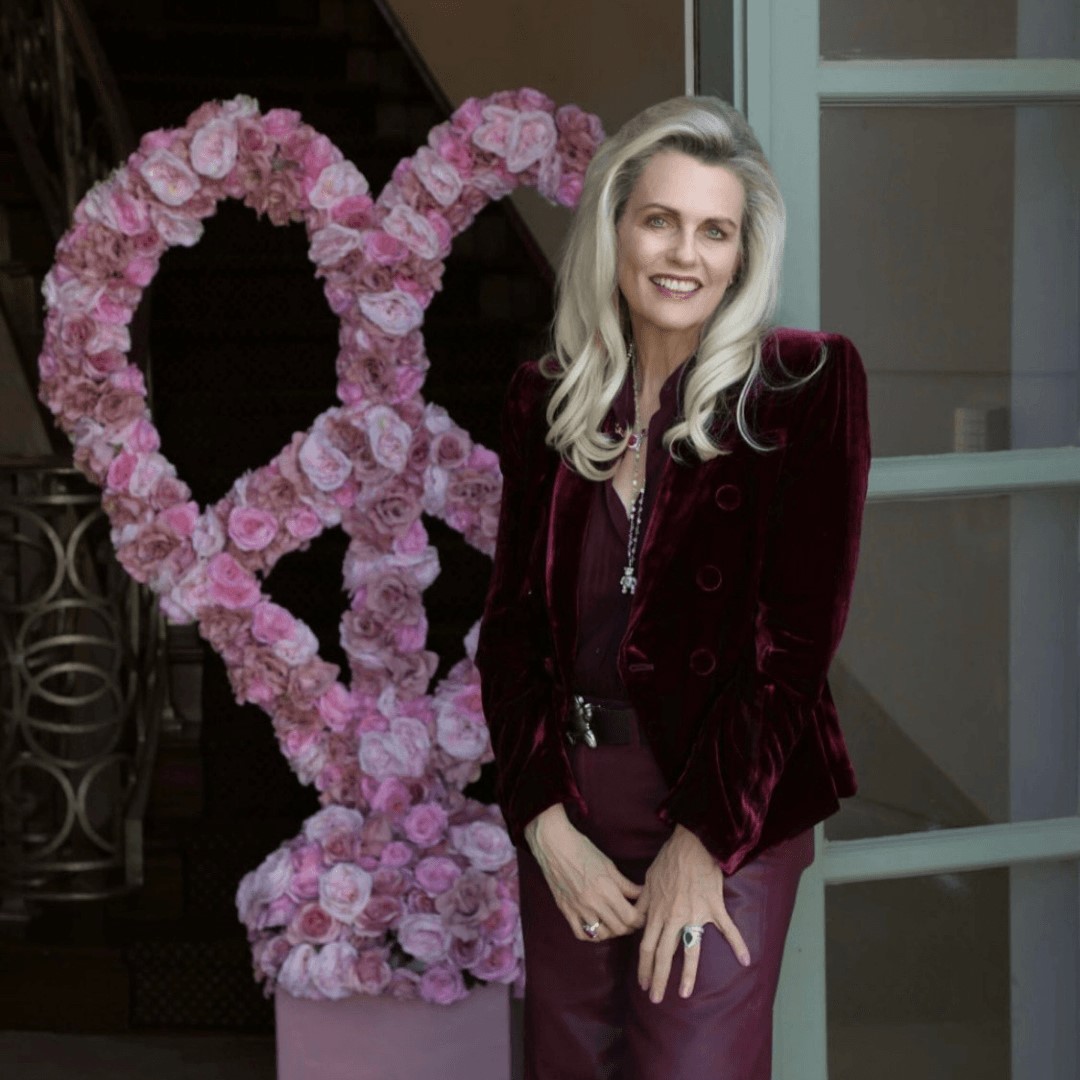
Welcome back to the Brain & Life Podcast. Today we're joined again by Nancy Davis, the founder of Race to Erase MS, a nonprofit that she launched after being diagnosed with multiple sclerosis at age 33 while raising three children. In our previous 2022 conversation, Nancy shared with us how this frightening diagnosis with very few treatment options became the catalyst for her helping move forward towards a new model for MS research. They bring together leading scientists together through what's called the Center Without Walls to collaborate rather than compete. She also spoke during that call, and if you want to check out that past episode, about the transformation she's witnessed over three decades from a time when MS was often associated with disability and limited hope to today's landscape with many different disease-modifying or what we would basically as a community think of as disease-altering therapies and have empowered the MS community.
Since that conversation, the Race to Erase MS has continued its work supporting research and collaborations between Cedars-Sinai, Harvard, Johns Hopkins, OHSU, UCLA, UCSF, USC, Yale, a long list of different researchers and institutions across the country. They have most recently announced once again their 2025-2026 research grant awardees. These are new researchers pushing forward the science in the area of MS, and as they are preparing for their 33rd annual Race to Erase MS gala in Los Angeles this June, and in fact, last year's 32nd annual gala raised more than 1.5 for MS research.
Nancy, thank you so much for joining us today and for everything that you've been doing to move forward this science.
Nancy Davis:
Thank you so much for having me.
Dr. Correa:
Looking back, since our last conversation, what feels most different in the MS community right now?
Nancy Davis:
I think what has changed so much, each year we get FDA approval on another MS drug, which is pretty much a miracle because that's not really happening in other diseases, a nd I feel that the realization that we will find a cure is in sight and there's so much brilliant research happening. Takes a long time. We've been at this for 33 years, which is quite a long time, but when we started, there was no known cause, no cure, no treatments, nothing on the market and very little hope that there ever would be. To look at where we are today, that hopelessness has been changed by hopefulness. People who were newly diagnosed back when I was diagnosed have so many treatment options, and if one isn't right for you, there's other options to have, and the options that exist today are helping about 90% of the people, which is pretty amazing.
I know when I was first diagnosed, there was just nothing, and it was so frustrating to me to feel like this is just going to keep spiraling out of control and I really had nothing I could do. Today for that new person being diagnosed, there's so many great options. There's ways of keeping it from accelerating. We're treating it before it starts with the B-cell therapies, which I think are the most amazing. The B-cell therapies are able to stop whatever that mechanism is in your body where your T cells start attacking each other.
By basically killing your B cells, we know that when the B cells are elevated, that kicks off the whole chain reaction where you have an attack, so by killing your B cells off, which is both what Ocrevus and Kesimpta do, we're able to stop you from having demyelination and nerve damage that we don't yet know how to fix, and that is our goal, to learn how to remyelinate and restore nerve damage. We don't have that done yet. It's very frustrating, but we have been working really hard and I know we will get there, but knowing that that's the problem. to be able to stop that right off the bat for somebody newly diagnosed, it's such a great thing to be able to go on one of these treatments, if it's right for you. You always have to test it.
There's some other side effects that people can have from any drug and you have to make sure you're the right candidate before you go on it, but even for those that they're not the right candidate, there's other medications, too, that are doing things. The reality of why we keep doing this is for people with more chronic progressive, primary progressive MS, which is about 15% of the people. I have something called relapsing-remitting MS, which basically means it comes and goes, and in the middle after it's gone, I'm pretty okay in between different attacks. When you have more chronic progressive or primary progressive, you don't have that ebb and flow. It just keeps going. So what we're really focused on now is, how do we find a way of stopping that type of MS? What can we do to restore nerve damage?
There's so many layers of things that we can possibly do, so we are doing it, but we're working as fast and furious as we can. We do have a big event coming up in a week from today, a week from tomorrow, and it's our 33rd Race to Erase MS. We have a really stellar fun evening plan. We're honoring a wonderful lady named Naomi Bulochnikov, who runs all the communications for Disney. She has MS as well.
To look at, seeing a new patient, newly diagnosed, which I get those calls all the time, it's nice that there's an arsenal of things that you can actually tell them to do. There's a lot of hope, and to be able to have hope for young people... With MS, usually it affects young people between the ages of 20 and 40, when you're just hitting your stride in life. All of a sudden you're at your independent age, you've been educated, you're out of college, whatever, you're finding your career, your family, whatever, and it just comes and it's obviously a big dark cloud in the future success of what you've planned for your life. Nobody plans on MS coming into their life, and when it does, it's pretty scary. But what's exciting today is there's options. We need to find more options and we need to find a real cure. We need to identify, at the end of the day, who is susceptible to getting it and figure a way to stop them from ever getting it.
Dr. Correa:
Yeah, you've had kind of a frontline view of so many different changes over the years within treatment and innovations for MS care. As someone living with MS, how have you decided for yourself when new things are coming up? We hear from many people living with a condition like MS when there are new treatments and new options. When should they consider and how might they decide for them if one of these new options might be something to move to or to consider and discuss with their doctor?
Nancy Davis:
A great question. If you feel good doing what you're doing, I think you have to say to yourself, "I'm pretty lucky that I'm doing well." If your MS is not accelerating and you're feeling really like you're having a whole life and you're having some security and that this has been going for a while, you're probably doing something very good for yourself. If what you're doing is not working, you're finding you're having a lot of attacks, you're not feeling well, there's so many different symptoms that MS can bring on, that's when you need to go to your doctor. Be very vocal and ask the questions and say, "Should I switch? Is maybe this other drug may be better? What would you suggest for me?" There's so many new things.
Not every doctor, however, that's an MS doctor or a neurologist, and sometimes people are diagnosed by a general practitioner, even their gynecologist or eye doctor, not all of them know all the nuances because it's changing so quickly with MS. So you have to really do your homework and find out what's good for you. If you go to a doctor and they tell you something that doesn't fit and you don't think it's right for you, it's probably not and you should probably listen to yourself. I know we all let doctors play God for us. Nobody knows our butter better than we do. When we go to a doctor, we assume that that doctor always knows exactly everything going on in our body. They don't. They can't. They have lots of patients.
You should always go to every doctor's appointment armed with a list. Very often when you have an appointment coming up, you keep thinking of these questions, but you need to write them all down because very often people go, they finally get the doctor's appointment, then they walk out the door and they go, "Oh, why didn't I ask this? Why didn't I ask that?" You need to always ask and you need to tell them exactly what is your journey, what are you going, what are your symptoms, what's happened? Nobody can read your mind and tell you, but it's really important to be very verbal about what's going on with your MS so you make the right decision if you should switch medications or if you're on the best medication that you can be on.
Dr. Correa:
Yeah, and as we mentioned before, you guys, your organization has just recently or more recently announced the 2025-'26 research grant awardees, but I'm wondering, what kinds of MS research that you've heard is ongoing that you're excited to support this year or that to see the results on as it comes and moves forward?
Nancy Davis:
There's so much out there. There's really a lot and it keeps evolving, and always interesting when we get all these proposals from different doctors trying to figure out where can we best spend our research dollars and which studies are the most important. That's always a very subjective thing. We do try to attract really young doctors who are just starting their careers. We have these Young Investigators Awards. I feel that young doctors have learned medicine in such a uniquely different way than some of the older doctors. However, the older doctors are brilliant. I really think the best thing that happens is when you see a young researcher who's spent the last six, eight years coming up with their study and they put pen to paper, they show you these studies, these things that they've been dreaming of for all these years to be able to honor them with a grant and do their study. I think it's really very important to do that.
We also need to create the whole next generation of MS doctors because some of the older ones are fabulous, but aging out. After a certain point, we do age out, but our older doctors used to go to the library and check out these big heavy books and look at all the different terminology for MS. If you look at it today, MS changes so much every year, and especially every three to four years, that what you might see in an old library book is completely irrelevant today. It has nothing to do with where we are. You have to really be on top of it. So if you're going to the kind of doctor who is going to the neurology conferences and really learning the latest, that's great, but a lot of doctors don't have the luxury of doing that, and sometimes you need to do a lot of your own homework to make sure that you're getting the best diagnosis, the best prognosis and you're learning about the new possible medications and their side effects and see if they are appropriate for you or not.
Dr. Correa:
Within the neurologic care space and across different conditions, we've talked about and pushed forward this idea how increasing and improving science across many different conditions is essential because if we can find a way to cure one or change the impact of one condition, we may end up finding things that teach us about so many others. I think MS and neuroimmunology has really been an example for that, how many of the treatments and things that have been developed have taught us things that have been potentially used within other spaces of neurology, and last time we talked, you shared some about the Center Without Walls and the importance of researchers communicating. Now after those continued work and decades, what do you think you've learned about this collaborative model that might help and teach others about medical breakthroughs and how they can actually happen?
Nancy Davis:
No matter what disease you are researching, whatever disease you have, the art of collaboration is absolutely everything. When we started with MS, so many of the most brilliant doctors around the country were doing identical research as each other, but knew and were convinced that they were the only one doing it. When I would bring that up to them, they looked at me like, "You don't know what you're talking about, because you're not a doctor." I said, "I'm a terrified patient. I know exactly what I'm talking about." I thought if we can just... That's when I came up with the idea of the Central Without Walls, which was actually virtual some 32 years ago, way before anything was virtual, but we put at that time seven of arguably the best doctors in the country to work as a team, and we were not going to fund any of them if they didn't communicate every month.
That was the whole deal. It was all about communication and sharing their different research. Studies take a certain period of time, but every month when you're doing a study, there's really critical information you're finding out every month. You could be testing a drug and the dose is too high, too low. It has a terrible side effect or when combined with another chemical compound, it has this terrible side effect that you weren't expecting. It's so important that our doctors talk and communicate. In the beginning, they didn't love the idea, and now they absolutely love the idea and they all get together constantly and they're always going back and forth and going up whatever the latest different ideas are with MS and they really find much comfort in sharing their research and their ideas with each other, and it only helps everybody with this disease if everyone shares.
Dr. Correa:
Yeah, absolutely. One thing you spoke about powerfully last time was the need for people to be working on and look beyond the symptoms of a relapse, including depression, mood changes, fatigue and other issues. Before, that really was not a space where there was much work that was happening and research within the MS space. For those who are listening who might either be impacted themselves by MS or someone in their family, what do you most want listeners to feel comfortable about talking and telling their neurologist or care team in terms of their condition?
Nancy Davis:
I think that everybody just has to tell the whole story and don't be... You are depressed. If you are tired, depression pretty much goes hand in hand with getting MS. The disease itself causes depression, the medications cause depression, and if you're having terrible depression, which a big part of the population of MS people do have that. In fact, it's one of the leading causes of death within the MS community, suicide. You need to speak up, you need to talk about it. You need to not be embarrassed. You don't have to feel bad. That's your body reacting to something that you didn't choose for your body to have and you need to figure out the best, healthiest way to deal with it, and you're not less than if you can't actually deal with your depression. There's so many different things that they can do to actually help you.
Fatigue is another huge problem, too. I mean, people with MS are always tired. They're always fatigued. There's medications and different treatments for fatigue, for depression, for absolutely everything. It's really important to speak up. Your body is your temple and you need to make sure that your entire body is functioning well in order to get better. You have to ask the questions. Even if sometimes you feel uncomfortable asking, that's fine. You need to just get over it and ask.
Dr. Correa:
One of the topics we come back to frequently here on the Brain & Life Podcast is around the idea of brain health, what we could all be doing, and really pushing that and the understanding that brain health doesn't stop once you have a neurologic diagnosis. So I'm wondering for you, what does brain health mean for you day to day and are there things that you're working on for yourself or for your family?
Nancy Davis:
I know there's a lot in that question.
Dr. Correa:
Yes.
Nancy Davis:
I try to do everything to have a really positive outlook in life. I believe it's really important. I wake up every morning and I have my gratitude prayers and I really make a big deal about making myself acknowledge everything in my life that is good and making a big deal about what is good, because sometimes you take for granted what is good and what's happening that's right in your life. It's easier to say, "Oh, poor me, this bad thing happened, that bad thing happened. This deal didn't come through," whatever. I make a big deal to myself about realizing how lucky I am to be doing as well as I am with my MS and that I'm living a good quality of life. I'm very lucky that I can be part of this team that's going to help so many people with multiple sclerosis. It feels very valid and rewarding. It feels very good to do that. It's exhausting, it's very tiring, but it feels good at the end of the day.
I think we all have to find things that make us feel good. If I walk every day, if I exercise, I feel a lot better. If I don't walk, I don't do anything. I don't feel as good or as good about myself and I know I need to just clear my head and do certain things. I take tons and tons of vitamins. I do everything that I think I can possibly do to remain healthy. I never smoke. I never drink alcohol. I never do things that compromise my immune system because I know it's very sensitive. I know that if I want to live a good quality of life, there's certain sacrifices I have to make all the time, and I've gotten used to doing that. At first, it was a little different and now I just know that I value my quality of life.
I want to be around. I want to be here for my children, grandchildren and live as long as I can in an independent sort of way. I know I really have to go out of the way. I know not everybody's as lucky as I am who has MS. I talk to people every day who are not doing well. I mean, there's so many different layers of MS. There's so many different kinds of MS. There's so many different symptoms and different people from MS. Whatever your MS is, you need to figure out, how can I live my best life? We all owe it to ourselves to do that.
Dr. Correa:
Absolutely. Is there some way that you speak to your children and family about their own brain health and everything that you've learned from your own experience?
Nancy Davis:
Yeah, I really try to tell them to be as positive as they can, find things that make them feel good about themselves. We usually like things that we're good at, and so sometimes finding that thing that you're naturally going to... maybe that's a sport, maybe it's... Whatever type of job or everything, it's always rewarding to do something that you enjoy. If you constantly do things you don't enjoy, you're not going to be a very happy person. That goes into whatever job you're doing every day.
I think it's important to identify, what are you all about? What makes you tick? What's good for you? What makes you want to do something in this world and make everything okay? It's really important to be in touch with your inner self, ask yourself questions. Our brain health is everything. It really is. We can't blame it on other people when things don't work out well. We have to blame ourselves. It's really important to just go forward and figure out what the tools are to make you live a good quality of life.
Dr. Correa:
Yeah, I think self-reflection and our outlook is such a key component to that aspect of purpose, which everyone often describes as being one of the key pillars within brain health. Based on everything that you've lived and built through Race to Erase MS, is there an essential piece of advice that you would share with someone newly diagnosed with MS or a family member helping to support them?
Nancy Davis:
Yeah. I think that when you're newly diagnosed, I seem to get lots of calls about people being newly diagnosed, especially like in the last week, I guess it's because we're doing our event, I've talked about six new people who are newly diagnosed, you have the right to be upset. You have the right to digest this new title or label that's come along with your life that doesn't necessarily have a cure. I think it's upsetting, but I think you owe it to yourself to research it the best you can and get second opinions. Don't just talk to one doctor, talk to several. Read everything you can.
Be careful sometimes on the internet because sometimes they have some very antiquated things that pop up telling you that you have a lot of bee stings and it will help your MS and things like that. That's just completely ludicrous and that's not going to help you. You might have an allergy to bees and die from having a bee sting, so don't follow these ridiculous things that seem to be out there. I would ask friends to be there to support you. I would go to the right doctors, therapists, whoever, and just understand that you have the right to be upset, but eventually, to digest this and find out what your MS looks like, what's it going to be for you and how do you create your best quality of life?
Dr. Correa:
Yeah. I think as in so many other places of life, finding your way to both express your needs and ask for help is one of the challenging vulnerabilities for all of us, but so essential for just our health and happiness.
Nancy Davis:
Yeah, for sure.
Dr. Correa:
Well, Nancy, thank you so much for everything that you're doing to support the community, to move this research forward and for joining us here on the podcast.
Nancy Davis:
Thank you for having me. I really appreciate it. Thank you for all you guys are doing to help people.
Dr. Correa:
On the Brain & Life Podcast and online, we share stories from people living with neurologic conditions and the science that helps them navigate everyday life. Behind that progress are researchers working on ideas that could lead to better treatments, better understanding and better care.
Dr. Peters:
The AAN Research Program has supported this kind of work for more than 30 years, but each year, far more researchers apply for funding than we're able to support.
Dr. Correa:
If you're someone who values neuroscience that makes a real difference for patients and families and all of our communities, we invite you to join this effort. A donation to the AAN Research Program helps more promising research move forward. Learn more about this at AAN.com/donate.
Wow, it was so great to hear from Nancy so much about her own story and progress living with MS, but her experience in hearing the stories of those in the community and the importance of pushing research forward through the Race to Erase MS.
Ane now actually we're joined by Dr. Adam Kaplin, a physician scientist whose work sits at that intersection between psychiatry, neurology, neuroimmunology, and the lived experiences of the community with multiple sclerosis. Dr. Kaplin has served as a clinician researcher both in psychiatry and in neurology with a focus on how the biology of the body and brain and its aspects of depression and cognition changes when immune conditions like MS affect the brain and spinal cord. He's also served as a psychiatric consultant to MS and transverse myelitis programs and has worked on digital health tools for mood tracking and mental healthcare and continues teaching at the Johns Hopkins system.
Dr. Kaplin has also been one of the researchers that has received support through his center from the Race to Erase MS in its Center Without Walls, contributing his expertise on the parts of MS that sometimes are less visible, including depression, cognition, fatigue, function, relationships. I'm really looking for our discussion and how his work has helped reframe these symptoms, not as an individual's weakness or a reaction to the diagnosis, but as actually part of the condition and that neuroinflammation ongoing during MS. Thank you so much, Adam, for joining us here on the podcast.
Dr. Kaplin:
Thank you.
Dr. Correa:
One of the things, as I gave that introduction for you and taking a look at your career in different roles, we mentioned you're a psychiatrist working alongside neurologists, also doing research. Why is a psychiatrist specifically interested in MS or other neurologic conditions?
Dr. Kaplin:
Yeah, so great question. I can tell you, when I was a medical student getting ready to apply to residency, I had my neurology residency applications and my psychiatry residency application. Sol Snyder was my principal investigator. He's the guy who first discovered receptors in the brain, opiate receptors and has published thousands of other things. He was a psychiatrist, but really the reason why it evolved the way it did is that I hate depression. I hate what it does to families, what does to individuals. It is a lethal illness sometimes and we're not doing well in this country addressing it. Rates of suicide have gone up 30% in the past couple decades, especially in younger age ranges. So how are we going to make progress?
Well, part of the problem is, in psychiatry, we're still syndromal. You have to have five of nine symptoms for greater than two weeks and those symptoms have to be trouble with sleep, interest, guilt, energy, mood, concentration, appetite, psychomotor retardation, which means you're not your normal bubbly self, and then suicidal ideation, thoughts of death, and one must meet decreased mood, decreased interest. This is what we go through when we're making the diagnosis. Unfortunately, there's 223 different combinations of those, so the heterogeneity is huge. It's like, I've got an antibiotic and I want to treat pneumonia, but I have to go and give it to everybody who coughs, and people cough for many different reasons.
Why did Willie Sutton rob banks? That's where the money is. I study depression and MS because in MS, I study MS because that's where the depression is and it has the highest rate of depression of any medical, neurological or surgical disease. 50% of people following the diagnosis will get a clinical depression. If you go to a waiting room in the MS centers, one in four people, 25% at any given time has clinical depression.
Just two points on the highlights of why it matters. It's the number-one correlative quality of life for people with MS, meaning it has a higher impact than if they're fatigued, than if they have pain, if they have trouble with vision or walking. It is the number-one correlate. I can prove that to you because MS suicide due to depression is the third leading cause of death across the entire lifespan. If you're willing to give up everything, obviously nothing's more important because people are willing to give up everything when the depression hits.
It's also the number-one correlative quality of life for their significant others. Again, it involves everybody. Sadly, it's no different than any other aspect of MS. It's just we make it complicated, meaning that fatigue, cognitive impairment, bowel, bladder, all of these things are due to the effect of inflammation in the brain, as is depression, and it's an important one, and it's treatable. That's the thing. It's hard to treat a lot of fatigue, it's hard to treat pains, hard to treat... We can get people all the way well from their depression with MS if we just recognize it and treat it.
Dr. Correa:
A big challenge and problem with the stigma of various conditions is how much it drives people into some isolation. Nancy, in our discussion, emphasized how people with MS and many other neurologic conditions need to feel comfortable bringing up the symptoms that are beyond attacks and relapses. That includes depression, fatigue, cognition, sleep and day-to-day function issues, as you mentioned. From your perspective, what are some of the other, or including those, quality-of-life issues in MS that are still underrecognized, undertreated, and how can we help people address those and bring them up and review them with the specialists that they see?
Dr. Kaplin:
You don't ask the easy questions. Just depression's hard enough. First of all, I just want to, as a shout-out to Nancy, Nancy is extremely brave. She sets a wonderful example and she just knows a tremendous amount about this illness. She learns just like doctors learn from their patients. She learns from her friends and the other people.
In terms of the above-the-neck symptoms that people often come to attention with is fatigue, it's cognitive impairment, and pain. Those are the three things that really get people's attention. But I will tell you that MS depression causes cognitive impairment. MS depression causes fatigue, and MS depression turns the... Most people, young people don't know spinal tap anymore, but mine goes to 11. Your pain goes to 11 instead of one to 10 when you have depression. All of these things, the above-the-neck symptoms that people suffer with, they often don't realize that depression is either playing a role or is the etiology, the cause of worsening it or really causing it in people who are vulnerable. Because when you have MS and you already have your brain under attack, you're more likely to get the cognitive impairment from depression. You're more likely to get the fatigue from the depression.
There are ways of sometimes teasing them apart. For instance, normal MS fatigue is where you wake up and you have the most energy you're going to have in the morning, and then about 2:00 or 3:00 in the afternoon, you hit the wall and you are just exhausted. What you need to do at that point is often just take a nap or just relax and recharge your engines. With MS, if you have fatigue from the moment you wake up to the moment you go to sleep at night, that is more commonly due to the depression. The cognitive impairment that comes with it, one of the things that happens in depression is you get diurnal variation often. Mornings are often worse and nights are better. It's this sort of big transition from really bad in the morning to pretty darn good in the evening. You have all the same stress and that's going on, it's just this biology of the depression that sometimes gives it away.
Dr. Correa:
I'm wondering, can you untangle some of the different types of sleep pattern changes that can occur with MS as opposed to depression and some of the other factors?
Dr. Kaplin:
Yeah. Again, it's a really good question. First of all, people will ask, is depression and MS different from depression and other conditions? I will tell you, when it's inflammation-related... By the way, inflammatory depression is involved in many neurologic conditions. Parkinson's disease has a large rate of depression and there are pretty much anything that affects the brain, that involves inflammation, so where there's an immune component, which includes rheumatoid arthritis, inflammatory bowel disease, diabetes, Type-1 diabetes, they all have inflammation, they all have this autoimmune component and they all have very high rates of depression. They all share that in common.
You never say never or always in medicine, but more likely than not, the sleep is impaired, and with depression, and particularly related to the depression of MS, it's early morning awakening. So people do have a hard time falling asleep, but they also wake up early in the morning and they can't get back to sleep. We can actually measure the changes using an EEG. Again, getting back to the biology of depression, people do what's called they have decreased REM latency. Normally, early part of the night, you go into deep sleep. Later in the morning, you go into dream stages. In depression, you go right into that REM, the dream states, early on. Your brain is just needing to start processing or whatever's going on with the dreaming component.
So there are those changes. People also have a lot of irritability, goes along with it. There are certain characteristics of the depression from inflammation that tends to be not the type where people are just sad, but they have fine energy. It's what we call the neurovegetative symptoms:changes in appetite, changes in sleep, changes in energy. Those are often what you see with inflammation-related depression.
Dr. Correa:
I'm loving that we get to distill so many lessons that you've learned throughout your career here for the listeners. I'm hoping maybe we can continue that. You've spent much of your career helping people understand that depression and cognitive changes MS are not simply emotional reactions to the illness. So maybe you can help our listeners in understanding this deeper. How do you explain that connection between MS, inflammation, mood and cognition to family members, community members and patients so that they feel less blamed and more empowered to seek treatment?
Dr. Kaplin:
Yeah, no, that's a very good question. What I would say is that, again, it's because of the stigma that still is associated with this illness depression that gets people to complicate things when they're not that complicated. If someone has cognitive impairment with MS, nobody's going to say, "Oh, well, sure, you'd be cognitively impaired, too, if you had MS," or if you had X, Y and Z, but when they have someone who's depressed, they dismiss it. They say, "Oh, sure, you'd be depressed too if you had MS." It is true that it's got a high rate, but the key is to understand that these both involved affecting the parts of the brain that do different things. So cognition is the ability to think and process information, recall it and the like.
In depression, there's a mood thermostat we have in our head. That mood thermostat, if it's cold in the room, the heat will go on for us. If it's hot, air conditioning will go on, keeping the temperature regulated in the room so we can be comfortable. The brain does this for mood. If something is upsetting, it goes up, but then it comes back, the upset, the grief or what have you goes up and then comes back down again. In depression, that mood thermostat is stuck on low. It just gets cold, if you will, just sadness that is unrelenting and out of proportion to whatever's going on. I have so many patients who tell me, these are the invisible symptoms of depression, who tell me, "Dr. Kaplin," those who are fortunate enough to not have visible signs of their MS will say, "I know it's terrible, but sometimes I wish I just dragged the foot or couldn't hold things in my left hand because then my family would understand and they'd stop saying, what's the problem? Come on, we just want to go to the beach or we just want to go out," and the like.
So it's these invisible things that are particularly difficult because those people who have been through it completely understand, but those people who haven't, it's hard to get them to realize that this is part, it really is no different than the cognitive impairment you get or the pain. I mean, there's no one test we can give people to say, "Oh, that's the pain? Yeah, we can measure that biologically." It's a subjective experience and the depression has a subjective component to it as well. It's difficult to try to get people to understand, but it really is simple. It's just another symptom that's caused by inflammation of the brain. People who get really depressed and suicidal, it tends to be around the times that they have inflammation going on in the brain and you can actually predict who is the person who's going to have lesions when you go get an MRI, because their mood was fine and then suddenly it dropped off, and that's the canary in the coal mine.
The other thing that's worth noting, there are a number of things worth doing, but just trying to keep it simple, all the antidepressants, every one that we have, including the SSRIs, the SNRIs, ECT, TMS, all the electricity treatments, psilocybin, ketamine, they are all powerful anti-inflammatory treatments. It turns out, when I went into MS, a lot of my colleagues said, "Oh, sure, well, even if you find out something about MS depression, how's it going to help us dealing with non-MS depression?"
So there's been a little bit of indication when we found out every one of our treatments has an antidepressant component, and now the estimates are that about 60% of depressions, 50 to 60% have an inflammatory component in them. The fact that all of these treatments are anti-inflammatory means we've been treating the inflammation for 70 years since we started having antidepressant available to us without really knowing it, but this has been going on under the radar.
Dr. Correa:
Wow. You mentioned a few of the variety of different treatments that are explored in different situations. Many people who might be just reading news on their phone or see other alerts or maybe just from the discussion in the community would wonder, what about cannabis and cannabinoids and their possible effect in neuroinflammation? Where do you think we are in understanding that for both depression or the neuroinflammatory processes with MS?
Dr. Kaplin:
It's really a tough one with the cannabinoids. There's no question that many people can drink responsibly, and there's no question that many people can drink responsibly and are not predisposed from a Irish heritage where they make high levels of aldehyde dehydrogenase, alcohol dehydrogenase, sorry, and so they can tolerate high levels of alcohol, which is what makes them more likely to get into trouble with alcohol. Many people can also use marijuana responsibly and don't have a genetic predisposition to the negative effects. Unfortunately, there's two groups that really are in harm's way. Those are people with schizophrenia or have in their family psychosis, psychotic disorders like schizophrenia or bipolar disorder. Unfortunately, those are people who should not be using marijuana because we know that marijuana, cannabis or THC in any of the forms that comes in, which is the active ingredient that has the psychotropic effects, worsens those conditions. It's not just because you have a kinetic predisposition. It's not destiny. A number of things have to happen to push you into that situation.
People who have schizophrenia in their family or primary psychosis in their family who then go on to start using marijuana, and the marijuana we have now is not your grandma's marijuana, it's 35% more potent, they become schizophrenic with much higher rates, and it appears now that they may never have had to deal with that, uncovering that illness if they hadn't been doing so much cannabis. So there are some people where it has negative consequences.
On the other hand, there is an anti-inflammatory component and it does help with, it's been shown, to help, for instance, it helps with pain and spasticity, but the one thing that people don't really like is that in the studies, for instance, of MS and showing that cannabis really does help with spasticity, the painful sort of tightness of muscles and spasm, is that in those studies, everybody who was in the study had to sign a contract and agree not to drive while they were in the study because driving stone turns out not to be so good if you want to avoid accidents. So people want, they're like, "Oh, no, no, no, I want the marijuana, but I want to drive, too." So there's a problem there. Then they say, "Oh, I only do it on weekends." Well, we've got better treatments that only help your pain on weekends.
So there are advantages. It does help with sleep. It does seem to help with pain. For those people who are not vulnerable, it can be a godsend. With kids, we've seen that these cannabinoids can really help with seizures, but it also, we have to be responsible about it, and there's really very little responsibility now because you can just go get it from a dispensary.
Dr. Correa:
Yeah. It's going to be quite a challenge and dilemma to figure out how we can use it in a responsible and clinical way and then involving it in research, since it's all over the place both recreationally and now clinically. Now, Nancy and the team at Race to Erase MS have long emphasized the Center Without Walls model of bringing together investigators across institutions and disciplines. What was your experience with that collaborative model, what it taught you and how progress happens in MS research and maybe potentially in other neurologic conditions?
Dr. Kaplin:
Yeah. It is part of Nancy's brilliance is recognizing what the problems are. You can't solve the problems if you don't know what they are, and a big part of the problem is that people often, sadly, care more about publish or perish and be the first to get it out there. So they don't want to share, they don't want to tell other people, they don't want to collaborate. Multiple people are all going after the same brass ring, the same reward by just racing to see who's going to get there, but not sharing information.
Today is so technologically complicated, and AI is further proving this, what you need to know is so technologically complicated that no one person can do it. Atul Gawande wrote a great article in The New York Review of Books, I believe, years ago where he said pit crew is not cowboys. Now, medicine is not one doctor in the middle of the night looking through the microscope and then going and seeing the patient doing it all himself or herself. Now it's pit crews. We all have to come. No one of us can do all of the various sort of parts. It needs to be collaborative, and that's where the real progress will come, and all the problems I think we have or the vast majority of problems in adopting and moving forward with technology is that those people who know how to code and to use technology and develop it don't know medicine, medicine people don't know how to code. It's the need to collaborate that's so important.
As an example of how this translates, one of the things that took place in the Center Without Walls that was really fascinating is they had one patient go to all of the different centers, and then they calibrated all their MRIs based on that one person. Now what that means is when they took the images of the patients from one center and compared it to the next center, they were calibrated so they all could be used together. So you amplified the number of images you had when you wanted to say, "Well, we have to recruit people and then study them and get their MRIs. I can do this for 10 people." Well, now it's a hundred people. It's a thousand people because you have all of these things. All of us together are smarter than any one of us alone. The big future discoveries come from those kinds of just collaborations and drawing on each other's expertise, so it's been amazing to watch.
Dr. Correa:
I agree. We've seen this in so many different areas of health sciences and health research, especially for innovations that are important to all of our communities within MS and many other areas. For our listeners, in the show notes, we'll include a little bit of some additional information for you to understand about the importance of these collaborations and how there are currently some proposed changes in the upcoming government that might really impact and slow down the kind of funding and collaborations that are needed. So something that you might want to think about advocacy-wise to reach out to your representatives to share the importance of the way research is designed and how it's selected by experts in the field.
Adam, I wanted to ask you from what you've learned from the community that you've worked with and then over the years, what does brain health mean for you day to day day and are there things that you are working on for yourself and your family?
Dr. Kaplin:
Wow. We're really trained not to talk about ourselves because we leave our baggage at the door and we come and really focus on patients. How much time do you have, Daniel? I will tell you that the reason why I came to MS, but the reason why I stayed with MS is that it has taught me so much about priorities and the importance in life and resilience and it's not how many times you get knocked down, it's how many times you get back up. It's just been remarkable. You don't sweat the small stuff. When people get together at these MS meetings and other MS patients meet other MS patients, one couple could just meet another couple and they'll say, "Oh, what do you do about sexual dysfunction? What has worked for you?" I mean, you would never have that conversation in any other context. You want the help, you forego the stigma and all of those things and you want to get as much information shared from one person to the other.
I will tell you that, just as a personal example, when I was back in medical school and then early residency, I was a little worried about having kids. I wasn't sure what if something went wrong, and then it can be a lifetime of really trying to adjust to those kinds of things. Then I started working with patients and seeing how they overcome adversity and that they find ways to accept what has happened to them, to adapt to it, and then to achieve things they would've never imagined that they could achieve before and the bravery in doing that and the like. I totally learned from it and I totally said, "Gee, if they can do this, how can I be such a wimp and be afraid of it?"
Having my daughter has been the single most gratifying experience of my life. Seeing her develop and seeing her go out into the world and be the amazing young woman she is has just been the source of so much joy and enjoyment for me that I think that there's so much that one can learn from people who have been through adversity and come out the other side. Mark Twain said the two most important parts of our life are one when we're born, and two, when we realize why. Finding a purpose in life is so important and seeing these people find their purpose and see how supportive they are of other people and the little things roll off their back and the big things really matter to them. It's just been a privilege to work with them and to learn from them.
Dr. Correa:
Just as we finish off, if there's a listener who they themselves are newly diagnosed with MS or a family member supporting someone newly diagnosed with MS, is there an essential or last piece of advice that you would leave with them with?
Dr. Kaplin:
This kind of goes back to one of the things that you were talking about, which is the Center Without Walls, communication: it is about communication and connectedness. What I would say is the first thing is to move forward. Our connectedness to ourselves comes from forgiveness. A lot of times we beat ourselves up over things. People, when they have MS, they always think, well, if I'd only done this, that, or the other, it wouldn't have happened. That's not true and it's not useful. Got to forgive yourself. You have to be grateful for the things you have. That's how we connect to others. I'm so grateful that you're spending time getting the word out, Daniel, and Emily behind the scenes is working on this as well to make it all happen, to make us not look stupid. Then this purpose in life is what connects others to us, finding something that we can do that makes a difference.
So what I would say to them is, I would not wish this illness on my worst enemy, but before 1993, we had zero treatments. Now we have over 25. This is the best time in history if you have to have MS, and that there is absolutely no way, shape or form you should give up the idea that you're going to achieve great things that you want to achieve with your life. You will have to adapt. If your great things were becoming an Olympic athlete, guess what? Maybe if it's affected your running, that's no longer it, but you can find other marathons, maybe not running marathons, but things to hang in there with, and that you can have complete and enjoyable lives with this illness. So I guess that's what I try to get across.
Dr. Correa:
Oh, thank you, Dr. Adam Kaplin for the purpose and the why that has pushed you forward and helping advocate for the quality of life for everyone, whether it's with depression, other neuroinflammatory processes or multiple sclerosis. Thank you so much for joining us here on the podcast.
Dr. Kaplin:
Thank you. Thank you so much for getting the word out. I really appreciate such an important topic and thanks for doing such a great job handling it, so thanks.
Dr. Correa:
Thank you again for joining us today on the Brain & Life Podcast. Follow and subscribe to this podcast so you don't miss our weekly episodes. You can also sign up to receive the Brain & Life Magazine for free at brainandlife.org.
Dr. Peters:
Also, for each episode, you can find out how to connect with our team and our guests along with great resources in our show notes. We love it when we hear your ideas or questions. You can send these in an email to blpodcast@brainandlife.org and leave us a message at 612-928-6206.
Dr. Correa:
You can also find that information in our show notes and you can follow Katy and me and the Brain & Life Magazine on many of your preferred social media channels. We're your hosts, Dr. Daniel Correa, connecting with you from New York City and online @NeuroDrCorrea.
Dr. Peters:
And Dr. Katy Peters joining you from Durham, North Carolina and online @KatyPetersMDPhD.
Dr. Correa:
Most importantly, thank you and all of our community members that trust us with their health and everyone living with neurologic conditions.
Dr. Peters:
We hope together we can take steps to better brain health and each thrive with our own abilities every day.
Dr. Correa:
Before you start the next episode, we would appreciate if you could give us five stars and leave a review. This helps others find the Brain & Life Podcast. See you next week.