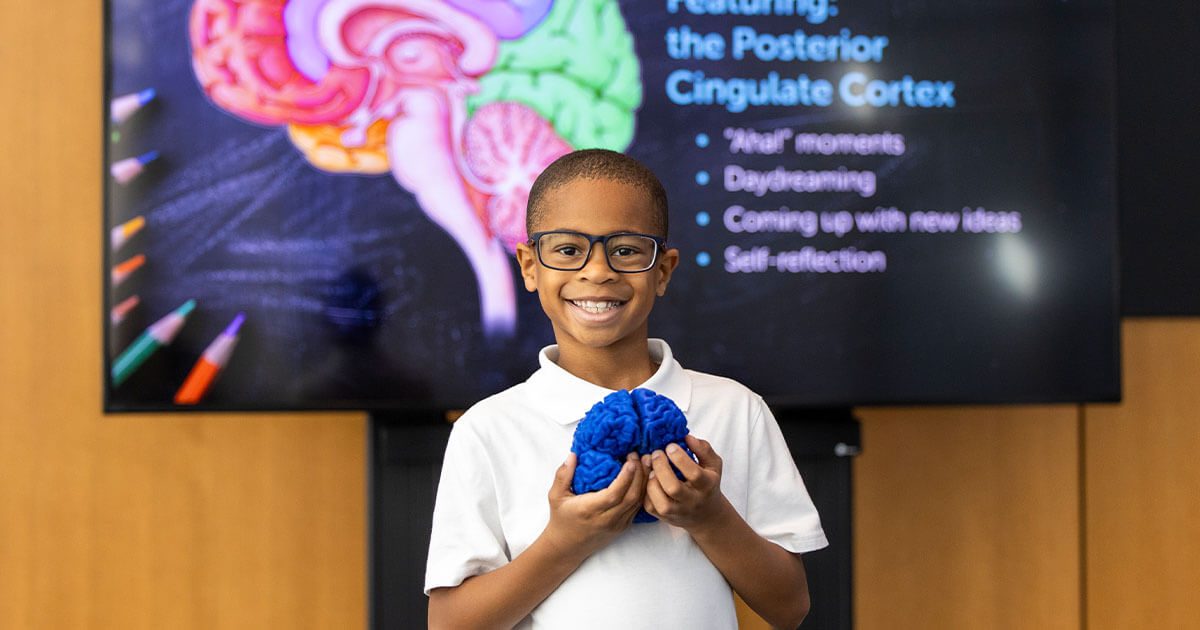
After Betsy Pilon's son was born with hypoxic ischemic encephalopathy (HIE) in 2012, she felt frustrated by the lack of information and support available in the neonatal intensive care unit. She was told to enroll her son in early intervention programs and wait and see what the full extent of his deficits would be.
When she researched the condition—which occurs at birth when a baby's brain doesn't receive enough oxygen or blood flow—Pilon found three families blogging about their experiences. “All three connected me to the Hope for HIE Facebook group, which at the time had about 200 families. Everyone had a similar experience of feeling very isolated and having no support.”
Pilon, who lives in West Bloomfield Township, MI, and other parents decided to expand the Facebook group into a nonprofit organization, and it now connects thousands of families. Over the past few years, Hope for HIE has collaborated on research projects and helped recruit and engage study participants. It also has partnered with the Epilepsy Foundation to promote legislation like Seizure Safe Schools, which would require all states to train school personnel to recognize and respond to a student having a seizure.
Many people react to a devastating diagnosis as Pilon did: by calling for more widespread information, research funding, insurance reimbursement, and support services and by addressing other concerns related to a disease. This type of action can help bring about significant change—and anyone can do it.
Advocacy can take many different forms, says Katie MacDonald, policy director for the Alliance for Headache Disorders Advocacy (AHDA) and director of operations for the nonprofit Miles for Migraine in Jericho, VT. Self-advocacy means speaking up about your needs and taking time to care for yourself. Individual advocacy might involve educating others. “Systems-based advocacy looks to make changes that affect a lot of people,” MacDonald explains. “It could be a law or how an insurance carrier determines benefits.”
MacDonald's interest in systems advocacy was sparked in 2015 when her headache specialist invited her to participate in Headache on the Hill, an annual event organized by the AHDA for people with headache disease, caregivers, and providers to meet with members of Congress to share their personal stories and make policy requests. This year, the organization is seeking funding to establish Headache Disorders Centers of Excellence within the Indian Health Service, a federal program for American Indians and Alaska Natives. It also is requesting reporting on how well the National Institutes of Health take into account a disease's cost to society (in terms of sick days, disability, underemployment, and so forth) when allocating research funding for it.
“By attending Headache on the Hill, I saw a different way to deal with this disease and to effect change,” MacDonald says. As she became more engaged in advocacy, she gained a better understanding of how government agencies operate and the different ways to influence policy.
To stay on top of political goings-on, MacDonald reads national newspapers such as The New York Times and The Washington Post and follows news sites such as Politico and The Hill. She also uses congress.gov to look up where specific bills are in the approval process, learn about upcoming hearings, and find out which members of Congress are on committees and any recent news related to those committees.
Strength in Numbers
Aligning with patient organizations is one efficient way to advocate for change, says Ana Rita Gonzalez, president and CEO of Policy Wisdom, LLC, a public health policy consulting group in Miami. “A group can help you identify where you can best apply 15 or 30 minutes of your time.” You might be asked to sign a petition, call or send an email to legislators, or create a testimonial video to show policy makers what it's like to live with that condition.
Pat Furlong of Hackensack, NJ, whose two sons were diagnosed with Duchenne muscular dystrophy in 1984 and died when they were teenagers, created Parent Project Muscular Dystrophy (PPMD), an advocacy organization. Over the years, it has involved parents, doctors, and researchers in supporting families and raising money for research. The group's efforts led to the 2001 passage of the federal MD Care Act, which allocated millions of dollars to the National Institutes of Health to support Duchenne muscular dystrophy research.
The key to their success, Furlong says, was hiring Washington consultants, setting up meetings with legislators and staff, and educating PPMD members about how to contact their local representatives. Today, she says, most groups work with lobbyists or have advocacy committees that organize meetings with legislators.
“Anyone wanting to become an advocate needs to find an organization committed to changing the system, to creating not only access to drugs or prevention but also access to local services,” Gonzalez says. National organizations and local chapters can be found by searching the web or browsing a list of organizations compiled by the National Institute of Neurological Disorders and Stroke. Another source for information is the neurologist's office, says Gonzalez, who suggests talking to people in the waiting room or asking the doctors if they belong to a disease advocacy organization.
A local issue might be that a school isn't accommodating students' medical disabilities, Gonzalez says. A national organization can advise on how to address the problem or even use that case as a starting point to track the issue across the country. Most patient organizations have a department or advocacy network that keeps members informed about bills and policies that affect the disorder in question at the local or national level.
Jill Dehlin, RN, of Lansing, MI, joined the American Headache and Migraine Association after she attended a medical conference in 2011 to find new treatments. “I wanted to make a difference in people's lives,” says Dehlin, who is now on the boards of the National Headache Foundation and the AHDA. She has gone to seven Headache on the Hill events and is especially proud of lobbying lawmakers to get the Centers for Medicare and Medicaid Services to cover use of oxygen therapy at home for cluster headaches under certain circumstances. She also volunteers with the Coalition for Headache and Migraine Patients, helping create a program called Migraine at School to educate middle and high schoolers, parents, and educators on how to support students who get migraine attacks.
For those whose involvement might be limited by mobility or fatigue, advocacy can be as simple as sending prewritten emails to members of Congress, says MacDonald.
Advocacy doesn't necessarily require a huge time commitment, says Gonzalez. “Imagine an organization with 1,000 members, and each member commits 15 minutes a week to support the organization,” she says. “You're talking 1,000 hours of volunteer work a month. That's where you see that your 15 minutes do count.”
It's not just patients and their loved ones who are involved in advocacy. The American Academy of Neurology (AAN), the American Heart Association, and the American Stroke Association successfully collaborated in a multiyear effort to expand reimbursement for telemedicine. During the AAN Advocacy Committee's annual Neurology on the Hill event in 2014, neurologists and patients met with lawmakers to explain why telemedicine would improve stroke care.
“There are not enough neurologists to meet the demand for neurologic services, so expanding reach through telemedicine is one way to address that,” says Eric Anderson, MD, PhD, FAAN, medical director of Corticare, a neuro-telemetry company in Carlsbad, CA, who was one of the neurologists who participated in the event.
The AAN's efforts paid off in 2018 when the Furthering Access to Stroke Telemedicine Act was signed into law: Medicare now must cover stroke services provided remotely to all patients. A coordinated approach by physicians and patients made a difference in the campaign, says Dr. Anderson. “When patient groups go to DC by themselves, they're told that physicians have different priorities, and when physicians go by themselves, they're told the same thing,” he says. “When we get patients and physicians together, that's a more successful push.”
Communication Advice
Advocates should tailor their messages and keep them concise when speaking with lawmakers. “Policy makers have busy schedules and often have only a few minutes to hear your case,” says David B. Watson, MD, FAAN, associate professor of neurology at the West Virginia University School of Medicine in Morgantown and a member of the AAN Advocacy Committee. “You have to be prepared and to keep the message focused on what's important.”
Thanks to the AAN's advocacy training, Dr. Watson has learned to describe what he's requesting—ways to improve the care of patients who experience migraine headache disorders—in only 15 minutes. He writes down what he plans to say and rehearses it in front of others. By doing mock interviews, he's practiced at responding to difficult questions by shifting the conversation back to his main message.
Many organizations provide advocacy training. MacDonald says the AHDA teaches advocates to share their personal stories and then transition to why certain legislation would improve things for themselves and others.
Personal stories are often more persuasive than just reciting facts, says Elijah J. Stacy, founder of the nonprofit organization Destroy Duchenne. Stacy has told his story—about how Duchenne muscular dystrophy took his older brother's life and will likely cut his short—during one-on-one meetings with lawmakers about getting more money for research. (Stacy has a younger brother who also has the condition.)
“When you understand the priorities of a particular legislator, you can play to those talking points,” says Stacy, who lives in Norco, CA. “Frame the message in a way to get them to agree with what you are asking.” For example, when speaking with lawmakers who have indicated religious leanings, Stacy focuses on how society has a moral responsibility to help the sick.
Vulnerability can be a strength in public speaking, he adds. “When I talk, I tell people, ‘My arms don't work and I feel weak,'” Stacy says. “If admitting these things is going to result in a child not going through what I went through and can save my brother's life and thousands of lives across the world, it's worth sacrificing my ego.”
Dehlin says experiencing a migraine attack at Headache on the Hill can be part of a person's testimony. “I tell advocates that if they have a migraine attack while attending a meeting, they can say, ‘This is what an attack looks like.' Many people don't know what one looks like because it's an invisible disease,” she says.
Changing policy or passing a bill can take a long time. Dr. Watson says he spent five years talking to people involved with the West Virginia Bureau for Medical Services to get the agency to provide Medicaid reimbursement for botulinum toxin (Botox) injections for people with migraine. Then, in 2019, he wrote a letter explaining Botox's benefits for chronic migraine and solicited the signatures of physicians and nurse practitioners. He created a packet that included research studies and articles showing why other health systems cover the treatment and sent it to the governor's office, his state legislators, Medicaid officials, and newspapers throughout the state. Within two weeks, the agency agreed to cover the treatment.
Other Ways to Advocate
Talk about your condition. The more people know about a disease, the more likely they are to donate money to the cause and to support policies. Start by joining a support group, says Jill Dehlin, RN, a member of the boards of the National Headache Foundation and the Alliance for Headache Disorders Advocacy.
Fill out surveys. Letting groups know your needs helps them plan strategies, says Betsy Pilon, whose son has hypoxic ischemic encephalopathy (HIE). Her group, Hope for HIE, uses surveys to help researchers collect data for trials and to learn how to support families. “If we get 500 people saying ‘This topic is important to me,' that is going to give the process more credibility to move forward,” she says.
Raise money. Encourage friends and family to donate. Participate in fun runs or other activities that help raise funds. Over the course of six years, David B. Watson, MD, FAAN, a member of the American Academy of Neurology Advocacy Committee, has organized races that have garnered over half a million dollars for headache and migraine research.
Participate in a clinical trial. Progress depends on research, and research can't happen without study subjects. Visit clinicaltrials.gov to search for studies by condition or disease.
Useful Advocacy Resources
- Brain & Life Advocacy: BrainandLife.org
- Federal, state, and local elected officials: usa.gov
- Indigenous tribes: usa.gov/tribes
- National Institute of Neurological Disorders and Stroke: ninds.nih.gov
- National Institutes of Health: nih.gov
- Public school districts: nces.ed.gov
- State health departments: usa.gov/state-health
- US Department of Health and Human Services: hhs.gov
- US Food and Drug Administration: fda.gov