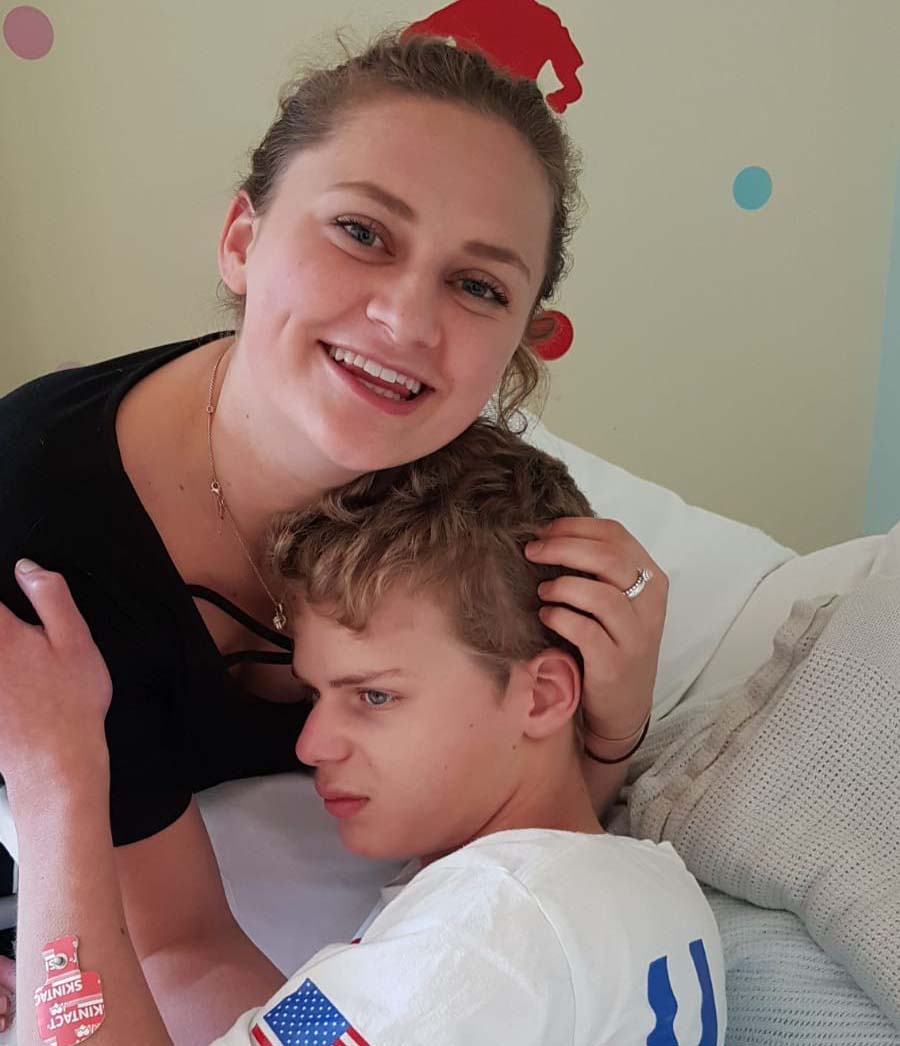
What are the challenges of living with a sibling who has Dravet syndrome, a severe form of childhood epilepsy? That is the question Lauren Schwartz, PhD, associate professor in the department of rehabilitation medicine at the University of Washington in Seattle and Zogenix, a biotechnology company investigating a treatment for Dravet Syndrome, set out to answer in a survey to families affected by this disability.
We spoke with Dr. Schwartz about what she learned.
Research has shown that having a child with Dravet syndrome is hard on families. What were you hoping to determine from the survey?
Previous studies have focused on parents. Our survey was directed at siblings to find out how they were functioning socially and emotionally.
What did you find out?
We found that one difficulty of being a sibling to someone with Dravet syndrome was not getting enough time with or attention from their parents. Another was feeling worried or scared when the affected sibling was having a seizure.
Did any patterns emerge from the survey?
A common thread was the need to talk to someone about living with a sibling with Dravet syndrome. Kids in the older age groups—13 to 17—were more comfortable sharing their feelings. The younger group—9 to 12—reported feeling uncomfortable talking to others about it.
What are some things families can do?
We hope this survey raises awareness about the needs of unaffected children and some of the risks they face including anxiety, depressed mood, and feeling isolated. The ultimate goal would be to create a system for support specifically for siblings of children with special needs. A model might be Sibshops, a workshop for siblings of children with special needs where they meet other siblings of children with special needs, play games, and find out how to handle uncomfortable situations related to having a sibling with a special needs. The workshops were started many years ago in Seattle, but are now available across the country. [For more about the program, visit the Sibling Support Project.]
How would you advise families?
I would encourage parents to talk to their unaffected children about how they are doing and to reach out to other supportive people in their lives such as teachers, coaches, aunts or uncles, neighbors—people who can be emotionally supportive when the parent is not available.
What other support systems are possible?
At conferences for families living with Dravet syndrome, I’d recommend hosting informal support groups for the siblings facilitated by someone who has expertise with the condition. Internet resources and other online communities could also be helpful.
For information about parenting both special needs children and their unaffected siblings, read “Juggling Act” in the October/November 2018 issue. For more information about support for siblings, go to Sibling Support. And stay tuned for our feature on cannabidiol for treating Dravet syndrome and Lennox-Gastaut syndrome in the December 2018/January 2019 issue.

