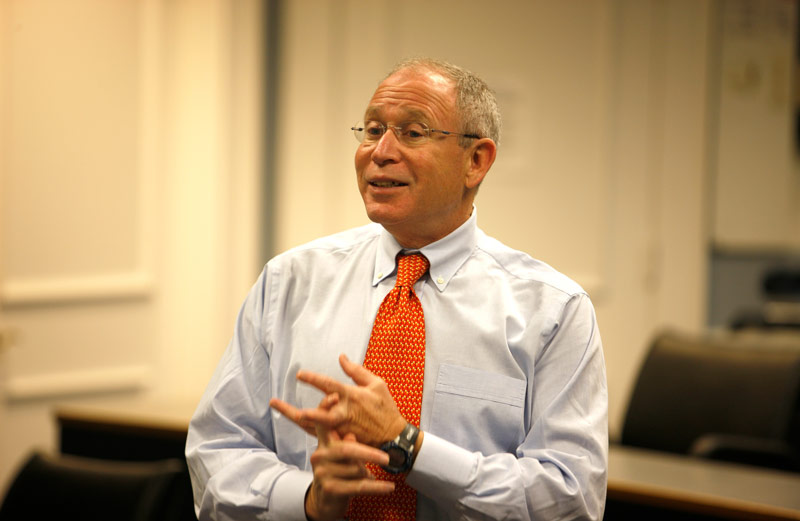
Robert Spekman as a high-powered consultant before his diagnosis.
I was diagnosed with Parkinson’s disease on January 2, 1995, at the height of my academic and consulting career. I was a professor of business administration at the University of Virginia’s Darden Graduate School of Business Administration in Charlottesville and consulted with many Fortune 500 companies. I was a stereotypical high-powered consultant, dogged in pursuit of my career, often putting it before family and definitely ahead of enjoying life to the fullest.
In my drive for continued success, I ignored early symptoms such as my shaky hand when I drank from a water bottle during tennis or my awkward gait when I ran. I was unwilling to consider that anything could derail my quest for success. After my diagnosis, I was too ashamed and embarrassed to tell my friends and my two daughters. Only my wife, my parents, and my sister knew.
Otherwise, I kept my diagnosis secret for four years, a decision that left me feeling exhausted, angry, and depressed. Finally, I sought counseling from a therapist, who helped me confront my fears and accept and claim my illness. She helped me see how damaging it was to ignore my feelings about my diagnosis. Thanks to her, I was able to examine the anger, hurt, and vulnerability I had buried deep inside. I learned that my anger was really fear—fear of a future I couldn’t control.
That first step opened a door to healing. It allowed me to confide in my children about my disease and not feel embarrassed or that I was weak because of it. Before therapy, I thought having Parkinson’s made me vulnerable and less of a dad.
My healing journey continued as I embraced complementary therapies such as yoga, massage, physical therapy, meditation, and acupuncture—activities my former high-powered self would have dismissed out of hand. The new me found that yoga eased my stiffness and that meditation reduced stress and kept me centered.
The more I accepted my situation, the more it seemed to improve. In 2006, my symptoms improved when I underwent deep brain stimulation on the left side of my brain. Four years later, I had surgery on the right side.
After surgery, I went from taking 34 pills a day to just a couple of pills as needed. After struggling with my diagnosis and its effect on my body, I finally accepted that its progression was out of my control. Years of therapy and mediation shifted my approach toward life. I am focused more on living in the moment and less on worrying about the future.
In the years before I retired in 2014, I would speak to groups of executives about work/life balance and use my own story as an example—the hard-charging consultant whose diagnosis of Parkinson’s disease helped him slow down and appreciate life.
In facing my fate I’ve rediscovered hope. To help others do the same, I published My Journey with Parkinson’s Disease, a book that chronicles my acceptance, in 2015.