Giving Back
A grandmother was always there for her granddaughter. After she was diagnosed with dementia, the granddaughter repays the kindness.
A grandmother was always there for her granddaughter. After she was diagnosed with dementia, the granddaughter repays the kindness.
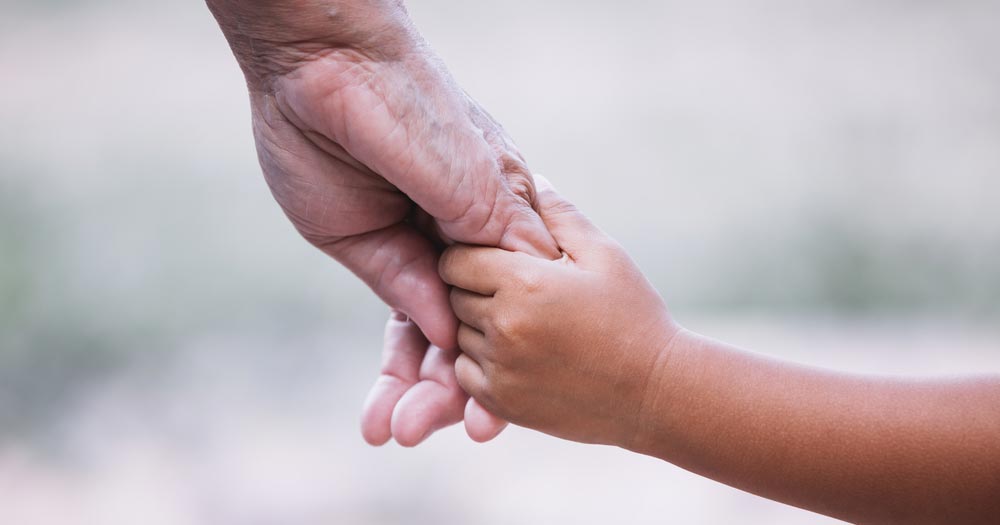
I grew up in Mumbai, India, and had a close relationship with my paternal grandmother. Even though she had eight grandchildren, I like to think I was her favorite.
Even if she had no favorites, I appreciated that she defended my right to be different. I remember a time when I was 15 and we went shopping and I tried on an unconventional dress. It wasn’t like the structured, color-coordinated dresses I usually wore. It was free flowing and kind of daring for city life. I was nervous about it, but when I asked my grandmother her opinion, she told me that as long as I was comfortable in it, I shouldn’t care what other people thought.
In that sense, she was ahead of her time. Otherwise, her life was conventional. She had five sons and one daughter and was a stay-at-home parent and homemaker. She was also very religious, spending up to three hours a day in a temple she created in her house.
My grandmother was a good cook and liked to experiment with different cuisines and insisted that I sample whatever she cooked. I hated being fed so I was hesitant. I think that was part of our bond. She would insist, I would resist, she would persist, and eventually I would relent. It was our way of showing our love—her insisting and me finally relenting.
I felt protected by my grandmother. One time we were at her house when my mother started berating me for something. My grandmother told her never to physically or verbally abuse me. She was a formidable and intimidating presence, even to my mother, who was fierce in her own right.
My grandmother was beautiful. Her complexion was flawless, and she wore a big red bindi on her forehead that I adored. When I looked at it, I felt I was looking at the center of the universe. Whenever I had the chance, I would stand in front of the mirror in her room and try to recreate her bindi on my forehead.
I never thought I’d be able to help my grandmother as much as she helped me, but that time came when she was diagnosed with dementia in her late seventies not long after my grandfather died. I visited as often as possible and did what I could to comfort her. I would read scriptures from the Bhagavad Gita and cook lentil soup.
It was difficult to watch this strong resilient woman grow meek and disengaged. I continued to love her unconditionally as her health deteriorated. I also saw sparks of the grandmother from my childhood such as the day she got out of bed and walked to her home temple, where she sat and meditated and prayed for what seemed like hours.
When I asked her about it, she said she was praying for what is right and just, which in her opinion was anything that makes you a bigger, bolder, and better person. I realized then that she was still and always would be my Iron Lady with or without dementia.
As her disease progressed, she stopped eating and drinking and was bedridden. In her final days, she struggled to arrive at a safe and serene place. On the day she died, we placed dozens of candles in her room, filling it with light and fragrance and helping her find ultimate peace. I honor her memory by living life on my own terms and never compromising to fit in. I think my grandmother would be proud.
Trishna Patnaik lives in Mumbai, India, where she’s a self-taught professional artist. She conducts painting workshops in her hometown and other cities in India.