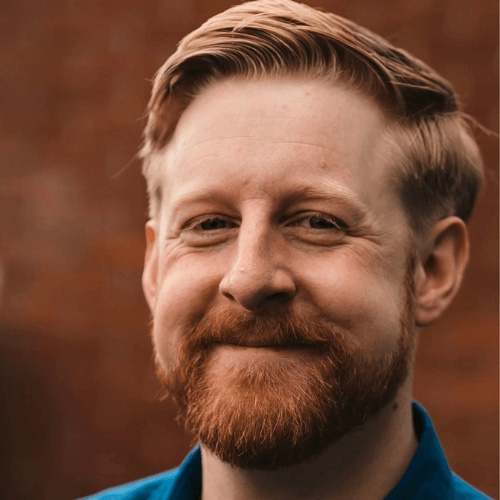
In this episode of the Brain & Life Podcast, co-host Dr. Katy Peters is joined by award-winning actor and playwright Michael Patrick, who shares his journey from studying science at Cambridge to becoming a celebrated actor. Michael also discusses his diagnosis of Motor Neuron Disease (MND), his participation in a clinical trial, and how he continues to find hope and support from his network. Dr. Peters is then joined by Dr. Matthew Harms, an Associate Professor of Neurology at Columbia University Irving Medical Center. Dr. Harms explains the complexities of diagnosing Motor Neuron Disease and ALS, the genetic factors involved, and the importance of early detection and treatment. He also discusses the importance of advocacy and what exciting research is happening now.
Follow and subscribe wherever you get your podcasts!
Apple Podcasts Spotify Libsyn
Additional Resources
Other Brain & Life Episodes on this Topic
- Focusing on Hope: Answering your ALS Questions with Dr. Rick Bedlack
- Making the Years Count with Brooke Eby, Influencer Living with ALS
- Finding Strength in ALS Advocacy with Podcaster Lorri Carey
Follow us!
- Guest: Michael Patrick @MichaelPatrick314 ; Dr. Matthew Harms @OSDIB_CUIMC
- Hosts: Dr. Daniel Correa @NeuroDrCorrea; Dr. Katy Peters @KatyPetersMDPhD
- X: @BrainandLifeMag
- Instagram: @BrainandLifeMag
- Facebook: Brain & Life Magazine
We want to hear from you!
Have a question or want to hear a topic featured on the Brain & Life Podcast?
Record a voicemail at 612-928-6206, or email us at BLpodcast@brainandlife.org.
Episode Transcript
Dr. Correa:
From the American Academy of Neurology, I'm Dr. Daniel Correa.
Dr. Peters:
And I am Dr. Katy Peters, and this is the Brain & Life Podcast.
We are rolling into 2026. I'm being very mindful that I have to write 2026 instead of 2025. I always have to practice that. And I've been trying to keep my resolutions. My big resolution this year is finishing a new book every month. I'm on track, doing okay. I used to be competitive with reading books when I was much, much younger in the distant past, and I feel like I need to learn from those old experiences. How is your new year shaping up, Daniel?
Dr. Correa:
I like that one. I mean, I'm always trying to expand my reading time. For me, often it's just with everything else that we're doing for work, sometimes my eyes just get tired, so I'd listen to a lot more audiobooks and occasionally will do more of my reading at relaxed times when my eyes aren't super tired from the day.
But this year, I mean, it's been a blustery and cold start, and I really feel like on those bitter cold days just makes you so aware of the many people who have unstable housing and have food and other needs during those times.
And happily, at least with my institution, we were able to go out and during Martin Luther King Service Week we could pick one of the organizations that we coordinate with. So I was out there on a very cold day, but just as much as I felt cold and my fingers were numb and I kept going in and out to warm up, I was aware of just the people that were showing up were in that much need that they were out there for clothes and food and in a time that they really had no other option.
But for me in terms of resolutions, I'm one of those annoying people, I don't usually focus on resolutions specifically. Maybe it's a trauma from having failed too many times in the past, but I usually like to pick, and I guess I like the idea of continuing to work and grow in certain areas and then letting go of certain things.
So I think of it less as a resolution and thing that I have to keep each week or each day or each month or something like that. In general, most of the things I like, I want a good solid B plus, B minus, but if I'm consistently getting that 80%, then probably I'm growing more. And so I think of it as how I want to grow and what I'm leaving behind.
So for me in this year, I've been continuing to commit to get outside, spend some time in nature, whether it's exercise or even just a walk and getting some sunlight, and trying to do that at least five days a week, which has been a tough start with the cold.
I'm working on growing on my personal relationships with some of my guy friends that are scattered around the country and more intentional time for us to talk and connect and opening up from where I'm at with the grief and challenges that I've had in the last year and not just getting on the phone to celebrate achievements. We tended to always be that, just to laugh together and share only the good and sometimes leaving out some of those personal things that I think really deepens our connection.
And I'm trying to leave behind having my stress level fluctuate with the rollercoaster of all the societal leaders and events. I'd like to find ways to support our local communities and international communities that are impacted by so many of these changes, but not have myself at the whim of the news, whether it's online, TV, or social media. It's just, it's not the place where I feel like I'm getting anything that I can give back out to others or that it's helping me in any way personally.
Dr. Peters:
And I think that's so well said, Daniel. I mean, I think one of the things, it's all really about personal development, how you sort of tier those steps. And I think you can really learn from past experiences and use the experiences to sort of inspire your next steps in personal development.
And sometimes you'll have something that is a roadblock in your way, or maybe it's an illness or maybe it's a loss that can reframe and maybe inspire that personal development.
And our guest today on the podcast indeed did pull from his own life experiences to inspire and shape his acting and writing. And it's award-winning actor and writer, Michael Patrick. He's out of Belfast and he starred in and also adapted Richard III, the Shakespearian classic, to include his own neurologic illness which is a form of motor neurone disease. For example, when Richard III refers to, "My horse, my horse, my kingdom for a horse," it is Michael's wheelchair that is in fact his horse.
And he talks about his condition and how he has been inspired to adapt that play in particular because of his experience. And he's also writing new projects that he hopes that will be on BBC that will be about motor neurone disease or have characters with motor neurone disease. Next we will speak with Dr. Matthew Harms about MND and also about clinical trials for motor neurone disease.
Hello, Brain & Life Podcast audience. Today we are joined by actor, Michael Patrick. Now, a little bit about Michael Patrick, he is an award-winning actor and playwright, and he wowed audiences in his portrayal of Richard III in the Shakespearean classic at the Lyric Theatre.
Drawing from his own life experiences, he's active also as a writer, and he co-wrote the BBC series, My Left Nut, about his teenage years. And in February of 2023, he was diagnosed with a motor neurone disease, but all the while he's continuing to act and write and even had some new projects based on sort of his experiences called My Right Foot. Michael, welcome to the Brain & Life Podcast.
Michael Patrick:
Thanks so much for having me on. Yeah, it's great to be chatting to you. Thank you.
Dr. Peters:
Absolutely. So I just gave you a short introduction. Can you tell us sort of where you're joining us from today and a little bit more about yourself?
Michael Patrick:
So I'm joining you from a flat in Belfast where I live. Acting for 10 years or so now and writing for about seven now.
Dr. Peters:
Oh, great.
Michael Patrick:
Yeah. So I was diagnosed in February. I said to my writing partner, Oisin Kearney, we write everything together, and we said, "Right, we want to keep writing, we want to keep working together." What I want to do and one of those things was Richard III. Well, a Shakespeare play in Belfast, wanted to do one, and we thought Richard III would be a good one, and so we put it on.
Dr. Peters:
You may have to correct me on this if I'm wrong. I have that you originally studied science at Cambridge University and then transitioned to the theater arts. Is that correct?
Michael Patrick:
That is correct. Yeah. I studied physics and material sciences.
Dr. Peters:
Oh, that is so cool.
Michael Patrick:
Studying is a strong word for what I did there. [inaudible 00:07:39] and did stand-up comedy.
Dr. Peters:
What inspired sort of the transition from, I guess, physics to doing acting?
Michael Patrick:
I always enjoyed acting. I always did it on the side at school. And then one of the reasons I applied to Cambridge was because of the theatrical history there with the Footlights. And all I did when I was at Cambridge was act, so it wasn't like a transition, it was more of a keep doing what I'm doing.
Dr. Peters:
I like that. And I think you and I are similar in a way, because I guess I studied the sciences, but now I'm doing a little bit of the arts in this podcast. I don't know if you could call it artistic, but.
Michael Patrick:
[inaudible 00:08:17]. It is absolutely.
Dr. Peters:
I like that. So you mentioned that you're a writer and you have a writing partner. Can you tell us a little bit more about that process for you and how that works to work with a partner?
Michael Patrick:
Yes. We met at Cambridge. Oisin was in politics, but we were at the same college with the Churchill College and he directed me in a few plays there. And then he trained in TV and filmmaking and documentary, mostly actually trained in that. And then I went to drama school for a year, trained in acting. Moved back to Belfast and met up again and started writing together. We normally write on Google Docs so we can write the same thing at the same time, but it works well.
Dr. Peters:
I agree. I like Google Docs. That's what we use when we riff on our introductions for our podcast, so I feel like there's so the similarities, Michael. I'm just so impressed.
And in February of 2023, you were diagnosed with motor neurone disease. Can you sort of tell us sort of how your first symptoms led you to seek medical attention?
Michael Patrick:
So I was doing a play in the Dublin Fringe which would have been 2022 in September. It was called Lie Low by Ciara Elizabeth Smith, it's brilliant play. And I had to dance on it and I kept falling over, tripping on my shoes. I kept blaming my shoes, kept saying, "Why they got me dancing in these big chunky shoes? It's not fair." But it didn't get better.
And then I went to my wife's auntie who's a physio and she said, "You should probably go to the doctor because I found that my dad died of MND and his brother died of MND as well." And then, yes, it was a foot drop basically I started with. I couldn't lift my right foot. I couldn't point my toes to the ceiling and then that was the diagnosis came to me in February.
Dr. Peters:
Wow. And what are the specifics of your diagnosis of motor neurone disease? Have they discussed any more from what that means for you?
Michael Patrick:
Yeah, so it started with foot drop [inaudible 00:10:06] right leg, started using a walking stick and then two sticks. And then a year later I was full-time in a wheelchair.
Dr. Peters:
Oh my gosh.
Michael Patrick:
And now my arm's going as well, so I can't really lift my arms very well. And my breathing's going, [inaudible 00:10:19] up my voice. So much actually this week I'm waiting for a bed to go in and get a tracheotomy.
Dr. Peters:
Oh my gosh.
Michael Patrick:
I'm breathing, which isn't great, but sure. Needs must.
Dr. Peters:
Well, we wish you the best and hope that you just recover from that procedure. Any procedure is very serious, but it sounds like your providers are trying to help you the best way they can.
Michael Patrick:
Yeah, so it's not really a done thing to get an elective tracheotomy with MND in Ireland. I'm on a drug trial, so they're trying to give me as long as possible for the drug trial to work. So that's why they're suggesting I get tracheotomy.
Dr. Peters:
Okay. Interesting. And can you tell us more about that clinical trial? And a lot of our listeners are going to be curious about what it means to be just in a clinical trial. Can you tell us more about your experience?
Michael Patrick:
So I have the FUS MND familial inherited version of four genes that are known to cause MND and familial MND. One's the FUS gene. I think it's one of the rarer of the four.
Dr. Peters:
Okay.
Michael Patrick:
My family seem to be the only one in Ireland with the gene.
Dr. Peters:
Oh.
Michael Patrick:
So I'm on a trial that specifically targets the FUS form of MND. And I was on it for 16... I started in February. No, sorry. I was diagnosed in February. I started trial in September. But for the first 16 months it looks like I was on placebo. So I've only really been getting the actual drug since March '25.
But since then, in October, I saw the first reversal of symptoms, which is really exciting because that doesn't happen with MND patients. So I can now wiggle my right foot, toes the first time in about two years. It's small. And my breathing's still going unless I get tracheotomy, and my arm's still getting weaker, but fact is there is some reversal there, which is really exciting.
Dr. Peters:
That's amazing and we just hope that it continues. And you're still on the drug now to this day?
Michael Patrick:
Yep. [inaudible 00:12:19] a couple weeks ago in Dublin to get the drug. It's a lumbar puncture, so it's not the most comfortable, but it's small price to pay.
But it's amazing being on a drug trial. The level of care you get and support. So even the first 16 months when I was in the placebo, it was still great because you're still getting all class care from top neurologists.
Dr. Peters:
And clinical trials are so important for our patients. In full disclosure, I'm a neuro, I take care of patients with brain tumors and I run clinical trials for those patients, and so I know how important it is for them to have those options. And so I just would say kudos for you for, first of all, participating in a clinical trial, and next for sort of educating our listeners. So I really appreciate it.
Michael Patrick:
Any hope, especially with MND, there's no real cure or treatment at the minute, so it was this or nothing, but it does give you hope, which is a good thing.
Dr. Peters:
Hope is so important. And what about your support network? How have they sort of helped you also have that hope, and like your family, your friends? I guess it would also be your fellow actors, right? The people that were in your plays with you?
Michael Patrick:
Everyone's been amazing. I've got a great support network with my family and my wife. I got married two days before I started the drug trial, so she's amazing. My friends from school recently raised 100,000 pounds through a GoFundMe account for me for [inaudible 00:13:44] support and stuff. So I have a lot of support. Family and friends are really amazing and I can't thank them enough.
Dr. Peters:
That is just amazing. I think that's just so great. Now, you acted in Richard III and you won an award for that. Can you tell us a little bit about that experience?
Michael Patrick:
Yeah, I love Shakespeare, always have. One of my reasons I wanted to get in the acting was to do Shakespeare. And to do it on my home stage at the Lyric in Belfast was unbelievable. And we tweaked it so that normally Richard III was born disabled, [inaudible 00:14:19] the line on it, it's, "Thrust into this breathing world, scarce half made up." But we changed it to be, "Sent out of this breathing world, scarce half made up."
Dr. Peters:
Ah.
Michael Patrick:
So we small tweaks like that. So he has MND essentially in it. I never see the words ALS or MND in the play, but we tweaked it so that he was recently diagnosed with the terminal illness, which sort of reflected my story a bit more.
See, after I was diagnosed, I put up a Facebook post on Twitter and all just saying, "Look, I've got MND now. My limp is very authentic. If anyone wants to cast me as Richard III, please do." And Jimmy Fay from the Lyric Theatre in Belfast got in touch, was like, "You serious with this?" I was like, "I am now."
And yeah, me and Oisin, writing partner who's also director, met up with him and he was like, "Yeah." And we told him how we wanted to do it and he agreed. And, I mean, it was amazing. At the end of the play, normally ends with Richard III being killed by Henry VII.
Dr. Peters:
Yeah.
Michael Patrick:
And Henry gives this big speech about how evil's dead and I'm the best, I'm the king now. But for us it was a weird ending because it was like, I don't know, I don't really care about English kings really, being an Irishman. I'm like, "Well, he's just another king. Who cares?"
So after that, after Richard dies in the play, I got up and it was me. I give another speech which we cobbled together from several different plays and sonnets. It was about time and I'll read it out to you here now, sure.
Dr. Peters:
Great.
Michael Patrick:
"Woe, destruction, ruin, and decay. The worst is death, and death will have his day. Oh, gentleman, the time of life is short. To spend that shortness basically for too long, for never resting time leads summer on to hideous winter and confounds him there. Time's the king of men. He's with their parent and he's their grave, and he gives them what he will, not what they crave. So make war. Make war upon this bloody tyrant time. That we shall die, we know. 'Tis about the time [inaudible 00:16:28] days out that men stand upon, for death and necessary end will come when it will come."
So I read that out as me, and that was the end of the play. It wasn't as Richard III, it was me. I got back up in the wheelchair and came out center stage and read that out.
Dr. Peters:
That was awesome. And, I mean, I guess I'm lucky because I got the soliloquy from the end of the play today and so will all of our listeners. Thank you so much for sharing that. That's so special. What is your favorite line as Richard III?
Michael Patrick:
"Was ever woman in this humor woo'd? Was ever woman in this humor won? I'll have her, but I won't keep her long." Which is after I was seen with Lady Anne, and Richard's just basically killed Lady Anne's dad and her husband.
Dr. Peters:
Uh-oh.
Michael Patrick:
And then by the end of the scene with her, she agrees basically to admire him, and he goes to the audience and he's like, "Eh. Ever woman [inaudible 00:17:22] won." And it's just, it's so blatant and brazen. I loved that every night. It got a big laugh.
Dr. Peters:
Well, I agree. I think it's a very... I love how in the play he actually engages with the audience, and so if you're sort of in on what's going on in his psyche.
And I will tell you, Michael, this has been a pleasure to talk with you today and I know you've got a lot going on. What is sort of your next steps in acting? What are you planning on doing next?
Michael Patrick:
To be honest, I don't think I'll ever really act again.
Dr. Peters:
Oh, okay.
Michael Patrick:
With the tracheotomy going in, it's going to be hard to talk and everything like that, but I'm still writing. I'm currently writing a TV series about a man in his thirties who gets MND. Don't know where I got the idea from. It's called So You're Going to Die.
And we did a short film version of it last summer with Conor MacNeill, he's in Industry if you watch that, and Jimmy Nesbitt in it. And it was brilliant so we're currently shopping that round to broadcasters, see if they'll pick it up as a series.
Dr. Peters:
Well, I'm going to say it's going to happen. I think that's a great idea. I can't wait to watch that.
Again, Michael, thank you so much for the discussion today. I really appreciate it. It was just great to talk with you. Thank you for sharing that soliloquy, and have a lovely day. And I also want to thank our listeners.
Michael Patrick:
Oh no, thanks very much.
Dr. Correa:
Can't get enough of the Brain & Life Podcast? Keep the conversation going on social media when you follow @brainandlifemag or visit brainandlife.org.
Dr. Peters:
Hello again, Brain & Life Podcast audience. Thank you again for joining us today. I am your podcast co-host, Dr. Katy Peters, and I'm delighted to introduce our medical expert, Dr. Matthew Harms, who will be discussing motor neurone disease, also known as MND.
So Dr. Harms is an associate professor of neurology at Columbia University Irving Medical Center. He is specially trained in neuromuscular medicine and clinical neurophysiology, and we'll learn more about those two specialties.
And in addition to seeing patients, he has a research laboratory that really hones in on the diseases of the motor neuron, particularly ALS, which we've talked about before, spinal muscular atrophy, and also hereditary motor neuropathies. And he's been able to identify some important genes that are associated with the development and the causes of these conditions. Dr. Harms, welcome to the podcast.
Matthew Harms:
Thank you for having me, Dr. Peters.
Dr. Peters:
Yes. And I just gave a short, brief introduction. Can you tell us where you're joining us from today and maybe a little more about yourself?
Matthew Harms:
Yes. So I'm joining you from New York City where Columbia is located. I came here a decade ago really to focus on the genetics of ALS.
So I'd been working in a neuromuscular genetics laboratory running it at Washington University and realized that the cost of sequencing had gotten cheap enough that we could start to apply it wholesale to patients with ALS and other motor neurone diseases, and that we were now able to identify not just the genes that all by themselves or the mutations that all by themselves could trigger ALS, but the genetic factors that could increase the risk by varying degrees.
So that's what I focus on, identifying the genes that have mutations where all by themselves they can cause ALS, but then also those that increase the risk of ALS. And excitingly, over the course of the last five or six years as technologies have advanced for therapeutic development, to be able to think about ways that we could immediately translate that into treatments that could turn off the bad actor genes and hopefully slow down or halt the progression of the ALS disease.
Dr. Peters:
And that's just so important. I mean, I think I'm in the world of neuro-oncology and we learn a lot about the genes associated with that illness, but we want to make it actionable. And I think that that's so important, so kudos to you.
Before we get into sort of some of the interesting clinical trials that you're doing and some interesting science, can you just give us the basics of what motor neurone disease is?
Matthew Harms:
Sure. So here in the United States, motor neurone disease is most commonly called amyotrophic lateral sclerosis or ALS, sometimes referred to as Lou Gehrig's disease. In the rest of the world it's called motor neurone disease or MND, like you mentioned in the introduction.
This is a disease where the upper motor neurons in the brain and the lower motor neurons in the spinal cord and brainstem deteriorate. And in the vast majority of situations, we don't really know why that's occurring.
We know the things that are going wrong inside of the neurons, the pathways that are messed up that are leading to the neurons eventually dying, but we don't know what the trigger is for about 85% of the patients that come through the door.
In the other 15%, we're able to identify a genetic explanation, an abnormality in a gene that is severe enough that it disrupts the function of the neurons and that cascades into the neurons dying.
And so when those neurons die, people experience weakness, they develop muscle fasciculations with that weakness. Sometimes it's a slurred speech, sometimes it comes on in the hands and makes manual dexterity with typing and things like that challenging. Other times it starts off in the ankles and people show up tripping over their feet or having difficulty going upstairs. So it can present in a lot of different ways, but the underlying process for everybody is the loss of those neurons, the ones that we're now with our therapies trying to save.
Dr. Peters:
And we've had a chance to interact with Brooke Eby, she was a wonderful guest who had ALS that has done a lot in the advocacy space. So we just know how this is just a really tough, insidious disease when people develop. Now, what are some risk factors for developing motor neurone disease?
Matthew Harms:
Sure. So there are a number of risk factors, and we're just really on the cusp of being able to understand these in detail. We know and have known for a very long time that having a relative who had Lou Gehrig's disease or ALS is a very strong risk factor, predominantly because there's oftentimes a shared genetic causation. And not everybody with an ALS gene mutation goes on to develop ALS, but it's the majority of people who will go on, and so that's the very strongest risk factor.
With our genetic studies these days, we can also find genetic differences between people. I won't call them mutations because they're not all by themselves sufficient to cause the disease, but they do increase the risk or make your motor neurons susceptible to developing ALS. And we can identify some of those now in a broader number of people.
And then there are some environmental and lifestyle factors that have a minor increase in risk. So playing an elite sport like football or soccer or running ultra marathons, things of that nature can increase the risk of ALS a small amount.
Having served in the US military increases the risk of developing ALS, which is why the Department of Defense and the Veterans Administration are such strong supporters of research and care for people living with ALS.
And then there may be some environmental toxins that increase the risk to a small degree, and those have been really hard to get at and the research is just starting to emerge on those and we're learning a lot more as each year passes.
Dr. Peters:
This is fascinating. We always look to Lou Gehrig and we think of baseball players like Catfish Hunter who developed these kind of illnesses and what happened to them, so it is sort of interesting with the athletes.
And there's a lot of new data even around the world of cancer in elite athletes that is coming out, particularly with colon cancer, young athletes had colon cancer. So I think we all need to sort of come together to sort of understand the pathogenesis and the processes.
Now, once somebody thinks they may have this and they go to see especially neurologists like you, what tools do you use to sort of hone in on the diagnosis and make the diagnosis for those patients?
Matthew Harms:
An ALS diagnosis can be challenging to make because as I mentioned earlier, it comes on in multiple different ways, and some of those ways mimic very common disorders. Right? So if it begins in your hand, it can look like carpal tunnel, which is obviously very common. If it comes on with difficulty walking, it can often look like a pinched nerve in your spine, which is also an extraordinarily common thing that happens to people as they age.
And unfortunately, at this point, we still don't have a diagnostic test that says, yes, this is ALS. We're looking for that, doing lots of research to try to identify things in the blood or in the spinal fluid that would tell us, yes, this is ALS and not any of the things that can look like it, but we're still without that.
And so a diagnosis of ALS is made when you have symptoms that are pretty consistent with it. We use something called an electromyogram and a nerve conduction study to look for other potential explanations for the weakness or the atrophy.
And then oftentimes doctors will send off gallons of blood, not literally, but tube after tube of blood, looking for any of the things that have ever been shown to mimic ALS or look like ALS at the very beginning. So looking for autoimmune or infectious causes of nerve damage.
And then if those aren't identified, then statistically it's highly likely that it's ALS, and then usually we follow people with a working diagnosis of ALS for a number of months before knowing for sure whether that's what it is or not.
And I think the challenging thing for ALS is that oftentimes people don't make it to a specialty motor neurone disease center until they've already had symptoms for a year or more. And sadly, here in the United States, that number is even worse for people of color or who live in rural areas and don't have access to neurologists.
So we need to speed the time to diagnosis, and that means basically expanding the number of neuromuscular neurologists who are available to quickly see people with suspected motor neurone disease or symptoms that look like they could be.
And the reason for that is because excitingly, for one of the more common genetic forms of ALS, we now have an FDA-approved medication that, if started early, can make a huge difference. And we all have patients whose disease progression has been halted and in some circumstances they've been able to regain some strength by use of this medication.
It only applies to people who have a mutation in the SOD1 gene or SOD1 gene, but that's about 2 to 3% of people with ALS. So we are really encouraging people to work as fast as they can to make early diagnoses of ALS or suspected ALS. And even at the stage where you're not quite certain, to get genetic testing, especially for that one gene that's now so treatable so that any therapy could be started early.
Dr. Peters:
So that is just amazing. And I talked to Dr. Rick Bedlack, we talked about the identification of that gene and he even talked about the rare reversals that can happen in some patients. But I would ask you, what is the accessibility? You mentioned sort of the accessibility problem. How much are these genetic tests to do this and how readily available is this for neurologists or for people that are practicing neurology? Can I just order an SOD test or how does a patient get it?
Matthew Harms:
Yeah. So at the moment, the company that manufactures the drug for the SOD1 gene is sponsoring testing at Invitae Genetics.
Dr. Peters:
Okay.
Matthew Harms:
So we're fortunate here in the United States and I think a couple of other countries where the drug tofersen is available to have access to free genetic testing. And yes, it can be ordered. The website's pretty easy to navigate.
So somebody who's suspecting a diagnosis of ALS should conduct genetic counseling for the individual. Right? There are implications. The SOD1 gene is not the only one on the genetic testing panel that gets done. So something else could show up that you would want a patient to have had good genetic counseling about so that there are no surprises and everybody knows what to do with the information when it comes back. But then yes, it can typically be ordered by any neurologist through that company.
Other places aren't so lucky and don't have the free genetic testing. Thankfully, these days to sequence the SOD1 gene, even if you used the old-fashioned slow route, would be probably less than $100 to actually perform. What a testing company charges is a different matter, but it's not an expensive test to find out if you have an SOD1 mutation.
Dr. Peters:
That's great. That's very hopeful. I think you're bringing so much hope. And beyond sort of the SOD1 gene, what are sort of the basics of treatment for motor neurone disease?
Matthew Harms:
Yeah, so we think that as ALS emerges, there are several components. One is neuroinflammation, and a lot of our clinical trials are designed to figure out how we can block that neuroinflammation without getting rid of the helpful inflammation.
Dr. Peters:
Right.
Matthew Harms:
There's helpful and harmful, right? And you have to finally split that. We think that the lower motor neurons in particular may be, as they're ill with ALS, being overdriven by the upper motor neurons. And that overdrive uses a neurotransmitter called glutamate.
And so we have a drug called riluzole which tries to inhibit that glutamate effect to try to allow the lower motor neurons to not be under the added stress of the upper motor neurons as much. That does slow down the disease, though we need to keep working because it's not as effective as we need it to be.
And there's some emerging information from Japan that actually injectable vitamin B12 in very, very high doses-
Dr. Peters:
Wow.
Matthew Harms:
... also called methylcobalamin, might be effective at slowing down the disease and allowing people with it to live longer.
And then I think excitingly, the technology that allowed for the treatment of the SOD1 gene that we were just talking about is relatively applicable to any or most genetic forms of ALS.
And so at Columbia, under the direction of our center director, Dr. Neil Shneider, we've been developing similar molecules, similar therapies for most of the genetic forms of ALS. So we think that there are probably a dozen genes that mutations can cause ALS all by themselves, and so we're systematically attacking those genes with the same technology as the tofersen medication for SOD1.
So what we hope for is that in those other genetic components, the FUS gene, F-U-S, the TARDBP gene, the CHCHD10 gene, the ANXA11 gene, the KIF5A gene, the list goes on of the ones that we're developing these molecules for in partnership with a nonprofit called n-Lorem. And those are all moving forward very quickly because the technology allows for rapid development.
Dr. Peters:
Well, you mentioned the FUS gene. That's what Mr. Michael Patrick has and is presumptively associated with his motor neurone disease. He is in a clinical trial. Could you tell us a little bit more about the particulars of this gene and what are the clinical trials in that space?
Matthew Harms:
Yeah, so the F-U-S gene or FUS gene was one of the first ALS genes found. So after SOD1, there was TDP-43 and then FUS. So really it's kind of the third one that we've known about. And one of the characteristics of this gene is that it can cause ALS onset in childhood.
Dr. Peters:
Oh.
Matthew Harms:
So the youngest patient that we've seen was 11 when they began developing symptoms, and it's relatively common to cause symptoms in the teenage and early 20s.
There are a subset of patients that don't develop ALS until their late 30s, 40s, and 50s, but this gene is particularly known for being pretty diabolical by having the possibility of coming on so early.
And there are two groups of people with FUS ALS, those early-onset cases where the mutation in the gene actually arises probably in the embryo or the sperm or egg. And so there's no family history, so people oftentimes don't even think about the possibility of ALS because the person's so young and there's no family history.
And then in the second group are people where the symptoms come on later and there often is a family history in that circumstance because someone else has had it. People think about ALS sooner, and we oftentimes get to the diagnosis sooner in people with later onset.
And so here at Columbia, Dr. Shneider had a patient with FUS, FUS ALS, a young woman, and went to the company that develops these ASOs called Ionis and asked if they had any, if they'd developed any, and sure enough they had, but weren't pursuing it as a clinical drug, and so they allowed Columbia to take that role on.
And so we developed Jacifusen, as it was called then. Now it's called Ulefnersen. And it eventually established that it was very safe to give by some very heroic and brave individuals who took a chance and got this as an experimental therapy.
And once we showed that it was safe, then it made sense to do a clinical trial, and so that's the FUSION clinical trial that I believe Mr. Patrick is participating in. And that's a global study that has already enrolled all of the people that it needs to enroll to get an answer.
And we're hopeful that by this time next year we'll have a very clear-cut answer as to whether this antisense oligonucleotide Ulefnersen works as well as we're all hoping and praying that it will.
Dr. Peters:
Well, we hope to have you back in 2027, maybe before the AAN, and see, or at the AAN, and you can tell us the results.
Matthew Harms:
Yeah, absolutely. We're all very excited to see. We published a paper earlier this year describing the first 12 people that received Jacifusen, Ulefnersen. It was an open label study, so we can't make firm conclusions, but we saw unexpected stabilization in some of the patients. And I think excitingly, we saw neurofilament levels go down, which is something that was associated with recovery or stabilization in the SOD1 antisense oligonucleotide. So we're hopeful that that also predicts an effect on the disease for the FUS gene.
Dr. Peters:
This is just very exciting because I remember when I was trained in diagnosis of ALS, all we really had was riluzole. And so just to see how sophisticated the development has come is amazing and is very helpful for our patients.
And where our patients sit is usually in the advocacy space. We know about so many great advocacy campaigns around ALS, what Michael Patrick's doing with motor neurone disease in his lanes in acting and writing. Can you tell us from your perspective as a physician, why is advocacy so important in this space?
Matthew Harms:
Well, ALS is still a very rare disease with maybe one in a 1,000 individuals having it. Maybe someone will know someone, maybe they won't. And so we still have to, even though the Ice Bucket Challenge kind of briefly put it on people's radar, we have to keep it front and center so that people will remember it when it comes time to make funding decisions and to dedicate the resources that are necessary.
And I think you're right, when I trained, ALS was just a diagnosis and then you moved on to palliative care, but now we have things that we can do and that can be very substantively change how fast the disease progresses. And I would argue that the next phase of drug development is on the cusp, but we still need the resources and the participation to get it across the line, and advocacy is extraordinarily important for that.
Dr. Peters:
I couldn't agree more. And thank you so much for this, first of all, an enlightening conversation, a hopeful conversation. I learned so much. I hope again you will take us up on the invitation to come back and discuss your results of your future research. And again, thank you very much for joining us on the Brain & Life Podcast.
Matthew Harms:
Great. Thank you for having me.
Dr. Correa:
Thank you again for joining us today on the Brain & Life Podcast. Follow and subscribe to this podcast so you don't miss our weekly episodes. You can also sign up to receive the Brain & Life Magazine for free at brainandlife.org.
Dr. Peters:
Also, for each episode, you can find out how to connect with our team and our guests, along with great resources in our show notes. We love it when we hear your ideas or questions. You can send these in a email to blpodcast@brainandlife.org and leave us a message at (612) 928-6206.
Dr. Correa:
You could also find that information in our show notes, and you can follow Katy and me and the Brain & Life Magazine on any of your preferred social media channels. We're your hosts, Dr. Daniel Correa, connecting with you from New York City and online @neurodoctorcorrea.
Dr. Peters:
And Dr. Katy Peters joining you from Durham, North Carolina, and online @katypetersmdphd.
Dr. Correa:
Most importantly, thank you and all of our community members that trust us with their health and everyone living with neurologic conditions.
Dr. Peters:
We hope together we can take steps to better brain health and each thrive with our own abilities every day.
Dr. Correa:
Before you start the next episode, we would appreciate if you could give us five stars and leave a review. This helps others find the Brain & Life Podcast. See you next week.