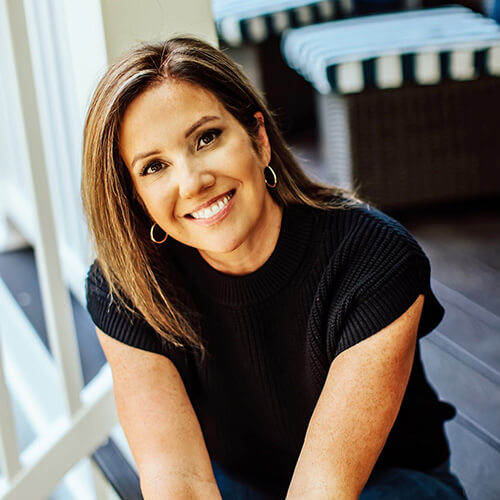
In part two of this two-part episode, Brain & Life Podcast host Dr. Daniel Correa is joined by influencer and podcaster Allie Signorelli. She shares her entrance into the world of advocacy and why she chose to speak up about her experiences and participate in research opportunities. Dr. Correa is then joined by Dr. Rodolfo Savica, who explains what some of those research opportunities are, why they matter, and what’s next for the Parkinson’s community.
Follow and subscribe wherever you get your podcasts!
Apple Podcasts Spotify Libsyn
Additional Resources
- Allie Signorelli: Living With Young Onset Parkinson’s
- What is Parkinson’s Disease?
- Factors That May Increase the Risk of Parkinson's Disease
Other Brain & Life Episodes on this Topic
- A Walk in the “Parkinson’s” with Author Annmarie O’Connor
- Ed Begley Jr. on Utilizing a Healthy Lifestyle to Thrive with Parkinson’s Disease
- How American Ninja Warrior Jimmy Choi Rose Above Parkinson’s
Follow us!
- Guest: Allie Signorelli @ImStillAllie; Dr. Rodolfo Savica @MayoClinic
- Hosts: Dr. Daniel Correa @NeuroDrCorrea; Dr. Katy Peters @KatyPetersMDPhD
- X: @BrainandLifeMag
- Instagram: @BrainandLifeMag
- Facebook: Brain & Life Magazine
We want to hear from you!
Have a question or want to hear a topic featured on the Brain & Life Podcast?
Record a voicemail at 612-928-6206, or email us at BLpodcast@brainandlife.org.
Episode Transcript
Dr. Correa:
From the American Academy of Neurology, I'm Dr. Daniel Correa.
Dr. Peters:
And I am Dr. Katie Peters, and this is the Brain & Life podcast.
Dr. Correa:
Okay. Welcome back. I can even feel the warmth and a little bit of the sweat building up under my shirt. Hopefully we're all feeling a little bit more warmth, even some of our northern friends. And so welcome back to the Brain& Life Podcast. Katie, this spring, we're getting all the life coming back and emerging from the gray and the dead of the winter and the plants. What are some of your favorite spring flowers or plants as we welcome that spring?
Dr. Peters:
Yes, so happy spring, Daniel, and I will say we deserve it. It's been a long, hard winter, especially for a lot of our people in the Northeast. So we have a lovely farm near us called Eno River Farms. And it does tulip picking right now. And it's just rows and rows of tulips, just all different varietals. And so my husband and I went down there this last weekend and picked some tulips. They were so beautiful. But I just love the early spring wildflowers that are in my backyard. We have little buttercups and little violets and they're blooming back there.
Has Central Park started to bloom for you in NYC?
Dr. Correa:
Yes. And I'm celebrating by taking allergy medicine. But I look forward each day that I can get outside for a walk or for some exercise and see the sprouting leaves and the sunrise and daffodils and plum and cherry blossoms out around the park or the yellow forsythia. I mean, it's been really pretty and enjoying it. And it's finally warm enough that I'm not layering as much so that it's more comfortable to be out there.
I think all of these things just remind us that that nature beckons and welcomes us and that idea of forest bathing and finding some time and space to be out in nature I think is great. And I'd like to keep that kind of positive energy for us as we think of everything else going on. Now last week we had a great discussion with Allie Signorelli about her personal experience with early onset Parkinson's and then continued with our medical expert, Dr. Rodolfo Savica, about how sometimes what many people understand as the community living with Parkinson's does not really fit what we see in books and media and expanding the idea of everyone that we know that might be impacted.
We had such a great discussion with both of them that we'll continue that as a part two and continue our discussion with Allie and Dr. Savica about her experience participating in research and then working in advocacy for Parkinson's. And then we'll return to Dr. Savica to hear about the current research updates and the importance of advocacy and awareness for Parkinson's disease. I hope you enjoy this episode and maybe take us out on a walk while you're listening.
So as we mentioned before, I'm really glad today to be joined by Allie Signorelli.
Allie Signorelli:
Thank you.
Dr. Correa:
Yeah. And you had heard from your general neurologist, your experience already from what you had seen in the community probably made you think that Parkinson's is a disease of older adults and we'll allow that broader definition of older to just sit there. But what surprised you of being diagnosed as what they described as a young or early onset age?
Allie Signorelli:
Two things surprised me. One, I left the hospital near us with a packet of information about Parkinson's. She handed it to me as I walked out the door and I remember flipping through it in the car ride home and every single picture in that packet and every single piece of information in that packet was geared towards, as you called it, an older demographic. It was imagery of various states of decline, of assisted devices, of care partners, of lots of information about not being home alone and all of this much older targeted information, which is super important, but it just didn't feel like it related to me in any way, shape, or form. And I said to my husband, "I think they gave me the wrong packet. They probably had a young person's one and they forgot to give it to me."
Turns out they didn't. There wasn't one and there wasn't a whole lot of information that I found online. I started to think I was the only person besides Michael J. Fox who was diagnosed young and I was like, "Maybe I am exceptionally rare." Which is part of the reason I started an Instagram page because I wanted to find other, if there were any, younger women with it or moms that were dealing with it at the same age that I was. And I just was really struggling to find that in the traditional sense. There was a page on the foundation websites and there was a few support groups somewhere, but not many. And I thought, "Oh, well, there's just not that many of us." Come to learn, there are plenty of young onset people, unfortunately.
Dr. Correa:
Yeah. And from your own experience going through this, seeing what actually is out there, both for your own information, and then as you're trying to help improve the communication that's out there, I'm wondering, what do you see as some of the daily realities of living with Parkinson's that people might not realize? And happy to have you separate it out as early onset or otherwise.
Allie Signorelli:
Yeah. I mean, physically speaking, it's so much more complicated than I even knew even a year into my diagnosis. As people probably know or some degree know, it's a web, it's a mix of all different kinds of symptoms. And some days... I always think of it as like if you had a hose and it had a hole in it and you plug one hole and then it pops up with another hole and you're constantly like trying to keep the leaks from happening. That's how I feel. If I get one symptom under control, then I get another. If I get the generalized pain under control, then my tremors are bad. And it just feels like it's a constant game of management and every single day is very different. Some days I'm in stiffness and in pain all day. And some days I feel great, but I'm anxious to a whole other level for no reason. Some days my tremor is so bad, I can't pick up a fork and your medication can do only so much.
We try very hard. I have great doctors. We try very hard to mitigate all of that, but there's rarely a day that there's not some sort of defining physical repercussions of it. I don't think I've had a day without symptoms probably in a couple of years. So that's a problem. Young onset, I think, is unique in the sense that most of us are still living very full lives. We're not slowing down. Most of us have kids who are either home or just about to launch out into the world. A lot of people are still working or trying to work. I unfortunately had to give up my job. I wasn't able to do it anymore. And so I do think there's a unique experience. And a lot of young onset folks are probably caring for their parents at the same time that they're caring for their kids. They're in that sandwich generation. So it's a lot. It's a lot.
And I think most people don't... I don't think they fully understand how difficult this disease is. And I think you look at someone like me, and if you look at my Instagram, I try very hard to show the realities of the disease, but if you were just to casually come across me in the world, you wouldn't think that I have it. My symptoms are fairly well managed when I'm on. When I'm off, it's a different story, but I think people look at someone like me or someone who has it and they're like, "Oh, that's not that bad." In fact, I hear it all the time like, "Well, you look great. You look like you're doing great." And I think people don't really understand how difficult it is and the ramifications on people's jobs especially I think is really, really tough. So I see a lot of struggle in this community and I think it often goes unseen.
Dr. Correa:
When you have the moments that you're on, symptoms are well managed, whether it's the day or just at that time with the balance of your medications, then with so many different neurologic conditions, but like Parkinson's, in a way socially you're almost penalized for looking good. You look too good. And then the stigma just flips over when you aren't looking like super mobile and then the assumption is you're completely incapacitated and no one is actually ascribing you to be able to do anything.
Allie Signorelli:
Yeah. And there's also, I think, a very large misconception that Parkinson's equals cognitive decline. And obviously that's a possibility later on. I think for a lot of people, they do experience that. I think at a younger age, there's a lot of stigma around it. And I understand why people keep it a secret. Before I left my job, I personally experienced people who were like, "Can she still do it? I mean, is she still there?" It's tough. It's really tough. It's a disease that feels unfair in many, many ways.
Dr. Correa:
Now, one of the things you share regularly is how Parkinson's not just affects you, but affects the family, affects a community. I wanted to just, if you wanted to share, but like how... You said this is an early onset. You are taking care of your kids, you were busy, living a full life with work and outside of work. How did it change yours and your husband's discussion about your lives together, your future together?
Allie Signorelli:
I think there is grieving that goes into a diagnosis like this. You start to have to reevaluate what your future looks like. You have visions of your kids leaving the house and this freedom of your empty nest years and your hopefully a little bit of financial security finally in your life. And you think you're going to travel the world and, I don't know, do all kinds of stuff that you didn't do when your kids were little. And you find out that you are facing an incurable, progressive neurodegenerative disease with no disease modifying treatments available. And it's scary. It's terrifying actually. And not just for you, but for him and for our kids, what does that mean? Do we need full-time care? Do we need a single level home? What are the ramifications of that right now?
Looking back, I wish I had known that it was probably not going to happen right away. I think part of the problem with Parkinson's is no one can even tell you that. Not even my movement disorder neurologist could look me in the eyes and say, "You've got 10 good years, go out and live them." She hoped that was the case, but nobody knows that for sure.
So yeah, there's a grieving period and a sadness. And I think for our kids, a fear for sure. I luckily had a really great, I still have a really great therapist and she encouraged us to really reevaluate or revisit with them the four years before I was diagnosed, but while we knew I had the disease. So looking backwards and saying, "Well, yeah, mom has had Parkinson's now for four years. We now have a name for it." But during those four years, we hiked in the Grand Canyon, we went to Disney World, we traveled all over these incredible places. She went to soccer games, she was a present in your life. So that helped our kids to say like, "Oh, okay. Well, she's been living it for four years and she's okay. She's going to be okay." So that helped, but it is. It's scary. It's terrifying. And I think people need to let themselves grieve through that process.
Dr. Correa:
Yeah. And I think, and you bring up such a key point, not just having a partner and a community to help you through that, but the importance of therapeutic behavioral health support.
Allie Signorelli:
100%. I am a huge advocate of therapy. I have a great MDS now who very early on said, "Red flag warning, caution, pay attention to depression and anxiety. It will get you. It almost gets everyone. It may not be significant. We may not need to do any medical interventions, but be aware, pay attention." And I did. I would say a year and a half or so into it, I had a really steep decline where I just felt like, "Gosh, I don't want to deal with this for the rest of my life." And I was sad all the time. And I called him and he's like, "Yep, we knew this was coming, so let's do all the things we talked about." And I started medication, I started working out more, I started doing therapy every week, I did meditation. So there are interventions for people when they need it. You have to be cognizant of it and then ask for help.
Dr. Correa:
Earlier you shared how one of the things that was helpful was early after your diagnosis that you really started to turn back to some of your skills for purpose and returning to advocacy. You've mentioned a few things before, but one of the other things also is that you've been working a lot now in social media and writing and helping increase awareness and build a community of people living with Parkinson's. What do you find are the kinds of messages and stories that seem to resonate both with those who are living through this experience and those who were unfamiliar with this story?
Allie Signorelli:
Yeah. I try not to think about it too much. I'm kind of just, I call it posting and ghosting. I share my day, I share my experiences, I share the good, as much as I can the bad without hopefully scarring my children and my parents too much. I do give some forewarnings if I'm posting something that's particularly hard to see or I think that will upset them. I think from the community standpoint, having... One of the things that you look for, I think when you're first diagnosed is benchmarks, right? So you're looking to see, well, who has it and how long have they had it and what can I expect? Because you just don't know. So from the community standpoint, I think I try to do two things. One is just show my real symptoms as much as I can or as much as I'm willing.
And then I try very hard to elevate their stories because the truth is that I am exceptionally privileged and well-supported and that is not the case for everyone. I married my high school sweetheart and we're doing, he's got a great job in health insurance and I have friends and family that support me. That is not the case for everyone with this disease. There are lots of people who are suffering and alone or single parents or don't have access to... I live in the Washington DC metro area. I could pick six different hospitals if I wanted to go to. That's not the case for most people who live in other parts of the country. So I try and elevate the stories of what people are really going through in this community and suffering from... Hopefully to help sort of raise awareness around that.
I think the other people, if you will, the non-Parkinson's community people, it's really just trying to educate folks about... They see Michael J. Fox, and one of the comments that I got a lot when I was first diagnosed is, "Well, he's doing great. He's still around. He's doing great." And it's like, trying to educate people about the realities of what this disease does to your body, what it does to your emotional state, what it does to your career, it's hard because you don't want to over... I would never exaggerate my symptoms. I would never sort of play them up, but at the flip side, I don't want people to look at me and say like, "Again, look at her. She's doing great." So it's a balance of keeping it real, educating as much as I can, and then elevating people in the community.
Dr. Correa:
Now, one of the other topics and areas that you've come back to a lot is your initial or involvement in research initiatives, and you mentioned it before, like the Parkinson's Progression Makers Initiative. What do you think is essential to the patient's participation and their input and research?
Allie Signorelli:
I think research sounds scary if you don't know what it is. I think people have this image of needles and spinal taps and tons of appointments. And there's definitely, I know lots of patients who generously give their time to that kind of clinical research. It's vital and super important, but there's all other kinds too. If that type of thing isn't available to you or... There's two parts of PPMI, one is research and data collection and one is more of a clinical data gathering. I was not able to do the more office-based one or in office one because I had already started medications and they said, "Well, it's too late for that, but we would love for you to collect data every month forever on your progression." So that for me is very simple. It takes me about 15 minutes to just catalog what I'm going through.
I do belong to a couple of other ones where it's blood draws or whatever, but research, in my opinion, makes you feel as though you are contributing to the cure. And that is an invaluable feeling as someone who is frustrated that there's not more I could do. So I highly recommend it. And I think if you can find one that fits your schedule and your physical abilities that doesn't drain you of whatever resources you have, people should definitely do it.
Dr. Correa:
And I mean, do you think the participation and research for yourself, is that part of what you've described as action being an antidote to the despair, and where does that fit in with all of the other things that you're doing to drive forward both awareness and greater community?
Allie Signorelli:
Definitely. I look at it as sort of a pie and there's all different pieces of the pie. I think exercise for me is a big piece of it, although I fall off the wagon regularly on that, but I do try and exercise as much as possible. And definitely the research piece of it is super vital to me. The advocacy part, being a part of the Fox Foundation, being on their patient council, hosting their regular event series I was mentioning earlier called Parkinson's IQ + You where we travel across the country and we have these huge events that people can come to for free and learn about Parkinson's and living well with it. All of that makes me feel like there is purpose in what we're going through.
It's hard to look at a diagnosis like this in your 40s knowing that you potentially could have this for more than half of your life and think of all the things that's going to rob from you. And I just, that is a very dismal state for me to be in. So I choose to hustle, if you will, and to find ways that I feel like I'm contributing to the community so that there's purpose behind this. Otherwise, I would just feel very sad. So definitely research is one piece of that.
Dr. Correa:
So Allie, I wanted to hear, from your perspective as both a patient and advocate, what gives you hope right now in Parkinson's within the community and within research progress or in policy changes that have been moving forward?
Allie Signorelli:
Interestingly, I had the privilege of interviewing Michael J. Fox a couple of weeks ago on my podcast and he said, and I really loved this, that there's a difference between optimism and hope. And I think hope is passive in my mind. You hope for something, you hope that it's going to work out versus, "I'm optimistic it's going to work out." And so I am optimistic. I'm not naive. I know that medical breakthroughs take a very, very long time and I'm very optimistic that we will get to one, at least a disease modifying treatment hopefully in my lifetime. Will we get the cure? I don't know. I hope so. Am I optimistic? I don't know. I mean, like I said, I know there are a lot of barriers to getting there from here.
I do know how important the national plan for Parkinson's is. I was, as I said, working in the Alzheimer's space when the national Alzheimer's plan was passed, the increases that we saw in federal funding for Alzheimer's research, I think it was, I want to say a hundred million when I was first starting and now it's at $3 billion annually for Alzheimer's research. I think Parkinson's deserves at least a proportionate increase in those figures. And so I know that that plan, and I was very involved, like many advocates were in its passing. I have high hopes for that plan to make progress. Finally, it's been long enough. I think the research that's being done and the advances that are here now are probably more exciting than have ever been. Again, I know that that's going to still take a long time before it's in the hands of patients. So I'm realistic about that.
I do think social media has the potential to change the course. I mean, lots of things do, but I do think social media has one potential to change the course of this disease. I think the more people like me and so many other young people who are out there sharing their stories, the more the general populace understands that it can affect anyone at any age. That's only helpful in terms of awareness and people caring about the disease. So there's a lot. It's frustrating. I know why people in this community are like, "Ugh, we keep hearing five more years, five more years." And I totally get that. I also know how complex the brain is. And I watched, like I said, how the regulatory process worked for Alzheimer's drugs and it's super, super complicated. So I'm tempered. I'm not out there Pollyanna. I know that it's going to be a while, but I'm excited about all the progress that is being made and the people that are in the fight.
Dr. Correa:
Yeah. I'm equally excited. I'm not going to say any number of years because I really don't know any, and it has to be led by the science, but I agree completely. I'm really glad to see the progress of the national plan. And again, with the idea, like you said, is that, if not at least proportional, really my perspective is that many of these neurodegenerative diseases all have different processes and mechanisms, and we need, in my view, almost an equal level of investment to understand, figure out how to modify those processes, and get closer to a cure because we don't know which one. If we learn that how to disease modify ALS in the cure or Parkinson's or Alzheimer's or PSP, we don't know if that's the one that's going to help us all of a sudden turn a mechanism in a strategy for treatment that could impact many of them with modifications. We've seen it. How did we have a COVID vaccine? By modifying a process that was designed for other conditions. And my hope is we move towards that.
Allie Signorelli:
To add to my hopeful list or my optimism list, I do think cross neurodegenerative research is key to all of this. And I know that some of the breakthroughs that we've had for other modifying drugs have come from the Parkinson's space or vice versa. So yeah, and I think that's where technology has the capacity to change the course of these diseases and AI even in a good way, hopefully. But using that data to see diseases across sectors, I think is going to be really, really important. So agreed.
Dr. Correa:
You were pointing out the importance of increasing awareness. Hopefully it's one of the positive areas and impacts of social media, maybe even AI. People, I think sometimes practically we are either connected or even plugged into our phones. So if you could download some aspect of information and understanding about Parkinson's into everyone, what would you want them to understand about living with this condition?
Allie Signorelli:
I think if I were downloading something for patients, it would be that community is vital, that leaning on each other is so important. I think only people who are in this unique situation that we find ourselves can truly, truly understand what we're going through. I feel like I wish somebody had said early on, "You're going to be okay. This is not the future you thought it was going to be, but there's still a good future to be had." And some kind of reassurance I wish I had had early on. I think outside of that, if you were just looking in and you don't have Parkinson's or you don't have a loved one that dealt with it, compassion, empathy, understanding about what this community goes through, support, financial, emotional, whatever it is, getting involved in finding something like PPMI, you don't even have to have Parkinson's to be involved.
So stepping up and getting involved, I think is something that everybody can do, but mostly just understanding. Learn about it. Learn about what Parkinson's is. It's a movement disorder, doesn't necessarily mean cognitive decline. It also doesn't necessarily look... If you look at me, don't say, "Well, you look great. You seem fine to me." There's little things that I think that people can do, but for the most part, I think people are trying and they're trying to be supportive.
Dr. Correa:
You were getting to this a little bit earlier, but wanted to give you more space for this.
Allie Signorelli:
Yeah. And just a heads-up, I have to do a live interview on TV in four minutes.
Dr. Correa:
Oh, okay. I have just... Yeah, yeah.
Allie Signorelli:
Okay. I just don't want to leave them hanging if they're on the air.
Dr. Correa:
Definitely. So living with a neurologic condition, in your case, Parkinson's can change the way you might see your brain and our health. So now, looking back, what does brain health mean to you given the perspective of your diagnosis and how it's evolved?
Allie Signorelli:
Brain health to me is whole health. If you are willing to do what it takes to stave off a heart attack or to regulate your diabetes or care for your mental health or live a joyous life, that is brain health. Brain health is whole body health. And I think caring for ourselves should be the baseline. And if we can do that, then hopefully your incidence of getting something like Parkinson's is lower. If it's not, and you're one of the unlucky ones that ends up like I am, there's still lots of things you can do to feel good and be brain healthy. But I think if one thing I could change, I would just let go of the guilt. Let go of the guilt. Even if I did find out, even if I later somehow someone was like, "Oh, it turns out you did cause this," I can't change anything I've done. Who cares? Let's move on. So I think brain health minus guilt is where I'd love to be.
Dr. Correa:
Well, thank you, Allie, so much for joining us here on the Brain & Life podcast, sharing your story and helping us all let go a little bit of the guilt and be here.
Allie Signorelli:
More joy, less guilt.
Dr. Correa:
On the Brain & Life podcast and online, we share stories from people living with neurologic conditions and the science that helps them navigate everyday life. Behind that progress are researchers working on ideas that could lead to better treatments, better understanding, and better care.
Dr. Peters:
The AAN research program has supported this kind of work for more than 30 years, but each year, far more researchers apply for funding than we're able to support.
Dr. Correa:
So if you're someone who values neuroscience that makes a real difference for patients and families and all of our communities, we invite you to join this effort. A donation to the AAN Research Program helps more promising research move forward. Learn more about this at AAN.com/donate.
Now, Dr. Savica, let's get into just talking about the research and some of the importance of advocacy and awareness for the community. And as you referred, we have often both in our society and even among physicians, an image of who is a Parkinson's patient, an older white man who moves slowly and has a tremor. And you've brought up, and Allie described how many ways that that does not necessarily fit many people in the community. And she describes symptoms that are non-motor or non-motion related, like esophageal symptoms, visual changes, sensory experiences. So many people in these situations have a variety of other symptoms.
What are some of the scope and the breadth of non-motor symptoms or early cues that you've seen?
Dr. Savica:
Well, one of the thing I always like, as every neurologist, we always like to try to localize. Localization is key for us. That's true and it's valid. So everything, most of the thing can be attributable dopamine loss. Not everything, but most of everything can be attributable to a loss of dopamine. So all the pathways that we know, the mesofrontal, mesocortical, tuber infundibular, nigrostriatal, those are pathways that we have that are using dopamine to work as a main source of neural transmitters. They're not the only one, but the main source.
So the typical breadth of symptoms that we see is what people call brain fog. It's a terrible word. Doesn't mean anything. It means everything at the same time. In other words, as a neurologist, we hear brain fog, we start to itch because they say what we are talking about here, but it's actually a true thing. So people are having subjective cognitive complaints. People are having feeling that they're taking longer, perception that are taking longer to perform a task. Either a daily task, either an amnestic test, memory task, or even in their work take longer to do a task or an activity that would take less than before. Multitasking sometimes is involved. So sometimes they're difficult to enunciate, but usually it is what it is. It's what we call brain fog. A cognitive difficulties that when you do the test doesn't look that bad, just because it has to do with processing and has to do with a mesofrontal cortical activity of dopamine. So that would be one.
Insomnia obviously is there and it's usually a very difficult symptom to treat. People never sleep well all their life and having problems. Sensory symptoms are even more complicated because they involve all the somas on the entire body. And sometimes people feel different part of their body, numbness, what they define as numbness, but it's not really numbness. It's a feeling of unusual sensation in one point. And usually it's unusual sensation in the limb is the place where the tremor will start later on or this rigidity will start later on.
Another very common non-motor symptom that people are complaining are a lot of GI problems. The GI problems we are talking about classically constipation. And people can say constipation has been lifelong, "I have constipation forever." But sometimes irregular bowels is indeed what it is. So moments of constipation together with moments of severe diarrhea. So a very irregular bowel syndrome, almost an IBS, but not necessarily IBS.
Or another majorly overlooked symptom in men, but especially in women that we had to interpret every time is our sexual dysfunction. Sexual dysfunction that had to do with the parasympathetic sympathetic system that we know is involved. Problem with erection, problem with ejaculation, problem with pain during intercourse, problem with reduction feeling in the labia, around the vagina. Those are things that sometimes are happening and they can precede the actual onset, the motor onset of many, many, many years.
So as you can see, they're really vague in the sense that you are not able initially when you hear these complaints to think about a condition such as Parkinson's if somebody will come to you with that. And in fact, I have many patients that were diagnosed, unfortunately, with chronic pain syndrome, with fibromyalgia, with functional logical disorder that in reality, they had onset of Parkinson's disease that was manifesting not in the typical motor way with tremor, stiffness, rigidity, and they were young because people weren't thinking about Parkinson's disease. I think that's a major problem. I think that we, and I'm doing this in my program, being in charge of the education and do that, but we have to make sure that our younger individuals, our younger physician know about this possibility, that we are not dealing only with symptoms that are affecting the older people.
We're not dealing only with something that is revolving around tremor because that's what we learned when we were younger. White man tremoring, falling. That often is case. And it's true. Men are twice as much more common than women with the disease. That's true. That's true. And that's a fact and it's epidemiological data that back these words and makes sense because of the role of chromosome X. Women have two, men have one. So apparently chromosome X has some protective ability against degeneration, against these kind of disorders. But other than that, this is what we studied and we know it's not only that. And it's quite difficult, I would say. Quite difficult.
Dr. Correa:
So I mean, as you're pointing out, there's so much need for increased awareness among other physicians, including neurologists and our other primary care doctors around the whole complex or the syndrome of a variety of ways that people might come in. But you also pointed out several ways where there's a lot of things that we don't yet know about the research. And Allie became involved in research very soon after her diagnosis. Took her a while to get the diagnosis, but soon after, she started to get involved in large observational studies and other studies for her management. From your perspective, how does patient participation and research early in the disease or later help move the field forward?
Dr. Savica:
That is a crucial activity to do. We as academic neurologist, but in general, as a physician, we have only one thing in our mind, at least many of us have, is not to become famous, but treat well people. At well people, especially when we're dealing with condition that are not the common, or at least not the commonly recognized, we need to have involvement of patients. The most relevant aspect of all this is also that, especially in conditions such as early onset Parkinson's, we are dealing with a number of conditions within the name early onset Parkinson's. So within early onset Parkinson, there's a number of subtypes that we need to be looking. And that types are not common unless... They're not common because they're not searching for, but once you search for, they're becoming more common. So having patient participation is crucial because allow to speed up, to recognize these different phenotype, these different manifestations of the disease, and allowing us to know the natural history, allowing us to know target genetic and non-genetic target that can be already available and maybe already used to advance science.
And it's important, the participation, but it's not required. So it means that there are some people that are simply don't want to be the face or the forefront of advocacy or participation, which is totally fair, totally fine. But it's also important to say that for us, the only way to advance science is to see, to understand, to see more patient, to see more people, to increase our knowledge with some of these studies. You mentioned observational studies. I mentioned population-based study, I mentioned individual studies, I mentioned trials. All these are really relevant and all these require our patient to participate, our people to participate, and that's what we want to have.
Dr. Correa:
And what kinds of breakthroughs do you think would be possible with these larger studies or as some of the research that's ongoing right now moves forward that the community could look forward to?
Dr. Savica:
I think there are three levels of breakthrough that we have to think. First, one of the most important and relevant aspect that is already happening is drug delivery. In other words, delivering the right amount of drug with different ways using devices that allows a continuous simulation of dopamine, similar to what happens in the brain. This is exactly what is happening, and it would be a first breakthrough that I think in the coming future, I'm expecting our field of movement disorder be similar to diabetes when insulin pump became the mainstay treatment for insulin-independent diabetes. I'm expecting similar situational occurring to us because it's already happening.
The second breakthrough is not too much biomarker discovery, but really using biomarker to anticipate progression, target identification and response to treatment. Every time we talk about biomarkers, for example, we talk about presence or absence of Parkinson's. I don't know if it's a great thing. It's not helping very much to me. What happened very much to me and what is happening is what's next. Once they have diagnosis, I want to tell my patient, "This is your percentage risk of developing this, this, and this. Those are the drugs that you can use. Those are the drugs that you shouldn't use. Those are the drugs that can cause a problem." Exactly what is happening in oncology, exactly what happened in our oncological fields with breast cancer, brain cancer, we are already using information. So the breakthrough will be having an individual molecular phenotyping of all what we know of all the different subtype of Parkinsonism. That will be very important and allows us to go beyond presence or absence of disease, but rather biomarker discovery for progression, for therapeutic response.
The last is newer strategies. Everybody talks about disease modifying condition, things that can block the disease. We know that nowadays we don't have any treatment that can delay the progression of disease. This is what we are expecting. Periodically, we are hearing about stem cells. Periodically, we are hearing about this or the treatment. I do not care what will be the treatment, but clearly there's few ideas coming around of things or approaches that can delay the progression of disease in some subtypes, not in everyone. And if you ask me, "Rodolfo, do you think that you will able to cure Parkinson's disease?" The answer is honestly no, because if we live 150 years old, everyone would have Parkinson's disease, as everybody would have dementia because it's a function of aging. The cell death happen with age. But if you ask me about subtypes, how do you be able to identify some subtypes with genetics, with molecular biomarkers that can be cured or blocked? The answer is absolutely yes.
I think we are really seeing number of interesting approach that are moving beyond one disease, one treatment would be different diseases that are something common, different treatment. And that's the effort that we have to make exactly as they're doing in cancer, because you don't accept to do chemotherapy to everyone, the same one to everyone. You have to understand what is the subtype and we go from there. That's exactly what we are seeing in the field.
Dr. Correa:
Let's go then to the present time. As you mentioned, there's been a lot of momentum recently and ongoing work from biomarker research on progression, response to treatment, but along with national policy efforts like the national plan to end Parkinson's, from where you sit, what are some of the most meaningful advances that are happening right now in the Parkinson's community?
Dr. Savica:
I say that there are, to me, the most meaningful advance are, I would say, for sure, the beginning of identifying a very big array of genetic predisposition to the disease that would allow us to know biochemically what is the dysfunction is occurring throughout life and providing target. The other one that I think is very important is, again, the delivery of drug in a different way. A prolonged delivery is something that does not allow you to need to take the drug multiple times per day. We know the advent of deep brain stimulation. We know the advent of deep brain simulation with basically that can change the stimulation according to the requirement of the patient that is super interesting and super important. In other words, a device that can modify according to the requirement of the moment of the patient using electrophysiology, that is super important. So a live stream feedback that is occurring.
We also know about focused ultrasound is not an advanced, it's not something super new, but it's been around for a while, lesional damage into the substantia nigra, basically around the substantia nigra to improve tremor is mostly for tremor, not for other symptoms, but also can be done for other symptoms. And to me also, still talking about genetics, the opportunity of editing the genes product using CRISPR technology, that's something that is happening and is happening around the corner and is happening now. Different groups are working on that and that can be to me very important, not changing the DNA, not changing the gene, but changing the byproducts of the protein of the DNA. They will be incredibly important, incredibly helpful, and is there, is happening around the corner.
Dr. Correa:
Rodolfo, for those who are listening right now and who may be newly diagnosed and maybe see themselves in parts of Allie's story, what are some of the most important first steps you recommend after a Parkinson's diagnosis?
Dr. Savica:
I think the most important thing to think is one, is that nobody is the same. We are dealing... You are dealing, I mean talk to the patient, you're dealing with a condition that is very individual. Your neurologist, your physician can give us some general ideas about what would happen in the future for now. But what you experience doesn't mean that you will be in a wheelchair in three years, doesn't mean you will have dementia in 10, doesn't mean that you will die in a hospital bed without being confused and delirious in 10 years. No, everybody is different and we have to understand the individual trajectory of the patient of you according to everything else that we have.
We also know that treating symptoms is a good thing. We're treating symptoms in the now, when things start, allow people to move better, to be participating in life better, to work, allow people to have less burden of disease. If you don't treat symptoms because some people are still worried wrongfully about the presence of early dyskinesia or this complication of levodopa, that is a problem because we are delaying the possibility of being an active part of society as things are happening now.
Other thing, we need two things. We need a good partner, which is going to be your physician, somebody that will be able to talk to you, work with you, and not daily, but whenever is needed, you should not be an intrusive partner. Should be somebody that you can rely on when is needed. You need the support around you. Support around you doesn't mean spouse. Can be spouse or friends or family. It can mean anybody around you, but you need the right support. If you're 35, you have to deal a condition that likely will lead you all your life when you're 70 and 80 will die. It's difficult if you're 35 to relate to somebody in the 70s and 80s. So sometimes even the support group for Parkinson are still populated by older individuals, which they don't necessarily have the same level of relatability with people that are younger. So you need to have the right support and that's a little bit more difficult to find, but thankfully we have internet. Thankfully there are a number of different groups online that can provide and can help.
But go back. Everybody's different. So whatever your friend next door is doing, doesn't mean they will apply to you and vice versa. And that's an important thing to know because everybody's having a slightly different condition, therefore a slightly different treatment. Not everything works for everyone. And that's an important thing to say.
Dr. Correa:
Well, Dr. Rodolfo Savica, thank you so much again for joining us and for everything that you're doing and the passion you bring to supporting the community, living with Parkinson's, and advancing research.
Dr. Savica:
Thanks so much. It's a pleasure to be here.
Dr. Correa:
Thank you again for joining us today on the Brain & Life Podcast. Follow and subscribe to this podcast so you don't miss our weekly episodes. You can also sign up to receive the Brain & Life Magazine for free at brainandlife.org.
Dr. Peters:
Also, for each episode, you can find out how to connect with our team and our guests along with great resources in our show notes. We love it when we hear your ideas or questions. You can send these in an email to blpodcast@brainandlife.org and leave us a message at 612-928-6206.
Dr. Correa:
You can also find that information in our show notes and you can follow Katie and me and the Brain & Life Magazine on many of your preferred social media channels. We're your hosts, Dr. Daniel Correa, connecting with you from New York City and online @NeurodoctorCorrea.
Dr. Peters:
And Dr. Katie Peters joining you from Durham, North Carolina and online @KatiePetersMDPhD.
Dr. Correa:
Most importantly, thank you and all of our community members that trust us with their health and everyone living with neurologic conditions.
Dr. Peters:
We hope together we can take steps to better brain health and each thrive with our own abilities every day.
Dr. Correa:
Before you start the next episode, we would appreciate if you could give us five stars and leave a review. This helps others find the Brain & Life podcast. See you next week.