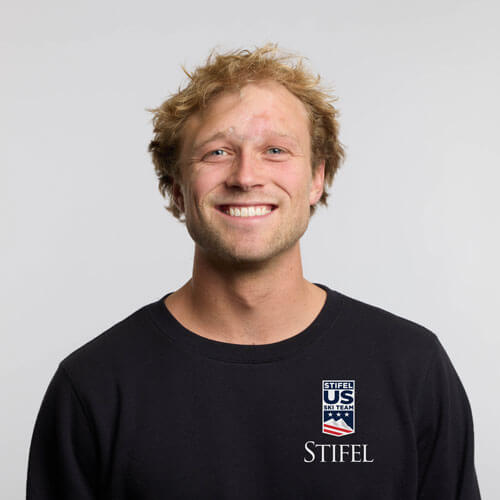
In this episode of the Brain & Life Podcast, co-host Dr. Katy Peters is joined by Olympian Colby Stevenson, who shares his incredible journey as a freestyle skier. Colby discusses his passion for skiing, the challenges he faced after a serious car crash and traumatic brain injury (TBI), and how he overcame adversity through hard work, a positive mindset, and support from loved ones. Dr. Peters is then joined by Dr. Kian Nasiri, a physiatrist specializing in TBI at Northwestern University. He discusses the role of physiatrists in recovery from brain injuries, highlights innovative treatments like neuromodulation, and emphasizes the significance of social support for patients and their families during recovery.
Follow and subscribe wherever you get your podcasts!
Apple Podcasts Spotify Libsyn
Additional Resources
- What Is Traumatic Brain Injury?
- How Sports Neurologists Protect Football Players’ Brains
- After Traumatic Brain Injury, a Veteran Finds Purpose in Advocacy
Other Brain & Life Episodes on this Topic
- Veteran Lindsay Gutierrez is Reaching New Heights with Traumatic Brain Injury
- U.S. Soccer Legend Briana Scurry on Concussion and Mental Health
- Healing the Traumatized Brain with Dr. Sandeep Vaishnavi
Follow us!
- Guest: Colby Stevenson @Colby_Stevenson ; Dr. Nassiri @NUFeinbergMed
- Hosts: Dr. Daniel Correa @NeuroDrCorrea; Dr. Katy Peters @KatyPetersMDPhD
- X: @BrainandLifeMag
- Instagram: @BrainandLifeMag
- Facebook: Brain & Life Magazine
We want to hear from you!
Have a question or want to hear a topic featured on the Brain & Life Podcast?
Record a voicemail at 612-928-6206, or email us at BLpodcast@brainandlife.org.
Episode Transcript
Dr. Correa:
From the American Academy of Neurology, I'm Dr. Daniel Correa.
Dr. Peters:
And I am Dr. Katy Peters, and this is the Brain and Life Podcast. Hello, Brain and Life Podcast audience. I know you've had your fill of turkey, and maybe your fill of football because everybody's been watching football. And basketball is just around the corner also. But probably what's coming up that is so exciting is that we're less than 100 days till the 2026 Winter Olympic Games. We've already talked to Elana Meyers Taylor, who is a US Olympic bobsledder.
And today we have another special Olympian, and this is Colby Stevenson. He is doing a sport, and he is on the 2026 Olympic team for a sport called freestyle skiing. And if you ever get to watch this, they are the daredevils of skiing, and the flips and stunts and tricks that they do are just amazing. And Colby joined us to talk, not only about his Olympic sport, about freestyle skiing, but he also talks about traumatic brain injury because he was in a very serious car accident that caused some serious brain trauma, but he recovered from it and is back skiing and doing all those wild tricks and stunts. So we're going to talk about TBI, learn more about it, and then learn more about how to recover from TBI from a physiatrist, Dr. Nassiri.
Hello everyone, and welcome to the Brain and Life Podcast. We are getting started again with so many of our wonderful, wonderful athletes. And we've got a special treat today because we don't even have just an athlete. This is an Olympian. It is Colby Stevenson. He is an American freestyle skier and Olympian. He won the silver in the men's big air event, which I'm going to learn all about. This was in 2022 Winter Olympics. Remarkably, he won this Olympic medal after having recovered from a very serious car crash. So he's here today to tell us all about his Olympic experience, about the road to recovery, and how you can always get through all those challenges. So welcome to the podcast, Colby.
Colby Stevenson:
Thanks, Katy. Yeah, happy to be on here, share my story a bit. It's definitely been a wild ride. But yeah, as you know, things happen, bad things happen, and you kind of use that as a learning point or a turning point to kind of shift that into something positive, and yeah, work with what you have.
Dr. Peters:
I totally agree. And where are you joining us from today?
Colby Stevenson:
I am in Park City, Utah. That's where I grew up. It's where the US Ski and Snowboard team is based. So a lot of the athletes are here training. And it's an awesome town. We've got, in the summer, tons of mountain biking, golfing. There's reservoirs around, just go on the lake. And then in the winter, obviously really good snow. Some of the best in North America. Yeah, very fortunate to have grown up here, and didn't have to move around when I made the US team. It worked out pretty well.
Dr. Peters:
That's so amazing. So tell us, you're a freestyle skier. What is that? And how does that differ from regular skiing, and what does that mean?
Colby Stevenson:
So under the branch of freestyle skiing, there's a lot of different disciplines actually. Mine is like, they're calling it free skiing now, which is the three events of it are half pipe, slope style, which is jumps and rails, and then big air. Those are kind of the branch of free skiing. Freestyle skiing is like aerials where they go and do triple flips, like a bunch of spins and then moguls.
But yeah, my version, free skiing, it's a lot more artistic, and definitely up to the individual with creativity and things like that. There's really no limits to what you do, and it's totally up to your imagination. So that's why I fell in love with it. Every time you compete, it's a different course. Every mountain you go to around the world has different rails, different shapes like S rails, rainbow rails, flat downs, and then the jumps are obviously different sizes. It's a really never ending outlet for creativity.
Dr. Peters:
Well, that's amazing. So how do you go from just like, I guess, being on skis and going down the mountain to doing those tricks and flips. I mean, when I think of skiing, I think of water skiing. I hate to tell you this. I'm from the south. Snow skier, I'm a little fearful.
Colby Stevenson:
[inaudible 00:04:45] can break down like that for sure.
Dr. Peters:
So give us sort of the 411 of like how do you go from like being on those skis to doing a flip? I can't even imagine.
Colby Stevenson:
Obviously learning to ski is a lot easier when you're a kid because you're pretty elastic. And if you fall, you're not going to like break a bone as easily. But yeah, I just started skiing as a kid. My parents got me going, and I was always like jumping off stuff in the house. I just kind of had that crazy like sporadic want to jump off things gene for whatever reason. And skiing became my main outlet for that.
So you just, once you learn how to turn and start going fast, then you're like looking on the sides of the trails for like little jumps to catch air. And then from there, going to the terrain park and you learn how to grind a box or hit these other like little bit bigger jumps. And from there you start learning tricks like 360s, which is a full revolution, or back flips. I learned to backflip when I was six years old on snow. It took me like probably 10 different tries crashing. And then when I finally landed it, it was definitely like a big moment for me as a kid, knowing what it felt like to learn a trick of that caliber on skis. It definitely was a catalyst for me to just want to learn more tricks.
Dr. Peters:
So it sounds like you have to be a bit of a, you have to be definitely an athlete, you have to also be creative and be artistic, but then you have to be a bit of a daredevil.
Colby Stevenson:
Yeah. Definitely a bit of a daredevil. The nice thing about today's training facilities is there's ways to learn as an older person too. You can hit the water ramps. So I grew up doing that as well, where you go off a plastic jump with your skis on and land in a pool. You learn tricks that way. And it still hurts if you land on your back. Obviously you knock the wind out of yourself, but it's like you're hopefully not going to have a serious injury. And they have bubbles that come up in the water to kind of break the surface tension.
And then the latest, in the last five years, it's been a plastic ramp and then you land on like a airbag. So it's a big blown up rubber airbag that is basically a water slide. You get it wet, the sprinklers go on and you land and you just slide out. And it's a lot more realistic than the water ramps because you're actually landing on a slope as if you're on snow. Because there's the takeoff, and then the landing has to be steep so that the impact isn't as bad.
Dr. Peters:
Well, first of all, congratulations on the Olympics.
Colby Stevenson:
Thank you.
Dr. Peters:
It had to be just amazing. So can you tell us more about sort of that experience, like going to Beijing and what it meant to you?
Colby Stevenson:
Yeah, for sure. It was a long time coming. In 2018, I tore my shoulder out before the Olympics in South Korea. So that was a really heartbreak year for me. And I kind of learned and just not put as much pressure on myself for the next time around because, God forbid something happens, you don't want to be so upset because you didn't reach your goal. So I just kind of took that part out of it. It was like, whatever happens, happens. I want to stay healthy.
Made the team. I actually qualified the year before Beijing. I was number one in the world for slope style skiing. And so I had a pre-qualified spot. So I was going in that whole summer before, knowing I had my spot secured for the team. There's only four athletes per discipline. So that was an honor. And yeah, just went there and with an open mind, and I definitely wanted to win slope style really bad. And I think I put a little too much pressure on myself for that.
But I mean, it was an amazing experience. Just going to the opening ceremony and like walking in with all the lights in the huge stadium, it was for sure a surreal moment to realize that, and how few people would experience that. And so I was definitely feeling grateful. And all the injury stuff aside, I was just like so in the moment.
And yeah, that's honestly how I've been able to get past all the injuries and the head injury and stuff. I got a crushed skull in like 40 places, and TBI, a bunch of titanium in my head and stuff. And like, yeah, there's a bunch of craters up in here. So the way I kind of like get through all that is just stay in the moment. I mean, I feel great. There's no denying that I feel amazing and as if it never happened. And we're so blessed with the power to heal. I kind of use it as like a superpower, the fact that I'm still here and can still do the things I love to do at the capacity that I'm doing them. I'm super fortunate. So yeah, I mean that all just kind of like, I try to bottle all that up into like one feeling and just be super grateful and lucky and excited.
Dr. Peters:
Well, we're grateful that you recovered so well. You sort of alluded to that. So this happened, I believe in 2016, correct? And you-
Colby Stevenson:
Yes.
Dr. Peters:
... were in a pretty serious car crash. Can you tell us sort of what happened? And you mentioned that you had like head injury and everything. So if you were willing to share, we'd love to listen.
Colby Stevenson:
I was 18 years old. I was driving back from Mount Hood, Oregon from a ski trip back to Utah. It's a 12 hour drive. Yeah. My friend had broke his leg, so I was driving him home in his truck.
Dr. Peters:
Oh my gosh.
Colby Stevenson:
This story goes on and on. But I would not have been driving. I was so tired at that point, but I wanted to get him home because of his broken leg. And anyway, I fell asleep at the wheel for like two seconds, and it was just enough to drift off the road a little bit. And then over correct when I woke up, and yeah, like rolled. And I think like on one of the impacts of the roll, the roof of the truck crushed my skull and my neck. And yeah, broke over 30 different bones, and then shattered my skull. Pretty much, yeah, super lucky that I had survived. I was unconscious for five to 10 minutes, and then was awake. But yeah, you can see this scar on my forehead. I was a full degloving of the scalp. So I got really lucky not to lose my eyes either because it's right in between them.
And yeah, just was in a coma for a week after that, a medically induced coma, to kind of let my brain swell because it swelled eight millimeters. And at nine millimeters is when brain damage starts. So yeah, just happened to go only eight millimeters, and then back down. Super lucky. When they took me out of the coma, they didn't know if I was going to be a vegetable, or what was going to happen. But yeah, my parents were there and stuff. And luckily woke up as myself. And I looked at my mom because the crash happened on Mother's Day, and they were in Hawaii. They were in Hawaii. And I woke up, saw them and said, "Sorry, you guys had to leave your trip early." And then they knew I was going to be fine. Well, not fine, but they knew I was still in my head. I was still the same person.
And so then it was a long recovery for sure. I was in the hospital for what they said was going to be two months. I was out in just a few weeks. Obviously just bedridden at home, and painkiller to painkiller and very slow. I couldn't make a decision on anything. I didn't care about anything. I was pretty down in the dumps. And then I did a lot of speech therapy. You go through and do all these brain tests and memory games. And I was frustrated. I thought it was stupid. But I definitely needed it. And thinking that my whole world was done. I was skiing really well right before that, one of the best for my age for sure in the world at that point. And it was hard. It was hard.
But then after a couple months went by and I started to get some physical strength back. I lost all my muscle in the hospital because I couldn't eat. But once I started to get my physical strength back and do all these things I loved, go out on hikes, and then I started riding my bike again. And I was just like playing cards with my grandma. And for a while, a hot shower was the highlight of my day. I was just like, it's the only time I felt so good. And that kind of put things into perspective for me as like I never thought about a hot shower being as amazing as it is, and how lucky I am to have that and other people don't. Do you know? Yeah.
And then during that time of speech therapy, I also was seeing a lot of people that were a lot worse off than I was. And going in wheelchairs. And I still had my legs. And I was like, okay, so there's a chance I could ski. Anyway, it was just all a perspective shift and that's part of the reason why when I returned to skiing, I have a total different mindset about it. I just was so elated and excited and doing it for the right reasons. Just skiing for the love of it, and realizing how lucky I was to be living that life still. And then I started winning.
Dr. Peters:
That's awesome. I mean, there has to be a point... First of all, amazing. I'm so glad you recovered. I think the fact that you have a lot of clarity that not everybody recovers that way. And I think that one of the things that I find that has to be, that we can learn from you, is that you do need to take those basic early steps of like doing the speech therapy and doing the physical therapy to get just the basic things down. But then you made a transition to really go back and be like at the highest level of your sport, being an Olympian. So when did you feel comfortable that you could turn that transition, like going from like just doing basics to going back to your sport?
Colby Stevenson:
Yeah. The transition was basically from being depressed and feeling like I screwed my whole life up, to realizing that there's nothing else I want to do more than that, is return and come back. And that shift, that determination, I got it through, like you said, working my way up with the activities and the little brain games. And it took time. It took two months to get to a point where I didn't wish I had died in the car crash. I was like, "I wish it would have been over." And then two months in, when I started being able to see progression and see some healing in my symptoms. I had really bad vertigo. So every time I'd lay down, I would just start spinning for two months.
Dr. Peters:
That's horrible.
Colby Stevenson:
Like oh my gosh, how am I going to do a bad flip or anything like that ever again? Anyway, I think the key was just not giving up. I mean, it's just literally a mindset every day. And then you can think about a goal way in the distance, and sure, write it down, whatever. But it really is just like, what can you do that day to get a little bit better or a little bit closer to your goal, and how to think positively? Because I think once I started thinking positively, my body just started healing amazing, freakish. It's just because I had that frequency in me, like I'm going to be better. It's going to be okay. I'm going to be able to ski again at the highest level that I can.
Dr. Peters:
Who were sort of, I guess, some of your partners in sort of helping you recover?
Colby Stevenson:
My grandma. Yeah, my mom obviously took a couple months off of work, maybe not quite that long, maybe a month. And then my grandma came out from Florida to live with us for a bit and take care of me. And she was a big, big help in the whole process. Because it kind of felt like the whole world stopped. Or sorry, my whole world stopped, but everybody else's lives kept going, and I just was kind of frozen in time. It was an interesting perception for sure.
But yeah, she kept it lighthearted. We'd watch movies and play cards, and then go on like little walks around the block when that was like the most I could do. And yeah, just easy living, and there's nothing wrong with that. And then I started to be grateful for the little things, which I hadn't before. I'm just such an intense person and I love like adrenaline sports, things like that. So I didn't always see the value in just like the little moments. And then watching a sunset and just how gorgeous that is and how simple it is, and how lucky we are to be able to like see colors. And anyway, just she was a big part in all that. And definitely was doing like Psalm 91 and all the prayers and stuff. She was a big church goer. So she passed away last year.
Dr. Peters:
Oh, I'm sorry about that.
Colby Stevenson:
And yeah, obviously my close friends and my dad. And it was a short amount of time, but it was very impactful on my character. And I mean, it completely changed, remapped the way I think of the world.
Dr. Peters:
I like the shout out to your grandmother. And I'm sorry that she passed. But it sounds like she was a pretty amazing woman.
Colby Stevenson:
Yeah. She was awesome. Very smart and very entertaining. She had a good humor.
Dr. Peters:
Yeah. She reminds me of my grandmother. I would go to California. My grandmother lived in Redding, California. I'm sure you know where that is. And I would play cards with her, always watch movies with her. Sounds like almost the same experience. And she was a firecracker. She lived to 102. And I just always remember her. She was such a go getter. I'll be honest with you though, you said that they were some relaxing times. Those card battles could be quite vicious, I remember. I will say-
Colby Stevenson:
Competitive.
Dr. Peters:
... she doesn't hold back.
Colby Stevenson:
She'd always be like, "It's your turn." If you were taking too long. "It's your turn. It's your turn."
Dr. Peters:
Exactly. I feel like we had the same grandmother. Absolutely. So what's next for you in, I guess, your sport, in your life, what's going on?
Colby Stevenson:
Yeah, next for me. I mean, the Winter Olympics are coming up this winter.
Dr. Peters:
Woo hoo.
Colby Stevenson:
Yeah, I'm doing a lot of filming in the back country in the big mountains, which is a total different side of skiing than I was telling you guys about. It's more of like just up in Alaska, no one's out there, and you're out there on a helicopter. And you just get dropped off on a peak, and basically turn a huge mountain into a playground.
Dr. Peters:
We'll absolutely be cheering for you. And Colby, thank you so much for sharing your Olympic experience, your love of skiing. And it was also just amazing to learn about sort of this freestyle skiing and also your experiences. We really appreciate it.
Colby Stevenson:
Yeah, for sure. One more thing I'll say about the whole head injury and stuff, like I definitely have some minor disabilities still from it. And it's like I have to be okay with the fact that I can't always remember things as good as I used to, and to not beat myself up about it because it's easy to. It's easy to feel stupid sometimes. Sometimes I just have brain fog and I just like I can't remember things that I remembered the day before. It's like little things like that.
And then I've had decision making issues ever since then, but I think a lot of people do. It's like when there's two good options, like flip a coin. But I don't know, life is just about doing the things you love. And yeah, sharing it with amazing people. And that's what's kept me inspired is just getting outside or hanging out with the right friends and doing fun stuff. That's kind of all I really care to do while we're here.
Dr. Peters:
Well, I agree with you, and that will totally resonate with our listeners. And I think one of the really important things is you do, when you have those challenges, you have to give yourself a little bit of grace, and you keep on moving forward. And see all that you've accomplished, it just gives people so much hope. So thank you.
Colby Stevenson:
Yes. Well, thanks for doing this podcast. It's really cool. I hope it helps.
Dr. Peters:
Yeah, absolutely. Have a great day.
Colby Stevenson:
Thanks, Katy.
Dr. Correa:
The American Brain Foundation is the American Academy of Neurology's philanthropic partner. To learn more about how you can help make a difference, please visit americanbrainfoundation.org. The American Brain Foundation believes that when we cure one disease, we will cure many.
Dr. Peters:
Hello, Brain and Life Podcast audience. We're again here today with one of our amazing experts. Today, our medical expert is Dr. Kian Nassiri. He is an assistant professor at the Feinberg School of Medicine at Northwestern University. His subspecialty is in physiatry. It's also known as physical medicine and rehabilitation, and is a branch of medicine that focuses on prevention, diagnosis, and non-surgical treatment of disabilities conditions due to a myriad of disorders or illnesses. And he's going to talk about physiatry, but also talk about how to recover from traumatic brain injury. Dr. Nassiri, welcome to the Brain and Life Podcast.
Dr. Nassiri:
Thank you so much for that very nice welcome, Dr. Peters. So yes, as you were saying, I am a physiatrist by training, did undergrad over on the West Coast in California, kind of studied physiology and neurosciences, thought I was interested in something brain related. And as I got into medical school, which I did out in Phoenix, Arizona, I was kind of exploring various medical specialties, and found myself gravitating toward the field of physical medicine and rehabilitation, or also known as physiatry.
And the main kind of reason I ended up gravitating so closely to that field was just because I really appreciated being able to help patients through their kind of various injuries or various accidents that they had experienced and helping them move through that continuum of recovery. And then specifically, I also did do a subspecialization in traumatic brain injury because I also really enjoy working with that specific patient population in terms of thinking about how various injuries to the brain can kind of like manifest in various different ways, and thinking about the different medications that we can try out or rehabilitation interventions that can help patients progress beyond kind of what some of their initial limitations may have been due to their injuries.
Dr. Peters:
Well, thank you very much for explaining that. And how do patients find their way to a physiatrist? I mean, I think that that's a big question. We actually have some embedded into our neurosurgery department here at Duke. But it's such a particular specialty, and I think is so, so important. I think movement and function is key. So how do patients get to you?
Dr. Nassiri:
That is a very good question. A lot of the times, we are a younger field of medicine, so I would say in terms of like our global presence is not as established as some more established fields of medicine like internal medicine, neurology, things like that. But a lot of the times, what we've had to do is kind of firmly establish ourselves in various different hospital systems and offer some of those services.
So a lot of times how I get involved with some of the patients that I end up treating is by seeing them early on in their injuries and working together with the therapists, as well as the acute medical teams to kind of identify what are some of the functional deficits as a result of the patient's injuries. And then depending on the severity of their injuries, they'll either make their way to our acute inpatient rehab hospital where they'll stay for a period of time and have intensive therapy, or we'll coordinate with them if they're more stable enough to go home where we could kind of follow up longitudinally and make sure that transition to home is going smoothly for them as well.
Dr. Peters:
Again, so important. Now you touched on that you're very interested in traumatic brain injury and treating those patients with what we also call TBI. Can you just tell us more about like what is traumatic brain injury in a nutshell?
Dr. Nassiri:
Yeah, so that's a very good question. So how I like to describe traumatic brain injuries to my patients is any sort of external injury that causes physiologic disruption in the brain tissue, or basically causes various difficulties in thinking, how we plan to do motor tasks, and things like that.
Dr. Peters:
We spoke with Colby Stevenson. He is an Olympian. He does this amazing thing called freestyle skiing, which means that it's skiing plus extra stuff where you flip around and everything. And he detailed his TBI event that occurred during a car accident. It was extremely serious. And what sort of special considerations should one have in regards to TBI in the setting of having a motor vehicle accident?
Dr. Nassiri:
In terms of the various kind of like things that we think about in assessing kind of whether a patient, whether their injury is more severe or not, some of the early things that we look at is how disoriented they are. And that's definitely one of the things that we track, both in their acute hospitalization, as well as for those patients that may not necessarily be safe to return home, making sure we're tracking that. Because the time that it takes them to regain their orientation can correspond with how we would expect those patients to recover functionally sometimes as well.
Dr. Peters:
I know that with TBI, there has to be like a range of symptoms. What are sort of some common ones? And what are you looking for, I guess, early on in those patients?
Dr. Nassiri:
Yeah. So early on, and I will say it's very varied depending on how severe the initial injury is. In terms of my personal practice, I get a very diverse patient population when we think about traumatic brain injury. So on the spectrum of severity, the most severe patients I see are in a disorder of consciousness where those patients demonstrate no signs of being kind of like aware of what's going on around them. Can manifest in a complete inability to follow commands, complete inability to communicate.
And then there's those patients that we put more into the category of concussions or mild traumatic brain injuries. And those patients can also have a various gamut of symptoms that can be more related to mood changes, difficulty sleeping, what we term as vestibular symptoms or feeling off balance. Ultimately, I guess what I'm just trying to say is that it can be very wide, and really just depends on the severity of the initial injury.
Dr. Peters:
And what's so important, I think, in your field and your job is that you're really there to get the patient back to their function. And that's something that Colby really talked about. It was sort of hard to imagine how he was going to be, and then he really worked hard at it. What do you see, what sort of early predictors or throughout the course do you see for people that are going to do well? So what do you use as sort of like your guidepost or like your milestones when you're rehabbing patients?
Dr. Nassiri:
Yeah. So one of the things that we definitely review for all of our patients is the extent of damage on the initial scans. So that's definitely an important kind of indicator of when we think about, number one, how we would expect our patients to progress, and also can help correlate in terms of giving us an idea of how that patient is going to behave or an idea of what aspects of their brain function that are potentially going to be affected. Such as if this spot of the brain is injured, does it manifest as weakness? Does it manifest as what we call executive dysfunction, or some of those higher level thinking tasks that you and me utilize in our day-to-day to kind of get through the day?
But then some other things that we do, and one of the kind of main hallmarks that we look at that I mentioned previously is measuring a patient's orientation. That's probably one of the most important things that we're looking at. And seeing how long this patient has been disoriented for. Because usually the longer a patient is disoriented, that's usually a signal of requiring more assistance and more supervision and prognosis. Unfortunately it tends to be worse. But for those patients where their orientation does recover pretty quickly, we can usually counsel them and usually expect a generally good recovery.
Dr. Peters:
That orientation, you're so correct about that. I think about when I'm in the hospital, I'm taking care of patients, and it's a very disorienting place to begin with. All the sounds, all the light and dark, and people coming in and out of your room at all times of day. To sort of have that, and to have a TBI on top of that, has to be so challenging. So what do you think, what are your favorite sort of rehab strategies that you really look at to sort of maximize people's function and their quality of life after they've had TBI?
Dr. Nassiri:
Yeah. So the number one most important thing, regardless of severity of injury, that I do recommend is a good night's sleep. And I think people underestimate how important a good night's sleep is for continued recovery. So a lot of the times, a main kind of part of my focus, and if I'm doing a consult in the acute care setting, or even some of those patients that I'm admitting to our inpatient rehab hospital, a lot of times those initial changes have to do more so with making sure that patient is sleeping well. So minimizing the interruptions at nighttime, taking away any potential distractions such as phones, TVs.
Emphasizing family members to let their patient sleep, and also potentially even separate themselves so that the patient can get a good night's rest. And then also keeping them busy during the days while they're doing their therapy is avoiding frequent nap times. And then if we have to, maybe using some medications that can help with sleep as well. So that's usually the number one thing that I focus on on all of my patients universally, regardless if it's someone that I'm seeing in clinic with a mild brain injury, or even some of my patients that have had more severe injuries that are in a disorder of consciousness.
Dr. Peters:
I couldn't agree with you more. And one of the other experts that we had on this podcast, I'm going to remind our listeners, is Dr. Fong-Isariyawongse, who's a sleep expert. And really sleep should be the thing that we integrate just like a good diet, just like good exercise. It should be good sleep, good diet, good exercise, do all those three things. And I couldn't agree with you more because there's nothing more frustrating when I come into a patient's room and it's noon and it's dark, and they're asleep and I'm like...
Dr. Nassiri:
Yeah.
Dr. Peters:
The first thing I do is like, let's sit up and turn the lights on. And I always tell patients I need them to be sort of frisky and to move around. So the night is the night and the light is the light. So I completely agree. You work in a rehab hospital. You also see patients on an outpatient setting. What are sort of some exciting new areas in sort of treating and maybe even preventing TBI?
Dr. Nassiri:
Yeah. So in terms of kind of new frontiers in treating brain injury, I will say a lot. Because brain injuries are so varied, and unfortunately, and one of my mentors said this to me, no two brain injuries are the same. Regardless it was the same type of accident, if it's potentially the same two areas, everyone's brain chemistry is so different and the way the forces cause damage to the brain are so different that a lot of medications and some of our interventions that we do have can have various different effects on an individual person that we necessarily can't control for. And unfortunately, because we can't control for these things, it makes it hard to kind of like determine what are the best medications or what are the best interventions for patients with traumatic brain injuries.
But I think one of the kind of most exciting new frontiers that we're exploring is what we call like non-invasive neuromodulation or non-invasive medical therapies, such as like electrical stimulation to see if that helps patients with their cognitive processes. Because a lot of the times, and even with patients with mild brain injuries, they might not necessarily be keen on taking a bunch of different medications. And if we can potentially integrate some wearable devices that they can use and it can help them progress too, they seem to be really excited by the ideas of that. And I think that's a really kind of good and evolving frontier that we're currently exploring in our field right now.
Dr. Peters:
I know that personally my patients would appreciate that. They sort of have a form of trauma being brain tumor patients having to go through those surgeries, and some of them also have falls. So it's something... But I agree, neuromodulation is so fascinating. And are you doing any of that in your work right now?
Dr. Nassiri:
Yeah. So I'm actually partnered currently with one of our speech therapists, we're actually looking at ear based stimulation, what we call like vagal nerve stimulation to see if that helps with executive function. And if consistent stimulation to the vagus nerve can help patients that aren't necessarily at that point at being disoriented, but they know that something feels off with their cognition. To see if that helps improve some of the symptoms that we're having a little bit more objectively that we're measuring with various tests. Another project-
Dr. Peters:
That sounds so cool.
Dr. Nassiri:
Yeah. No, it's very exciting. And another project that I'm also involved in in some of our inpatients is median nerve stimulation to one of the nerves in the hand to see if that would help, what we say, kind of emerge patients from a disorder of consciousness. So making them able to meaningfully interact with other people and their environment too.
Dr. Peters:
You're doing some cutting edge stuff. I think that's just like really exciting and so meaningful for the patients. But I guess I'm going to pivot a little bit, and just talk about sort of everything you're doing is wonderful for the patient, but what about sort of their social network and their support network? Because I'm sure it can be sort of challenging. What do you sort of recommend to friends and family and care partners when they have to be part of this process for this healing journey and this recovery journey in TBI?
Dr. Nassiri:
These events are so traumatic for the patients and their families. And a lot of the times making sure that those patients are plugged in with the appropriate social supports to help them emphasize that they're not going through this alone. I will say specifically like at our facility, a large part of the rehab process here is making sure that our patients and their families are connected with psychology to help them unpack a lot of the emotions that are naturally a part of this process.
But another thing that we also do have at our institution is what we call our life center, which helps put patients in contact with various kind of community resources in the areas that they're from, in terms of putting them into, whether it's just information or community support networks that have other individuals that may have sustained similar types of injuries in their families. So there can be some camaraderie amongst people that have been through a similar event.
I would say we do have the Brain Injury Association of America is a very good resource, and each state tends to have their own kind of subgroup of that organization that can provide a lot of good resources. Something that could also be quickly looked up online that provides various educational materials that are a little bit more geared toward more severe traumatic brain injuries. It's brainline.org is just kind of like a general network of providing resources for patients and their families that have had more severe traumatic brain injuries, and then also can potentially clue them into identifying various rehab programs, especially for those patients that might still be early on in their injury to various different rehabilitation centers that might have the appropriate services for those patients.
Dr. Peters:
Well, thank you for sharing all that information. And Dr. Nassiri, we're going to have to have you back because this is so much wonderful information, and I think you're doing such amazing work. I wish all of our patients could have a physiatrist. So I'm making your job very busy right now. But again, thank you so much for joining us today on the Brain and Life Podcast. It was a delight.
Dr. Nassiri:
Of course. Thank you so much for having me. It was a pleasure.
Dr. Correa:
Thank you again for joining us today on the Brain and Life Podcast. Follow and subscribe to this podcast so you don't miss our weekly episodes. You can also sign up to receive the Brain and Life Magazine for free at brainandlife.org.
Dr. Peters:
Also, for each episode, you can find out how to connect with our team and our guests along with great resources in our show notes. We love it when we hear your ideas or questions. You can send these in an email to blpodcast@brainandlife.org, and leave us a message at 612-928-6206.
Dr. Correa:
You can also find that information in our show notes, and you can follow Katy and me and the Brain and Life Magazine on many of your preferred social media channels. We're your hosts, Dr. Daniel Correa, connecting with you from New York City and online @neurodrcorrea.
Dr. Peters:
And Dr. Katy Peters joining you from Durham, North Carolina, and online @katypetersmdphd.
Dr. Correa:
Most importantly, thank you and all of our community members that trust us with their health and everyone living with neurologic conditions.
Dr. Peters:
We hope together we can take steps to better brain health and each thrive with our own abilities every day.
Dr. Correa:
Before you start the next episode, we would appreciate if you could give us five stars and leave a review. This helps others find the Brain and Life Podcast. See you next week.