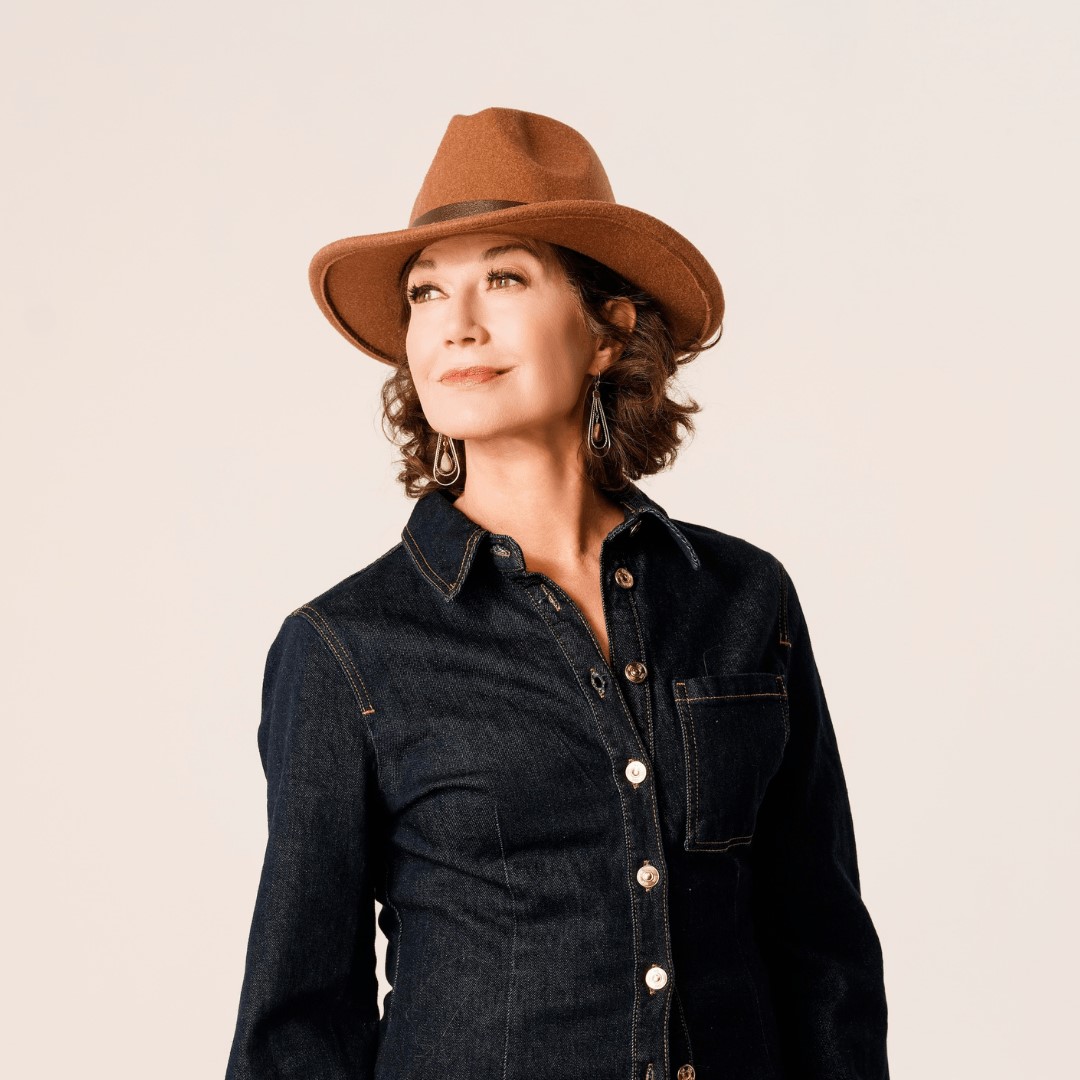
In this episode of the Brain & Life Podcast, co-host Dr. Daniel Correa is joined by musician Amy Grant. Amy discusses her inspiring journey of recovery following a traumatic brain injury (TBI) in 2022. She shares her personal stories of resilience, the symptoms she felt and how she dealt with them, and how music continues to be a source of connection and healing. Dr. Correa is then joined by Dr. Shae Datta, co-director of the NYU Langone Concussion Center. Dr. Datta shares expert knowledge on concussion and TBI management, recovery, and innovative therapies, highlighting how personalized care can make a difference in prognosis.
Follow and subscribe wherever you get your podcasts!
Apple Podcasts Spotify Libsyn
Additional Resources
- Amy Grant
- After a Traumatic Brain Injury, Work Challenges May Last Longer Than Expected
- Surviving and Thriving After a Traumatic Brain Injury
Other Brain & Life Episodes on this Topic
- Veteran Lindsay Gutierrez is Reaching New Heights with Traumatic Brain Injury
- U.S. Soccer Legend Briana Scurry on Concussion and Mental Health
Follow us!
- Guest: Amy Grant @AmyGrantOfficial ; Dr. Datta @NYULangone
- Hosts: Dr. Daniel Correa @NeuroDrCorrea; Dr. Katy Peters @KatyPetersMDPhD
- X: @BrainandLifeMag
- Instagram: @BrainandLifeMag
- Facebook: Brain & Life Magazine
We want to hear from you!
Have a question or want to hear a topic featured on the Brain & Life Podcast?
Record a voicemail at 612-928-6206, or email us at BLpodcast@brainandlife.org.
Episode Transcript
Dr. Correa:
From the American Academy of Neurology, I'm Dr. Daniel Correa.
Dr. Peters:
And I am Dr. Katie Peters. And this is the Brain & Life podcast.
Amy Grant:
Maybe I was wrong, wouldn't be the first time. Maybe I come on a little too strong, keep rolling through stop sign.
Dr. Correa:
Welcome back. Now, as you guessed it with the change in intro music, today we have a musical guest, and I truly appreciate Amy Grant and her team for sharing selections of her music for this episode. Katie, over the years have you listened to Amy Grant's folk or contemporary music? I know when I mentioned it to my wife that I was interviewing Amy Grant, she just reflexively started singing Baby, Baby.
Dr. Peters:
Baby, baby. I'm not allowed to sing, I'm not allowed to sing, especially after the wonderful Miss Amy Grant was able to sing for you or we had that audio. She shaped sort of contemporary music and folk music into something that was really more accessible to a lot of people, which I think was really nice. And many artists came after, sort of followed her path. I mean, she's a great leader and was an important part of that Nashville folk music contemporary community.
Dr. Correa:
And for our listeners who have been hearing or have caught our episodes, you know that we really enjoy bringing together music and movement alongside discussions about how they impact neurologic conditions and how neurologic conditions impact everyone. So if you have specific artists that you'd like to hear from or topics about the overlap of music, movement and dance in our brains and the neurologic systems, please let us know. I know I would love to follow up with some of the scientists who are actually studying how music and dance can compliment other activities for our brain health. I know there's work going on within the space of Parkinson's and other movement conditions and in recovery from certain conditions or prevention of seizures. I really want to reach out and bring some of that content here and update that latest science with our listeners. Katie, anything you want to think about for future episodes?
Dr. Peters:
I agree with you. There's so much about movement. I think we've touched on diet several times. I think that would be sort of fun to explore a little more. We've got so much in the works for our future episodes and I'm just thinking about the guests that we've already recorded. I don't know if I'm allowed to tell everyone yet, but we will definitely hear from many different voices with a lot of new opinions. And really with sincere focus that we want everyone to foster the best brain health they can have and what are the mechanisms that we can do to do that and also to bring awareness to how important brain health is to us day-to-day moment to moment and what you can do with those positive changes such as movement and diet.
Dr. Correa:
And the way many of those things can also help protect our brains, but even more, well, I guess adding to that importance of protecting our brains in our discussion and interview with Amy Grant today, we'll highlight and talk about the importance of wearing a helmet for any kind of movement activity where it's recommended, whether that's skateboarding, riding a bicycle, a scooter. We see increasing numbers of people coming to hospitals with head injuries and brain injuries from these kinds of events. And that'll come out in our discussion today with Amy Grant. And we've had a previous episode also related to cycling and brain injury or TBI with Rebecca Rusch if you want more information from a different context.
I hope you enjoy our interview with Amy about her music, her experience with TBI rehabilitation, and returning to recording another album, now actually currently available to everyone entitled The Me That Remains. Please enjoy.
Welcome back to the Brain & Life Podcast. So our guest today, Amy Grant, is the iconic singer-songwriter whose voice and music has been a part of so many lives for decades, but many don't realize that in 2022, Amy faced a life-changing challenge with a bike accident in Nashville that left her with a concussion and a traumatic brain injury, including a period of unconsciousness and a long uneven recovery. She shared candidly about the lasting effects on her memory balance and confidence, including starting experiences of lost memories in her lyrics. We're so glad to welcome you, Amy. Thank you for joining us on the Brain & Life podcast.
Amy Grant:
Thank you, Daniel. Great to be here.
Dr. Correa:
I have to say, when I told my wife that we were going to be having our interview today, she was so excited and just went into her own song.
Amy Grant:
Good. That's fun. Music creates some pretty interesting and wonderful relationships.
Dr. Correa:
Yeah. And I was hoping maybe we could start with there. What initially brought you to the performance stage?
Amy Grant:
Well, I was not one of those kids who sang into a hairbrush looking in the mirror. I was a music lover and I had a record player from the time I was a little girl and I would borrow my older sister's albums and I listened to everything from The Beatles to Elvis Presley to John Denver, James Taylor, Early Elton John, Carole King, Joni Mitchell. I mean, way back when you just put the needle down on the LP and it's such a tactile experience.
And then I started playing guitar when I was a freshman in high school, so 14. And then I started writing songs. I so loved the experience. I never felt like I was a great singer. I just loved being involved with music. And through a strange set of circumstances, a tape of songs that I had made for my mom and dad fell into the hands of someone. They were starting a new kind of record company and it was contemporary music that talked about faith and somebody played this record company executive, my cassette tape and he said, "Well, she's not that good, but she sounds really sincere."
Dr. Correa:
And they gave you that report?
Amy Grant:
Yeah. And it's just like anything that you love and you apply yourself to, you improve. I was learning as I went and you learned what your strengths are and you just kind of try to lean into those strengths and my strengths were always lyric and conversation. And so I think about songwriting as just always a way to further the conversation connecting people.
Dr. Correa:
Absolutely. And we've loved having you in the conversation and in our living rooms and in ears. And before we jump ahead to 2022, I was wondering if you might share some of your favorite career highs or even some of the lows and challenges that you went through.
Amy Grant:
Oh, goodness. Well, if this were before 2022, I might have different answers.
Dr. Correa:
Exactly.
Amy Grant:
But I just love how music brings people together and you cannot know a recording artist, but you maybe have listened to so much of their music that they feel like a part of your life, not somebody you want to but just like you feel like my friend. And James Taylor is a great example of somebody that I grew up with. I loved his story. I loved his songwriting. I loved his storytelling and songs. And I remember going to see him at different venues in Nashville.
And then when I started recording my own records, I would have opportunities to be backstage, like at the big amphitheater in Nashville, which is no longer Starwood and standing in a line shaking his hand, "Thank you for your music." And then years later, asking him if he would sing on one of my records and then Vince and I were his guests at his 4th of July Tanglewood show and we stayed in their guest house and took a couple of our kids and we're all sitting around and having breakfast together. And I just went, "He's someone that has just occupied every chapter of my life."
And he just came and celebrated his first performance on the Grand Ole Opry stage and it was so lovely now to have had so many experiences with him from the time I was in my 20s, I'm 65. And backstage at the Grand Ole Opry, like lots of people are back there and even some of the audience members can come back there and it really is kind of people are playing instruments from dressing room to dressing room, but I saw him coming down the hall and everybody wanted his attention and I said, "Hey, we've got an empty chair in the corner of this dressing room." And he was like, "Thank you." And I don't know, it just felt so lovely to be somebody to sort of shelter his privacy and everybody's in there playing different things, strumming along someone handed him a guitar or he said, "Ooh, can I try that guitar?" Because guitar dealers will come backstage and just have a lot of lovely old instruments and kind of waving the carrot in front of all these musicians.
But I'm telling you, when JT put his hands on that instrument, everyone stopped talking because they wanted to hear his stylized way that he plays guitar. It's only like James Taylor. And anyway, so I just think music makes great relationships even if you never meet the artist. Music is like the wallpaper for every experience we have all through life.
Dr. Correa:
So I mean, it sounds like in contrast to that age of be careful meeting your heroes, music and the opportunities that you've had have helped you connect with some of your heroes and their humanity and their love for the music.
Amy Grant:
Absolutely, yes. Yeah.
Dr. Correa:
Now, I mean, there are many physical challenges that can come with performing and musics and arts, but in 2022 you had a very different kind of challenge enter your path. And so can you take us back to that bike accident and the first days after in your recovery and what it was like for you?
Amy Grant:
Well, I have been told stories of it. I just have a few flashes of memory, but I don't remember the accident. I don't remember the ambulance ride. I don't remember any of that. I do know that my friend who was on the bike ride with me, she was in front of me and we were going down a hill. It was so much fun. We were on really heavy bikes. Mine was a Pedego. And what's so lovely if you're riding with somebody that doesn't ride frequently, if you're on an E-bike, a great rider can be with somebody who's totally out of shape, but we were spinning quickly going downhill and I was not looking at the pavement and there was a really deep pothole about six inches and so it just stopped me instantly. This is what I'm told. And it was interesting because a couple of years later she said, "I want to take you to the site of the accident." Because I had a lot of processing just trying to be patient with my brain and my recovery.
Anyway, I sort of started two different stories. When we were in the hospital, a neurologist that came by the room, when he was leaving, he grabbed my bike helmet and then he came back in and he said, "Oh, I bike to work every day." And he said, "I thought this was my helmet. This was her helmet." And he picked it up and he said, "If she hadn't had on this caliber of helmets, she would have been in the morgue." And so I don't remember him saying that. I don't remember any of that, but as I was sort of mentally one step up, two steps back, I had people tell me stories and recount things that encouraged me to be patient with myself.
And then it's probably been, I mean, that will be four years this summer, but about a year ago I was trying to find a little tiny food composter and I had one that was a green little plastic canister with a filter and I was just looking through some storage drawers and cabinets and I reached for what I thought was one thing and it was that old bike helmet and I hadn't actually held it since the wreck and I thought, why do I still have this? And I clipped it on and that really beautiful heavy duty plastic had gravel dents in it from here all the way to here. And I just went, "Ah, oh my gosh, this thing protected me." And that was a few years after the wreck and I just thought, oh, go easy on yourself. Go easy on yourself.
Dr. Correa:
Yeah. I think we often all need that to just remind ourselves of everything that we've been through. Sometimes people hear the term concussion and they think of really just a short term injury. They maybe relate it to some other type of trauma that just heals with a little bit of time as a cut or a scrape might, but your recovery is a clear example that it's so much it can be and it's often much more complicated, more prolonged. When did you realize that this was going to be a longer journey?
Amy Grant:
I basically had a very quiet life. So the accident was the end of July and I was quiet, no screams, nothing all of August in September I had to go in for shoulder surgery and it was something that had happened during the wreck, but they didn't want to anesthetize me until I was a little more healed up in the head. And then I had another surgery in January. I didn't feel like myself I would say for months.
So that was July. I actually did some shows in December, Christmas shows, but I would start crying during sound check and couldn't stop. I had very poor balance so I would have to hold onto people or things. It was not fun, but what I remember is like the next summer, so a year later, a friend saying, "Oh my gosh, you're exponentially better than when I saw you in December." And then the next Christmas, somebody saying, "You're so much better than you were last summer." And then so two years after the accident, I did some neuropsychologist at Vanderbilt Hospital, he said, "We just need to have a baseline. We need to do some tests." And there were things about memory, processing, my vocabulary. And at that time, two years after the accident, almost two years, I felt myself still kind of start my tendency to recede because when a conversation was going on, it was hard.
I was not going to come out with a one-liner, the funny thing, because that wasn't going to occur to me until 10 minutes later. And so in a very practical way, he said, "Might not feel like it to you, but your memory, you're scoring in the 90 percentile, vocabulary, the 90 percentile." And he said, "You got to realize anybody doing these tests has a reason to be doing these tests, so this isn't like a cross section of America." But he said, "Your processing is in the 20%, 20, 30%."
And I was going, "That's what it is. It's that my speed of processing." And I said, "I don't believe I'm done. I don't believe this is my permanent resting place." And he said, "The plasticity of the brain," he said, "All I can tell you is lean in, lean in, enter the conversation, never recede." Oddly enough, six months ago, I felt compelled to start doing some movements that I nicknamed Child's Play because they always make me smile. It was just a series of movements and I thought because my life is public and I have to be on stage, I have a lifestyle of fitness if nothing else, just I'm a woman in vain, I'm not going to get up there. I would have a baby and six weeks later have to do a music video.
This is when I was much younger, but it was that reason to be fit. And so I just asked myself the question last September, does somebody have to have a gym membership? Do they have to own a bicycle? Do they have to have all the fancy stuff? Do they have to be able to swim a mile? Is there a way that you can be healthy if all you have is yourself? And I was on the road one day and I just said, "What if I did these seven exercises, a hundred repetitions a day for 100 days? Would I find it was enough?" Just the word enough is rarely said in our culture, everything's not enough.
And so I made it manageable, 25 repetitions as soon as I awaken, 25 repetitions right before I go to bed, two times during the day. And it was interesting because just trying to do some of the things, toe touches, standing on my toes, kind of going back and forth and standing on one leg, I was teetering and tottering everywhere I would lose my balance, but a month into doing that, the engineer mixing my live music said, "Man, you're singing stronger. What are you doing?" And I said, "I'm just doing these simple movements a hundred times a day. I'm going to see if it's enough in a hundred days if I feel better." And that simple addition to my life, I got on a bike again last week for the first time.
Dr. Correa:
And how did you come to the mix of movements that you decided and wanted to do? Were they suggested? Were there things that you just felt a challenge with already?
Amy Grant:
A friend of mine that I make music with, a musician in the band, he's always like getting all these Tai Chi moves on YouTube and anyway, he was just doing different things after we'd taken a walk in Sioux Falls, South Dakota. He said, "Let's just take our shoes off, put our feet in the grass and I want to show you some moves." And he knows how bad my balance is or how bad it was and every movement we did, I couldn't keep the smile off my face.
Dr. Correa:
I like that. Yeah.
Amy Grant:
And so I thought, "Man, this is fun. This doesn't even feel like exercise." And that's why I just called them movements. And it was really just, I feel like my body led me out of curiosity is the only way I know how to say it. And I was curious, what if I did a challenge? What if I picked my seven favorite movements? One was like starting with my arms out to the side and one foot at a time, lifting up and clapping my knee. I mean, I was just stumbling everywhere trying to do that one, but a few weeks, a few months into it, I was not stumbling anymore. And I found that the regulation of those returning to that simple pattern of movements four times a day, it provided like a self-regulation for me if I was feeling overwhelmed by something, if I was feeling especially scattered, it put my mind back in alignment with my body.
And I just mention all that because I'm three years and three quarters of a year after that accident and in the last six months I have felt such a profound change and I'm not walking down a hallway and suddenly listening to the left, but I was for three years and there's still some residual things. I mean, my short term memory is not great. I have to write everything down. I set alarms for everything, but we're not static in life and all kinds of things change us and at every chapter we just have to figure out the systems that help us accomplish what matters most.
Dr. Correa:
I really appreciate that you started with things that would bring you joy, that brought you a smile as you thought about the movements or activity or exercise as other people will think about it and that you, as you reflect and look back at it, you see growth and improvement even though as you pointed out, there are some areas where you still have challenges. A lot of people expect to not consider that they are getting better until everything is better.
Amy Grant:
Right. Yes. I mean, all I know is every time I go and have my hair cut, she'll say, "Well, this section of your hair grows a lot faster or this section." She'll do the cut, whatever that is, and then I show up and if hair grows at different speeds, why wouldn't we think every system in our body actually functions in a slightly unique way and health and healing would be that way and recovery, yeah.
Dr. Correa:
And one of the most striking parts of the story that you've told and shared is you forgetting lyrics to these songs that you've sung and known for decades. What did that feel like and what was it to relearn your own music?
Amy Grant:
I feel like one of my super skills was my memory, and I didn't have to think about it. I really grieved the loss of that, but hey, the alternative six feet under, I'd rather be here and I feel like whatever my toolkit is now, what I do know is there are no guarantees in life and every day is a gift and there are even in the worst case scenario, there's always some good happening.
I remember years ago after that tsunami in somewhere in Southeast Asia and I remember there was a man that somehow was a friend of Oprah Winfrey's. I don't watch a lot of TV, but his name was Nate and she was interviewing Nate. He had returned from this awful tsunami and his life partner had died, had drowned and she was interviewing him. He was so emotional and he said, "I know this sounds weird. It was the awfulest experience of my life, but in the middle of that I saw some of the most beautiful display of human compassion and people coming together." And at the time I thought, "Wow, how large of him to see a bigger picture with that awful experience." And that's what I've experienced about that bike accident.
I've got a niece that says, "Oh, you're different, but I actually like you better now." Not sure what that means. And I feel like my problem solving is different and I'm not sure what that is. I remember the first time my husband and I kind of, that I can remember we kind of got in, not a tiff, but however he normally responded, it wasn't finding any familiar landing spot with me. So I was like, "So right now I kind of want this argument to be over. Can we keep talking about this? " But he processes in silence. As he would say, "I've never regretted something I didn't say."
Dr. Correa:
That's a good one.
Amy Grant:
Yeah. And whatever pattern I used to have, I couldn't find it. And so I was like, "This isn't making sense. We're saying things that we don't really ... I don't think we mean this. I think what we feel about is a lot deeper than this. " And I don't miss, I like this more immediate, I don't feel the roots of a lot of longstanding behavior patterns.
Dr. Correa:
So in some ways it's helped you let go of things that were a challenge before.
Amy Grant:
Maybe so.
Dr. Correa:
Is there anything that has helped you celebrate and love if I can turn the phrase of even one of your songs, what remains in you and your music?
Amy Grant:
There's so many things to celebrate. I mean, I hadn't written a song in years and I mean, the room I'm in right now, I've nicknamed this room, Craftopia, inspired by my youngest daughter because she said, "You need a place where you can close the door and be creative. My granddaughter's dress up clothes are in here. I've got art supplies in here. Normally this chair I'm sitting in is not in here. The only chair that's in here is a child's chair." And when I finally cleaned out everything there was to clean out from when my kids were here, I sat down in that child's chair and I just wrote out that lyric to the me that remains and it was about going through that bike wreck. I mean, all of our stories have different details, but our life journey is similar. We try, we fail, we succeed, we learn the best from mistakes, all those things.
But yeah, I think the real lesson in all of this is to live with gratitude because I think when you live with gratitude, no matter what comes down the pike, you are more apt to welcome it and to go, "I don't see it right now, but I know there's goodness in this, even though maybe not what I would choose." And to me, gratitude makes a person flexible. If you're rigid about what you want to happen and you're just determined to live by your preferences, well, guess what? The whole world can't read your mind. And so you're either like that or else you go, "Hey, we're all in this. Everybody's just doing the best they can."
Dr. Correa:
One in the column for not processing in silence. In terms of that gratitude and sharing it, is there someone or something that helped you a lot and supported you throughout your recovery period?
Amy Grant:
My sisters were so supportive. Our kids a year ago we had a big family gathering for Easter and some of the kids and extended family were sitting on the front porch and they started telling stories about the summer of the accident and goofy things I had done. And no kidding, I felt like this must be what a child feels like when their parents are telling favorite stories about them when they were little. And I had no recollection of those, but it was just such a backwards thing that they were more in the parental role Whatever I was supposed to be doing for my healing journey, I was not obeying. But I don't know. I just feel like the rupture of how we all related to each other, it shifted.
Dr. Correa:
But provides a new opportunity for redefining those relationships.
Amy Grant:
Yes. Right, right. And then it kind of finds, like one of my daughters said, "Oh my gosh, I so loved it when mother had no filter." I mean, we really knew what she thought about everything. Yeah, life. I just think overall though, anybody that's had any kind of a life-threatening experience, you just don't take anything for granted. I don't care what it looks like today, tomorrow it could be very different.
Dr. Correa:
Well, Amy, thank you so much for your music, for joining many of our families in our stories and memories, and for joining us here on the podcast and sharing your story.
Amy Grant:
Thanks, Daniel.
Coming out of the dark, coming out of this cave. It's taking me months of days and years to find my way. My face in the mirror doesn't look the same. I recognize a light in my eyes that never did faith and I'm going to find, yeah find and revive the me that remains.
Dr. Correa:
Thank you so much for joining us. And if you're enjoying the Brain & Life podcast, we'd love your support. Take a moment to rate and review the show on Apple Podcasts, Spotify, or whichever platform you're listening from.
Dr. Peters:
Your feedback helps more people discover these stories, learn from experts, and feel connected to the brain health community. Thanks for listening and for helping us grow.
Amy Grant:
Coming out of the dark. Stepping into the day. It's taken me months and days and years finding my way. When I look in the mirror, so much has changed, but I recognize a light in my eyes that never did fade. And I'm going to find, yeah find and revive the me that remains.
Dr. Correa:
So that was so much fun getting a chance to speak to Amy Grant, hear about her story, her experience with traumatic brain injury and the injury that she had along with her recovery and then just hear the updates about her music and as things are moving forward, joining us now for this continuation of our conversation as our medical expert for this episode is Dr. Shae Datta. She's a neurologist and co-director of the NYU Langone Concussion Center. Dr. Datta is one of the few fellowship trained neurologists in the country with specialized training in sports concussion and traumatic brain injury. And she's known for her multidisciplinary work, patient-centered approach focusing within the brain injury recovery space. Thank you so much, Dr. Datta, for joining us and welcome to the Brain & Life Podcast.
Dr. Datta:
Thank you so much. I'm so excited to be here to continue this conversation.
Dr. Correa:
So Shae, when people hear the word concussion, they often think of something mild or short-lived and we've had past episodes discussing some of the aspects of traumatic brain injury, but how do you explain what a concussion and a traumatic brain injury is and why some people have symptoms that last much longer?
Dr. Datta:
Yeah, that's a great question. So we have a wider umbrella. If you want to think about a umbrella, right? At the lower end of severity, let's say on the top of the umbrella are what we call concussions, which are synonymous with what we call mild traumatic brain injuries. So MTBIs and concussions are the same thing. What that constitutes is you can get a bump, blow or jolt to the head or the body. It doesn't have to be the head. Sometimes you get hit in the neck or back of the body and it causes the head and brain to move rapidly back and forth in your skull. And you can at that time have different degrees of, let's say, impairment or injury, but most of the time if we do any type of imaging, you're not going to have any type of structural changes unless we do something called a swan and that neurologists are familiar with can show some mild tearing of the blood vessels, but that has to be done fairly soon after a motor vehicle accident or some kind of blunt froze trauma.
And in our classification we're trying to keep it simple for the listeners, it's called a contrecoup injury, which is a fancy French way of saying the brain hits the front of the skull and comes back. So that in a nutshell is what concussion is.
Dr. Correa:
And what might be some of the reasons someone who has a concussion or a mild traumatic brain injury may have short-lived symptoms or longer lasting symptoms?
Dr. Datta:
Yes. I could probably talk for an hour on this, but I will try to keep it short and get off my soapbox and not get on it. But you know what it is everyone is different. I like to tell my patients that they're like fingerprints because we're all different. The way the mechanics of the forces, when we do studies or we try to equivocate how a concussion is caused, no two people get the same injury, one, unless we take poor mice and give them some type of injury that's equivocal in the lab and then test what happens to their brain.
But when people show differently, it's because the way they've had the injury is different. Their set point is different. So let's say me, female, let's say medium to low athletic ability as opposed to an athlete who has a concussion, they can recover much faster because depending on if they've never had a head injury, they're much more in shape. If you have preexisting conditions like depression, ADD, any kind of mental health issues, it's going to cause the symptoms to last much longer. And we've seen that in the studies, especially also females because we have longer necks, if we get a jolt, especially whiplash that transfers injury to the brain, we can take longer to recover.
And also times in the menstrual cycle matter too, believe it or not, I did a paper on that recently with the Concussion Center. It's fascinating really because if you think about a computer's processor, the brain is the computer is a processor, like our body's processor. So if the brain gets injured, and I always try to say that it's sort of like an invisible injury, like a bruise that you can't see on imaging, because microscopically there is a change in the neurotransmitters as well as the "bruise" that happens can cause changes in the cell membrane, the way that the neuron functions.
So the reason why people come with a constellation symptoms like anything that's preexisting, like they were managing their anxiety before with deep breathing, exercise that no longer works, they're dizzy, they have blurry vision, let's say, balances off, depression gets worse, anxiety gets worse, of course, headaches, light sensitivity. We're just touching on a few things that people can present with and it's confusing for, especially doctors that are not trained in concussion or other people that because it's sort of a quote unquote invisible injury, almost like a pain classification scale because there's not many objective measures that we have to measure this type of injury.
Dr. Correa:
And we've already kind of distinguished how there's some differences between mild and moderate or more severe types of injury and some of them the information that we have that Amy shared with us about the changes on the imaging or the pictures of her brain and the type of injury she had. We know that it was more likely moderate, but Amy also shared that this happened in a bike crash and how she's learned about the importance of using a helmet. What should listeners know about helmets and why they can protect us, what they can and can't do?
Dr. Datta:
Yeah. I love this topic because since we're reaching a wider audience with this podcast, I'd like everyone to know that helmets do not prevent concussions or brain injuries. What they do is protect you from cracking your skull in a worse way. If you have a helmet, the helmet can crack and you could still get some kind of concussion or brain injury, but it most likely will be milder than what would've happened if you did not have a helmet.
Now, we have a lot more fancy ones in professional like players like NFL and hockey and things like that, but obviously the layperson doesn't have access to that. But the better helmet that you have, the better chance you have of not having structural like cranial injury, that's what we can say skull fracture.
Dr. Correa:
Yeah. So likely then at this point we're really talking about protecting against some of the even more severe types of injuries both in the fracture and potentially even some of the hemorrhage.
Dr. Datta:
Absolutely.
Dr. Correa:
Yeah. And so let's move then forward to those moderate or more severe types of injuries after a head injury, what are some of the symptoms or recovery concerns that really might point a person towards needing to get further evaluation?
Dr. Datta:
Yeah. So as you mentioned previously, concussions are known to be, or they're defined as being self-limited. So a person should, whatever symptoms they're having should get better by themselves with some mild rest and then getting back out there within 24 to 48 hours cocooning or just resting and avoiding all activities no longer recommended. So we want them to get blood flow to the brain and be able to go back and do the normal activities. But if you're still not out there and not recovered, and I'll be generous, within a month you definitely need to be seen by a concussion specialist evaluated hopefully in a multidisciplinary center like NYU or University of Florida where I trained, shout out. It's a complicated thing to manage because there are multi systems that are involved once you get a concussion or a brain injury.
Dr. Correa:
And so I have sort of two then follow-up questions. One related to in the short term, immediately after an injury, what are some of the signs and suggestions that someone should get more urgent evaluation instead of waiting to see if symptoms resolve in the coming days or the month?
Dr. Datta:
Right. So we call these red flag symptoms in neurology. Anytime there's pupillary changes straight to the ER, blurry vision and vertigo are concerning, but if they resolve within let's say 12 hours, then I wouldn't worry so much, but definitely you still should get checked out by a medical professional regardless if you've been injured. I want to say that I should say you should not ignore it, but pupillary changes, neck stiffness, inability to move your neck, intractable headache, any kind of headache that gets worse on position change.
Also, if you have vomiting, intractable nausea or vomiting, any kind of seizure-like activity, obviously we've all seen the infamous Miami Dolphins incident where he had the fencer figure four posturing on the field where most likely had a seizure after getting a head hit. So obviously I know most of this is common sense, but anything that doesn't resolve or just is still there after 24 to 48 hours that would be constituted as dizziness, blurry vision, vertigo. If you're young, we're less concerned about it, but pupillary changes, horrible headaches, neck tension, neck pain, you really definitely need to get checked out.
Dr. Correa:
And we want to get to some of that recovery phase also, but one of the things you mentioned was ideally if someone can being seen by a specialist or a center with a multidisciplinary team so they can get the variety of support that they need. But for those with limited healthcare access, where do you suggest they start first?
Dr. Datta:
Yeah, that's a very good question. Urgent care is a good place to start because they're mostly emergency room doctors that work at urgent care to get checked out, at least get some imaging. And with limited healthcare access, if you're feeling that bad, you should definitely go to the ER so that they can check you out and then properly refer you. And there are programs that offer telehealth evaluations. We're sort of working on a consult type of triage system at NYU and across the country, I'm sure there are.
And I think this presents a great opportunity, Daniel, for all the major centers to work together and have this sort of offering for people that is limited. And this is why I'm a big proponent of having telehealth coverage for this because you're right, there's not many people sub-specializing or training in this, especially neurologists that you can easily go and see and perhaps the access to care would be better if we offer telehealth across the country.
Dr. Correa:
I think the only thing I would add and suggestion would be if you've had the more urgent evaluation completed and done and you're not sure where to start, either how to get to a neurologist or a specialized concussion center, I would suggest maybe listeners reach out to the Brain Injury Association of America. They have chapters all around the country and I may have some suggestions on how to navigate getting to the place that you need to be seen in your region.
Dr. Datta:
Yeah, they're excellent advocates. They do regularly email me to try to get people in earlier, which I don't know where I would fit them in my schedule, but we try to make room. Yeah.
Dr. Correa:
And so on the recovery path for someone dealing with persistent or long-lasting memory problems, dizziness, headaches, balance issues, loss of confidence and fatigue, just the shortlist of some of the many symptoms that can come with a mild traumatic brain injury or more significant traumatic brain injuries, what does good rehabilitation look like?
Dr. Datta:
Yeah, that is extremely important because we diagnose and we treat, but then we need to send them to specialized neurological rehabilitation, which consists of physical therapy, specializing occupational therapy, speech, and it depends on the person's deficit. So for example, if they have persistent vertigo and there's no central cause except for the fact, or it could be inner ear, we have to rule out if it's something called BPPV, because after a head injury, you could knock some crystals in your ear out and then you could get this spinning sensation. So we either want to see whether it's coming from the brain or the ear and then once we determine that, that it's not actually the brain, we would send them to a specialized physical therapist known as a vestibular therapist to rebalance their vestibular system with specialized exercises.
Now, a lot of times you also have eye involvement, blurry vision. And everyone goes through, they're like, "Oh, I've been to three different ophthalmologists. I've been to an optician. They're saying nothing wrong with my vision." So it's not visual acuity, it's actually the convergence and the ocular muscles that become weak when you get a head injury. So what happens, the easiest way to explain is that the eye muscles sort of get misaligned. That's the way I explain it. So they need to go to occupational therapy that specializes in vision therapy and none of these things are easy. So sometimes you can go to these specialty therapists and get further triggered. So you really have to work with a physician that knows concussion well and can ease you into this with medications and dedicated supplements that I use for my patients in order to treat them alongside the therapies.
Dr. Correa:
And this path of this rehabilitation and recovery in the short term for athletes, for many people with different neurologic conditions, but particularly those who are managing traumatic brain injury, there is a period of kind of grieving that previous function. And one of the most important and powerful parts of Amy's story that she shared was having to relearn lyrics that she had performed for decades. When someone is returning to something that's so deeply meaningful to them like music or performing or an athletic identity, how do you help them do that safely and realistically?
Dr. Datta:
The loss of autonomy and the psychological basis of this is huge. So in athletes and high performing musicians like you say, or anyone that's doing any kind of craft or job, they are absolutely mourning the loss of function and they keep pushing themselves, not understanding why they can't function the way they did before.
And you have to support them with psychological resources, understanding, counseling. We have specialty neuro-psychologists that can help us do this as well as psychologists to sort of manage their expectations, have them sort of dial back their activity to allow for the healing and then manage expectations as they grow. And you have to keep encouraging them because you see when I see the patients every month or two months or after they've done a bout of neuro rehab, I'm like, look, this is an objective test I did. You couldn't even do this when I saw you first. You are getting better. We have to be patient and these are the things you've improved on. So that sort of gives them a reality check because they're sort of in their head about it.
And also psychiatry has to be on board. I end up doing a lot of psychiatry because there's coexisting anxiety, depression, OCD and sort of ruminating thoughts about this. So you need counseling as well as you need therapy support as well as SSRIs or antidepressants at time to get you over the hump.
Dr. Correa:
Yeah. I think just the complexity of the many things that people will be managing and balancing in this, both their physicians, but also them and their families is so essential that they have really a supportive team.
Dr. Datta:
Absolutely.
Dr. Correa:
Now Amy shared for her and from her perspective, the role of practicing her singing, her music, different movement helped her with her brain injury recovery. What do we know about the role of music, rhythm, movement, dance in brain injury recovery? Are those uplifting extras or do we actually see and know that they help with cognition and mobility and mood?
Dr. Datta:
Yeah. I mean, music is known to activate parts of the brain and help memory consolidation as we know. And anything like music therapy, garden therapy, art therapy has been shown to foster neuroplasticity. And that's a fancy way to say that we can remodel the brain in a positive way and help recovery. It has been shown to improve a cognitive physical and speech rehab. There are things like something called rhythmic auditory stimulation that helps executive function, memory, gait, speech fluency, and mood.
I think I was reading an article and I thought this was so interesting, but of course I'm so burned out and don't have time that I don't even look this up. But there's Beethoven, some type of Beethoven symphony that if you play it's shown to alleviate anxiety and it tests subjects and they're also testing it in the lab for cancer patients, it shows to slow down cancer cell growth, which I find mind-blowing.
I'm just so impressed and amazed that this type of treatment is getting the time that it needs because so often allopathic physicians, we were really just always taught one way just medicine, medicine, medicine and pathophysiology, but now we're using all these adjunct treatments and I'm really all into it. I really think this cognitive rehabilitation, meaning rehab for memory should employ music art, it stimulates structured brain areas responsible for memory and helps with recall.
Dr. Correa:
Yeah. So for our listeners, we'll put them in the show notes, but yeah, Beethoven Symphony Pastoral number six is the one that's been-
Dr. Datta:
All right, let me Google this while we're talking.
Dr. Correa:
It's one that's been studied and shown reduction in anxiety. The other one that I know about from the epilepsy space that I'm familiar with is Mozart Sonata for two pianos in D, major. And then there's the funny little thing of K.448. It's been shown to reduce abnormal electrical discharges or epileptiform discharges, the things that can lead into seizures when people listen to them. And we don't know if these things are particular to characteristics of this music or that type. And there are people actually studying and seeing if there are other cultural references and examples or parts of this music if it's incorporated into other music that could be beneficial. But we hope that everyone gets a benefit from the music they enjoy and love.
Dr. Datta:
Yeah. And this is free and it's uplifting and relaxing. There's something to it because we've studied brainwaves and they respond differently to different music. So it would make sense that this would work. The other thing is I'm not sure if you've heard of, I don't even know how to pronounce it, by R&L Beats. By Arnold Beats, I recommend that for my patients for anxiety and guided meditation before sleep, no matter what they see me for, what neurologic issue they see me for, because I'm in New York and we're all very high-strung. Everybody's anxious. It's like anxiety is like a stipulation to survive here almost.
So I think everyone can do with a little bit of guided meditation. And there's actually been research done where they've mapped areas when people are meditating and with meditating for like three months, it actually increases gray matter in the brain. So that's neuroplasticity for you.
Dr. Correa:
We all hope we have still many opportunities for growth and improvement. So for our listeners who might be living with lingering symptoms after a traumatic brain injury, as we wrap up, what do you want most for them and their families to understand about their recovery, pacing, and hope?
Dr. Datta:
Let's start with recovery. So let's say you have had an injury very recently. You have a huge opportunity to improve the sooner you get started. Now that we know as much as we know and we're still finding out more, of course, 10 years ago we didn't have the knowledge that we have now. It's unfortunate when someone comes to me 10 years later, there's not that many things perhaps I can move the needle on to reverse at that point, but we do have ways to treat what they're living with. For example, anxiety, vertigo, unless there's structural brain changes, let's say in the area of the cerebellum, let's say that's balance. If you have that issue, there's nothing we can do unless we find some kind of interbrain stimulation to fix that.
But what I'm trying to say, if you have a piece of your brain that's damaged, structural damage, it's very hard to get that back, but you can get a lot of speech back, you can get memory back, but you have to work with the proper therapist to rewire those structures. So it's like anything they say, if you don't use it, you lose it. So like professional basketball players or athletes or anyone who's trying to build muscle, they have to be in the gym, they have to practice, they have to keep at it. The patients that I see that are, they'll say like, "Oh, I went to vestibular therapy and then whatever exercises they gave me, I dedicate an hour and go down and do them in my basement."
The ones that keep with it and have families that are supportive and keep on top of them in terms of their appointments, support them and don't push them because it's very hard to understand because on the outside they look the same, but they're definitely not the same on the inside. So having patience and compassion is very important with these patients. And then for the future in terms of what's looking forward, we definitely, once let's say you've gone and always get a second opinion doesn't mean that one person you see knows everything.
There are different programs across the country that you can look into, but let's say you've gotten to a place where you plateaued and perhaps you're not improving then like you said, that morning sets in and you have to manage your expectations and sort of go through therapy and use, let's say, supplements, music therapy as much as possible, even see a psychiatrist for support to manage your mood and find a new normal for you where you find life meaningful and that is the quality of life for all of us.
Dr. Correa:
Yeah. I mean, I think every day we have to adapt to what we're capable of and our new selves and find meaning and hope in what we have right now.
Dr. Datta:
Absolutely.
Dr. Correa:
Well, Shae, thank you so much for joining us. I truly appreciate the time and work that you do with the community that you support here with brain injury and thank you so much for joining us and the listeners on the podcast.
Dr. Datta:
No problem. It's my pleasure. Thank you so much, Daniel.
Amy Grant:
All alone and feeling sorry for yourself, seek the truth but you keep finding something else. It's so disturbing. Any problem that you ...
Dr. Correa:
Thank you again for joining us today on the Brain & Life Podcast. Follow and subscribe to this podcast so you don't miss our weekly episodes. You can also sign up to receive the Brain & Life Magazine for free at brainandlife.org.
Dr. Peters:
Also, for each episode, you can find out how to connect with our team and our guests along with great resources in our show notes. We love it when we hear your ideas or questions. You can send these in an email to blpodcast@brainandlife.org and leave us a message at 612-928-6206.
Dr. Correa:
You can also find that information in our show notes and you can follow Katie and me and the Brain & Life Magazine on many of your preferred social media channels. We're your hosts, Dr. Daniel Correa, connecting with you from New York City and online at neurodrcorrea.
Dr. Peters:
And Dr. Katie Peters joining you from Durham, North Carolina and online at Katie Peters MD PhD.
Dr. Correa:
Most importantly, thank you and all of our community members that trust us with their health and everyone living with neurologic conditions.
Dr. Peters:
We hope together we can take steps to better brain health and each thrive with our own abilities every day.
Dr. Correa:
Before you start the next episode, we would appreciate if you could give us five stars and leave a review. This helps others find the Brain & Life podcast. See you next week.
Amy Grant:
Nothing like a sunny day to ease your mind and chase those clouds away. All I want to say is nothing like a sunny, nothing like a sunny day. A glass half empty still more than fills the cup. And if you're in the dark, you might just need to open up the curtain, for certain. There's nothing like a sunny day to get you smiling. Nothing like a sunny day to ease your mind and chase those clouds away. All I want to say, there's nothing like a sunny, nothing like a sunny day. Nothing like a sunny day. Nothing like a sunny day. Nothing like a sunny day.