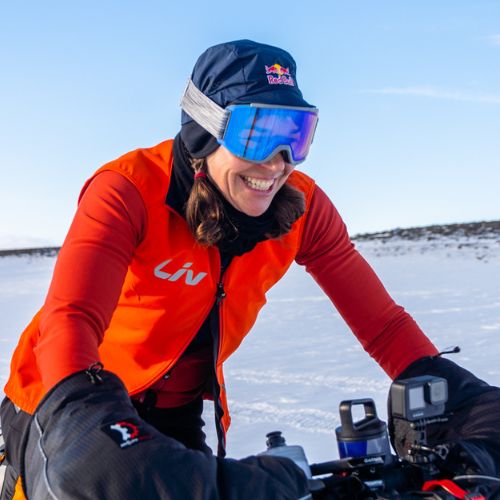
In this episode of the Brain & Life Podcast, host Dr. Daniel Correa is joined by adventure athlete, best-selling author, activist, and Emmy-award winner Rebecca Rusch. Rebecca tells the story of her Traumatic Brain Injury (TBI) and how it led her on a new journey of healing and recovery. Dr. Correa is then joined by Dr. José Posas, board certified sports neurologist with a focus on the intersection of sports, neurology, and brain health. Dr. Posas explains TBI treatment options for all and the importance of reducing healthcare disparities and using innovation to improve care.
Follow and subscribe wherever you get your podcasts!
Apple Podcasts Spotify Libsyn
Additional Resources
- Who is Rebecca Rusch?
- How to Deal with Invisible Symptoms of Neurologic Disorders
- Surviving and Thriving After a Traumatic Brain Injury
- How Yoga Can Help People with Traumatic Brain Injury
Other Brain & Life Episodes on this Topic
- Veteran Lindsay Gutierrez is Reaching New Heights with Traumatic Brain Injury
- Healing the Traumatized Brain with Dr. Sandeep Vaishnavi
- Julia Easterlin on Being a Performer with Migraine
Follow us!
- Guest: Rebecca Rusch @RebeccaRusch; Dr. Jose Posas @UVAHealth
- Hosts: Dr. Daniel Correa @NeuroDrCorrea; Dr. Katy Peters @KatyPetersMDPhD
- X: @BrainandLifeMag
- Instagram: @BrainandLifeMag
- Facebook: Brain & Life Magazine
We want to hear from you!
Have a question or want to hear a topic featured on the Brain & Life Podcast?
Record a voicemail at 612-928-6206, or email us at BLpodcast@brainandlife.org.
Episode Transcript
Dr. Correa:
From the American Academy of Neurology, I'm Dr. Daniel Correa.
Dr. Peters:
And I am Dr. Katy Peters, and this is the Brain & Life Podcast.
Dr. Correa:
All right. Now, we're back again, and thank you for joining us on the Brain & Life Podcast. You know, Katy, how far away from housing, beds, comforts of society and civilization have you ventured?
Dr. Peters:
Well, Daniel, it's going to depend on the decade of life because this definitely varied from time to time. I'm really a homebody, even as a kiddo. I really loved camp. That's a story for another day, and we can go into that later on, but I like the creature comforts, plus I need my creatures, my three cats, Amber, Bo, and Lucy. It's a lot easier to be with them. Now, are you willing and able to step beyond the comfortable to be Daniel the Explorer?
Dr. Correa:
I like your point of it depends on the decade of life. I had opportunities that I really enjoyed when I was growing up, going and camping. I think over time, as it got more challenging to sleep, and get rest, and recover well outside of the home, the evening comforts is really a place that I find important to me, but I love adventuring and going out for the day, but finishing somewhere with a really nice meal in a comfy place to sleep. And the last two weeks, we heard about Adventures at Sea, and today, we're going to continue that adventure theme, but we're going to take it to the back roads, and the backwoods, and the forest, and the wilderness of the mountains. Our guest today, Rebecca Rusch, is an adventuress in every sense of the word, and we will hear from her about mountain biking, overcoming injury, and redefining her image of herself and her life after a traumatic brain injury.
Welcome back to the Brain & Life Podcast. Today, I'm really excited. All I have to admit, I am a bit of an adventurer at ... No, I wouldn't even say athlete, just enthusiast, and I like being outside. You guys have heard me talk some about my running and other adventures, but I heard our recent guest, both on her channel on YouTube, heard her on several different podcasts, and I'm really excited to bring her experiences here to you, our audience.
Rebecca Rusch is an adventure athlete with over 30 years of competing, including seven-time world champion endurance competitions. She's a bestselling author and activist, and Emmy Award winner, obviously an overachiever, and she's pushed her limits in many disciplines, including rock climbing, whitewater rafting, and mountain biking. And then, in 2021, after a mountain bike crash, she's been living with and recovering from a traumatic brain injury, or TBI. This experience has led her on a new journey of healing and recovery, and probably a new form of endurance competition, and we're excited to hear from her about her own experiences. Thank you, Rebecca, for joining us today.
Rebecca Rusch:
Thank you, Daniel. And I'll admit, I've been binging on the Brain & Life Podcast since I found out about you as well, so I'm a little bit of a super fan over here.
Dr. Correa:
Well, now, you're making me feel anxious. Oh, well, thank you so much, and for listening along, and hopefully you, along with everyone listening finds it helpful. Now, we use that setup of often and talk about all these different things. I often will walk in the room, people might use my title as physician or doctor. I might mention, or they may applaud me for having run a marathon, and you have so many achievements, but when you think of yourself, who is Rebecca Rusch?
Rebecca Rusch:
It's a good question because we do put labels on ourself, but first and foremost, I'm an athlete. Even since being a young kid, I found enjoyment in being outside in nature, and camping, and moving my body, and so that has been, through all my sports and all my sports, entrepreneurial activities, they've all focused around being outside and moving. And so I'm an athlete. I also like to call myself an explorer because I'm still that curious kid who likes to go see what's over the top of the mountain or around the next hill. And so athletics have been my trade and training my entire life, competition, also launching businesses and events.
And I will tell you, I love that you started with this first question because one of the biggest challenges of my long-term post-concussion symptoms was a real loss of my identity, and, "If I'm not a world-class athlete, who am I? If I'm not charging and doing all this stuff that I used to be doing, then who am I?" And that was a really big factor in, I think, the prolonged effects of my symptoms because I had this wrapped up in this identity, that all of a sudden, came to a screeching halt in 2021.
Dr. Correa:
We all, unfortunately, have experiences like that for ourselves and within our family, and in some ways, I'd actually challenge that idea and say, "Maybe not unfortunately." Have the opportunity to survive past a challenge, and then see the other side is a great positivity for all of us. Before this, you were known in endurance and adventure athlete community as the Queen of Pain for pushing past physical and mental limits, but now, after a traumatic brain injury, when you were physically and mentally dealing with pain in a very different way, what were some specific things you had to work towards adjusting in your mindset and your approach towards managing and living with, and recovering some of the symptoms of your traumatic brain injury?
Rebecca Rusch:
We talked about exploration. I've been an outdoor explorer. I really had to sort of turn inward and start to explore myself, and sitting still, and being quiet and trying to meditate, and breathing exercises, really, a lot of things that are, what I've learned, are nervous system management tools, whether it's breathing or doing art. I started picking up drawing, playing a little bit of music, but I had to find other outlets for my energy, but outlets that didn't make my brain tired and didn't stress my brain. They actually were using my brain, but in different ways.
And so that's actually been one of the gifts of my injury, is that I feel like I have a better understanding of myself internally, and some better tools for when I am injured, or better tools to keep me more healthy as a whole human. I'm a big advocate for health in general, physical health, but now also emotional, mental, cognitive health, because it really is the whole picture.
Dr. Correa:
And you talked about different outlets for your energy and, in a way, finding other ways to recharge your battery. What did you do on those times when you just didn't have any of the motivation and none of the energy, not having to figure out where to displace it and use it?
Rebecca Rusch:
Yeah.
Dr. Correa:
But I imagine that there were some times when it just felt like you didn't want to move, couldn't move, or weren't moving beyond the space you could be in and felt safe.
Rebecca Rusch:
Yeah, the biggest thing for me was finding support communities. I found a group called Love Your Brain, launched by a former professional snowboarder and his brother who had a brain injury, and they have free resources online, and I started making some friends who've had concussion, who've had brain injury. I have some brain buddies that I call them now, actually, and reached out to some other athlete friends, and we sort of formed a little bit of a community because I did find that my closest friends and family members, they didn't really understand what I was going through, and I didn't have the words to articulate it, and so I found a community, which is what's so great about this Brain & Life Podcast, and I started finding a lot of communities and was just like, "Why didn't I know about these before?" But it was mostly, I had to reach out for help in areas where people had some expertise or had some familiarity with what I was going through, and it made me feel a lot less alone.
Dr. Correa:
And if you can, can you take us back? I want to spend most of our time talking about the recovery, and where you are, and how you're managing things now. But to give our listeners context, can you take us back to that November 2021st event and injury, and where you were in that initial space before you found these tools and community?
Rebecca Rusch:
Yeah, it was November 2021. I was doing a three-day solo ride, which is normal for me. That sounds like a bikepacking ride.
Dr. Correa:
I know.
Rebecca Rusch:
So I was riding all day, and then camping with friends at different places along the way, but I was alone by myself, self-supported, riding all day, and this was the second day in Arizona. Beautiful, sunny, having a great time, not trying to break any records or anything. I was just riding my bike, and on an easy section, I clipped a handlebar, and I was probably going 15 miles an hour, and my handlebar hitting this rock that was sort of overhanging in the trail, just kind of sent me torpedoing at pretty high speeds down this rocky ravine. And the first impact was on my head, and then I bounced a few times on my ribs and sort of fell down this rocky slope. I got to my knees.
I didn't lose consciousness. I knew where I was. I knew what was going on, sort of took stock. I'm also an EMT, so I have some medical training, so I took a selfie of my face, and looked at my pupils, and was like, "Okay, I'm going into shock. I'm getting cold."
And so I kind of knew what was happening, and I went into sort of first responder mode. I was outside of cellphone coverage as well, and it was probably 4:00 in the afternoon, and I was maybe a couple hours from a trailhead, where I could get out. And so there was definitely an initial safety issue of like, "Okay, I hit my head. I could have a brain bleed. I could have a punctured lung because I hit my ribs."
And so I kind of went into survivor mode and self-extricated myself and got myself out there. I'd sent a satellite message to a friend to meet me at that trailhead, and I just made my way out. And it was a pretty hard sort of self-rescue, but I could move and I got myself out, and quite honestly, when I got to the trailhead, I was like, "Okay, the worst is over. I did it. I'm okay. I'm here."
I had no idea I was in for three years of long-term symptoms. And I looked at my helmet, my helmet was broken, and I didn't go to the ER. I stayed with some friends, and who were all mountain bikers, and literally, nobody said, "You should go to the ER and get your head checked." It was like, "Oh, you hit your head. You're going to be bruised. Oh, you might have broken ribs."
It wasn't the first line of thought of, "You fell hard enough to hit your helmet and break your helmet. You should go to the ER and get your head checked out." So that was the first thing, is that just socially, people aren't saying, "You hit your head. You should go checked out." They're like, "Oh, you know what day it is, you know who the president is, so you must be fine." And those aren't really the best factors to know, "Okay, do I have a head injury or not have a head injury?"
Dr. Correa:
And personally, for yourself, I mean, you mentioned you have EMT training. When you were going through the assessment process, you thought through the concerns of, "Oh, maybe I injured my lung, maybe I've injured my head, maybe I have a brain bleed," and work through that, and then made a plan to self-rescue. But what do you think got in the way once you actually were there, from following through and seeking that additional support?
Rebecca Rusch:
It's a great question because I'm trained to get them to definitive hair quickly, and then wash your hands of it. And so I'm trained to deliver them in the best, better than you found them hopefully, or the same, and that's where my training ends, and that's where I did go to a medical professional. But yeah, I didn't push for the right care, and I think part of that is I was scared. I didn't know there's a lot of sort of stigma or like, "Oh, you'll be fine." But I do blame it on my primary care physician that they didn't actually push for, "Hey, okay, you hit your head. Let's get some tests."
I mean, they did testing to see if I had a punctured lung and did some blood tests for the ribs, and really, didn't hone in on the brain health. And I think that's a big missing part in our healthcare system, is that, one, the patient doesn't know what to ask or push for, and the primary care physician, it doesn't come up when people hit their head. They don't automatically go to, "Oh, well, we need to think about brain injury." Some folks do and some are great, but I didn't have that experience. So that was really hard, and the people around me just didn't know what to do. And again, that's part of the resource guides and talking about this is so that your friends and family just know the questions to ask, to try to get you to the right kind of specialist.
Dr. Correa:
And one thing, I think, I really appreciate about what you are saying and sharing about your experience that also you have and point out in the resource guide is there is one level, like you talked about, as an EMT, and even you thought about for yourself, there's the first and the emergency side of things. It is important to get evaluated early on, and the approach that you're going to get evaluated from, whether it's a primary care doctor or in the ER in a hospital, initially is probably just going to be checking for the major, immediate things that would need some sort of immediate medicine or intervention, but just because they do those tests, a few blood tests, a picture of your head, and they don't see any major injury that needs an intervention, that doesn't mean that you're now expected to be completely normal tomorrow. And really, your attention to the other things you're going with, the challenges you were having with headaches while you're reading, these are all things that then go back, either to see your primary care doctor or to seek more ways to help manage and work on these things so that you can improve how you're recovering in your brain health moving forward. And so one is managing and evaluating, yeah, because there's going to be different stages, and I think you demonstrate that so well with your story. And unfortunately, this is something everyone experiences.
Everyone in the healthcare system, both us as patients and us as providers, need more resources to help people at each of the stages of many medical conditions, but particularly, traumatic brain injury is one of them. Yeah, and then you're sharing and pointing out something many of our listeners, maybe they're not adventure athletes, but many of our listeners and their families are familiar with this frustration of the invisible aspects of injuries, which include traumatic brain injury, but so many other medical conditions have invisible aspects of their condition that they live with as a challenge or an injury. How did you cope with that disconnect between the outward appearance and the internal struggle beyond just your interactions with the medical providers, with other people in your community and your family? There's so much that they didn't have awareness or see because other than your helmet, you didn't have a lot of other outward injury.
Rebecca Rusch:
Yeah. Honestly, I lied about it for a long time, and I hid it, and I pretended like I was fine, and that was super frustrating to know that I needed to rest, or I couldn't work as long of hours, or I couldn't have conversations with lots of stimulation if a lot of people were talking at once. I had a few people close to me that kind of knew some of my triggers, and they were really helpful in shielding me, but I was lying about it, to be honest with you. And when I stopped lying about it, that's when the recovery really started coming. And I also started finding those communities, like we said, and also started seeing that me sharing my story was actually helping other people.
It was helping me to be honest about myself, but it was also helping other people, and then people started reaching out with other therapies, or other groups or ... So really, was this beautiful snowball effect. And so while it is an invisible injury and I was ashamed to talk about it, I'm so glad I finally did because it's actually, it's opened up a lot of new doors, and new work projects, and new friends, and it feels really good to, one, be helping my recovery, but helping other people at the same time. And so I can't say enough about the person who has the injury or something going on to just be honest about who you are and where you are. And first, people kept saying that kind of stuff and I didn't want to hear it.
I'm like, "No, no, I'm going to be right back to where I was before," and I'd hear some language around, "Well, you might not be the same," and I kind of didn't want to accept that, you know? And when that acceptance came, I actually felt like my recovery really started to escalate and elevate. So I think the first part is admitting, "You've got an injury, you've got a diagnosis, you've got something to deal with," and hiding it, like hiding any injury doesn't help a heal.
Dr. Correa:
Yeah. And you speak about the crown and the cape of your history and your accomplishments, feeling heavy, and that exhaustion of your previous experience of basically being, I mean, a superhuman. You talk the three-day solo bike ride was just like a regular thing, it paling in comparison to literally riding across Vietnam and so many other accomplishments that you have made. Maybe not necessarily that level of accomplishment is what we think of in our regular day lives or our listeners, but many of our listeners are parents, caregivers, in a way, a superhuman for other people in their life. How would you elaborate on letting go of that aspect of your identity, for you, the superhuman athlete, and for others that might be listening, other aspects of their life and the way they are superhumans to others, and redefining that for yourself with the recovery?
Rebecca Rusch:
Yeah. I mean, Daniel, that was the hardest part of me, letting go of this identity, and I'm supposed to motivate everyone, I'm supposed to have everything handled. This was very new for me, to not be able to be that person that I've always been for myself and for those around me. It was pretty dark. I mean, definitely depression, anxiety.
I can't tell you how many times I was prescribed antidepressants that I didn't end up taking because I felt like it wasn't the right diagnosis, or it wasn't based on a professional, giving those medications, prescribing those medications. And so I had to have a real identity shift, and it was very slow. Therapy was really helpful for me, to have somebody to talk to, that I didn't need to be anybody else with, that I could just really say all the things that I was feeling and thinking about, "I'm weak." All this stuff, I could just say it to a therapist who is unbiased and trained professional, that could sort of hold those feelings. And once I started getting those out and talking about it, really was helpful.
And I also started to see myself through others, is that we started this conversation with like, "What is your identity? Who are you?" I was like, "I'm an athlete." I started to see around me other people saying, "Oh, you're a great writer," and I'm launching a podcast is part of it. So I started to find other avenues and other ways to sort of fulfill my desire to explore and help other people through things other than doing hardcore, massive expeditions in the outdoors.
So I started seeing value in myself in other ways and other places, still based on athletics and movement, but in other avenues. And I've heard you talk about that a little bit with some of your clients, that you may not be able to do the same exact job that you were doing pre-injury or pre-diagnosis, but you can take the foundation and what you love, and shape it into another way to contribute. And that's been really important for me, so that the two factors, really, if we talk about were community and purpose, me finding a community I connect with and a purpose for me being in this world, and it's a way to give back. And once those things started to come, then the recovery really started to happen.
Dr. Correa:
When you think of it now, do you think you started to see yourself in a different way before other people saw the value in you and these other identities, or do you think people like your partner, Greg, other people in the community, them really investing and saying and pointing out to you your level and value and qualities beyond the athlete? Was that started it, and then over time you internalize some of that?
Rebecca Rusch:
It was a little bit of both, but I will say most of us are our own worst enemy, and so often, the people around us see the ways that we shine before we see them, and so that's why it was important for me to open up and tell some of these people, "I'm really hurting. This is what's going on for me." I would write some poetry that was pretty dark and send it to a friend, and they'd be like, "Oh, you want to talk?" But the act of sharing and just sending it was really important. It was a way of opening up so that I could let those people say, "Hey, no, you're doing great."
"Let's go on a walk. Let's cook some food. Here's a recipe I love." So it's a little bit of both. It's you being open to listen to the people around you and letting them come in.
And then, those people that are coming in with somebody who's injured or maybe behaving differently than they have before, or they have symptoms, it's also that person approaching you as a whole human, not as the people who are like, "Let's go do some hardcore bike ride." I said no every time to those, because I wasn't confident in my abilities, I didn't want to get headaches, I didn't want to create that level of stress. But if someone said, "Let's go on a dog walk," I would say yes, because it wasn't scary, it was approachable for me, and it was still a way to be outside that wasn't tied to an expectation that I should be this or that. So it's both sides of the coin, but I will say others often see your light better before you can see it.
Dr. Correa:
And now, how do you see your light now compared to Rebecca pre 2021?
Rebecca Rusch:
I'm actually really excited about the future for the first time in three years and three months, because I can see the Rebecca before is not gone. There was a period where I was like, "I have to kill the athlete person. I have to become something totally different, and this part of me is dead," and I can see now that that was sort of dark, depressive point of view, and it wasn't accurate, but everything I was before is foundational for everything that I can do in the future. And it might look a little different. I still have an adventurous spirit.
I still want to explore, but it feels like a more rounded exploration now, where I want to explore physical health, mental health, cognitive health, and wrap all those things together for myself and for people because we really are. Our head is connected to our body through our nervous system, and we often talk about mental health, cognitive health, and physical health. So I'm really feeling like I'm a healthier person as a whole, and hopefully I can take that and help other people get outside and move, but also think about their entire body health, brain and body health.
Dr. Correa:
So you do think that Rebecca Rusch now, after the TBI, is a healthier person than you were before?
Rebecca Rusch:
Yes. Yes, 100%. I wouldn't have said that a year ago, but yeah. And it's exciting to say that. If you asked me that a year ago, no, it was in a really, really dark place. And so I will say to people ...
I go back and read the journals, and I can't even believe what I wrote. And so keeping a record of your sleep, your symptoms, especially the subjective ones, that will actually give you hope when you go look back and you go, "Oh, that's where I was. Oh my gosh." And so often, I journal, I put them away, and I don't read them, but for the Brain Storm podcast series, I went back and read some of my journals, and it was actually really sad to see where I was, but it was also really great to see how far I've come, and the same thing with sleep tracking or other kinds of measures, is keeping track so that you can see progress.
Dr. Correa:
Yeah. And I love that it's not that you're better because of a label or the injury in of itself, or some achievement, it's from the work that you've been doing.
Rebecca Rusch:
It's been hard work. This is the hardest expedition of my entire life, has been recovering from a traumatic brain injury, the hardest thing I've ever done, but I've learned a ton.
Dr. Correa:
And now, and along the way, can you share some specific examples of how movement was a role in your recovery, and what advice you'd give to others who may be facing more significant physical limitations?
Rebecca Rusch:
Yeah. I mean, there's all sorts of great science about what happens when we move our bodies. You're getting circulation, blood flow, brain flow, all sorts of neurochemicals are getting released, but those things happen also when you play music or you pet your dog. And so there are a lot of things that we ... Depending on your mobility.
But I also, I had to shift my mindset to, "I don't need to go ride for four hours for it to be a legitimate healthy movement exercise," so I would say frequency and smaller duration is actually a better tactic to fit in something every day than to do a big, huge, long thing on the weekends.
Dr. Correa:
And we've talked about movement here and some of the mental health work that you've been doing in therapy, but what else did you find most helpful along the way in your TBI recovery?
Rebecca Rusch:
Just kind of safety, I will say. There were two friends, in particular, that were safe for me, and my therapist was safe for me too, to say whatever I want, to cry or to express frustration, and so it was this non-judgmental listening that a couple people in my life were there for, and I think that that was really important because a lot of my issue was not wanting to admit failure or weakness, or that I needed help. And I had some friends. It's just listened non-judgmentally, and they check in, and they didn't ask anything of me. They just called and talked to me, and often, they didn't even talk about my brain injury, which was great.
And then, they were also a good mirror for me. I remember asking my friend, Donna, a couple years in, "Am I getting better? Do you notice anything different?" She's like, "Absolutely, you can move your neck better, you can do this a little bit better." So she was a great mirror for me.
Dr. Correa:
And you've shared that your bike crash and this traumatic brain injury happened in November 2021 on Veterans Day, and you've shared before a lot of the aspects that it has made you think about and recall about your own father's experience in Vietnam. As you look forward this next November and Veterans Day, how do you think you might honor your own journey of healing and your father's legacy?
Rebecca Rusch:
That's a really beautiful idea, to actually honor the crash on that day and to think about my dad on that day. I feel like he was definitely looking out for me. The spot on my helmet, where the impact happened, was right over the map coordinates that I had painted on there of his crash. And so there was a very sort of symbiotic kind of relationship going, "Oh." Like, "Wow, I crashed on his crash coordinates."
So I do like that, actually honoring it. If we think about ceremony, I think about loss. I talked to my therapist about this in my concussion like, "What did I lose?," and the answer changes of like, "I lost mobility, I lost an identity, I lost confidence in myself. But what have I gained?," and there's a big list now that keeps building. And I think about, yeah, when I did lose my father at a young age, but what I've gained is the ability to honor his life and be like him. And I will share my mom died just a few weeks ago and unexpectedly.
Dr. Correa:
Oh, I'm sorry.
Rebecca Rusch:
And so I'm also thinking about she was very community-oriented person, and she remembered to call everybody on their birthdays and all that kind of stuff. So I do think we can take things with us that help us become more whole as humans. And so I love your idea that Veterans Day for me now will be probably a bike ride, and thinking about my dad, but also the gift of the crash, and the gift of what I've learned in the healing.
Dr. Correa:
Thank you, and thank you particularly for being here with us, even as you go through some of these loss, these experiences for you and your family.
Rebecca Rusch:
Well, you know, none of us get out alive, and I will say I have a different skill set now to help deal with the stress of losing my mom and the grief of losing my mom. I have a better skill set, thanks to the concussion and meditation and communities, so yeah, it's a growth opportunity.
Dr. Correa:
And as we wrap up for our listeners, who they themselves may be going through an early stage of a TBI recovery or another physically or painfully limiting injury or condition, what words of wisdom do you think you would offer or maybe even your father would've offered you and support at your early stages?
Rebecca Rusch:
Yeah, don't wait to get help. I mean, if you can imagine, my father was there, urging me on and helping me. My mom would be doing the same. What would your parents do for you right now, your main caregivers of your life? They would say, "Hey, let's go get some help. Let's take care of this."
And so if you can be that own caregiver for yourself, which is really hard, but don't wait. Go get checked out, and go start therapies that are appropriate for you. And if you hit your head and you don't have a concussion, great. You got checked out and you're good to go, but waiting is really never the answer. And so as hard as it may be, put your mom and your dad on your arm and get yourself in to get some professional help in the area that you're working in.
And our primary care physicians are amazing people, but they aren't specialists, and the body is so complicated, especially the brain, so finding the right kind of resource. And I'm sure you've got a lot of resources in your magazine and in the podcast, but yeah, don't wait.
Dr. Correa:
Oh, thank you, Rebecca, for taking the time for really finding your own path and journey as you move forward through this, sharing with us in the many ways that you've grown to really be even a better whole person as you look forward in your life, you know? And we'll make sure to share Rebecca's Brain Storm Podcast information, links to her YouTube if you want to see some really crazy bike riding and stories from her past, but we really appreciate the time you took with us and our listeners today.
Rebecca Rusch:
I love this conversation and love talking to you. And I will tell folks I'm launching a brand new podcast called What's The Rusch. And it is about taking a minute, looking inward, and exploring. So, Daniel, I might ask you to come on the podcast, if you don't mind, at some time too.
Dr. Correa:
Oh, yeah, I enjoy the conversation together so much, and I feel like there's so much more for us to talk about.
Rebecca Rusch:
Well, we'll have to pick it up for then in the next time around on my podcast.
Dr. Correa:
Great. Thank you.
Rebecca Rusch:
Thank you.
Dr. Correa:
Want to learn more about the conditions discussed in this episode and other factors that could impact your brain health? For the latest on causes, symptoms, diagnosis, treatment, and management of more than 250 of some of the most common and rare neurologic conditions, please visit brainandlife.org/disorders. Welcome back. I'm just absolutely floored by the discussion and story that Rebecca shared with us, and today, now, I'm here with Dr. Jose Hernan Posas. He's a board certified sports neurologist, now at University of Virginia and a colleague in the American Academy of Neurology. He's deeply committed to understanding the challenges faced by athletes and individuals recovering from brain injuries.
He serves at UVA as the Neurology Residency Associate program director and on their Neurology Department's Diversity Committee, really particularly considering on how issues of health equity, including Title IX, affect access to care in traumatic brain injury, other types of head injuries, and sports neurology. His dedication to patient care stems from his mentor, who has instilled in him the importance of giving back to community, which takes us to Rebecca's own story of the importance of community. With his focus on this intersection of sports, neurology and brain health, Jose was the first colleague I thought of for our expert discussion about Rebecca's experience, her transition, her rehab, setting goals for her own life, and I'm so glad he's here with us today. Jose, thank you for joining us here on the Brain & Life Podcast.
Dr. Posas:
Thank you for having me.
Dr. Correa:
So, Jose, you shared that you, yourself have experienced concussions, traumatic brain injury. It's a reality that many people live with, that we can have different injuries at different levels. I'm just wondering, what was your experience that you had with your concussion, and what has it taken to your day-to-day practice and how you understand living in these situations?
Dr. Posas:
So I'll sort of start at the end and say that it has connected me with my patients in a way that I have changed my practice to make sure that I express the need for sort of forgiveness and grace. You have to forgive yourself for not being the person you were before your injury, but also have the grace to understand that it takes time to recover, and everyone's journey is a little bit different. We know, for example, that collegiate athletes, most of them, 70 to 90% get better in a month, and at the three-month mark, 95% of them get better, but not everyone is a collegiate athlete. My own concussion occurred a few years ago. I was in my early 40s.
I'm still sort of in my early 40's, but not quite as early, and I was trying to avoid a pothole when I was riding a bike in New Orleans. I swerved into a limb of a live oak tree, and I tried to avoid that, but gravity decided to get one over on me. I fell hitting the ground, did not hit my head, but it shook my head with enough force to give me a mild concussion, which here's the kicker, I didn't actually recognize until about two or three weeks later. I had to deliver a graduation speech for our residents, and I did pretty good in extemporaneous speaking, but I can't tell you what I said. No one came after me and said I did or said anything inappropriate, but I certainly wasn't up to myself.
I wasn't thinking correctly. I had some mild headaches, definitely some dizziness, and it just didn't really strike me as, "Oh, I had a concussion." I just thought, "Oh, I'm feeling a little under the weather," but it took hindsight to put two and two together. So that really does inform my daily practice and the importance of understanding that we're all people. I think part of my problem is I sort of push through it.
A lot of my patients are kind of very alpha, very driven, and what I've had to do for some of those patients is ask them and/or the person who's with them in the room behaviorally, "Are you the type of person that puts on everyone else's oxygen mask first if the plane is going down before you put your own on?" And unfortunately, when that answer is yes, I really have to sort of pause the visit and say, "Well, listen, let's talk about grace, let's talk about forgiveness, let's talk about healing and time, and understand that you can't just push yourself to recover. You can't fight against your body as it's taking time to recover."
Dr. Correa:
I mean, I think it speaks so well to so many of the experiences each of us have had with many different medical conditions and the experiences that we see those living with them have to manage, and adapting and really having some adjustment to their image of self moving forward. And that's really something that Rebecca described for us. She described her own experience of initially hiding her symptoms even, attempting to muscle through her recovery. I mean, she was a sponsored professional athlete. And how common this behavior she has seen in other athletes as she's learned more about those living with concussion, at what potential long-term consequence is there to this approach?
Dr. Posas:
That's a great question. I think this sort of gets to the underlying idea that I talked to colleagues about with the warrior mentality. We train our youth athletes, our student athletes, our high school collegiate athletes push through it, no pain, no gain, all of the sort of sayings that you've heard growing up and playing sports. And so frequently, I have my athlete population, especially my younger athlete populations lie to my face about feeling good and ready to play when they have the sunglasses on in the office with the door shut and the lights down, and/or the hat pulled low over their head, or sort of almost hands up to their ears to block out sound. They say, "No, doc, I'm good," but it's really not.
And I have to sort of explain to them, "Look, with these objective measures of your neurologic function and based on what you're telling me, this is just going to keep you out longer." So the long story short on that is ... And it's natural to sort of want to not admit that we're injured. No one wants to be sick, no one wants to be injured. We all want to be healthy. We all want to be at our best, but if we sort of don't disclose that we need help, then how do we get it in a timely manner to help improve our trajectory of recovery?
And that's a frequent conversation I have with people, especially if they try to just soldier through, and fight forward, and push onto their life. Again, this spans different lifestyles and life ages and stages, but we talk about brain health in terms of what's good for a teenager is not the same for a 65-year-old, but I've seen folks who are in the Senior Olympics, who've in injured themselves and pushed through too hard and taken longer times to recover. That strategy is not one I recommend, but when I find people who have that strategy, I really have to have a grounding and discussion of reality, and how long that prolonged recovery might be because of some of these issues.
Dr. Correa:
It's so interesting, the two sides of the table here. I mean, you talked about how you, for yourself, after your own head injury from the bike, which is eerily similar to how Rebecca described her experience, that you didn't even recognize your own symptoms. You didn't take that step that you do from the other side of the table when you're advocating for your own patients, to recognize those symptoms in yourself, and it really took, you said, I think a week really, before you started to reflect on the impact that you were having.
Dr. Posas:
Yeah. So I'll say definitely my failure to recognize my own injury partly was born out of this sort of cultural idea that we have, that we should be most productive all the time, give 110%, but I think that's a big inflection point in my own life as a physician, and as someone who has had concussions, let's take time to check in with our bodies and see how we're doing, and really see what we need to continue to sort of, not only survive, but thrive and make sure we're reflective and insightful in what's going on in our own internal life and how we're interfacing with the external world. I mean, one practice I'll share that I've taken up since that time is just reflective journaling every once in a while. And I don't do it every single day, but it really helps me pause and make a mental scan of, "How am I dealing with stress in my life?," because we know, for example, the brain processes stress, and after a concussion, the brain doesn't process things the same as before, so therefore, we have a moment where stress could have an undue, manipulating or confounding effect on concussion recovery.
Dr. Correa:
Yeah. And Rebecca also emphasized that for her own initial evaluations, both with primary care and when she went to the ER after her friends came and picked her up following her crash, that there really wasn't any emphasis on brain health, that even on the possibility of a traumatic brain injury, it was much more the acute assessment of other bone and joint, and other possible trauma, and there really wasn't a moment of even thinking about concussion and traumatic brain injury. You said how even in culturally, this is a barrier for us, but what if in this situation also, even our initial medical providers aren't conceiving it?
Dr. Posas:
I think part of that ... And that's a great point. It's an insightful point, and I think it's important to think about the way that we manage and deliver care and what our expectations are here in the United States, especially with regarding health and thinking about a human being as holistic. My joke, my bad joke with patients who are suffering with longstanding symptoms after their concussion, meaning greater than six months, a year, two years, three years, 10 years later, the human brain is good at keeping us alive, but it's not great at keeping us happy. So the idea there is the emergency room doctors function to keep us alive and don't necessarily have the time or purview to get into the nuance of what could influence quality of life, AKA trying to get happier or be happy.
So there is a parallel there, and I try to take my time with my outpatient concussion patients to discuss, "Well, what does make you happy? Where do you want to get back to? How much exercise do you normally do before your injury? What are your activities that you like to do? Do you like to garden?"
"Do you like to paint? Do you like to sing? What are you missing now? How close to whole can we get you?"
Dr. Correa:
It's great to conceive and think about the idea of working on this well after, or as you are in that approach to addressing the limitations that you have now. But I'd like to ask if we could be there in that initial assessment, whether it's with the primary care doctor, in the ER, or maybe the first time they're seeing a specialist, neurologist or otherwise that's addressing their concussion care. How could either we, as individuals, help advocate for ourselves for this broader approach to management, or if maybe we're the friend in the room who is helping the person come back to, not just return to play, but actually thinking about quality of life?
Dr. Posas:
That's an important role to have, to be able, not only to advocate for yourself or advocate for your loved ones, right? If you're the bystander and your friend crashed out after a long run or a ride or something like that, or your child or niece, nephew, someone hit themselves in the field that are now being assessed, it's important to make sure that we're all sort of up-to-date on what the initial first 48 hours looks like after a concussion. The first 48 hours, the thought of waking somebody up every hour and making sure they're responding appropriately at everything, that's not specifically for concussion, that's more for brain bleeds and moderate and severe traumatic brain injury. Once that has sort of been ruled out either by physical exam, by history, by observation, by CT scans, MRIs, whatever the emergency room doctors are going to do, you really need to ask, "How do I start to get back to my usual life?" Most of the recommendations now say, "Give about 24 to 48 hours of brain rest," but as soon as the brain starts to feel like you can tolerate things like screens, or homework, or work work, or emails, or other reading or other types of things like that, it's about that progression.
So one of the questions might be, "How soon can I start progressing to my normal life activities?"
Dr. Correa:
And are there protocols that we can reference as community members, or as an advocate of a family member or friend, that might help us in talking through the patient, or bringing it to other providers who are less familiar with this approach?
Dr. Posas:
Sure. So the American Academy of Neurology has guidelines about what to do after concussion. There are sort of one or two-page PDFs that are publicly viewable without having an AAN membership. Also, the Concussion and Sport group has put out what's called the SCAT6 and the SCOAT6, which is Sports Concussion Assessment Tool and Sports Concussion Assessment Office tool, which are freely available as publications online that can be sort of searched for and found and have a PDF, and there is a portion after acute concussion on the field. These are the orientation questions that someone who is not necessarily a doctor can ask to check for orientation of the athlete on the field, but also, it has recommendations about the amount of rest and first 24, first 48 hours after concussion as to what to do, including that sort of progressive and gentle return back to what it is that the person needs to do.
So what I tell people, if I see them very acutely, "If you have four hours of algebra homework or multiple papers or calculus homework to do, don't jump into four hours, do about 15 minutes and see how you feel." It's about sort of that insightful feeling, how you feel, and letting your body tell you its warnings before pushing so hard that you have to sleep for two days and have a splitting headache.
Dr. Correa:
And, yeah, I think most people think, "Okay, yeah. You got your bell rung, you hit your head, so therefore you have headaches." So why isn't it all just an issue about managing headaches? What else, and why are there so many other components of a chronic concussion or a traumatic brain injury?
Dr. Posas:
This is a sort of topic of great interest of mine, right? So the idea ends up being, conceptually what I tell my patients is, "We are human, we are finite, we have a certain amount of bandwidth that we're allowed every single day," and every day after your concussion, if you're having headaches, that eats a little bit away of your bandwidth, but that's different from person to person, but then, there's something called the vestibulopathy, which is my very nerdy way of saying the inner ear is not functioning. It's sending false signals to your brain, that can eat away at that cognitive bandwidth for the day. The other problem that is there, and this is sort of a step back here, we are all, if you're a human being and listening to this podcast, we're all predators. And not saying that if you're a vegan or vegetarian, you're not doing the right thing or whatever.
Just biologically, we rely on binocular vision with our eyes on the front of our heads, like cats, or tigers, or dogs, or hyenas, for example, who are predators versus prey animals, such as deer, or horses, or cows with their eyes on the side of their head. So with that binocular vision, if you get a concussion, your brain can sort of dismantle the way that we use those eyes together as a team. So that takes away another component of our cognitive bandwidth. So we can have problems where we also have whiplash from the way we hit. So if I fell off the bike and I hurt my neck, that's whiplash, and that can cause pain and discomfort, and give false sensations of movement and pinching of nerves in my neck.
So if you put all that together, if at the start of the day, we're given 100% bandwidth, but I have to give X amount to my cervical spine pain that I'm dealing with, to the doubling a vision that is so subtle, that I don't even understand that it's happening, to a subtle false signal from my inner ear that's causing me dizziness, what are we left with? Look, I don't know, but it ain't 100%. So we have to really, again, think about, "What are the components that are triggering these chronic concussion symptoms, and how do we tackle them?" I sort of give an analogy of, if you remember the movie Little Rascals, the children climb on each other's shoulders and put on a trench coat and try to buy an R-rated ticket. We have to take the trench coat off of our concussion symptoms and not have the garbage can diagnosis of, "Oh, I've just got post-concussion syndrome."
You can't cure syndrome. So that's a self-defeating diagnosis. The new nomenclature is persisting symptoms after concussion, and if we can identify what those persisting symptoms are in direct therapy, management, medications, injections, rehabilitation, et cetera, et cetera, et cetera, the list goes on, against those specific discrete problems, the path to recovery starts to become clearer.
Dr. Correa:
And you and Rebecca have talked about the importance of a support community. Part of that starts with this care team and specialists who have an understanding for these different aspects. But Rebecca also broadens it to the broader community of support, and family, friends, people who have an understanding of the situation, or what she called her brain buddies, that were pivotal to her recovery because sometimes other close friends and family members don't fully understand what someone living with or rehabilitating from a traumatic brain injury is going through. What role does peer support play in TBI recovery, and how can medical professionals help connect patients with other communities like this?
Dr. Posas:
So this is a wonderful moment of advocacy and community, where it sort of boils together, it comes down together, and I've seen it in the way that I've seen communities of athletes respond to concussion over the years. I think when I first started my fellowship more than a decade ago, it was very much, "Don't tell the medical staff, rub some dirt in it, keep pushing on, let's fight, fight for every yard," next man up mentality, and now, you get to the point, or at least I see within the sort of teenage cohort, "Hey, Billy doesn't look right, and I want to make sure that he's okay." And so I applaud the idea of this teamwork and this teammate cohort, looking out for each other. It really does put that community into the hands of the student athletes that are there. For older patients who may not be at the level of a high school or collegiate athlete level, yes, finding other people who've gone through what you've gone through can be very helpful in terms of, "Who's the best rehab specialist here?"
"Who's the best person who's going to acknowledge my headaches? Who's going to be somebody that just doesn't say, 'Well, your MRI is clean, so there's nothing I can do for you'?" Because part of it is about, not only that forgiveness and grace that we give to ourselves, but a sense of sort of validation and a lack of gaslighting. You don't want to feel like, "Oh my gosh, I'm crazy. I'm making this stuff up."
So that's another thing. I didn't say it earlier, but I'll say it now, when I talk to a patient who's had concussion issues, sometimes part of it is translating what may be attributed to, "Hey, this is concussion," and now, thinking about, "Well, maybe now what you have is not specifically concussion, but what you've got now is chronic migraine." And we know that migraines, for example, are a disabling condition. So we have to sort of put respect on that diagnosis and say, "What does it look like to transition from concussion to chronic migraine, or to somebody who now has a chronic cervical disc disorder with pinched nerves and things like that. Where do we sort of build our confidence and our community that can help us go through that?," because the other thing too, that should be said out loud for everyone to hear, this is a "Invisible disability." Right?
I don't routinely tell people to wrap their heads in gauze and walk out of my office. So you can look at someone and never know that they've got a concussion going on. I think the airlines have done a really good job of changing their verbiage to, "If you have a hidden disability that prevents you from being able to use the exit row, please let us know discreetly, and we'll have a discussion with you." So it's a sort of inclusive moment, rather than a, "If you can't follow these instructions, get out of here." It's more like, "Hey, let us know if you've got a problem, and we can figure it out."
Dr. Correa:
And do you think, looking forward, and maybe you have experience both with professional athletes and other professionals returning to a level of activity, do you think that there's a point at which someone like Rebecca, a professional athlete, someone returning to a high-demanding professional job, where they can have an insight of when they need to listen to their body and dial back, or when they can kick in that old strategy of, "I'm going to push through to cross the finish line first"?
Dr. Posas:
So that's, I'm going to say I'm not going to betray the personal health information of professional athletes I've seen, very important, but I will say that with experience and exercise comes understanding of one's own body, right? We talk about musicians knowing their instruments. So the athlete's instrument is their body, and knowing different ways to train and figuring out where their thresholds lie and how not to exceed them in certain ways, but then to really safely find the margins where they can push themselves to that 110% and get that performance level where it needs to be, that maybe doesn't rely on the same old strategy. Meaning, "Do we not lean so much into fast twitch muscles? Do we have more endurance muscles that we have to build over time?"
Again, that sort of lends itself to the idea that not everyone's going to recover at the same rate, and not everyone's going to need the same strategy to recover. The other thing that I think needs to be said, especially for professional athletes, is there's a tremendous part of how our brain and our body connects that we don't talk about in regular sort of sports and exercise. We need to think about how the brain and body connect that neuromuscular connection so that we really are performing at our best, and the best way to figure that out is to try to do things that your body is not used to, where your brain sort of goes on autopilot. Athletes call it the flow state. So if you're going in the flow state, and then you get an injury, you're going to find it a lot harder to get in that flow state because your brain and your body just aren't talking.
So how do you reconnect it? You do exercise and other novel things to re-trigger those connections between brain and body.
Dr. Correa:
One thing I really loved in Rebecca's own reflection is that at this point, she feels like she's at a stage that although she has changed in the way she competes and trains, that she's a better and stronger athlete now. I want to know, is that possible for everyone after a traumatic brain injury?
Dr. Posas:
There's lots of confounding information about that, but assuming that there aren't significant disc bulges, rupture of ligaments, tendons, membranes, et cetera, and other parts of the body, I think that the idea of being able to expand your exercise repertoire as a professional athlete and being able to move into other body movements, or train in other ways that are more beneficial can certainly make you better depending on the sport you play. I don't know that Troy Polamalu is going to go back into the NFL, for example, despite having a high rigorous level of continued conditioning after his NFL career. However, if someone like that were to try a different type of sport that requires endurance or some other sort of like the ultra marathoners or the people I think about here, that would be something that would be another expression of tremendous, both physical and cognitive determination.
Dr. Correa:
I wonder how much ... It's also how we're defining. Again, we're in a way if we're defining and measuring ourselves from what our expectation of the sport was before, versus really truly assessing where we are as a human being and as an athlete with a new definition of our goals.
Dr. Posas:
And I agree with that wholeheartedly. I think that that harkens back to the idea that we need be, not only reflecting on who we were, but also defining what our future needs to become. And sometimes when I talk with somebody who's had a long time in recovery or has not yet begun the recovery, and it's been many years, I ask them, "What do you want to do? What do you want to accomplish? What are your goals, and how do I help you get there?"
Dr. Correa:
We've been focusing in a way, in a concept or an idea of like we were talking to a professional athlete, or to the collegiate athlete, but is return to work, return to other activities that we do in life different, and are there groups that somehow aren't really getting access to this kind of care about traumatic brain injury? It really took Rebecca a while to get to the places that she needed.
Dr. Posas:
I think that part of the issue ends up being access. There are far less of me than there are of patients who need my help, and that humbles me every day. So trying to figure out ways I can partner with athletic trainers and physical therapists, and occupational therapists, and speech therapists, and doctors from other stripes, and making sure the message gets out there to not just dismiss people if the CT scan or MRI is negative, and to really dig deep and say, "Well, what does it feel like to be in your shoes, and how's that different from where you were?," I think is very important. And then, in terms of return to work, I've had patients that are judges and lawyers and doctors, and firefighters and policemen, and people who have to make critical lifesaving decisions, and part of the discussion ends up being, "How can I get you back to there? And if I can't get you back to there, then what do we do next?," because a lot of people feel a certain amount of sadness with regards to, "Well, I'm not the person I was, and if I'm not the person I was, the way I was that person, then I can't ever go back to that."
And that doesn't mean life is over, that means we need to think about, "What are ways that we can take the skills that we've got already and either mature them, grow them, pivot them, and figure out what the next step is?"
Dr. Correa:
Jose, I mean, just I have so many more questions. I feel like it's such a great conversation. I really appreciate you taking the time. And is there something that we can all take from this more holistic approach, thinking about our life, quality of life, and recovering from a medical change, like a traumatic brain injury, to the concept of brain health for each of us?
Dr. Posas:
Brain health within the lens of traumatic brain injury, to me, ends up being two sides of the same coin, because it requires us to be insightful of where we are and where we want to be. And to me, it requires a certain amount of acknowledgement of exercise as medicine, and also thinking about the holistic components of sleep, and nutrition, and hydration as well. But the other things that I don't say in my daily practice, mainly because I don't have time to say it because I go over other stuff, but thinking about the community that we surround ourselves with, which Rebecca so beautifully sort of put forth and we've discussed on and off during this conversation. I think thinking about the fact that we are social creatures, even for those of us that have a misanthropic stripe through us, we all crave and need community. So how do we surround ourselves with community that will help support us even when we're not at our 110% as it were when we're recovering and when we need help? How do we get by with a little help from our friends, as the song goes?
Dr. Correa:
Jose, thank you so much for everything that you're doing to help increase awareness about traumatic brain injury and sports neurologic care for so many communities.
Dr. Posas:
Daniel, it's been a true pleasure and an honor to speak with you about this concept that, I think, continues to involve, and I hope that anyone who listens today can get some help or get a loved one that they know is suffering with this the help they deserve.
Dr. Correa:
Thank you again for joining us today on the Brain & Life Podcast. Follow and subscribe to this podcast so you don't miss our weekly episodes. You can also sign up to receive the Brain & Life Magazine for free at brainandlife.org.
Dr. Peters:
Also, for each episode, you can find out how to connect with our team and our guests, along with great resources in our show notes. We love it when we hear your ideas or questions. You can send these in an email to blpodcast@brainandlife.org, and leave us a message at 612-928-6206.
Dr. Correa:
You can also find that information in our show notes, and you can follow Katy and me and the Brain & Life Magazine on many of your preferred social media channels. We are your hosts, Dr. Daniel Correa, connecting with you from New York City and online @neurodrcorrea.
Dr. Peters:
And Dr. Katy Peters joining you from Durham, North Carolina, and online @KatyPetersMDPhD.
Dr. Correa:
Most importantly, thank you and all of our community members that trust us with their health and everyone living with neurologic conditions.
Dr. Peters:
We hope together, we can take steps to better brain health and each thrive with our own abilities every day.
Dr. Correa:
Before you start the next episode, we would appreciate if you could give us five stars and leave a review. This helps others find the Brain & Life Podcast. See you next week.