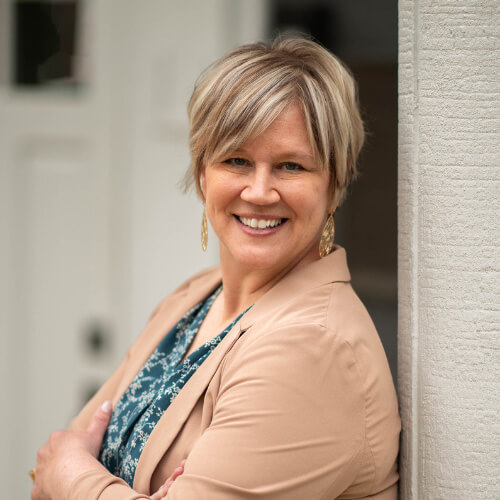
In this episode of the Brain & Life Podcast, co-host Dr. Katy Peters speaks with advocate and author Lori Jones about growing up in a family affected by Huntington’s disease (HD), reflecting on stigma, isolation, caregiving, and the inspiration behind her memoir, Spared: A Memoir of Risk and Resolve. Dr. Peters is then joined by Dr. Katie Moore, assistant professor of neurology at Duke University Medical Center, who explains what Huntington’s disease is and how genetic testing can impact individuals and families living with HD.
Follow and subscribe wherever you get your podcasts!
Apple Podcasts Spotify Libsyn
Additional Resources
Other Brain & Life Episodes on this Topic
- Author Tanita Allen on Existing with Huntington's Disease
- Rare Thoughts on a Rarer Neurologic Condition
- We Are Brave Together with Jessica Patay
Follow us!
- Guest: Lori Jones @LoriJonesWrites; Dr. Katie Moore @DukeNeuroRes
- Hosts: Dr. Daniel Correa @NeuroDrCorrea; Dr. Katy Peters @KatyPetersMDPhD
- X: @BrainandLifeMag
- Instagram: @BrainandLifeMag
- Facebook: Brain & Life Magazine
We want to hear from you!
Have a question or want to hear a topic featured on the Brain & Life Podcast?
Record a voicemail at 612-928-6206, or email us at BLpodcast@brainandlife.org.
Episode Transcript
Dr. Correa:
From the American Academy of Neurology, I'm Dr. Daniel Correa.
Dr. Peters:
And I am Dr. Katie Peters, and this is the Brain & Life podcast.
So we always sort of write little notes when we're getting ready for the podcast, and I recall that, Daniel, when I was a younger person in my younger days and I had to write, I was often inspired by a famous quote. Recently we had an interview with actor Michael Patrick, and I was remembering that famous quote from Richard III, "My horse, my horse, my kingdom for a horse," and we know who to attribute that quote to. Of course, that's Shakespeare. I know there's people out there that think Shakespeare didn't exist or somebody else, that there's a hundred Shakespeares. We're not here to belabor that point. But, Daniel, do you pull inspiration from those famous quotations that you get to think and ponder over?
Dr. Correa:
You mentioned writing poetry when you were growing up, and it made me shudder with embarrassment recalling my teenage years and writing poetry for classes. I am not really sure what the well of inspiration was for those years beyond hormones and just high school life and whatever else was going on. I think I've emerged, at least, from that cloud, though I do take inspiration from authors I read, guided meditations I hear and listen to, quotes like you mentioned. And I like us here on the podcast. I enjoy the quotes and inspiration from amazing stories of resilience from patients and often the athletes and other artists that we interview, like those right now that are competing in the Winter Olympics.
Though while not necessarily a famous person, I know that during one of the most difficult times I had in medical school, I heard a quote and was inspired by one of our professors at Howard University College of Medicine, Dr. LaSalle Leffall, and he would always tell us about the importance of equanimity under duress. And this sentiment is really something I try to take into every day and just remember, not only his sharp dressing, but his ability to just respond with calm.
Dr. Peters:
I like that. And alas, in the words of Mark Twain, "The secret of getting ahead is getting started," so I'll get to the point. Okay? This is not just about quotes.
The quote, "Hindsight is 2020," is often attributed to the humorous Richard Armour from the 1940s, and I think that quote... We often look back and see what would've been the obvious path and the mistakes we could have made or the right choices we could make should be just really obvious, and that's what that quote means. And I started to think about it after I had this discussion with our guest today, and it's author and advocate, Lori Jones, and she talks about her family's experiences with Huntington's disease, which is a rare inherited movement disorder. And she takes a lot of reflection and looking back about her experiences and what she would now advise others in their situation or in a similar situation as hers to really reach out to others and share challenges and share those experiences, share those life lessons. We will also have a repeat expert with Dr. Katie Moore, who will tell us more about Huntington's disease. So more from Dr. Moore. That's my quote.
Hello again, Brain & Life podcast audience. And I would like to welcome Lori Jones to the podcast. Lori is a speaker, an author, and advocate. Wow, just it's amazing. And in her book, Spared: A Memoir of Risk and Resolve, she shares her experiences with Huntington's disease, and that's a rare inherited movement disorder that impacted her family. She continues her advocacy for others with Huntington's disease in Wisconsin and started Team Hope Fox Valley 5K walk/run events in her area. That sounds like a lot of fun. But it also was to raise awareness and support for research and community programs through Huntington's Disease Society of America for the Wisconsin chapter. And we're excited to learn about her book today and learn about Lori. So, Lori, welcome to our podcast.
Lori Jones:
Thank you so much for having me. It's an honor to be here.
Dr. Peters:
So I gave a little introduction. I said you're from Wisconsin. But I don't know if you're on vacation. Maybe you've decided to escape the winter. Where are you joining us from today?
Lori Jones:
I wish I had escaped the winter. No, I am in a tiny little town called Winneconne. It's south of Oshkosh, so sort of the northeast side of the state is what we call home.
Dr. Peters:
And I predict you had some snow.
Lori Jones:
Oh, yes. We have snow. We have ice. We have all the things, yes.
Dr. Peters:
Oh, wow. And I give a little introduction. Could you tell us a little bit more about yourself?
Lori Jones:
Yeah, absolutely. So the book came out in 2024. I have a day job, so when I'm not talking about rare disease and not writing, I lead several tech teams at a technology company. So I do that, but this is my passion. And having grown up in a Huntington's disease family, was guardian for my dad during his run with the illness, felt compelled to dialogue about it in written word. And then the more I continued to write about it, it turned into this book. And so after that, it went out into the world, and now we talk about it. And so I just say yes to opportunities that come anywhere that they come, and I'm happy to sit and talk with people and just create understanding about neurological illness. I think there's a lot of misunderstanding.
Dr. Peters:
I completely agree, and it's so important that... I treat patients with brain tumors, and I think it's really important because they wake up one day with a cancer diagnosis and a neurologic diagnosis, and when people get these diagnoses, they can be... Any kind of neurologic disease can be very isolating, so you shedding light on things is great.
I know that your journey really started when you were young and probably changed through your lifespan. Can you tell us about how it unfolded and what happened with those life experiences as you were sort of growing and aging with that family that was contending with Huntington's disease?
Lori Jones:
Yeah, of course. You nailed it when you said isolating. So our family was isolated. I think often with a neurological illness... Our family, we kind of hunkered down. We didn't share what was happening. You didn't talk about it. You couldn't really put your finger on what was going on. And I was born in the '70s, so of course that dates me, but this was pre-testing, this was pre-internet, this was pre-any of us really talking about things that looked out of the ordinary. And so as a little girl, I often tell people and I tell children when I speak in schools, I knew something was wrong, but I couldn't put my finger on it. And so my encouragement to them is even if you don't have language for what's happening, try to find words and talk about what's happening to you.
So I'm little. I don't know. I just know the more I venture out to friends' houses and social outings that my family looks different and my dad is sick. And so it's a slow-paced illness, of course depending on how you're affected by the mutation, but I think if you live with someone affected, you sort of get used to what's happening in your home and you don't notice the stark difference until you go out and about. So as a young person, I would go out to sporting events and friends' houses, and then I would be reminded how very different my home was. But it was always with a bit of a stigma and a secrecy and a shame. We just didn't talk about it.
My dad wasn't diagnosed until he went into care. Without a diagnosis, we don't have a way to say, "Here's why this is happening," and then you don't have that empathy that would come from someone who's experiencing symptoms, especially neurological ones.
Dr. Peters:
Oh my gosh. And so how old was he when he finally got the diagnosis?
Lori Jones:
Yeah, so my dad probably wasn't diagnosed until 45. Now I'm kind of guessing, because he had gone into care, and it was at that point that there were some pretty significant neurological challenges, there were some behavioral issues, and he lost his driver's license. And so he started to be seen by a psychiatrist, and then they chose to test him. It took a while, though. Our family knew about Huntington's disease. My grandmother was very knowledgeable and tried to keep up on the science. But my dad was probably in quite a bit of denial. Maybe knew it was coming, but maybe wanted to hold off. And so he wasn't forthcoming with his physicians that that could be in his history. A lot of physicians are just grasping at, "What is this? What am I faced with in this office?"
Dr. Peters:
And I think it's really interesting because neurologists or psychiatrists can see these patients, and so it really does take someone to say, "Well, maybe we need to look into something else." So I'm glad that he finally got that support.
I really like the title of your book, and I think that it says a lot in its title. Can you sort of tell me what inspired the title for you and how that sort of came about?
Lori Jones:
Yeah, absolutely. I always tell people it's a spoiler alert, so Spared. And people would think, "Oh, she must be gene-negative. She must either not have symptoms or had gone through testing." So I talk about the entire testing experience in the book, and so you can learn all about it there.
But it's almost ironic. Because HD is a family disease, at one point or another, you are either going to be a caregiver, you are going to be at risk, or you are going to be affected, or you are going to be gene-negative. And so there's this cycle, and I experienced all of the stages of living at risk, being a guardian and a caregiver, and eventually going through pre-symptomatic testing. And so it's almost Spared with a question mark. Is anyone spared who grows up in a Huntington's disease family?
What I will also say, though, is I had a heavy dose of survivor's guilt. Those of us that do test gene-negative, I've talked to many of them, we're all kind of in this boat where we say, "Well, now what? We kind of thought our lives were headed one way. Now they're headed this way. Why was I spared? Why did Dad get the mutation? Why not me?" And then what do you do with that? And so it took quite a while, especially after his passing, to decide. And I always credit my husband with the candid and frank advice, and he's just very sensible, and he said to me, "If the gene-negative do not help the gene-positive, Lori, who will?" And he wasn't wrong. So that's what we do.
Dr. Peters:
And I mean, I understand where the term Spared came in, but you actually were part of the whole experience too because you... And I can't even imagine having to get the testing and then also being the caregiver. That has so many emotions that are sort of wrapped up in it. And you mentioned you sort of talked to other people that had that survivor guilt or were also tested negative. Where did you go to... What resources and support groups were there for you?
Lori Jones:
Yeah, and I love to talk about this because people will say to me, and I go to book clubs and all these places, and people say, "What would you have done differently," which is a pretty big question. So I say, "Well, probably lots of things. Don't we all think we would do things differently?" But if I look back, I would've talked about my situation sooner. I would have found resources sooner.
So, again, it was not the age of electronics. We didn't have virtual support groups like we have today. There are social media groups. There are in-person support groups. There are all kinds of places you can go. But it wasn't until a moment of desperation that I opened the Yellow Pages and found the HDSA, the Huntington's Disease Society of America. And there was one social worker who I called to say, "I don't know what to do with my dad. He is getting booted out of every group home we find for him. Every adult care home isn't equipped to care for him. What do I do?" And you know what? Her name was Jean, and she was with me every step of the way. She always picked up, and she never pushed me aside, and she guided me through the caregiving part and helped me find resources, helped me find facilities that were creative in caring for HD.
But then there was also support groups. And I will tell you, I didn't go. I didn't go to a support group because I was feeling survivor's guilt. I didn't know how to sit in the room and be there. And I only went when it was time to talk about the event we were starting. And when I was there, I saw people affected, I saw family members, I saw caregivers, and it was all this big room, and it was more than I could even handle. Going back, I would've spent more time... I would've sat in that room and made myself sit there and talked and got to know those people.
One little piece that comes up in the book is I was actually a nursing assistant at a long-term care facility where one of my great aunts lived her life. She had a very high CAG score, and she was bedridden in her late 20s. And so the other aspect of being a caregiver and being at risk and maybe going through testing and maybe being affected is sort of like looking in the crystal ball, sort of looking at, "This could be me." And so in the ultimate irony, I cared for her, bedridden, and thought, "Is this my future?" And so I was scared, scared to find other people to talk to about this. And I don't know if that's denial, or maybe if I don't go to that support group, then I'm not in that boat. But I should have.
Dr. Peters:
And I think that's great advice. I think for anybody with any kind of neurologic condition, there has to be some element of like, "Am I going to be severely affected? What's going to happen to me down the line?" But I agree, and I think this is the onus of the medical providers, and when someone is diagnosed, or if there's a family member, tell them about those other resources that are out there. I always tell my patients with symptoms, I'm always like, "We have two social workers, we have this, we have that, we have this. We have a child life specialist. We have a psychiatrist. And as soon as they're like, "Well, I don't really need them right now," and I'm like, "But someday you might need them, and at least I told you. And here's a piece of paper with all their phone numbers on it."
Lori Jones:
Yes. And they will. They absolutely need it, even if they don't think they need it. I needed it immediately, and once I even got a taste of the care and compassion of the HD social worker, a lifeline, a literal lifeline.
Dr. Peters:
Yeah, so I think we need to put that on our providers, if any providers are listening, and I know they are. And so what are sort of your hopes for the future for people with... There are some new drugs out there. What would be your hope for, and I'm going to say not just for patients with Huntington's disease, but also for their loved ones that are negative, what would you sort of say is your hope for the future?
Lori Jones:
Yeah. So obviously we pin our hopes on the cure and we pin our hopes on the recent trials that have come through, and I know there's been a lot of trying to get movement with the approval agencies to keep the testing to go forward, truly, truly. My hope is that... When I was a kid, I thought I was the only person on the planet except my sister who was living in this weird situation. And so we didn't talk about it then, but I always say we're talking about it now. So my hope is that we would talk about it, that we would normalized situations like this so that they wouldn't be isolating and you could create that community and that empathy.
And so if I saw someone who maybe had a neurological behavior, I would think, "Well, they must have something going on." There'd be kindness. I think when people saw my dad out in the community, they thought he was on substances or that he was unwell, and we're so quick to judge or pass an assumption. I think when you have language and you have awareness and you talk about it, there's instantly that empathy and the kindness.
So, no, we're not going to cure it overnight, but we can create a community where people say, "That family is struggling. How can we surround them? How can we help them?" That's what I want to see.
Dr. Peters:
Oh, that's awesome. I want to see that too. We're going to make it happen.
Lori Jones:
We're going to make it happen.
Dr. Peters:
Yeah. Absolutely. So I just wanted to say thank you for sharing really your experiences and your advocacy for yourself and for others with Huntington's disease. And I'm going to remind everybody to check out Lori and her book. You can actually go to... I have lorijoneswrites.com.
Lori Jones:
You got it.
Dr. Peters:
Is that right?
Lori Jones:
That's my website. Yes.
Dr. Peters:
You have a book. You can find the book on Amazon. You can find it in a bunch of different places. It's called Spared: A Memoir of Risk and Resolve. Thank you for this story.
Lori Jones:
Thank you for having me.
Dr. Correa:
On the Brain & Life podcast and online, we share stories from people living with neurologic conditions and the science that helps them navigate everyday life. Behind that progress are researchers working on ideas that could lead to better treatments, better understanding, and better care.
Dr. Peters:
The AAN Research Program has supported this kind of work for more than 30 years, but each year, far more researchers apply for funding than we're able to support.
Dr. Correa:
So if you're someone who values neuroscience that makes a real difference for patients and families and all of our communities, we invite you to join this effort. A donation to the AAN Research Program helps more promising research move forward. Learn more about this at aan.com/donate.
Dr. Peters:
And as I told everyone today, we have more from Dr. Moore. That's back to our quotations. But again, thank you for joining us today, and I'm very honored to have Dr. Katie Moore back again. As you know, she's an assistant professor of neurology at Duke University Medical Center. She provides neurologic care for people with movement disorders, and these include tremor, Parkinson's disease, Huntington's disease, dystonias, and many other movement disorders. She's involved a lot in the educational initiatives of the department, and she serves as the associate director of the Neurology Residency Program. And we always love having her here, and it's more from Dr. Moore. Welcome.
Dr. Moore:
I'm so glad to be back. Thanks for having me.
Dr. Peters:
So I know where you're from, and I know you've had to deal with the snow recently. How did you fare in our Southern snow storms?
Dr. Moore:
This is home for me. I've been here a long time, so I know how to get my milk and my bread ahead of time and hunker down and how to be safe. But I hope everybody else was safe out there.
Dr. Peters:
And I want to give a big shout-out to you because you just published... I heard in our grand rounds today that you just published something on Huntington's disease. Can you tell us what it was?
Dr. Moore:
Yeah, so a group of us across the country got together and said we really need a better way to describe chorea and help people approach diagnosis an understanding of chorea. This will help us do a better job of diagnosing the wide variety of conditions that cause chorea, and hopefully in the future to do a better job with treating these diseases. And of course, one of the major causes of chorea is Huntington's disease.
Dr. Peters:
And so tell us a little more about Huntington's disease and about that chorea.
Dr. Moore:
Huntington's disease is a genetic neurologic disease. It's autosomal-dominant, which means that everybody that has it, each one of their children has a 50% chance of getting this disease. It's a complex disease, and it causes difficulty with movement, with cognition or memory, and also with mood. The quintessential problem it causes with movement is excessive, unpredictable wriggling or dance-like movement that we call chorea. But people can have all different kinds of abnormal movements, like tics or pulling or twisting of the muscle that we call dystonia, a whole bunch of different things. People tend to develop difficulty with walking and balance. It also affects cognition, and so people can have difficulty with day-to-day activities, with focusing at work and school, and that is progressive over time. And it can also affect mood. And it affects mood in a wide variety of ways. People can often get depression, anxiety, irritability, and it can be more severe than that with suicidality or even psychosis. So these patients and their families are affected in a wide variety of ways.
And because this is an autosomal-dominant genetic disease, we're often taking care of multiple members of the same family, and so we have to be cognizant of how that is affecting individuals in the family, both who have the disease, who are at risk for the disease, and who aren't at risk for the disease, but are just helping family members to go through life with the disease. So it's a pretty complex situation.
Dr. Peters:
It sounds really complex. And our guest, Lori Jones, her father had Huntington's disease, and she writes about this experience in her book. She writes about getting the genetic testing and ultimately testing negative, but having to deal with what she saw in multiple family members. What do you do in those kinds of situations, and how do you advise people around the genetic testing?
Dr. Moore:
Yeah, genetic testing for Huntington's disease is a really big deal, and so we treat it differently than any other blood test or test that anyone's going to get in medical care. There's two major situations where this happens. One is where somebody is symptomatic. They're starting to have abnormal movements and problems with memory and mood. And then the genetic test, especially if there's a family history, can help confirm that this is the diagnosis.
In other scenarios, patients may have no symptoms at all, but know that they have a parent or grandparent with Huntington's disease and they'd like to know if they're at risk for the disease. So there are many things that we want to do to help prepare people to make that decision, both sort of from an emotional support perspective, from understanding what they've seen and gone through with other family members, from anticipating what a positive result may mean and what a negative result may mean for them. There's also insurance questions and things that people would want to get straight before getting genetic testing. And so our team works with individuals at risk for HD to make sure that we're supporting them in this very holistic fashion before we get testing results.
We also know that receiving the results can be a very difficult moment. You can imagine if you got those test results through your provider's electronic medical record at 6:00 on a Friday night with no one there to answer questions or help you understand that, that can be really challenging. So it is the policy of the Huntington's Disease Society of America, and therefore all the people that practice in this area, to have people come back into the clinic with a support person of their own and meet with us. So it's typically whoever the provider is that ordered the test, so myself and maybe one of our social workers or our chaplain, because we know that even when you test negative, that can be a really emotional moment and processing that information can be really challenging. So we try to be there for patients and families throughout the process, and so it is a multi-step approach, just to make sure that we're doing it in the most supportive way possible.
Dr. Peters:
And it's multigenerational. I mean, that has to be really tough. It has implications about fertility choices ultimately for patients. That requires you as a physician to have a lot of resources. Who do you lean on? I mean, do you have an entire team? Do you have psychiatrists that are also helping you as sort of the psychiatric phenomenology? Who else is in that room that's helping you out?
Dr. Moore:
Right. We are very lucky at Duke. I have a wonderful team that I work with. Specifically in this area is our team of social workers and our chaplain. And so they're really instrumental in helping make sure that we support patients and families and support each other as we do the work. We also partner with psychiatrists at the university and in the community to make sure that patients are getting supportive care. This goes for counselors and other community leaders. But it is, to the point about multigenerational, people often will be very familiar with what this disease is like. Even though it's quite rare, they will have seen it in their family and know a lot about it. So there may be misunderstandings about the disease or fears about it that we go through extensively before we move forward with testing.
Dr. Peters:
I'm really curious to read Lori's book. She talks about how she actually took care of her aunt who had early onset, like in her 20s, Huntington's disease in a nursing when she was a tech in that nursing home. So she saw it from so many different perspectives and then getting tested herself and what that meant, because she was essentially spared the illness, but still had a lot of survivor's guilt.
Dr. Moore:
Absolutely.
Dr. Peters:
What do we do for treatment? It sounds like you do a lot to really support the families and get testing. What new treatments are out there to help patients?
Dr. Moore:
Well, in many ways, the care that is currently ongoing is supportive care. There are medications to help treat the movements, the mood, and to some degree, the thinking difficulties that patients have. We know that things like physical therapy, occupational and speech therapy, all of which are part of our center here, are instrumental in quality of life and helping people maintain independence.
As of this moment, there are no FDA-approved disease-modifying medications to treat Huntington's disease, meaning there are no approved medications to slow, stop, or reverse the disease. But there's a lot of hope in this area. Many companies are researching ways to make this change. So there are a number of companies that I think are, it's hard to know with science, but on the verge of making real breakthroughs in terms of how we treat Huntington's disease. And when I'm talking to learners, you mentioned my educational work, I'm talking to medical students, residents, fellows, I tell them I really believe that in the course of my career, the way that we look at Huntington's, the way we treat Huntington's, the way that people with Huntington's live their lives is going to be dramatically different. So there's a lot of hope here for the future about what it will mean to get that positive test.
Dr. Peters:
I completely agree. And I'm going to ask you a very important question, Dr. Moore, and I think this is so important, is... I've talked to you again on this podcast about movement disorders. What is special about movement disorders that you love teaching these patients? Because I feel like you're going to give us a really good answer because I can tell really the passion of how much you care for your patients, but also how much you love to teach others about movement disorders. So tell us your secrets.
Dr. Moore:
I get to nerd out a little bit. This is great. So for me and for many people that go into neurology and become neurologists, we're really excited about how you can do a physical exam on a patient and largely know what's wrong with them, sometimes without doing any tests whatsoever. And with inside of neurology, there are a few subspecialties where the exam is paramount, and one of those is movement disorders. I often joke with people that I'm a professional people watcher, and so I come in and I look at you and I look at your walking and how you move or don't move, in some cases, and we're able to help identify what's going on with a person. So I really like being able to teach that.
But for me, many movement disorders go far beyond the actual movement difficulties, and these are complex disorders that affect the brain in numerous ways. We've talked about how the brain is affected in Huntington's disease, but this is common to many other diseases like Parkinson's disease and dystonia in terms of how these diseases affect everything from your cognition to your bladder and your bowels. And to me, being able to take care of patients in this holistic fashion with all the different systems of the body, family systems, all the different things that go into these complex diseases and how they manifest themselves is really fulfilling work. So it's challenging, and I'm really glad that I have my team to make sure we provide the best care, but to me, that's what is fulfilling about this work.
Dr. Peters:
Well, that's wonderful. And a big plug, it seems to me, and maybe this is just me, it seems like the movement disorders docs just love teaching people. And they not only teach, I think, students, but are also very important and integral in teaching patients and families. So I'm going to ask you also about advocacy. Why is advocacy so important for people with Huntington's disease?
Dr. Moore:
Oh, this is a really important one, and this comes in at multiple levels. Number one, I would say advocacy for care. Many people may be out there listening and know they're at risk for Huntington's or that they might have the beginning symptoms of Huntington's disease, and I want you to hear that the care that maybe your parent or grandparent received is different than the care that we have now. And we have learned a lot about how to give excellent care to people with Huntington's disease. So advocacy for patients to understand what kind of care they can access, to help them access that care, that's a big thing. And so people receiving appropriate care, getting education about things that they can do. You mentioned fertility, so I'll just say in here that it is now possible for patients at risk for or with Huntington's disease to undergo IVF or in vitro fertilization with something called pre-implantation testing so that they know that their children are not at risk for Huntington's disease. And there are now grants and things available for families to do that.
The other side, I think, of advocacy is really helping people outside of the direct HD community to understand the impact that this disease has on families, on the world around them, and to encourage those folks to help with legislation that's important for our patients, help move drug discovery along in a way that hopefully meets the need and meets it as quickly as possible. So there are a lot of agencies out there, government groups, companies that may not understand what the impact of Huntington's disease is, and so there are many avenues for patients and families to get involved in advocacy and tell your story because that's so important to how these folks give their attention to this really important issue.
Dr. Peters:
I love that point, tell your story, and that's what... We got the story from you today, and we also got the story from Lori Jones. So, Dr. Moore, it is always a pleasure to hear from you. Thank you for being our amazing expert today, and thanks to our listeners.
Dr. Moore:
It's my honor. Thanks for having me.
Dr. Correa:
Thank you again for joining us today on the Brain & Life Podcast. Follow and subscribe to this podcast so you don't miss our weekly episodes. You can also sign up to receive the Brain & Life Magazine for free at brainandlife.org.
Dr. Peters:
Also, for each episode, you can find out how to connect with our team and our guests, along with great resources, in our show notes. We love it when we hear your ideas or questions. You can send these in an email to blpodcast@brainandlife.org and leave us a message at (612) 928-6206.
Dr. Correa:
You can also find that information in our show notes, and you can follow Katie and me and the Brain & Life Magazine on many of your preferred social media channels. We are your hosts, Dr. Daniel Correa, connecting with you from New York City and online at NeuroDrCorrea...
Dr. Peters:
And Dr. Katie Peters joining you from Durham, North Carolina and online at KatiePetersMDPhD.
Dr. Correa:
Most importantly, thank you and all of our community members that trust us with their health and everyone living with neurologic conditions.
Dr. Peters:
We hope together we can take steps to better brain health and each thrive with own abilities every day.
Dr. Correa:
Before you start the next episode, we would appreciate if you could give us five stars and leave a review. This helps others find the Brain & Life podcast. See you next week.