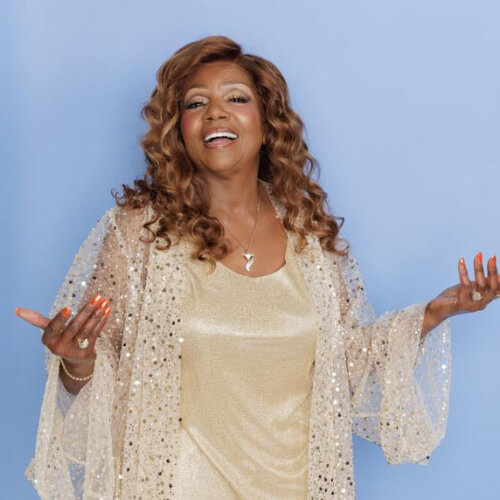
In this episode of theBrain & Life Podcast, co-host Dr. Daniel Correa is joined by musical legend Gloria Gaynor. Gloria talks about her journey in music and opens up about living with a spinal cord injury (SCI), undergoing surgery, and navigating the long road to recovery. She shares what the experience taught her about resilience and adapting when life doesn’t go as planned. Next, Dr. Correa is once again joined by Dr. Shelly Hsieh, attending physician and Assistant Professor, Physical Medicine and Rehabilitation at Montefiore Einstein. Dr. Hsieh dives further into the multifaceted approach to rehabilitation for spinal cord injuries and the lifestyle factors that support healing.
Follow and subscribe wherever you get your podcasts!
Apple Podcasts Spotify Libsyn
Additional Resources
- How Spinal Surgery Helped Gloria Gaynor Beat Chronic Pain and Return to the Stage
- What is Spinal Cord Injury?
- HEP2go Rehabilitation
Other Brain & Life Episodes on this Topic
- Answering Your Spinal Cord Injury Questions with Dr. Shelly Hsieh
- “Roll with Cole & Charisma" On Building a Life Together as an Interabled Couple
- How Disability Advocate Wesley Hamilton Became Empowered by Adversity
Follow us!
- Guest: Gloria Gaynor @GloriaGaynor ; Dr. Shelly Hsieh @MontefioreHealthSystem
- Hosts: Dr. Daniel Correa @NeuroDrCorrea; Dr. Katy Peters @KatyPetersMDPhD
- X: @BrainandLifeMag
- Instagram: @BrainandLifeMag
- Facebook: Brain & Life Magazine
We want to hear from you!
Have a question or want to hear a topic featured on the Brain & Life Podcast?
Record a voicemail at 612-928-6206, or email us at BLpodcast@brainandlife.org.
Episode Transcript
Gloria Gaynor:
I am what I am. I am my own special creation. So come take a look, give me the hook or the ovation. It's my world that I want to have a little pride in my world and it's not a place I have to hide in. I am what I am.
Dr. Correa:
From the American Academy of Neurology, I'm Dr. Dana Correa.
Dr. Peters:
And I am Dr. Katie Peters, and this is the Brain & Life Podcast.
Dr. Correa:
Welcome back to the Brain & Life Podcast. You know we'd love to start with musical guests and bring in their art. We truly appreciate her and her team providing us music to accompany this introduction, and there'll be clips from some of her other songs throughout this episode. Katie, are you a Gloria Gaynor fan?
Dr. Peters:
I am totally feeling it. That was so much fun and I Will Survive. It's iconic. Every time it comes on, it will have me dancing or singing along. I'm sorry, Ms. Gaynor, because I'm not a good singer. You're amazing. And it just makes me think of sort of like, it's all about really good inspiration and good vibes. My Instagram, I like to look at it in the morning and it's full of good quotes and inspirations. And sometimes her songs will pop up there, because they're the feel good songs.
Dr. Correa:
Yeah. The energy that she's brought to both disco and music, gospel music, it's so great and much of it being very uplifting. Beyond the music that you'll hear in this episode, you'll also actually hear some of her story about early time in the discos in New York City, and how she truly herself has survived through so many challenges after multiple back surgeries, and the challenges that can come from one after another and how one back surgery sometimes might impact other levels of the spinal column. So following that discussion with Gloria Gaynor, make sure to stay tuned for my discussion with the rehabilitation expert about spinal cord injuries, to talk about the short and the long-term journey of that recovery.
Gloria Gaynor:
I let the hard times have their way. I kept the company of drama like an old cliche. I used to cry, cry, cry, cry every night and every day. And it took rock bottom to recognize that I'm stronger than I ever realized. You can see it in my eyes, there's a joy that I just can't hide. And it's a new kind of feeling. I'm feeling a heart with no walls and no ceiling. I let the sun shine in and the darkness disappear. Now I'm finally crying. Happy tears. Happy tears.
Dr. Correa:
Welcome back to the Brain & Life Podcast. Now today we opened with I Am What I Am, a 1983 dance club classic that hit the charts in UK and US dance song lists. And just now after that introduction and catch up with Katie, we heard new music from Gloria Gaynor. And whether it was from the dance floors of Studio 54 to global stages today, Gloria Gaynor's voice has been a soundtrack for resilience. After a devastating stage accident in 1978 that left her temporarily paralyzed, she fought her way back, recording I Will Survive in a back brace and decades later underwent a complex multi-stage spine reconstruction that finally freed her from chronic pain. She's still performing, sharing her heart and telling the deeper story behind her many anthems that has lifted millions. Today, she joins us for a conversation about music, her grit, and what spine recovery can really look like. Thank you so much, Gloria, for joining us today.
Gloria Gaynor:
Thank you. It's my pleasure.
Dr. Correa:
So I wanted to go back. Can you tell us about Gloria Gaynor in the 1970s or even before then?
Gloria Gaynor:
Well, in the 1970s, I was kind of a wild child. Well, not by today's standards. By today's standards, I was totally boring. But by those standards, I was free. And just having fun, not only performing in clubs, but frequenting clubs and dancing. I loved dancing. I've always loved dancing. And so, I was one of those in the disco techs dancing and just having a great time. And then, carrying on with my career. And then when I recorded I Will Survive, a lot of stuff changed, because I really began to travel not only the United States, but the globe. And so, that was so many, many wonderful experiences, tasting of other cultures and the flying and all of that, and coming to understand more about me and how much I really, really love flying, and how much I love tasting and indulging, and experiencing other cultures and all of that. So it was a great time for me doing I Will Survive and things have only gotten better since.
Dr. Correa:
As you've pushed through. But back home in Newark at the start, what was the music that really started to fill your soul and got you to your feet? Was it the gospel music? Was it right from the beginning, that dance club type of music?
Gloria Gaynor:
It really was all of it, because in my home, I had five brothers and everybody liked something different. I had some like gospel music, some like R&B music, some like jazz music. One of my brothers liked country music. We told him that we found him on the front porch. He was the only one that liked country music, but we all liked a variety of music. And of course, each one had our favorite category of music. And I think at that time, my favorite category of music was R&B, although I really liked all kinds of music, even country music.
Dr. Correa:
I think all of us who grew up in either big households or with lots of cousins are familiar with that fight for the music and the control of the dial.
Gloria Gaynor:
Oh yeah. Yeah.
Dr. Correa:
Now, and what was the life in New York City and the clubs like in the '70s before you had that onstage accident?
Gloria Gaynor:
It was great. When I started working in New York City, I lived in New Jersey and I would have to take the bus home every night after my show, either the bus or the path train, but at first it was the bus. And when I was taking the bus, someone said to me, "Oh, why are you sitting in the station waiting an hour for the buses to start running? Why don't you come to this club called the 10th of Always?"
And so, I started going there and staying there until my bus started running. Well, after I got to know people, I started staying longer. So I'd come out at nine o'clock in the morning, like Dracula with the sun. And I had an experience that I will never forget, where I can truly say I didn't know if I was coming or going, because I'd fallen asleep on the bus. And when I woke up and looked out the window, I didn't know whether I was going to work or if I was going home. I didn't know if it was... Because seven o'clock in the morning looks the same as seven o'clock in the evening in summertime. So I woke up, I looked at my watch at seven o'clock and I didn't know if I was going to work or if I was going home. And I was so tired. And I was saying, "Oh God, please let me be going home. I'm so tired. If you let me be going home now, I won't ever do this again."
Dr. Correa:
Until the next night.
Gloria Gaynor:
No, thank God I was going home and I did not do that again. I stopped going. I really did. That was such a [inaudible 00:08:57].
Dr. Correa:
Now, as you were there in the clubs and seeing the variety of music and seeing, kind of getting a sense for what makes a hit on the dance floor, was there something that you feel like you picked up that helped make the song like I Will Survive a hit and make it stand out from the B-side dance songs?
Gloria Gaynor:
Absolutely. Absolutely. I was always amazed that record company executives, who were always up in their ivory towers all day and then going home at night doing absolutely nothing, thought they knew more what the disco audience wanted than I did, who was actually out there, not only performing for them, but actually dancing with them, went on my nights off. So yeah, I did get a vibe for what the people wanted and what... And plus, I was a dancer myself. So of course I knew what was most appealing for a dance audience.
Dr. Correa:
Now, you've described before, but maybe some of our listeners aren't aware of an onstage stumble and then waking up the next morning unable to move your legs. What happened that evening and medically in those early days?
Gloria Gaynor:
Well, I fell backwards over Amanda. I had a skit in the show, where I would whip the cord of my microphone over to my two male background singers on the other side of the stage and we would fake a tug of war. So I whipped the chord doing that song. They caught it, but they didn't hold onto it. So when I pulled back on it, there was no tension and I fell backwards over the monitor. But I jumped back up and finished the show and went out to breakfast. And as you know, went home that night and woke up the next morning paralyzed from the waist down.
Dr. Correa:
And those days afterwards, what kind of medical support or evaluation did you end up seeing?
Gloria Gaynor:
I actually called my boyfriend and he called an ambulance, and met the ambulance at the house and let them in, because he had a key to my apartment, so that he could water my plants while I was gone. So he let them in and he said I was screaming at the top of my lungs when they came. I don't remember that. But I got to the hospital and it was only a couple of hours that I was actually out paralyzed. They gave me something, whatever it was they gave me and I was able to... Actually, that's not true. It was at least a day now that I think about it, because I remember feeling my stomach and thinking how big it felt. It felt different than when you have feeling. Only my hands were feeling it. The stomach wasn't feeling my hands. And so, there was a different sensation about the size of my stomach. I'll never forget thinking that, "My stomach really that big?"
Dr. Correa:
Yeah. It's almost like that weird sensation we have in our mouths when we go to the dentist and just everything feels off. Yeah.
Gloria Gaynor:
Exactly. Everything feels bigger. Yeah. Yeah. But only that day I was paralyzed and then I don't know what they had to do, but they got feeling back in my legs, but I couldn't walk. I couldn't walk for three months.
Dr. Correa:
Yeah. And what do you remember them telling you about what happened, what kind of injury it was, and what it was going to be like to walk again?
Gloria Gaynor:
Well, I mean, it injured my spine, the lumbar of my spine and exactly what they called the injuries, I don't know. I just know remember L3, L4 of my spine were damaged and they had to fuse. They had to fuse my spine. Yeah.
Dr. Correa:
And what was the start of your rehabilitation for being able to walk, let alone even thinking about dancing again?
Gloria Gaynor:
That happened in the hospital. I went from being unable to move at all to them exercising me in the bed with pulleys and all of that, and then finally got into a wheelchair, and then a lot of exercising of the legs and all of that in the hospital. And then finally, I'll never forget the first time I was able to walk and I asked them, could I walk to the window? And I walked to the window and looked out and I'd completely forgotten about life outside. It was all about what was going on in the hospital. And I was like, "Oh yeah, there's buses and there's cars and there's people."
It was really strange. But yeah, it was like a month, three weeks to a month before I was able to walk and like I said, walk to the window. And then was in the hospital for another couple of months, getting all kinds of treatments and stuff, which I honestly don't remember what treatments they were there, but I was in hospital for three months.
Dr. Correa:
Yeah. And that's a long and challenging, arduous course that I think a lot of times gets oversimplified as like, "Oh, you had an injury and then you were in a back brace, singing I Will Survive." There was a lot more in between that.
Gloria Gaynor:
I honestly don't remember the agony. What I do remember is the wheelchair races after the doctors went home in the evening.
Dr. Correa:
So finding the joy. That's great.
Gloria Gaynor:
Yes. We would do wheelchair races up and down the hallway when the doctors were gone.
Dr. Correa:
Are there other things you feel like you remember learning from other people going through their rehabilitation that helped you?
Gloria Gaynor:
One of the things I learned is how easy it is for some people to be invalid. I mean, I met people who just had no problem just laying there, letting people wash them and take care of them and all of that. And I was constantly trying to do everything for myself. I was just wanting to be self-sufficient from the very beginning. I mean, one of the nurses even told me that. She said, "You're one of the few who tries to help herself."
I'm like, "What?" So yeah, they just lay there like a baby and just let you take care of them. No, that's not who I am. I'm the one that would rather be up helping them.
Dr. Correa:
Yeah. That each person can try to take the strengths that they do still have to be able to keep pushing forward as you have.
Gloria Gaynor:
Yeah, that's the way I think. Just, okay, this is a time when I can have people just lavish care over me and I don't have to do anything. It's just not my bag.
Dr. Correa:
Yeah. And between 1978 and then much later in 2018, you had lots of procedures and treatments to keep trying to help you with your posture and living with chronic pain. What was some of that process, balancing trying to perform and work with the chronic pain issues?
Gloria Gaynor:
Well, strangely, nothing hurts on stage. I have had situations where I had a doctor, I was feeling so bad before I went on this stage. I had a doctor waiting in the wings who never got a chance to do anything, because once I hit the stage, everything was great. I guess it's the adrenaline from the fans and yeah, nothing hurts on stage. Weird phenomenon, but that's the way it is.
Dr. Correa:
Yeah. Well, unfortunately, I don't think we can all have an arena of cheering fans. And that's probably why there's such a down sometimes coming out of these performances that many people will have.
Gloria Gaynor:
Yeah. Yeah. Yeah. I don't know. I somehow have the gift of extracting that joy, the love that comes from the audience and just bathing in it and flourishing in it.
Dr. Correa:
And when you weren't on stage, how did managing these symptoms along with the pain end up shaping your daily life or travel and preparing?
Gloria Gaynor:
Well, I was somewhat limited, but I've always been a fighter in that way. I'm the one who wants to be the helper. I don't want help. And so, I mean, if I have to have help, I'll accept it, but I really want to... Anybody that's helping me, I want them to know I'm not laying down on them. I really am doing the best that I can. And whatever it is you're doing for me, I really need this. I'm not taking advantage. I never want people to think I'm taking advantage of their kindness, their willingness to help me. So I'm always purposing to do the very best that I can for myself.
Dr. Correa:
And eventually in 2018, you ended up getting a very complex surgery. Where did that idea come from and what ended up finally pushing you towards pursuing such a complex reconstruction surgery?
Gloria Gaynor:
Well, I had had another surgery. When you fuse one part of your spine, the parts above and below are taxed even more. And so, you are likely to have another injury, another problem with those areas. And so, that's what happened. So I had a surgery in '78, and then I had another one in '98, and then I had another one in 2016. And then by 2018, I'll never forget walking down the street in Manhattan and the pain was so excruciating I could barely move.
So managed to get back home. I happened to be with Stephanie, my manager, at the time. And she got me back home and started to looking for doctors that could find out exactly what was wrong with me and take care of it. And thank God she found a Dr. Mellamed out in California and he was wonderful and saw everything that was wrong with me. Had all kinds of tests and exams, and X-rays and MRIs, and CAT scans and everything, and found out exactly what was wrong, exactly what he needed to do, proceeded to map out exactly what he would do, and then got me into the hospital and did it all. And I'll never forget, the day after the surgery, they get you up immediately. And so, I was up and I had a walker and I was walking down the hall and there was a picture on the wall that was a glass frame.
And I looked and saw my reflection that for the first time in 20 years, I was walking upright. And I just stood there and cried, because I was just unbelievable what he had done.
Dr. Correa:
And then in addition to that change in your presence and posture, were there other things that surprised you in the first few weeks after the surgery about that change that you had?
Gloria Gaynor:
No, just like I said, the ability to walk up right and move. It was just absolutely wonderful. Of course, I still had the physical therapy that I had to do to strengthen my back and to strengthen my muscles and all of that to heal. The only real change I saw was in my strength and ability to walk upright.
Dr. Correa:
When did you start to try to sing and vocalize? Did you notice a difference in how your posture affected your ability for speech?
Gloria Gaynor:
No, it didn't, for whatever reason. It just didn't. Didn't affect that at all. Thank God. No, it didn't affect that at all. Not long after I sang for the Grammy after party. That was wonderful. Yeah, so it was great.
Dr. Correa:
Wow. Okay. Wow. I guess they didn't touch those pipes then.
Gloria Gaynor:
No, no, no.
Dr. Correa:
And for our listeners, we'll review with our medical expert after this some more details about understanding some of the terms around spine injury and spinal surgeries, including fusions and revisions and so on. But you also have been a big proponent of the physical therapy and movement activities as a key component of your recovery, incorporating both physical trainers and Pilates, even getting yourself to the point where you're dancing back in heels on stage. What would you tell someone who's anxious about the first steps of spine surgery and recovery?
Gloria Gaynor:
Well, first of all, I'd say make sure you have a top surgeon, because your spine is major. I mean, it's probably the most major part of your body other than your heart. Your spine is probably the second most major thing to deal with in your body. Yeah, you can't function without that. And so, just make sure that you have... I highly recommend my doctor, Dr. Mellamed. Just make sure you have an expert in the field and someone who... One of the things I love about Dr. Mellamed is not only is he a wonderful surgeon, a talented surgeon, but he is caring, very, very caring. He's one of those surgeons that will not do an unnecessary surgery, and he will make sure that he is doing exactly what the patient needs. You don't have to worry about him sort of padding the bill kind of thing.
He's all about the patient, and if he feels like he's incapable of doing something or there's someone that can do it better, he will tell you that. He's very, very, probably one of the most ethical doctors I've ever met. So my advice is to get him or somebody just as good, which I think is going to be a really hard thing to do. Physical therapy is so, so very important that you start physical therapy immediately after your surgery and that you continue it until you can feel that you are as close to normal as possible. I can't stress enough. And another thing that I've learned through all the difficulties that I've had with my knees, with my spine, is that you need to always be exercising. I do CrossFit three times a week. I'm now going to a stretch lab that stretching is so very, very important.
And I never knew that, but I wish I had known it and had the initiative to continue it and keep doing it, because when you don't use certain parts of your body, they just determine that, "Okay, you don't need us anymore." And they kind of atrophy. And then when you go back to use them again, your body's like, "Oh no, we don't do that anymore." And sometimes it's next to impossible to get back the original strength that you had. So I advise everybody, young and old to consistently exercise at least three times a week, get an exercise that encompasses all of the muscles or as many muscles in your body as you can keep moving. Because if you don't keep them moving, they will just decide that they're retired.
Dr. Correa:
And Gloria Gaynor does not retire.
Gloria Gaynor:
Nope.
Dr. Correa:
And do you feel like as a part of your rehab and your exercise, your vocal work and exercises are a key part that also benefits more than even just your voice?
Gloria Gaynor:
Well, yeah, because they help me with my breathing. My vocal exercises help me with my breathing, and this is my instrument, so I have to keep it in shape. So I vocalize on my own, and then with a vocal coach at least once a week, because these are muscles that have to continually be used. Or like I said, they will decide you don't need them anymore, and they'll go on vacation or retire.
Dr. Correa:
And for those who aren't regularly working with a vocal coach, do you think that there's a vocal exercise or breathwork exercise that we could all benefit from doing? Can we try something that out together?
Gloria Gaynor:
There are absolutely vocalizers. I have not looked up any, because I have professional vocal coach, but I'm sure that online, on YouTube, you can find vocal exercises that can help you with your lungs, with your bronchials and your head breathing. I'm sure there are exercises that can help you with all of that, that if anything attacks those areas, they'll have a harder time taking you down, because you have kept that part of your body in good shape.
Dr. Correa:
Yes. I think an excellent place to work. I know I try to focus on the breathing components when I'm working on my meditation. I think playing around with those, if anything that you can get yourself to exercise is a good start.
Gloria Gaynor:
Yeah.
Dr. Correa:
Now, your faith, community, and music have been constant through your surgeries and the challenges you've gone through and each of those comebacks. How did those supports carry you and what does I Will Survive mean to you when you sing it, and you think about other people navigating their own challenges?
Gloria Gaynor:
I Will Survive. It's been my mantra since I first heard it, because I was singing it when I was recording it. I was thinking about the fact that I was standing there in the back brace and the fact that my mother had passed away not long before that, who she was my rock and foundation. So I Will Survive really helped me as much as it helps anybody else, any of my fans. So I was very, very happy to have that song on many, many occasions throughout my life to help to carry me through some of the difficult times and assure myself that I would overcome, that I would survive, I would thrive, triumph and thrive over these difficulties that had come into my life and that I had to face.
Dr. Correa:
And I think to have your music as a place to go back to and speak to each of us is such a key thing. And thank you so much, Gloria, for joining us and our listeners, and we're looking forward to hearing more from your upcoming albums and performances.
Gloria Gaynor:
Well, I'm certainly hoping that people will enjoy my new EP with the songs, Fight Unknown and Happy Tears, and When I See You. I've gotten lots of great response in my audiences from those songs and from people who have purchased them. I've gotten lots of fan mail from people saying how much they enjoy the songs and how much they encourage and uplift them. And that's always been my purpose, to uplift, encourage and empower my audience through my music. And it seems that I'm continuing to do that through these songs and hoping that more people will find that true, because they've sought out those songs on all of the different streaming platforms that are available and hopefully I can broaden my scope of people that I'm encouraging, uplifting, empowering through my music.
Dr. Correa:
And we appreciate your permission to feature some of the music, and your past and present music in this episode. We hope our listeners enjoy that and we'll have a link also to Gloria's music online.
Gloria Gaynor:
Wonderful. Wonderful. Thank you.
Gloria Gaynor:
First, I was afraid. I was petrified, kept thinking I could never live without you by myself, but then I spent so many nights thinking how you did me wrong and I grew strong, and I learned how to get along. And so, you're back from outer space. I just walked in to find you here without that sad look up on your face. I should have changed that stupid lock. I should have made you leave your key. If I'd have known for just one second you'd be back to bother me. Go on, now go. Walk out the door. Just turn around now, because you're not welcome anymore. Weren't you the one who tried to hurt me with goodbye? And I'd crumble, think I'd lay down and die? Oh no, not I, I will survive. As long as I know how to love, I know I'll be alive. I've got all my life to live. I've got all my love to give. I'll survive, I will survive. Hey, hey.
Dr. Correa:
So that was Gloria Gaynor's anthem I Will Survive that lifted millions. And up next, we're going to have a plain language discussion about spine surgery and rehabilitation, and some of the decisions about when to consider revisions and other surgeries, what to expect and how to set yourself up for healing well. And if you find this episode helpful, share it with a friend and look at the resources in the show notes. Thank you again for joining with us and make sure to listen all the way through, so you hear all the clips and music shared by Gloria Gaynor. Welcome back to the Brain & Life Podcast. And I'm loving Gloria's music in this podcast. I'm really glad that they shared with us some cues and some parts of some of her upcoming and past music. It just gives us a little bit more to enjoy.
And now I'm here and I get to enjoy sharing with a colleague and talking some more about this inspiring story. I work with and have the opportunity to bring to you guys today, Dr. Shelly Hsieh. She is a spinal cord specialist and works at Burke Rehabilitation Facility as the outpatient spinal cord injury director and a colleague with me here in the Montefiore Health System. Shelly, thank you so much for joining us today.
Dr. Hsieh:
Thank you so much, Daniel, for inviting me to speak again on the Brain & Life Podcast. I'm so excited to be here. And I just have to say it's so interesting to be invited, because during some challenging times of my life, I've listened to I Will Survive by Gloria Gaynor for inspiration and motivation. And now it just holds so much more meaning, knowing that she was going through a spinal cord recovery and rehab journey during that time. And that's why she's sang with so much conviction.
Dr. Correa:
Yeah. And I mean, you know such a unique aspect about what it is to be living with this situation and the rehab process. So I'm really glad you can be here with us. But I wanted to start off really with the background context. So there are lots of different neurologists, neurosurgeons, spinal surgeons. We've had a mix of those and then rehabilitation specialty providers. So where's your role and the scope of the different things that you bring to a patient and to their family as a spinal cord injury specialist?
Dr. Hsieh:
Thank you so much for asking that question, because I am a physiatrist, a physical medicine and rehabilitation specialist. And it's a little known field, but such a rewarding one. We are really the specialist of function and quality of life, and specialists of the nerve, muscle and bone in a non-operative fashion. So while we have a large scope of practice, in this case, we would collaborate with a spine surgeon, physical and occupational therapist and help guide the patient's rehab journey. We would help treat pain, spasticity, neurogenic bowel, bladder, and other secondary conditions that developed as a result. Also, to help provide and prescribe assistive devices and adaptive equipment as necessary. And really the goal is to help the patient get back to living their life to the fullest, so outside the medical setting, but also helping someone return to their job or going back to college, or sports and driving, and returning to community as a person as they were functioning like before.
Dr. Correa:
Yeah. And I wanted to get to that part, because so Gloria amazingly returns not just a day-to-day activities, to full on performing and her singing. And there's been other artists who've gone through that similar journey. As she told us, she had lived the kind of rock lifestyle before she had the fall and injury, but had really already been working and performing and doing both that physical work and the vocal work that has. So in that context, how much does a person's movement background before an injury end up affecting and impacting their possible directions for rehabilitation and recovery?
Dr. Hsieh:
It plays a tremendous role in their recovery process. So it's great that she was so active prior. And in fact, if people do sustain injuries or are about to have elective surgery, we even recommend prehab, which is pre-rehabilitation to help strengthen and support the muscles for the recovery process afterwards. So she had really already set herself up for success in that way.
Dr. Correa:
And then, she tells us both in the magazine, online, and just recently now in the audio of this episode about this fall in the late '70s, during one of her shows has this onstage accident, of all places to have a spinal cord injury right there in front of a major audience. And then that transition of being in a back brace and needing emergency surgery, what's the variety and the possibilities of the types of injuries that set someone up for a spinal cord injury that needs either surgery or possible long-term rehabilitation?
Dr. Hsieh:
Oh, there's so many different mechanisms of injury, but certainly the one she sustained was quite traumatic. It was sudden. It was from a fall, where I believe she fell on a monitor on stage, unfortunately, but falls are very common. People also have injuries from car accidents or sports, or many other mechanisms of injury.
Dr. Correa:
And with those different kinds of injuries, I know we talk about it in an academic setting, the different ways that it can affect the spinal cord, but how much does that really mean? I mean, some people might have heard, or when they hear about someone they know or in the public who's had a spinal cord injury, they hear the terms incomplete and complete. But what does that really mean for the person when they're actually starting to get that information explained to them in the hospital or as a part of their rehabilitation in terms of the short and the long-term outlook?
Dr. Hsieh:
That's a really great question, because this is new vocabulary the patient is hearing for the first time. When someone has a spinal cord injury, there are different severities. It's graded from a scale of A through E. And an A is a complete injury, which is the most severe. And unfortunately, in that case, I would inform the patient they will reach their new baseline about one year after injury. So the spinal cord nerves and neurons are working really hard to recover in that one year timeframe and rehabilitation, physical activity, managing the secondary symptoms are so important in that time. If someone has a age impairment scale B, C, D, or E, that's classified as an incomplete injury, meaning more of the nerves responsible for strength and sensation are preserved throughout. So that gives you a better prognosis or a better chance for recovery. And I inform the patient that they usually have about two years after the time of their injury to achieve their new baseline. So don't give up hope quite yet at that one year time point.
Dr. Correa:
And I think sometimes people hear, both as we're explaining it or maybe sometimes as a much more definitive description from other doctors, that this idea of a one year or two year baseline, whether it's after a stroke or a spinal cord injury or another type of neurologic injury, and sometimes I think individuals, their family, or the public interpret that as that sort of being the barrier of where they can improve. But I know that I've seen, and I'm sure that you've seen in your years of working in rehabilitation, that that baseline isn't necessarily a place where they can't continue to adapt or improve their skills or add functional capabilities. So I'd love to give you a chance to kind of talk through that idea, what we mean by that initial baseline and what kinds of ways a person can continue to improve and build.
Dr. Hsieh:
Yeah, absolutely. When I say the one year, two year time point, that's what we call a functional baseline, that the function may not change that much, but it's absolutely true. Strength and sensation may continue to recover beyond that. But in addition to the traditional therapies and what they've been doing, there have been so many technological advancements. And so, thinking about using other muscles or other tools to help compensate to improve somebody's function really can help that drive them even further past that "expected functional baseline."
Dr. Correa:
That's great. And actually, I've reached out to you to help us on some past episodes around spinal cord and particularly around that idea of new directions and technology. So I mean, where are we now? Are you talking about like somehow robots operating the spinal cord or what's the scope of possibilities of current and upcoming technology that might be coming to spinal cord rehab?
Dr. Hsieh:
Sure. Yeah. In the previous episode, we've discussed the exciting technology, transcutaneous spinal cord stimulation, which really serves as a hearing aid for the spinal cord. So it amplifies your natural spinal cord signals going to the rest of your body. And at Burke Rehabilitation in White Plains, New York where I work, we recently acquired the device. It was this FDA approved in 2025, so we were happy to be able to acquire the device ourselves. And I've already seen patients many years out of injury have improvement.
For example, I had a patient who's 30 years after injury who was never able to have the dexterity and function in his hands before to button his own shirt, now using this device he has. So it's great, because now again, although I'm using the term, this new functional baseline, there may not be this new baseline anymore, because of the technologies out there that we have to help improve these spinal cord signals. There's also brain computer interface technology, which will pick up signals that your brain is creating and it's connected to a robotic device that will then help you move your limbs as appropriate and a lot of more exciting technologies that are out there.
Dr. Correa:
So I mean, we're really talking about a chip in the brain, learning what we want to move and then helping our muscle and body move it.
Dr. Hsieh:
Yes, exactly.
Dr. Correa:
Wow. And so, I wanted to go back to some of Gloria's own story. And one of the things she told us is that the morning after her fall, this injury was the moment that she first realized she couldn't move her legs. So that makes me think about, okay, when someone has had a fall or a possible injury to their back and spine, what do you feel like are the key ways of explaining very clearly to the public about the important signs that mean go to the hospital now and the ones that are, start doing some of the things that you've had a response before to improving your back pain or get an appointment with your doctor. It can take so long to see neurologists, primary care doctors, any variety of the specialists, whether it's orthopedic or neurosurgeon. So how do you tell people either when they might need to go to the ER or quickly call for a 911 and an ambulance when it comes to the spinal cord?
Dr. Hsieh:
That's a great question. And that's something that I do advise patients of very frequently. One thing is pain, and oftentimes patients are living with chronic pain, and a pain can be an indicator of something going wrong in your body. If there's a slight increase in pain, that doesn't necessarily mean there is more nerve damage occurring, but if there's severe worsening pain, that's a red flag. Other really important red flags to know are signs of neurologic deterioration, meaning there is nerve damage actively occurring, and that's why you need to seek medical attention. So that will present as weakness, numbness, bowel bladder incontinence, meaning the inability to control when you need to urinate or when you need to have a bowel movement, saddle anesthesia, which is numbness in that groin area where a saddle would sit. Or again, as I said, like severe worsening pain. I would recommend that you seek immediate medical attention and go to the emergency department, because then that's where they can perform imaging. And if there's something actively compressing on your spinal cord or your nerves, you have access to the spine surgeons who would be able to decompress the spine.
Dr. Correa:
And we've heard the term time is brain and people talk about the importance of timing around a heart attack. How similar or different is it when we're talking about the spinal cord injury?
Dr. Hsieh:
Time is definitely spinal cord as well and studies have shown that in cases of spinal cord injury, spinal surgery within the first 24 hours have led to superior outcomes. So in Gloria Gaynor's case, it sounds like she had the fall and by the next morning, realized that she had this weakness and she had the emergency surgery. So it's so important that she did seek medical attention at that time, and that's partly why she had the recovery that she was able to have.
Dr. Correa:
So there's always the impossible time machine telescope, but I'm just wondering, in her case, she falls on stage, has back pain, but finishes the show. As these performers do, the show most go on, has some food, eats breakfast, and it's not until later when... And again, this is funny, she's a performer. She ate breakfast at night before going to bed, but it wasn't until she went to sleep and then woke up that she noticed this acute or sudden onset functional loss of not being able to move her legs. Why is that the case sometimes in spinal cord injuries, that people might have an injury and not develop that urgent functional change until maybe hours later?
Dr. Hsieh:
There are different reasons why that could happen. And it depends on what is compressing on the spinal cord or the spinal nerves. There could be some gradual pressure, but although you lose the function or you lose some of your nerves or neurons, your body is still able to have fairly good strength and manage along, but when it loses a certain percentage of them, that's when you see significant weakness kick in. If I could take a moment just to explain spinal anatomy might help me explain this situation. So if we think of the spinal column, I think most people imagine a skeleton and it's just these bone blocks sitting on top of each other. And the truth is, if our spine was really bone blocks sitting on top of each other, we wouldn't have any flexibility or movement, because it's such a dense material. So we have intervertebral discs.
Those bone blocks are the vertebral bodies and the discs are like a jelly-like substance in between them. And what keeps the disc in place is this outer crust called the annulus fibrosis, which is a thick fibrous material. And the discs have a lot of water content and they're what allow for movement and flexibility of the spine. They are like the shock absorbers, so they also take off some pressure off the spine itself. In Gloria Gaynor's case in the 1970s when she fell on that stage, she had a ruptured or herniated disc. And what happened was that trauma from the fall, that impact and that force caused a tear in that outer crust, the annulus fibrosis, leading to some of that disc jelly-like substance to leak out. That can cause an inflammatory response, it can be painful, but as more and more of that disc material leaks out, it can start to compress the nerves of the spine or the spinal cord itself.
So what may have happened in her case is she had the initial impact of injury, but it took some more time before that disc material leaked out and started pressing on her nerves to the point that she had significant weakness and paralysis that she experienced the next morning.
Dr. Correa:
So it's so interesting and I'm always amazed and wondered by the many different ways our body just adapts, and then also sometimes needs an intervention to help recover and stay healthy. And we are in kind of this discussion of the injury in surgery. One of the other things that Gloria has shared with us is that after she had this more urgent surgery, years later after dealing with some chronic pain issues, she ended up developing a need to have another or several revision surgeries and one of them in 2018 being this very complex multi-stage operation. Why is it in your experience in seeing how patients progress that sometimes after one type of surgery, people end up needing other surgeries at other levels in their spine?
Dr. Hsieh:
Yeah. So Gloria Gaynor had a decompression fusion surgery, I believe, and a decompression is quite literally what it sounds like, decompressing or taking the pressure off the spinal cord or the nerves. And if the disc was pressing on, it would be called a discectomy. If part of the vertebra or the bone was pressing on it called the lamina, it would be called a laminectomy. And after parts of the vertebra are removed to help decompress the spine, after decompression surgery where parts of the bone, for example, are removed, the spine can become unstable. So a fusion surgery helps to put rods and screws in place to keep the spine straight and in alignment. Now we talked about how the spine is used to bending and twisting. For example, if you think of your neck, the cervical spine or your lower back, the lumbar spine, we do a lot of bending rotational movements in those areas.
If you do have a fusion surgery, the levels at which are fused can no longer bend and rotate. So now all those forces are being transmitted to the level above and below it, and that can cause more degeneration. That could be in the form of a disc herniation, arthritis, or spinal stenosis, which is a narrowing of the spinal canal where the spinal cord passes. So that type of condition is called adjacent segment disease. And in adjacent segment disease, sometimes it does require revision surgeries to extend the surgeries above and below to help stabilize that spine and decompress the spinal cord or the nerves at that level.
Dr. Correa:
Yeah. It makes me wonder sometimes, because I think some individuals, especially if they're not in that acute need of all of a sudden, if the surgery is not done, they may not recover or more damage can definitely end up happening. Really wonder, should they have surgery? What are the risks too, needing more surgery later? And so, how do you think people should think about, if they're in a stage where a surgery has been offered or they're told that a surgery may end up being necessary, that they can think about and decide for themselves whether or not they should consider surgery now, or what are some of the rehab, prehab suggestions around going to a spine surgery that people should think about?
Dr. Hsieh:
This is a discussion I have with my patients often. So the MRI or the image that you receive will show you how much of your spinal cord or your spinal nerves are being compressed. That's one part of the picture. The other part of the picture is the clinical symptoms and what the patient is experiencing. So for example, sometimes it will cause pain and how severe is that pain? How much is it affecting your daily life will help dictate whether or not the surgery is worth pursuing for you. Sometimes the pain is tolerable, so maybe you don't need surgery at this point and you can undergo a rehab regimen and work on strengthening the muscles that are supporting your spine. There are also other types of interventions that can be given such as injections. However, if you do have signs of neurologic deterioration, like we've discussed before, you're slowly getting weaker, more numbness, you can't quite hold your urine as much or you can't quite sense when you need to have your bowel movement as much, then those are certainly signs to pursue the surgery sooner rather than later.
Because again, time is nerve and time is spinal cord, and you want to prevent more chronic nerve damage and ultimately decompressing the spine, the spinal cord or the spinal nerves will help that nerve to recover and heal. In speaking about the rehab program, that is so important. So prehab and also does therapy as the treatment option. When we think about therapy, a therapy regimen will consist of stretching, range of motion, because a lot of these muscles do attach to the spine and if they're tight, they're going to put more pressure on the spine and that can accelerate spine injury over time. Then strengthening is so important of the arms and the legs, but I cannot emphasize enough how important it is to perform core strengthening. And when we say core, I think what comes to most people's mind is that six-pack, which is the rectus abdominis, but there are so many deeper core muscles like the transverses, the abdominis, the obliques.
And all these core muscles are like a natural core set for the spine. So they help to offload the spine, they stabilize it, prevent abnormal movement, and really reduce strain on the spine and those small bony joints and the discs. That is very important to help in spine recovery, but also in discussing adjacent segment disease, a good core strengthening program can also help minimize the risk of adjacent segment disease. And of course, in therapy programs, they'll also work with you on balance and different functional tasks and activities of daily living as well.
Dr. Correa:
How many of us tighten up our bellies when you mentioned the core? I felt my low back getting a little sore sitting in this chair for a while. I'm just like, oh, one thing I've brought up and how did this discussion and talking about some of the core exercises and other movement exercises someone can do when back pain is a component of the issues they're dealing with, with other neurologic issues. Sometimes people will say, "Well, I have upper neck and thoracic or upper back and neck chronic spine issues. What would the core work end up helping me with that?" I think it's often thought of primarily as a low back issue. So how do you enter that discussion?
Dr. Hsieh:
Well, the spine is all connected. So although it seems like the core is helping just the lower back, it's attaching to the vertebra and the bones of the low back that are attached to the mid-back and also of the neck. So all of that is very important together. And also with a poor core, someone's posture may change and that may also affect their neck posture, but there are also own set of exercises to work on for people with cervical or neck issues as well, which is a lot of neck stretching, strengthening, like chin tuck exercises, scapular, like shoulder blade exercises are really important as well to help maintain the spine in good alignment from top to bottom. So from the head all the way down to the tailbone, it's all connected.
Dr. Correa:
And we're all thinking right now, of course, of our postures and like this chain of movements. Where are maybe some good resources? I know my family has emailed and called me many times and probably we all have had that kind of response of getting out to family members and friends who are wondering about neck and back pain issues, what they should be doing. But what are some resources that our listeners could look to think, "Oh, this is an area that I often have a challenge with. What are some of the exercises that I can do to at least help me in the short term or in my maintenance as a part of my movement activities?"
Dr. Hsieh:
Yes. Motion is lotion. So I'm so happy when people do ask this question and they want to perform the exercises on their own, because a home exercise program or HEP is so important outside of just your therapy sessions or what you may be doing in the hospital. So I love HEP2go, which is HEP, standing for Home Exercise Program, to go and you can Google that and it breaks down by the different body parts and joints. And within the body part and joint, you can select and what type of exercises you want to do. So if we take the low back, for example, it'll look at some related to traction or flexibility or strengthening or some with a foam roller. So it's very individualized. There's a picture, there's a descriptor and I do recommend that you do consult with your physician or your therapist if you have a certain medical condition to know if some of these movements are safe for you.
Another really great resource is the American Academy of Orthopedic Surgeons Spine Conditioning Program, and they have some good core exercises there. I think most people, when they think about course or anything, think of like sit-ups and crunches, but it's so much more than just that. So there are planks, side planks, bridges, a bird dog exercise that you'll see listed on there and Russian twists, for example. So I would refer to those two resources for home exercise programs.
Dr. Correa:
All right. So we all have some home exercise homework to look at and decide on. Gloria shared and has particularly had a big aspect of her story being living with chronic pain through all this. These aren't just isolated surgeries that were instigated just by a sudden functional change. A big part of it also has been the pain issues and how it's altered her posture, and how it's at times shaped her daily life. And I'm sure this is a thing that is also a big part of your outpatient practice. So I'm wondering how you would help some of our listeners think about and consider if they're dealing with chronic pain in general or particularly chronic pain from spinal conditions.
Dr. Hsieh:
Sure. So I'm glad you distinguished the nature or the type of pain between acute and chronic. So acute pain is the first few days, weeks or months, and chronic pain is when it's lasting a few months or years. When you do have chronic pain, it's also important to determine that nature of pain. So you could have nociceptive pain, which is from tissue damage. Let's say a disc herniation or you had a surgery or a muscle strain or sprain. You can also have nerve damage resulting in neuropathic pain. So that might be like when you hit your funny bone and it has that strange feeling. So it's described as like pins and needles, electrical, hot, cold or burning. So it's important to distinguish the type of pain that you are experiencing so the right medications can be described and the right modalities can be utilized.
In the pain management world, it's also important to look at multimodal pain management. So having medications with different mechanisms of actions that are working on different receptors to help really optimize pain relief. And if you're interested in some of the medications more specifically, I can certainly talk to you about some options if you would like.
Dr. Correa:
I'm sure a lot of people would like, but I think we have some limitations and the kind of recommendations we can give directly to our listeners without knowing the context. And we also have the limitation on time. So I wanted to wrap up by hearing from you. I mean, you've worked with so many people in both acute and the long-term recovery phases and managing spinal conditions. What are some things that you've learned from them that you take into your daily life?
Dr. Hsieh:
I'd say really the patients that I see do really well, even if they have the same severity of injury and the same level of function are those who are motivated and have a really positive outlook. And so, I really believe that my patients are some of the strongest patients I'll ever meet, because I know everything that they're going through and the outlook that they maintain and how motivate they are to participate in their therapy And just get back to living their life to the fullest. I also want to mention the importance of lifestyle factors in the recovery process to support healing. So it's really a whole person biopsychosocial model and approach. So not just looking at physical activity and exercise, which we've discussed a lot about, but also the other factors such as nutrition. For example, an anti-inflammatory diet is very helpful and higher intake of fruits, vegetables with low to moderate meat intake, somewhat similar to a Mediterranean diet, but also it's so important to manage anxiety, depression, and stress.
And we do know and research has shown that higher rates of anxiety and depression do increase the intensity of pain or the frequency of pain in patients. Optimizing the sleep is important and really maintaining social connections and having that support group around you for physical assistance perhaps, but also really for that emotional support throughout this process. So if anything, my patients have certainly taught me that to consider a whole person approach and look at the lifestyle factors as well.
Dr. Correa:
Well, Shelly, thank you so much again for joining us and for everything you're doing for so many people who are in their rehabilitation journey, and joining us alongside the many neurologists that you work with in supporting this community as they move forward into a fuller life.
Dr. Hsieh:
Thank you so much, Daniel, again, for inviting me to speak on the podcast. It's always a pleasure.
Dr. Correa:
Thank you again for joining us today on the Brain & Life Podcast. Follow and subscribe to this podcast so you don't miss our weekly episodes. You can also sign up to receive the Brain & Life Magazine for free at brainandlife.org.
Dr. Peters:
Also, for each episode, you can find out how to connect with our team and our guests, along with great resources in our show notes. We love it when we hear your ideas or questions. You can send these in an email to blpodcast@brainandlife.org and leave us a message at 612-928-6206.
Dr. Correa:
You can also find that information in our show notes and you can follow Katie and me, and the Brain & Life Magazine on many of your preferred social media channels. We're your hosts, Dr. Daniel Correa, connecting with you from New York City and online @neurodrcorrea.
Dr. Peters:
And Dr. Katie Peters, joining you from Durham, North Carolina and online @KatiePetersMDPhD.
Dr. Correa:
Most importantly, thank you and all of our community members that trust us with their health and everyone living with neurologic conditions.
Dr. Peters:
We hope together we can take steps to better brain health and each thrive with our own abilities every day.
Dr. Correa:
Before you start the next episode, we would appreciate if you could give us five stars and leave a review. This helps others find the Brain & Life Podcast. See you next week.
Gloria Gaynor:
Good morning, I've been dreaming. Don't look back, I keep believing. I'm reaching for the goal. Reaching for the goal. I know that I can do this. It's my time. I'm reaching, always reaching. I'm reaching for the goal. I'm a fighter, always climbing through this pain I'll keep on rising. I'm reaching for the goal. It's the moment I've been dreaming for the fact I keep believing. I'm reaching for the goal. Reaching for the goal. I'm reaching for the goal. I'm reaching for the goal.