In this week's episode, Brain & Life Podcast hosts Dr. Daniel Correa and Dr. Katy Peters discuss some of their favorite articles in the most recent edition of Brain & Life Magazine. They discuss patients and caregivers becoming advocates, the importance of sleep for brain health, and a touching story about a wonderful sense of humor. If you would like to read these articles, be sure to subscribe to Brain & Life Magazine for free!
Follow and subscribe wherever you get your podcasts!
Apple Podcasts Spotify Libsyn
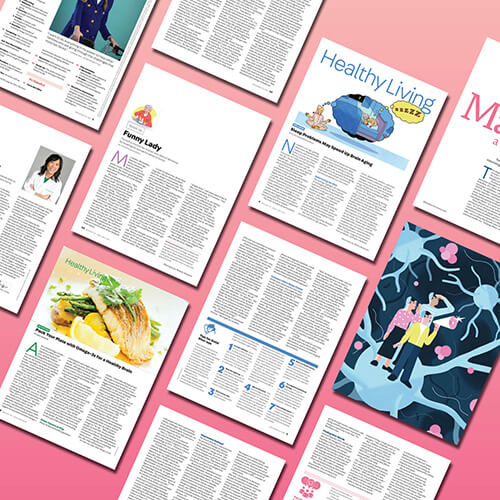
Brain & Life Articles Mentioned
- Patients and Their Loved Ones Find New Roles as Advocates After Diagnoses
- Does Poor Sleep in Middle Age Speed Up Brain Aging?
- Seven Tips for a Healthier Night’s Sleep
- Funny Lady
Other Brain & Life Episodes on these Topics
- Finding Community in Caregiving with Kitty Norton
- Actor Cameron Boyce’s Legacy and Raising Awareness About SUDEP
- Recognizing Sleep Awareness Month with Dr. Joanna Fong-Isariyawongse
- Raising Awareness for a Rare Cancer with Love4Lucas President Hide Harashima
- Leaving a Legacy of Love and Care with Mary Lou Falcone
- Resiliency and Caregiving with Janet Fanaki
Follow us!
- Hosts: Dr. Daniel Correa @NeuroDrCorrea; Dr. Katy Peters @KatyPetersMDPhD
- X: @BrainandLifeMag
- Instagram: @BrainandLifeMag
- Facebook: Brain & Life Magazine
We want to hear from you!
Have a question or want to hear a topic featured on the Brain & Life Podcast?
Record a voicemail at 612-928-6206, or email us at BLpodcast@brainandlife.org.
Episode Transcript
Dr. Correa:
From the American Academy of Neurology. I'm Dr. Daniel Correa.
Dr. Peters:
And I am Dr. Katie Peters. And this is the Brand New Life podcast. Daniel, so we just made it back from a lot of travel. How was your experience at the recent annual meeting for the American Academy of Neurology?
Dr. Correa:
Speaking of travel, I made it back. I was home for a few days and now I'm in St. Louis for another work trip. It's a lot sometimes, but I had a great time in San Diego. It was also really nice to get a break from the New York City cold. It was just that beginning part of spring where it's spring by name but not by weather. And that warmth of perfect weather that San Diego has, I think they're spoiled. It was just a nice break for us, great to see the water and to see friends.
I definitely found a new favorite fish taco spot. Shout out to City Taco in San Diego. I didn't get to go try all the ones. I often have a list much longer than a number of meals left for food when I go visit a place. And I really enjoyed the live podcast we recorded, stay tuned for when we release that. And the session I held with Dr. Joel Salinas. Many of our listeners have heard him here on the podcast, and we talked about how doctors and neurologists could help improve brain health and prevent chronic neurologic conditions across each of our life stages.
Dr. Peters:
Yes, it was so much fun that we did that live podcast and I hope that we can continue to do that in years to come, the future conferences, and it was so great to do it with you and with our other colleagues and I hope that the listeners will enjoy that. And it's great to see colleagues. I see people from my medical school, from my residency, from where I've trained, but also all of our colleagues from the Brain and Life magazine and that's what we're going to talk about today, but also learned about new advances in neurology. And I also get to interact with advocacy groups across all different types of neurologic conditions. And one part of the conference is the exhibit hall, and this is where there are pharma companies that are involved there, but there's a whole section just dedicated to different advocacy groups. And I had a great time sort of just wandering through there and talking to everyone. And we've featured them, some of them on the podcast, but also in the Brain and Life magazine.
And in fact, what we're talking about is our recent edition of the Brand Life magazine and one of the articles is on patients and their loved ones and how they find new roles as advocates after receiving a neurologic diagnosis. And you know that a new diagnosis can sort of be a turning point or a shift for a patient or a loved one, and it can often trigger not just the changes physically but also emotionally and mentally and maybe it would actually inspire those people to use their own experiences to support others.
Dr. Correa:
Yeah, I mean I think in a way many doctors are also doing that themselves. We're often inspired by our own experiences in our family and in our lives, and I think all of our community, patients and family members can elevate their own experiences to advocate. In this recent issue of the magazine, I also enjoyed this article, but I'll admit I had an early preview of it because I helped as one of the people doing the editing for this article and this example-
Dr. Peters:
[inaudible 00:03:54].
Dr. Correa:
This article includes Gwen Jourdan's journey, and I'm sorry Gwen if I pronounced that incorrectly, but her journey with Myalgic Encephalomyelitis, which is a much fancier and complex name for something that a lot of people maybe have heard of as chronic fatigue syndrome, although the newer term myalgic encephalomyelitis is a more descriptive term about some of the different issues and symptoms that may be going on. And she shares her experience as a former literature professor to then patient and community advocate after her diagnosis, increasing awareness for everyone and bringing together her teaching skills to educate the public, influence policy and raise awareness for the community for everyone to have a better understanding of what this condition means and not only for those living with it, how they can improve and address some of their own symptoms, but other people to have a greater understanding of some of the challenges that someone with ME or CFS might be going through.
Dr. Peters:
And it's not only the patients that may take on sort of that advocacy role, but it could also be sometimes the parent or spouse or even a friend that take on that advocacy issue for their loved one with a neurologic condition. And a case in point is Amanda Hopper's advocacy for functional neurologic disorder, it's also known as FND. And it's not well understood, the etiology of it and sometimes it can be really hard to explain the condition to others, but it's something that definitely needs to be identified. So she took on the role to be involved in leadership roles in FND-focused nonprofits after her child Elle was diagnosed with this condition, she actually left her job to do more advocacy in that area. And that's what you may see, is you may see that a parent, a spouse or even a patient may even shift their focus from school or their position to go into advocacy because it's so important to them and they want to push things forward. Now Daniel, do you see examples from your own practice and your own patients?
Dr. Correa:
Yeah, I mean for several years now, some of my work, both at the hospital in the Bronx but also really nationally, has been working alongside what I consider basically as community members, whether they're patients, caregivers or family members who are the true subject matter experts of living with that condition impacting themselves or their family. And this has included the Epilepsy Foundation, which has chapters around the country and national work to help address advocacy, address policy issues, address seizure safety in the school and homes, helping educate people with seizure first aid, really addressing a lot of the gaps there are of what happens outside the doctor's office and outside the hospital about all the different services and understanding there is about the condition epilepsy, which 1 in 26 people may have at some point in their life.
Another organization within epilepsy is the CURE Foundation and they're bringing together a lot of their perspectives as many family members, people who work and help support people with epilepsy to help advance research, as their name states, to find a cure for all the different causes of epilepsy.
And we've also done an episode covering the essential work of Cameron Boyce's parents and the Cameron Boyce Foundation. They've been doing work to raise awareness about sudden unexpected death in epilepsy or SUDEP. And that work alongside with other epilepsy organizations have helped to advance science in the hope towards a future where we prevent SUDEP from taking another life.
Dr. Peters:
Yes, that is such a serious condition, SUDEP, and we need to understand more about it. So thank you for highlighting that work. And recently we had an episode with Hide Harashima whose son Lucas had a very rare form of a very serious brain tumor called a diffuse intrinsic pontine glioma. And really because of his illness inspired him to start Love4Lucas, which is essentially a non-profit organization that helps support research in diffuse intrinsic pontine glioma. I also want to highlight, I guess the advocacy group that is closest to me and to my patients because it involves my patients. It's our fundraising group here at the The Preston Robert Tisch Brain Tumor Center called Angels Among Us. And every April we have a 5K run, Daniel. So you need to come down, you need to run, you can win it, but it's Saturday April 26th, it's to raise awareness for brain cancer, all types of brain cancer. So if you're in the neighborhood at Duke University in Durham, North Carolina on Saturday, come and run and see all of our wonderful patients, their loved ones, and also their advocates.
Dr. Correa:
Well, you put it on my calendar a little bit too late.
Dr. Peters:
Sorry.
Dr. Correa:
I've been doing too much travel, but maybe for next year. That sounds really great.
And for our listeners, these aren't all of the different advocacy efforts and organizations, we do our work here to help bring awareness to many neurologic conditions and to many of these different organizations work. Please reach out to us if you're aware of an organization, a foundation that's doing this kind of work, let us know. It'd be great to see if we can find ways to highlight their work or include their work, whether it's in the magazine or the Brain and Life podcast. So please reach out to us. We're always looking for more people to partner with.
Now as with travel, that sometimes throws things off for lots of routines. There can be all kinds of other reasons. I know I'm already thinking about how I'm going to sleep better tonight. How are you sleeping these days?
Dr. Peters:
Well, I will tell you, the answer is travel can mess with this. This is definitely something that can happen. But right now my challenge is allergies in one word. In NYC Spring may have just sort of started there, but it has sprung here in the south. At one point we turned just bright yellow in the spring because of all the pine pollen. And it's not the allergen, it's really the pollen that comes right after the pine pollen. It's all the grass pollen and oh gosh, it's bad.
Dr. Correa:
I didn't understand this as a reality or thing, and I saw photos I think at some point in the past that I was like, what is this? Is this some sort of AI or effect or something like that? And then years ago when I moved and lived in Augusta, Georgia for a bit and just that week or so of literally, it's a pollen snowfall that you guys have, it's a quarter inch on everything, it was amazing, and in image and from inside looking out the window, it's not amazing when you're outside.
Dr. Peters:
I know it is yellow everywhere and it can just cover everything and it has no boundaries. So we're still getting rid of the yellow, but now it's all the grass pollen. So if I don't take a shower before bedtime, it's really a challenge, definitely the sinuses can interrupt my sleep. But in my recent interview and podcast with Dr. Joanna Fong-Isariyawongse, she says that actually taking a shower before bedtime helps with sleep because it regulates your body temperature. And so I feel it's a double bonus to wash away the allergens, but also to do that body regulation. So she gave so many great tips about how to improve essentially your sleep hygiene. So I would suggest that all of our listeners definitely check that out.
Dr. Correa:
And in this magazine issue, we continue the discussion about sleep. And I'm reminded once again the importance of it and redoubling my efforts to build a consistent routine, or when things get off to find that there's real key importance to getting back to it. And the article, Does Poor Sleep in Middle Age Speed up Brain Aging? The authors and our medical experts who weigh in cover a recent article in the Neurology Journal that showed an association with poor sleep patterns and a sleep deficit in your 40s and 50s having higher rates of brain atrophy. So they studied the MRIs, those are the magnetic resonance imaging or special photos of brains in 589 people 15 years apart and found that poor sleep is linked with nearly three years of additional brain aging, or atrophy in this situation, the way they were measuring it, even as early as these years in middle life. Okay, I'm definitely going to make sure that I make a plan for my bedtime and my routine tonight.
Dr. Peters:
Daniel, we've already talked about brain health on this podcast over and over again. We've talked about diet, we've talked about exercise, and both of those diet and exercise have been linked also to preventing brain aging and brain atrophy. So now sleep is thrown into the mix. And when I talked to Dr. Fong-Isariyawongse, she really highlighted sleep in terms of something that we should really strive to practice to a better degree, similar to diet and exercise. So it's almost like the three things, the pillars that you need to do. You need to have a healthy diet, to exercise to keep moving. And the next is you need to sleep.
And I agree it's not all doom and gloom because even tonight is a great time to start to improve sleep. And I also find that we, in the same issue, we had an article Seven Tips for a Healthier Night's Sleep, and this is how you can try to use them. So the first would be to cut out caffeine. I'm like a gremlin if I have caffeine too late in the day. So I have to be done by noon. So up to six hours after drinking a caffeinated beverage, half of caffeine actually remains in your system. So you want to curtail caffeine after a certain time. You also want to skip the nightcap. About 10% of older adults who use alcohol to fight insomnia, that's not a good idea. It can actually make apnea worse and disrupt or sleep later in the night. So maybe let's think about the beverages that we're choosing in the evening. So curtail caffeine and skip that nightcap.
Dr. Correa:
Those I think are key. And as I've the evenings that I have any alcohol, I've noticed a big improvement. And at this point I kind of have a 12:30, 1 o'clock cutoff for any caffeine. I try to switch to either decaf tea, other warm drinks, but even always have to remember that even decaf tea sometimes has and decaf coffee still has some small amounts of caffeine, so avoiding getting that too much later. And another key thing is, we talked about two things about cutting them out, another one to not add in or to stop is to ditch the sleep aids. And so these in drug stores, we can find all kinds of things that say that they're good to help you sleep. These over the counter drugstore remedies often, whether it's a Benadryl or other antihistamines, they can lead to more daytime drowsiness, can disrupt your bedtime routine, can throw off your regular sleep patterns and can actually even worsen potential for memory issues and confusion in some individuals at night and in the following day.
So really not using these kinds of medications that are over the counter to try to start or set your sleep schedule and instead trying to work towards having a regular routine, having a point in the night, whether it's a phone reminder or something, you start to wind things down. You start to, like they do in all the good songs, "Turn the lights down low, put your PJs on," that's not always in all the good songs. Avoid the tense discussions that might occur or might cause stress in the evening. Maybe start thinking of even winding down in more peaceful discussion, keeping the room peaceful and forcing a quiet time as you start to get towards your sleep and go to bed. These are all things that can help people's transition. And in the articles and on several of our other episodes where we've talked about sleep, we have many other recommendations about this routine.
And once you do get in bed, ignore the clock. If you toss and turn, you're not getting to sleep within 15 to 20 minutes. It's best actually just to get out of bed or sit up, not with a lot of light on, but maybe read something on a printed page, not a phone or television or other screen and maybe not the most engaging thing. Maybe there's that book that you have that you go to that it's not really there to be reading and enjoyment, it's more to help just soothe you or just get you sleepy again, maybe it's just a recipe or something, not immediately engaging, or listening to relaxing music. That's the thing for me sometimes. The challenge is we all often listen to relaxing music now off of our phone or something else, so then that introduces more light, that's the thing I often will struggle too. So I try to have at least a book that's near the bedside that is not the most interesting, but I can keep attention for a few moments and it gets me sleepy again.
Dr. Peters:
So Daniel, I can actually say that I'm doing very well in this apartment because in my new house we do not have a TV in our bedroom. Yay. We really strive to not bring gadgets in our bedroom, which is very good. So keeping the phones out. So I feel like I've got this tip really well, but there's some other ones from the issue. So first is, you do want to really rule out if there's another kind of sleep disorder happening. And I believe we've had podcasts definitely on obstructive sleep apnea. We've had some on restless leg and you want to think about conditions also like gastroesophageal reflux, sleep apnea. Those can all prevent or prevent you from getting a better sleep. So definitely check with your doctor, be evaluated for those and consider the appropriate treatments.
And then some patients can benefit from cognitive behavioral therapy. This is where you can really retrain your body and mind to get a deeper sleep by setting personalized lights out rituals. So maybe talking with a therapist or a psychiatrist about using cognitive behavioral therapy, also known as CBT. And then of course, if you're still having issues and problems, we have so many wonderful colleagues that have been on this podcast and have maybe been in the magazine, it's just find a sleep expert and talk to them. I loved sending my patients to my sleep colleagues to help them out.
Dr. Correa:
I think those are all good ideas and I'm going to get working on some of those where I don't feel as strong in. And I do have to actually have my follow-up sleep study to see how I'm doing.
Dr. Peters:
My doctor just told me to get a sleep study also, so I think we all should get one. I'm sort of curious to see what it'll look like, but one of my favorite parts of the magazine is I always like to read the Speak Up section in the Brain and Life magazine. The stories can range from sort of the poignant to a little sad, but the one in this issue is really heartwarming and funny. Did you get a chance to read it yet?
Dr. Correa:
Yeah, the article, it's titled Funny Lady, the author honors her mother who died of dementia by recalling her wonderful sense of humor. And it truly touched me and it recalled discussions that we've had and interviews with other family members of those living with dementia on the podcast, including Mary Lou Falcone, Janet Fanaki, Jacqueline Revere, Michelle Boyaner among others. And personally, I like to have the opportunity to read these stories and lift up these stories together with you on the podcast as memories of love and honor of my own family's experience reflecting back all the love and happiness that my grandmothers [foreign language 00:20:59] and Abuela Mary shared with us throughout our lives. And in the last line of the article, Catherine Macdonald captures this perfectly when she says, "My mother didn't live happily ever after, but she lived happily."
Dr. Peters:
Just love that quote, and it's amazing what humor can do for the soul. In fact, if you can believe it, one of my patients played a joke on me in clinic yesterday. We had a really good laugh. And you know what I appreciate? It wasn't just the humor, but it was also a shared moment and I thought it was great what this article, because she was really sharing the moments about her mother, and I think that that is just such a positive thing and it's really where we get our memories, even when we're dealing with, my patient was in our brain tumor clinic, so they had a brain tumor, but it was a chance to share together.
Also, check out the podcast episode with Kitty Norton. She's a filmmaker who was a caregiver for her mother with dementia and she really talks about instead of her mom dying of dementia is like living with dementia and all the sort of experiences that they had together through her journey. And she took a sort of a similar approach with humor and her filmmaking to honor her mother and explore the caregiver journey in a documentary called Wine Women and Dementia.
Dr. Correa:
Yeah, it's such great experiences and possibilities to share all of our different life stages. If we have the benefit to be there with someone in our family, even through these more difficult times and to share in their experiences. I think it's an honor, I think in so many ways. There are unfortunately so many people who are tragically lost at times when many of the family didn't really get that opportunity to be with them or to share and reflect on their lives together. And for our listeners, what was your favorite article in this issue of the magazine or maybe one of the past ones? Reach out to us, either write in or record your own thoughts and reflections on one of the articles from the magazine, whether it's this recent issue or a past and send it in. Or if you have any other ideas that you really feel like you've taken away that are important to you from the podcast, please let us know. We'd love to share your thoughts with our community.
And some of you may have heard, we've mentioned a few times, we recently recorded a kind of trial live podcast in front of neurology members and the attendees of the American Academy of Neurology meeting. We're going to be releasing that to you as long as the audio quality comes out well and really we feel is a value to you. And we'd love to hear your thoughts. And if your thoughts are you'd like to see or be part of a live podcast with us, well, we're going to be having upcoming meetings in Las Vegas or in Chicago, let us know if that's a place that you feel like you'd like to be part of and hear a live podcast for the Brain and life community.
Thank you again for joining us today on the Brain and Life Podcast. Follow and subscribe to this podcast so you don't miss our weekly episodes. You can also sign up to receive the Brain and Life magazine for free at brainandlife.org.
Dr. Peters:
Also for each episode, you can find out how to connect with our team and our guests along with great resources in our show notes. We love it when we hear your ideas or questions. You can send these in an email to blpodcast@brainandlife.org and leave us a message at 612-928-6206.
Dr. Correa:
You can also find that information in our show notes and you can follow Katie and me and the Brain Life Magazine on many of your preferred social media channels. We are your host, Dr. Daniel Correa, connecting with you from New York City and online @NeuroDrCorrea.
Dr. Peters:
And Dr. Katie Peters joining you from Durham, North Carolina and online at Katie Peters, MD-PhD.
Dr. Correa:
Most importantly, thank you and all of our community members that trust us with their health and everyone living with neurologic conditions.
Dr. Peters:
We hope together we can take steps to better brain health and each thrive with our own abilities every day.
Dr. Correa:
Before you start the next episode, we would appreciate if you could give us five stars and leave a review. This helps others find the Brain and Life Podcast. See you next week.