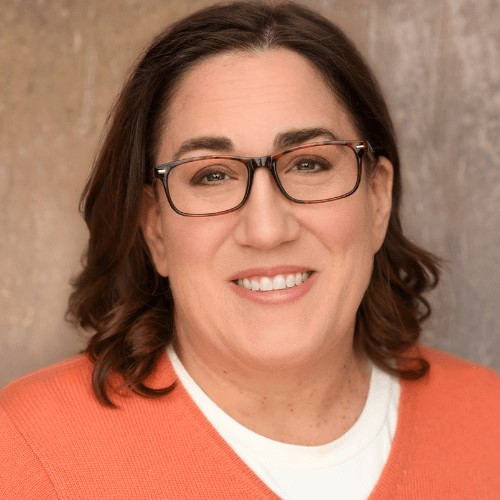
In this episode of the Brain & Life Podcast, co-host Dr. Katy Peters interviews Beth Pinsker, an award-winning journalist and certified financial planner, about her brand-new book 'My Mother's Money: A Guide to Financial Caregiving.' They discuss the challenges of handling end-of-life financial decisions, the importance of having key documents like a power of attorney, and the emotional and practical aspects of financial caregiving. Dr. Peters is then joined by Dr. Winston Chiong, the Mary Oakley Foundation Professor of Neuroethics in the UCSF Department of Neurology at the Weill Institute for Neuroscience. Dr. Chiong explains what happens in terms of the decision-making capacity of the brain for people with memory concerns, how financial decision-making capability is assessed, and how we can support both people with these conditions and caregivers.
Follow and subscribe wherever you get your podcasts!
Apple Podcasts Spotify Libsyn
Additional Resources
- My Mother’s Money: A Guide to Financial Caregiving
- How to Protect Loved Ones from Financial Scams
- Cognitive Decline Can Lead to Financial Struggles and Scams—Here's What to Look For
Other Brain & Life Episodes on this Topic
- Memory and Your Brain, Explained
- Navigating Complicated Caregiving Journeys with Jacquelyn Revere
- Journalist, Producer Kitty Eisele’s Honest Recount of Her Time as Caregiver
Follow us!
- Guest: Beth Pinsker @BethPinsker_NY ; Dr. Winston Chiong @UCFSMedicine
- Hosts: Dr. Daniel Correa @NeuroDrCorrea; Dr. Katy Peters @KatyPetersMDPhD
- X: @BrainandLifeMag
- Instagram: @BrainandLifeMag
- Facebook: Brain & Life Magazine
We want to hear from you!
Have a question or want to hear a topic featured on the Brain & Life Podcast?
Record a voicemail at 612-928-6206, or email us at BLpodcast@brainandlife.org.
Episode Transcript
Dr. Correa:
From the American Academy of Neurology, I'm Dr. Daniel Correa.
Dr. Peters:
And I am Dr. Katy Peters, and this is the Brain & Life Podcast.
Well, I do feel that I have some proficiency in science and medicine. I've never formally studied finance or economics. But Daniel, during the pandemic, I decided to sort of take a deep dive and sort of understand the stock market. I also took a deep dive into art, but also decided to do the stock market.
Totally two different investments, but looked into how to invest in the stock market. I feel like I've had a trial by fire about doing my taxes and helping other people with their own taxes. Now, how literate are you are in the world of finance, Daniel?
Dr. Correa:
I think I'm envious to all of those who understand it. There were a few years that my wife and I would do our own taxes, which was its own painful stress, but no.
I would say I did not start with much financial literacy. I fell into credit card scam vortexes-
Dr. Peters:
Oh my gosh.
Dr. Correa:
... in college when I was trying to cover different expenses. I was working to pay some things off during college and paying for books. I got behind on finances both in college and several times on my path to medical school.
But more importantly, it was often because I had a lot of shame about not knowing that much and being, quote-unquote, an adult, and having financial challenges. And I didn't know who or where to ask for help. And it wasn't until I got some financial counseling in medical school for some of the challenges I was having and then the love and support and patience of my wife who did a business degree and had much more financial literacy than I did. And when we started dating, I learned a lot from her and through her help, and really, it's all that that has led to our stability that we have now.
Now, I try to consistently check in and tap into some of the help of others, check in regularly with financial advising services that many of us could get through our banks or through the retirement accounts we have at work. But it's still very much an area that I feel like I don't have a full sense and grasp, not only in personal finance, but the finances in medicine and the way it impacts so many different patients.
Dr. Peters:
Yeah. It can be really tough if you've never been exposed to it. And I found that I was listening to podcasts that I had never listened to. There was one on, it was called The Finance Guys, and they were sort of humorous, and I was like, "Why am I listening to this? What's the difference?" And then I was like, "Well, I need to read a book about it." And it just sort of felt like it was something I wanted to sort of conquer and understand and take a deep dive into.
And then we have a great accountant, she's been our accountant for years, and my husband's in private practice, and the way that I was being paid was sort of weird. And then I had to deal with my mom's finances after my father passed because she'd never done taxes before, so it was really this trial by fire. And having the advice of professionals I think is quite helpful, but you need to find ways to have really accessible resources.
And a lot of our patients may have had to step in when a loved one with a neurologic disorder or even if somebody is an aging loved one, had to step in and sort of help them with those financial issues. Have you ever had to step in and sort of help with it? But I guess it's your wife. We call in your wife, right?
Dr. Correa:
Yeah. I mean, I think we share a lot in our concerns and support of our family, so yeah. I mean, I think I lead in. Of course now that we have some more of this stability and organization in our own lives, in my financial life, yeah. We've helped some family members.
Often I'm coming in with humility and openness of the challenges that I've had and knowing it's a challenge, and just trying to encourage them to be open to the help from others. And then have discussion like with recommendations and the things we've learned from my wife, her family, and any of the experts that we've had that have helped us along the way.
Dr. Peters:
So today's discussion, I think you're really going to like it, and hopefully it will sort of inspire you to learn a little more. It's with Beth Pinsker. She's an award-winning journalist, but also a certified financial planner, which was really interesting to find out about that part of her life. And she really has been focusing on the challenging and sometimes daunting tasks of handling end-of-life financial decisions for an aging parent or maybe a loved one with a neurologic disorder.
And she just wrote a book, it just came out. It dropped November 4th. I've already bought my copy. It's called My Mother's Money: A Guide to Financial Caregiving. It is now out. And I love that term financial caregiving.
And so when we were looking for an expert, we came across Dr. Winston Chong, and he studies dementia and Alzheimer's, but he also goes really a step further to understanding how those patients deal with financial situations and deal with financial challenges. So I hope you enjoy this discussion today.
Hello, Brain & Life podcast listeners. I would like to welcome our very special guest today, Beth Pinsker, to our podcast. Beth is doubly talented as an award-winning journalist and also a certified financial planner. She is a financial planning columnist at MarketWatch and now is focusing on challenging and sometimes the seemingly daunting task of handling end-of-life financial decisions for an aging parent or for other loved ones. She is tackling this in her upcoming book called My Mother's Money: A Guide to Financial Caregiving. Beth, welcome to the podcast.
Beth Pinsker:
Thank you so much for having me.
Dr. Peters:
Absolutely. So I just gave a short introduction, but could you tell us where you're joining us from today and a little bit about yourself?
Beth Pinsker:
I am in Brooklyn, New York, and I am a longtime financial journalist, and I started writing about elder care issues when my parents started to go through them, mostly because I was on duty having to fill column inches when I was going through this and I literally couldn't do anything else. I had a column due, and I was sitting at the hospital, and this is the only thing I could think to write about, and it's my core subject matter.
So it ended up helping people, and so I took all the stuff that I wrote about my mom and I fleshed it out and I turned it into a book because the answers weren't there for me when I was going through this and was looking for what I needed to know. There are general resources out there, there are lots of caregiving resources about the medical side of things, but filing somebody's taxes for them, getting their social security benefits straightened out, navigating Medicare and if a loved one has to go on Medicaid, those are all really complicated practical tasks, and there's no manual for how to do any of it.
Dr. Peters:
I'm sitting here nodding back and forth because I think this is a under-researched topic and it's not in the literature that's very accessible, you have to really cut for it, and so I'm really glad that you're giving a guide out to people in My Mother's Money. So before we start to go into that, can you tell us what is a certified financial planner and how do you become one?
Beth Pinsker:
So you take a very, very hard test. Certified financial planners have a broad subject area. We are the people who do holistic planning. These aren't the people you go to say, "Which ETF do I want to invest in?"
This is the person who's going to say, "Well, how old are you? What do you want to save for? How much other money do you have? What insurance do you have? What are your children doing with their lives? What are your parents doing with their lives?" You need to get a full picture of somebody's existence before you can give them any financial advice. And the certified financial planning designation means that you're going to somebody who has had the training in all of those areas and can help you with all of those things.
And most importantly, they are what's known as fiduciaries, which means that they can only act in your best interest. It's not about commissions or sales for them. They are held to this very strict ethical standard where they have to give you recommendations that are the best thing for you, not for them or for anybody else or for their company. That's the most important part of the whole thing.
Dr. Peters:
Well, it sounds like you're a guardian?
Beth Pinsker:
Yeah, exactly.
Dr. Peters:
So first of all, just kudos for what you do. I also have a certified financial planner that has helped my husband and I, so I just would say thank you very much for doing that. And the inspiration really for My Mother's Money, the book, came from sort of caregiving for your mom.
Beth Pinsker:
Yup.
Dr. Peters:
Can you tell us a little bit more about your mother?
Beth Pinsker:
My mother was a school teacher, my father was a college professor, and they lived a very lovely life as academics in Lancaster, Pennsylvania, and then they moved around a little bit when they retired and they were in Florida. My father passed away a few years before my mother, and I got that call like you get. My mom called me up. She said, "I have to have back surgery and I'm going to need some help."
Everybody gets one of those calls at some point in their life and they are terrifying and life-altering. Dad fell, mom had a heart attack, Aunt Sue had a car accident. Whatever it is, it's just life stops in an instant and you have to rush in, and you don't know how well anybody else has handled their life, right? So I mean, you can do everything right for yourself and end up taking care of somebody who hasn't done everything right, and your whole plan is derailed.
My mom happened to do most things right because I was there helping her for most of it, but there were still things that I just didn't know. And when she got sick, she got sick pretty fast, and there were things I didn't have time to ask her about and didn't have the opportunity.
She had surgery and she sort of rolled into six to eight months of just disaster after disaster. And she would come around, and then she would go back to being really sick, and then she would come around, and there was never the right time to be like, "Mom, what's the password for your third credit card that you have?" And nobody thinks about those things, right? So no matter how much she would've prepared, there were still going to be things that I was missing.
And I wrote about these things, the biggest stumbling blocks as I came upon them as columns in MarketWatch, and after she passed away and I was dealing with settling her estate, which is just enormously complicated to settle the estate of somebody who's died, I thought there's no way that anybody could really understand the whole picture of this just by dealing with one thing at a time. Because you sort of have to get a picture of the whole thing and how it all works together in order to understand how important any one piece of it is.
So my mom got sick. The most important thing we needed at that period of time was a power of attorney form that was properly notarized and up to date. And if you don't understand that until the end after the person is too sick to do anything about it, you're stuck. That's expensive. That's a big problem to have.
But if you don't understand the whole life trajectory of it, you're going to let that sit on your to-do list forever and ever and ever and never get around to it. How many people in this country think about it but then never actually take the steps to do it? Only 30% of the people in this country, of the adults in this country, have a will done at this point. Even fewer have powers of attorney, even fewer have healthcare proxies, even fewer have trusts of any kind.
And so that's millions and millions of people who are unprotected if something happens to them, and millions and millions of their loved ones who have to clean up after these messes. It's a lot of angst and paperwork and trauma and all of that. It's really hard.
So my job in the book was to give people through storytelling, through telling my story of everything that I did, was to tell them what this feels like to go through. And when you feel it, when you see what happens to the people involved, you understand why it's important. Because a to-do list is great, but you have to understand why it has to be the most important thing that you have to get done today.
Dr. Peters:
You are hitting on so many points. I wish I had your phone number. I wish I'd been doing this podcast before.
And I will just say, when my father passed, he didn't have anything organized, and I had to deal with his finances, and it really fell to me and my mother because she'd never done anything. She'd never filed a tax return. So filing his tax return that was lumped in with his practice, because he was an attorney-
Beth Pinsker:
That's a complicated one.
Dr. Peters:
It was very complicated, and it really felt like a second job. And I think one of the things that you said was you're having to do this while also grieving, I feel like. Your task now is to handle all this stuff, and you don't really have a chance to grieve.
So what would you recommend for people that are sort of in that situation where something happens all a sudden? I guess what you'd probably recommend is plan ahead of time, I would assume?
Beth Pinsker:
Well, my goal is to get to people ahead of time, but if you are in the middle of it and you can't get out of it, the thing to do is take a deep breath, first of all. I hate to say it this way, but after death, you're not on a time schedule for the most part.
Most of the deadline decisions happen when somebody's sick, and those are the most pressing ones, but after somebody dies, you have a little bit of breathing room, and not everything has to be done all at once. I tell this story in my book. My mother died, and I was like, "There are all these things I need to do. What do I need to do?" I got COVID at her funeral. And-
Dr. Peters:
That's horrible.
Beth Pinsker:
That's horrible. But I would have started making phone calls, and I would have killed myself to get all the stuff in order, and I couldn't. I literally couldn't. I literally could only lay in bed. And I was grieving, and life was topsy-turvy, and I was sick, and being sick was the only thing that made me stop and take a minute. But everybody deserves that minute.
And some cultures have it built in so that you take a week of grieving or you take a month of grieving, and there are prescriptions for the spouse to take a month or a year. Those things are done for a reason. The old-timers, whoever set those things up, knew what they were doing. You need that time.
But sometimes, you don't have it. I just interviewed the author Geraldine Brooks, who's a Pulitzer Prize winner. She wrote March, Horse, a lot of great books, and she wrote this book called Memorial Days recently about the death of her husband. And when she was planning his funeral, she realized that their credit cards were canceled because he was the primary and she had no credit history of her own.
And then she figured out a month later that their health insurance had been canceled the day after he died because it was the end of a month, and your health insurance gets canceled at the end of the month in which you terminate it, which he terminated it by being dead. And she had paid the premium and thought that she and her children were covered, but they weren't. She didn't have any time to breathe.
And it took her a year to settle everything, and then she went off to a remote island in Australia to think about things and write this book. And it's just crazy that we have a system in this country that you don't get a minute, but you can take it for yourself. You can insist on it if you need to.
Dr. Peters:
I wish I would've taken that advice because it was really, really hard. Because you should give yourself some breathing time, and I'm sorry you got COVID, but I feel like that gave you some time to reflect at least.
Beth Pinsker:
Yeah. My inspiration for that part of things are these sisters on TikTok who make these videos, and one of their most famous videos is Confessions to Our Dead Mom. And it's one year after their mom died, and they're in their car or something, and they're giggling, and they're saying, "Mom, we didn't know we had to file taxes for you." They're young 20s, early 30s, whatever they were. They didn't know. Who knows these things, you know? But they were stuck in the middle of it, and they had to figure it out.
Well, people like that deserve time. You deserve time to figure it out. And some of these things are forgiving enough that if you need a minute, you can take a minute, you can ask for help. If you have a little bit of extra money or money from the estate, you can hire somebody to help you. They have what's now called after loss professionals.
Dr. Peters:
Oh, wow.
Beth Pinsker:
They have what are called death doulas, they have geriatric specialists. There are different categories of people who do specifically different things, and after loss professional is a designation that's like an after loss coach, and they will help you through all the paperwork. You can also hire a trust attorney to help you or a state attorney to help you with the paperwork. They will usually take that on as an extra service. You can farm some of these things out. You can take your time with it.
There's still things that I haven't done of my parents' paperwork. Like my father was a writer, and he had royalties and copyrights and things like that. And I haven't settled all of those things, but we're talking about I get statements, and they're $7.99, and I'm like, "I'll deal with that another time," you know? It has to get to $25 in order for you to cash out the money anyway, so I figure I've got about three years before I have to deal with that to get my $25 and then split it with my brother.
Dr. Peters:
Well, that is great. And I haven't necessarily heard of those positions like a death doula or the after loss professional. Not after life. Sorry.
Beth Pinsker:
The after loss professional is fairly new. These are people who in former days, might have been life coach kind of people, but they have found this niche of help that people need that's very specific and very hard to do yourself.
And so if you need to hire somebody like that, you pay an hourly fee, and they will sit with the credit card list and call each one of them up and make sure it's canceled. They'll help you pull a credit report and go through your loved one's financial accounts one by one, and make the calls that are so annoying to make to customer service, to get the right person on the phone and then to get the right transaction process. It's tedious.
I remember the most tedious time I had when my mother was on hospice, and I was just antsy, and I couldn't sit still, I sat at her computer with her phone and had to open up each thing that she interacted with, like her ancestry account, her newspaper delivery, one by one, every charge that was on any credit card in the past year that was a recurring charge, and cancel each one or transfer it to myself.
And just hours and hours of me sitting there with the two-factor authentication, signing in as her, getting the buzz to her phone, signing in, changing the password, changing it to my email, changing it to a password that I understood rather than her squiggles on a piece of paper, and just being methodical about it. But there are people you can pay to do that if it's not something that you want to handle yourself.
And I definitely recommend the taxes, going to a professional for the taxes, because filing after death tax returns is complicated, and I didn't even understand as a tax specialist that my mom would need two and possibly three tax returns in the year of her death. And that was crazy to me, because I had my own tax return to do and two tax returns for my working teenage children, and that was going to be six tax returns I was responsible for that year, and yeah. Literally, it made me want to cry. And that's just too hard for most people. You can hire an accountant. That's what they're there to do.
Dr. Peters:
I agree. I agree. Six tax returns? Oh my gosh. I can't even imagine. So I want to just add one thing to the [inaudible 00:22:32] thing that you mentioned that's a tedious task. So one of the things that I learned is my dad had a safety deposit box, but it didn't have my mom's name linked to it. So we had to get all this paperwork to show that my mother was now, I can't remember the exact name of the document, but-
Beth Pinsker:
Surviving spouse.
Dr. Peters:
Surviving spouse. So she got the safety deposit box. Well, when the safety deposit box came out, I envisioned a safety deposit box something like this size. I mean, I can't even show you how long the safety deposit box was.
Beth Pinsker:
Oh my gosh.
Dr. Peters:
So it had some legal papers that sort of scared me, and I did not know what they were, but because her name wasn't on the box and my name wasn't on the box, I had to account for everything in the box. And when I say account, I had to also count. And my dad was a pack rat, so he kept all these dimes, and it was a large, large, large container of dimes, and I had to count every one-
Beth Pinsker:
Oh my gosh.
Dr. Peters:
... of those dimes at the bank in front of someone. So back-
Beth Pinsker:
Did they make you go to court in order to do that, or did they accept the death certificate with your mom listed as spouse?
Dr. Peters:
Yes. They accepted that. Yes. I'm from a small town.
Beth Pinsker:
If your mom wasn't there and it was you, they would've made you go to court, and you want to know how much that would've cost you?
Dr. Peters:
Oh, how much?
Beth Pinsker:
$18,000.
Dr. Peters:
Can I pay them in dimes?
Beth Pinsker:
I don't know. But that is the going rate to get a probate lawyer to go to court to establish the relationship in order to get into the safety deposit box.
And the problem for most families is that the older generation, they think that's the safe place to keep documents, and they will keep their will and their trust and their powers of attorney inside the safety deposit box. But you need a court order to get into the safety deposit box to even get them.
And so from the start, you are stuck and locked out, and you're lucky that the bank let your mom in because they are not usually very nice about that. And in my book, I spoke to a lawyer who had to sue a bank in order to get them to accept a client's power of attorney.
Dr. Peters:
Wow. That is just really amazing. What I'd love to know, first of all, I cannot wait to buy your book.
Beth Pinsker:
Thank you.
Dr. Peters:
I think this is such a key concept about financial caregiving. Can you sort of give us the top five tips from your book? Without revealing everything, the top five tips?
Beth Pinsker:
Yeah. So the number-one tip is to make sure that you have those key documents. You really need that power of attorney. Then you need to secure the person's phone. You need to know the passcode or you need to be named as a legacy contact on that phone. The person's phone and access to it is the number-one thing.
It is heartbreaking the stories I hear of families that the loved one dies and they can't get into their phone. They can't even get started really without that phone. And there's no way around it because the FBI can't even get into phones, you know? I have instructions in my book on how you can name a beneficiary to your phone. It's right in your settings. It's really easy to do. It takes 30 seconds. It will save so much heartache.
You need to talk to your people. The most important thing for me was knowing what my mother wanted because there are decisions to make that would have literally given me trauma if I had to make them myself about end-of-life decisions, what kind of care she needed, where she wanted to be cared for, how she wanted to live out the last days of her life.
And you need to talk about these things. You need to talk about what the inheritance plan is. If people don't know, they fight, and fighting, the only way to fight over stuff after somebody dies is in court. There is no arbiter who's going to come in, there's no mediator who's going to help you. There's no parent who's going to slap you upside the head and say, "Get some sense in you." You are going to have to go to court, and the courts are very, very strict about the hierarchy and the delineation of assets.
So if you and your sister are fighting about your dad's assets, which I'm just making that up, I don't even know if you have siblings, but if you have a family and you have two siblings who are fighting over assets, the court is going to just split things evenly. If you're the sibling that doesn't want things split evenly, you want some other split of the assets, you got to be nice about it. You got to work with the other person because if you don't, you're going to end up in court, and the court's just going to cut it down the middle.
And if one sibling is mentally disabled or has a addiction problem, you got to put some protections in place for that because the courts aren't going to recognize any of those things. The court's just going to say, "You have three biological siblings and we're going to split it in thirds." So you need to be willing to communicate is number three.
Number four, let's see if I could come up with a number four. I have a whole list of these, but those are the three key ones. Three is a lot for people. Five is almost too many things to focus on. You need the documents, you need the phone, and you need to talk to each other. It's that simple.
Dr. Peters:
I think that it's so important. And for our podcast listeners, many of them either have a neurologic condition or disorder, or maybe they have a loved one with a neurologic condition and disorder. And so sometimes, it's hard to communicate what those wishes are, so I would say do that now and early and often as much as you can.
And it's so important with my patients and their loved ones because I treat patients that have brain tumors. And so when they get diagnosed with that, there's a lot of financial considerations that come into it. Now, what have you found as far as resources or support groups that have been helpful for you in terms of financial caregiving?
Beth Pinsker:
For me, writing the book was really helpful to deal with my grief. It let me sit with my mom and think about the conversations that we had and go back over things and almost forgive myself a little bit, because when you're in it, you think you're doing everything wrong.
And when I went back through it, I think we did things okay. I think we were okay. I think we did the best we could, and I think that we respected what she wanted and cared for her lovingly, which is what she wanted, and she left this earth knowing that me and my brother and everybody around us, that we loved her, and we knew that she loved us. And really, what more do you want than that? The financial stuff is secondary to that always.
And for financial resources, I have a workbook at the end of the book, and it walks you through a step-by-step, all the things you need to do. "Here's how to organize your papers. Here's how to do the math on figuring out how much money is at your disposal and what benefits you have access to. And here's how to figure out how long that money will last given how much you're spending right now. And here's what to do with it after. Here's how to protect it, and here's how to pass it along to the next generation or to charity."
And all of those resources are disparate. They're out there in the universe, and I made an attempt to pull them all together so that you can see them all in one place. You might go out there and find a resource that tells you how to do charitable giving, or explains to you about trusts, or explains to you your Medicaid benefits or your Medicare benefits depending on which one you're eligible for. But there wasn't anything that pulled it all together.
And so what I tried to do was say, "Okay. You need to be thinking about giving to charity at the same time you're thinking about is my mom going to need to go on Medicaid?" Because those are part of the same life cycle and you need to think about those things together. And my book was an attempt to put those things together so you could see the whole picture.
Dr. Peters:
So Beth, I'll be honest with you, I am so excited about your book and-
Beth Pinsker:
Thank you.
Dr. Peters:
... I really appreciate that you spent so much time with us really discussing this topic. Because I think when it comes to, especially for medical professionals, we can talk a lot of times about the medicine, the side effects, even people's quality of life, but sometimes the financial picture is not even discussed. So I would say kudos to you for bringing it forward, so thank you for sharing your experiences, your writing, your advocacy-
Beth Pinsker:
Thank you.
Dr. Peters:
... for financial caregiving. And check out Beth's upcoming book, My Mother's Money: A Guide to Financial Caregiving.
Beth Pinsker:
You can get it through any bookseller or through my website, BethPinsker.com.
Dr. Correa:
Are there questions you have about living with and thriving with one of many neurologic conditions? We're excited to start taking your questions and feedback and sharing those responses here with you on the podcast. You can also email or record an audio message and send it to BLPodcast@BrainAndLife.org.
Dr. Peters:
Hello Brain & Life podcast audience, and thank you so much for joining us today. I'm of course your cohost, Dr. Katy Peters. And we've started our discussion about financial caregiving really in the setting of aging loved ones, but sometimes those loved ones will also have dementia or an underlying neurologic disorder.
So we're really excited today to have our expert, Dr. Winston Chong, to join us today to discuss sort of the nuances of this topic. And Dr. Chong, he's the Mary Oakley Foundation Professor of Neuroethics, and we'll find out what neuroethics is, in the UCSF Department of Neurology at the Weill Institute for Neurosciences, where he is based at the UCSF Edward and Pearl Fein Memory and Aging Center.
His clinical practice focuses in on patients with Alzheimer's disease, another type of dementia known as frontal temporal dementia, and other cognitive disorders associated with aging. His research really delves into neuroscience, but also ethics and health policy.
And one of the things that he does investigate, and I can't wait to talk to him about this, is the underlying neural basis of decision-making in the aging brain and how examining brain systems involved in both financial and medical decisions are affected by health and diseases such as dementia or Alzheimer's. So Dr. Chong, thank you so much for joining us today.
Dr. Chiong:
So glad to be here.
Dr. Peters:
So I gave a brief introduction. Can you first just tell us a little bit more about yourself and where you're joining us from?
Dr. Chiong:
Yeah. So as you mentioned, I'm here at UCSF for UC San Francisco, trained here for a long time, and do a lot of things. I wear a number of different hats. So in addition to seeing patients and doing research, I direct our bioethics program at UCSF, and so in that way, I'm involved in a lot of conversations about different ethical challenges that arise in the care of patients or in research, and have been thinking for a long time in particular about some of the tricky situations we find ourselves in and that caregivers find themselves in when we are trying to help people who have Alzheimer's disease or other cognitive disorders. Where among other things, we're often trying to balance their independence with their safety, right?
And that's just a core ethical problem that comes up for us as clinicians, but it also is something that caregivers experience all the time where we want to give people autonomy, we want to recognize what people can do. We want them to have the fullest lives that they can have, but we also want to protect them from dangers.
And so we see this sometimes with things like driving and dementia, we see this sometimes with other activities, but money management and medical decisions and research decisions are a group of decisions that we focus a lot on my lab because they're really consequential. They reflect people's values, they reflect the work that people have done in many cases their whole lives to accumulate their retirement savings, and to be in control of money that they've earned.
But we also know that particularly with Alzheimer's disease and other conditions, that people are at risk of scams, financial abuse, they're at risk of financial mismanagement, and so it is this real core challenge, this balance we're trying to strike where we are trying to honor people's ability to make decisions for themselves to live their own lives. And at the same time, we know that there are really tremendous harms, and that can have serious, serious consequences for people with dementia and for their whole families.
So it's just at this intersection of what we're learning about the brain and how our brain helps us make decisions, what we're learning, and we're learning so much every month or every week even about Alzheimer's disease and other dementias, and thinking more and more about how to really support caregivers and people with these diseases that are becoming more common in our aging society.
Dr. Peters:
First off, kudos to you. I think this is something that definitely needs to be discussed, and I love that you're using really sort of your neurology lens to look at these really challenging and ethically based issues, because we all want our patients to have as much agency for as long as possible, but to have that agency be safe and not have there be really serious financial challenges or problems that would sort of come out of that.
So when you have someone who has early Alzheimer's or any Alzheimer's in general, what are sort of some early signs that you might notice that they're having problems with their finances or having problems with making sort of those higher-level decisions that maybe they were once good at?
Dr. Chiong:
Yeah. So I'll take a step back. I think we're going to talk a little bit more later about Alzheimer's disease and other dementias. And so some of what I have to say is specific to Alzheimer's disease, but some of what I have to say relates to dementias as a broader kind of category, and we'll get into some of those details a little later on.
I do want to zoom out also and say that we're in a really historically unique situation around aging and some of our expectations around aging and financial decision-making, and that's part of why it's such an important problem for families and for us to think about, right? So people are living longer. People have really different expectations for aging and their own independence than people did in earlier generations. Their expectations about their ability to live independently and travel and enjoy life and retirement that were really just not possible for many people, and still aren't possible for some people now, but were not as possible for nearly as many people before.
And there's also something about the individualism of American society where we're kind of globally unique in terms of the extent to which we expect older adults to kind of rely upon their own retirement savings rather than a pension or rather than being dependent on younger family members to live through retirement. So there are some really interesting findings that suggest that, for instance, people in their 60s and 70s are not necessarily more susceptible as a category to things like financial scams than people in their 20s and 30s.
Dr. Peters:
I agree with that.
Dr. Chiong:
Yeah. But the reason we focus on people in their 60s and 70s are, first, scammers target them because they have the money, right? They are people where we are all earning and saving throughout our lives because we expect to live off of our retirement savings when we get older. And so if you're a scammer, you're going to focus on people who are in their 60s and 70s because people in their 20s and 30s haven't had that accumulated wealth.
And also, if you make a mistake with your money in your 60s and 70s, that's really, really consequential, because if you're retired or if you're just about to enter retirement, you have saved up all of those funds with the expectation that that's what you're going to live on during your retirement.
Whereas if you're in your 20s and 30s, it's terrible to be scammed, but you have a whole kind of earning career ahead of you where you can rebuild that retirement fund where you're not going to be in a bad way or hopefully not as bad a way in retirement. So that's just one thing I want to flag that there's certain features of our historical and global situation that make this such a core topic for families and one that affects people here in the United States especially so much more keenly than it did in the past.
As a neurologist who sees people with memory concerns in aging, and I see the range of people, which includes kind of what we would sometimes call the worried well, right? So people who are-
Dr. Peters:
Absolutely.
Dr. Chiong:
... thinking that they're noticing changes in their cognition, and they're worried that it might be the start of Alzheimer's disease or something else, and then of course, people who have real full-blown cognitive disorders. We can talk a little later about some of the diagnostic and clinical tests that we use.
But I think as a practical matter, when I think about what people are doing in their home environments, we think about things that are what we call activities of daily living, like the things that you do every day that are part of just living and being out in the world. And I think about ones that are more kind of cognitively complicated that require the coordination of different parts of the brain in order for us to be successful and also ones that involve some degree of risk.
So I think about things like cooking, driving, and money management, partly because these are things that require multitasking, that require memory, that they're among the more cognitively complicated things that an ordinary person does just in the course of their usual day or week or month.
And also where the consequences for making mistakes, like leaving a pot on the stove, or leaving the water running, or getting in a car accident, or getting lost, or losing your money or not paying a bill, these are things that can have significant consequences for people later on.
And so these are some of the more kind of cognitively complicated things that people do that are part of living independently and that we like people to be attentive to. And sometimes it's a matter of family members attending to, because again, one of the problems we have with Alzheimer's disease and other dementias is that, in many cases, people are unable to recognize changes in themselves.
Dr. Peters:
I love how you sort of stated that with the activities of daily living, that they're really tasks where there is sort of an element of something could go awry, cooking, driving, financial. So how do people sort of first become aware that they're having challenges? What do they usually see? What are those early signs?
Dr. Chiong:
Yeah. I think it's tricky just because there can be changes that are part of what we call or consider normal aging. And I think those can be difficult to distinguish sometimes even clinically from what might be the early signs of a disease or a cognitive disorder like Alzheimer's disease.
But I guess I would say that, yeah, if we're starting to notice that things are just more difficult or more challenging or that we're relying more on help from other people or relying more on different kinds of cognitive aids, then those can be at least signals that would at least prompt someone to talk with their primary care doctor or kind of bring these to other people's attention.
I would say that we need to get better as a society about recognizing some of these conditions in primary care, and two of the problems, of course, are just that primary care doctors are so busy with so many other things that they're just focused on the problem that's in front of them.
And so that does kind of mean that in many cases, they don't ask the screening questions that would elicit whether somebody has the early signs of dementia. But I think that certainly if people bring those concerns to their doctor, then that becomes an opening for a conversation. And in some cases, it could just be reassurance, or in some cases, that could lead to a referral for a more extensive evaluation.
Dr. Peters:
And so how do we diagnose Alzheimer's today or how do we sort of go to the next step? You have a patient, there's memory issues in clinic, maybe there's some functional issues in regards to finances or activities of daily living. What is sort of the next step? I know that it's really changed since I was trained as a neurologist of how we diagnose these types of dementias.
Dr. Chiong:
Yeah. Well, this is something that is honestly changing month by month right now. This is one of the-
Dr. Peters:
I hope it isn't changing right now, because we're getting this podcast out soon, so I hope it isn't changing right now.
Dr. Chiong:
Well, it could be different in a few months. I mean, this is really one of the most active areas of research, and we are still honestly figuring out how to incorporate the speed and rapidity of what we're learning about Alzheimer's disease and other dementias into practice. That's one of the most exciting areas, I would say, of our research, and it's something where we're going to have to figure out how to put this in practice. And in part, this is because of some of the new molecular treatments for Alzheimer's disease and what we hope will be other treatments for other conditions in the near future.
So I guess I would distinguish between what I'll call a clinical diagnosis and a molecular diagnosis. And so I mentioned before that when I use the term Alzheimer's disease, I'm using that to mean a very specific type of disorder that causes cognitive and memory problems, and that one thing that we are learning and recognizing is that Alzheimer's disease is one of many such disorders that can cause dementia, that can cause cognitive and memory problems, and that these are different diseases or disorders that are associated with different molecules in the brain, that are associated with different kinds of aggregates that we can see under a microscope in the brain, but that can often produce very similar symptoms or clinical presentations, right?
And so for some purposes, it's sufficient just to make a clinical diagnosis that somebody has a memory problem that is a dementia, and it's one of these dementias that it belongs to this broader category. And then there are some specific purposes for which it might be useful to know more specifically that this cognitive problem is due to Alzheimer's disease specifically and is not due to one of these other molecules, is not due to one of these other diseases.
So with regard to the clinical diagnosis, so somebody has a memory problem and we're trying to figure out, "Well, is this just kind of aging? That somebody's just more sensitive to the normal problems of aging? Or is this a worrisome change? Is this something that suggests a more serious pattern of cognitive decline?"
Then the tools we have for that are still the older tools, and they're still probably the best tools, right? And so that's a detailed cognitive assessment. That's a cognitive history where we kind of hear about and take into account what was somebody's education, what were the things that they were able to do before, what are the things they're not able to do now?
And we can think about that in the framework of what we understand about the different memory systems in the brain and how they're affected by these different conditions. And in many cases, we'll do some neuropsychological testing that will help us to sort out really different types of memory problems that we can see in aging.
And that can be hard to distinguish just by description, but where we can use these different kinds of neuropsychological tests, right? So these are memory tests or repeating a list of words, repeating a group of numbers, retelling a story, things like that. And those are really the tools we use to make the clinical diagnosis that help us to distinguish between something that's maybe just normal aging from what might be a cognitive disorder.
Now, a new set of tools that we are still figuring out how to use are these sort of molecular tools that right now, they're specific to Alzheimer's disease, and to a lesser extent, Parkinson's disease. And this is really more helping us sort out among different conditions that could cause a cognitive problem.
And one of the tricky things I would say in terms of how we're going to use these clinically is that for a while, we've had these brain imaging and cerebrospinal fluid tests, and now we have these blood tests that can actually detect Alzheimer's proteins that are related to Alzheimer's disease. And this is really, really exciting, and it's relevant especially for people who might go on to get targeted treatments, these new molecular treatments for Alzheimer's disease, but we're not sure how to use them for everybody.
And one of the challenges is that, so if you're somebody where you're starting to have these cognitive problems and you're worried that it might be the beginning of a dementia, then if you get one of these blood tests and it's positive, then that probably gives us some good information, right? And that might tell you that, "Oh, this really does suggest that you have a cognitive disorder that's due to Alzheimer's disease." But if the test is negative, then because Alzheimer's disease is only one of a variety of molecular conditions that can cause dementia, it doesn't mean that you've answered the question.
So again, for most purposes, I would say that the clinical diagnosis is still more important than the molecular diagnosis. So getting the cognitive tests, having a detailed cognitive history, for most patients, that's still going to give us most of the information we want to know, which is, is this, quote-unquote, normal aging, or is this a disease like Alzheimer's disease or one of these other diseases that can cause more serious problems as people get older?
Dr. Peters:
Now, for those blood tests, could you potentially have people that are not symptomatic have a positive test? And then how do you go about the next steps? Because I think there's a lot of people out there that are like, "Well, I want to get the test to see what's going on," you know? We're sort of a proactive culture like, "Give it to me now, so I know."
Dr. Chiong:
Right. Right. So we don't in general recommend that people get this kind of testing done if they don't have symptoms, in part because we don't know what to do with the information, and we actually don't know how to make it relevant. So at this stage, and this is one of the things that could change in the next few months or the next year or so as we learn more.
But I think in our present state of knowledge, one of the things that we know is that people can have these proteins, like these molecular changes, these things we can see under the microscope. People can have them for a decade or maybe two decades before they have any kind of cognitive problem.
And there's a lot of really interesting research being done right now. I would say one of the most exciting areas of research is actually there might be protective factors, right? There might be differences between individuals where the two proteins that are associated with Alzheimer's disease are called amyloid and tau.
And so somebody might have the kind of amyloid and tau aggregates in their brain, and they might be detectable in people's blood, but there might be differences between two people where one person is very susceptible for other reasons we don't understand to go on and develop cognitive problems and dementia, and somebody else could have the same amount of amyloid or even tau in their brain, and then maybe for other reasons, other factors we're still researching, they might be protected from actually developing cognitive problems and dementia for decades or even for the rest of their life. So we know that there are people who come to autopsy who die for other reasons, and their brains are full of amyloid and tau, right?
So knowing that you have these proteins in your brain if you're cognitively normal, I think we understand that that means you're probably at greater risk for developing a dementia. But at the same time, because there are all these factors we don't yet understand, but it's difficult to know how to use that information.
So at this stage, I certainly would not recommend that a cognitively normal person gets these sort of blood tests or other kinds of tests just because there are other steps in the process that we really don't understand. That said, if somebody has a cognitive disorder, and especially if they've had the clinical diagnosis, they've had that clinical assessment, they've had that detailed history, they had neuropsychological testing as appropriate, those are cases where these kinds of blood tests could be useful, particularly in cases where somebody might be thinking about a molecular targeted treatment.
And those are treatments that are not right for everybody, they're probably not right for most people, but for some patients, they would be appropriate. And those are the cases where I think we'd be most likely to see these kinds of tests.
Dr. Peters:
And that's a hot topic right now are these molecularly targeted treatments. Can you just give us a little thumbnail sketch of what those are?
Dr. Chiong:
Yeah, yeah. We're using them in our clinic. These are medications. And I guess when I talk with my patients about them, I try to distinguish between how exciting these treatments are scientifically and how modest the benefits are of these treatments for individuals who have these diseases now. So I think we really need to distinguish between why we as clinicians and scientists are really excited by the fact that these medications exist at all, but also be really frank with people about how limited these medications are.
So I kind of compare this in some ways to the early days of cancer treatment where we had treatments that were not that effective and they had pretty bad side effects, but they were the first treatments that allowed us to really change the biology of cancer. And through those kinds of treatments, they were kind of the first step towards much, much better treatments we have for many cancers nowadays.
And I think the same way about these new treatments for Alzheimer's disease, and again, these are treatments that are for a specific type of dementia, right? So this is the one case where the particular molecule's involved, and in particular the amyloid protein that I mentioned before, these are medications that kind of help the immune system to clear the amyloid protein out of the brain.
So again, these are treatments where right now, the benefits are very modest, so they don't restore people's memory, people's memory doesn't get better. They don't even actually stop the disease from progressing, but the benefit of the medication is that in people given the medication when it's appropriate, on average, they progress more slowly. Their dementia still gets worse, but it's just getting worse at a slower rate.
And so it's very individual to people whether that's a benefit, right? Most people are like, "No, I want my memory to get better," or, "I want my memory at least to stay the same," but getting worse, but just getting worse more slowly, for some people, that's a big deal. For some people, it doesn't seem like that big of a benefit, so that's a very individual judgment.
And we know that these medications are associated with certain risks of brain inflammation and what we call bleeding. It's really, I would consider it more like bruising in the brain, and these are things that we would ordinarily maybe just see on a brain scan that might not necessarily cause symptoms, but in more serious cases can cause symptoms like headache, dizziness, confusion, or in severe cases, require hospitalization for things like seizures.
So these are pretty significant medications in terms of that they have very profound effects on the brain's physiology, and so they have more significant risks associated with them than with other medications that we're used to using in dementia. And so those of us who treat people with Alzheimer's disease and other dementias are learning a lot right now in terms of how to care for patients with these, how to monitor them for safety, and how to manage some of these side effects of treatment.
Dr. Peters:
And then we think about treatment, and you sort of touched base on this, you talked about sort of the toxicity associated with it, there's another realm of toxicity, and that's financial toxicity. This is one of the things that we're discussing, the implications of sort of financially taking these drugs, how they're involved, whether you can actually receive them. And one of the things we're talking about is really about finances for our patients.
And so the next step is there's the general caregiving that our wonderful care partners give to our patients with dementia or any aging parent, but then now what we've learned now is another term is financial caregiving and what we have to do. So what can you do to help your patients navigate, I guess, the world of not just general caregiving, but also allowing those care partners and those patients to welcome in financial caregiving?
Dr. Chiong:
Oh, there's a whole set of different challenges, so I'm trying to think about how to organize my response there. I mean, this is really tough.
Let me talk about some of the legal planning and other tools that people should know about, and then I'll talk about some of the practical challenges that people run into, particularly family caregivers. So one is that in the same way that we want all of our patients to have advanced medical planning, right?
Dr. Peters:
Oh, yes.
Dr. Chiong:
Like what kind of care [inaudible 00:57:51] want, things like that, we think that thinking about these sort of advanced legal and financial plans is really, really important. For patients with the means, we recommend that they see a family attorney. I think one of the problems that we have in this country is that access to legal aid for people who have fewer resources is pretty hard to come by, so that is a challenge in itself. But for patients who have the ability to do so, I think seeing a family attorney, especially one with expertise in elder law, can be really, really important.
There are a number of financial tools that people should use or think about, particularly if they have assets that need to be protected, so these are things like a living trust or a durable power of attorney for finances. And so these are different kinds of tools where, again, if you have a trusted family member, and some people don't, and that's a really bad situation to be in, but if you have a trusted family member who's a caregiver, those are tools that can kind of empower that person to make decisions about people's money when the person themselves can't do that, right?
And so all of these are just tools, and so tools can be used for good, they can be used for bad, and the tools are really only as good as the preparation and planning that goes into them. And so I think another part of it is not just having the document, but really having conversations, right?
And so this is a lot like medical advanced care planning where you can have the form and the form is signed, but it doesn't do any good unless the caregiver is prepared and they understand this is what's important to the person, this is what they want this to be used for, and what are the values, what are the priorities that we should be following?
Dr. Peters:
Again, I'm a brain cancer doctor, and all my patients get diagnosed. It's usually a shock to themselves and to their family, and a lot of these decisions have to be made pretty quickly and understanding, and there's also an emotional situation.
How do you separate out sort of some of the emotional about this? Because I think that people just talking about money in general can also bring up a swell of emotions. So how can we make it so that we can have safe, productive conversations?
Dr. Chiong:
Well, one thing I would just say in my own clinic is that I don't throw this at people all at once, right? If we're giving a diagnosis of Alzheimer's disease or another dementia, or if we're even just talking about people who are at increased risk, maybe it's a diagnosis of something like what we call mild cognitive impairment or there may be genetic or other factors that let us know that people are at risk, I try to have this conversation relatively early about planning, but it's often not the first meeting with people just because there's only so much information people can handle at once, right? And so we try not to overload people in a way that they feel disempowered.
I think that money management within families is also really complicated, and this part is complicated by the whole history of everything that's happened in somebody's family before they get to us, right? And so adult daughters and sons, siblings, things like that, who's responsible for what, things that happened 20 or 30 years ago.
And one of the things you mentioned is just the emotion and sense of control, right? I alluded before to we have a very individualistic society and we prize our independence a lot, and so many of us are very not just financially invested, but emotionally invested. And again, these are life savings that people have spent their whole lives accumulating and working and working very hard to accumulate and acquire. So I think it's very threatening to people, right? And so I think there's lots of features of that that can be difficult.
And one thing I also don't want to discount is that there's also financial abuse, and so we know about conservatorship abuse sometimes with court-appointed conservators, and we also know that there's abuse that happens within families. And so when I said before that we have these tools that can be used for good or they can be used for bad, there is in many cases a real danger that if we create these kinds of instruments, we might actually empower an abuser to do things that are not in the interest of the person who's supposed to be cared for.
So, yeah. So I think these are really tricky areas, and as a clinician, I do my best, but I don't have a perfect window into people's family dynamics, or we usually kind of rely on the idea that, hey, the person who's there who's taking them to appointments, who's investing the time, who's learning about the disease, has the patient's best interests at heart. But we know also, sadly, that there are cases when that's not true.
So I don't know that there's a one-size-fits-all recommendation. I think that we do the best we can to find reliable caregivers and to empower them. And I think there are also cases where there's financial abuse or misuse of funds that is not necessarily out of ill intent, but because caregivers are not prepared and they don't understand what their responsibilities are. And sometimes, there's just some blurriness about if somebody's living with a caregiver, what are appropriate uses for that person's funds and what aren't?
So that's another domain where I think preparation can be helpful. Again, in some cases, meeting with a family attorney and for caregivers to understand what are their responsibilities, what are the lines that they shouldn't cross when they're making decisions with people's money? Things like that can sometimes help us to avoid these situations where maybe the line seems a little bit blurry and they cross the line that they didn't intend to.
Dr. Peters:
Yeah. And I think these are all very challenging questions. And when I got to talk to Beth, this is one of the reasons why she wrote the book. She's a certified financial planner herself, and the book's called My Mother's Money: A Guide to Financial Caregiving. She's a certified financial planner, but when her mom needed assistance in aging, she was like, "This is a totally different ball. I'm not managing these other scenarios. I'm now managing hers. And how do I walk that line of sort of allowing some agency but also caring for her from that unique perspective?"
And I really appreciated it and thought it was a very refreshing conversation to have with her. And I told her that as soon as her book went on sale, I would buy it, and I did that yesterday, because it went on sale yesterday. Because I do think that we need to have guides, and then we also need to have people like you that want to study these topics. And I'm going to ask you that: what sort of brought you to neuroethics?
I think that I just love your path and what you're studying. And again, I think that these are wonderful topics to discuss. What sort of brought you there to sort of want to study that and really to not just help patients and families, but also to contribute to science in this arena?
Dr. Chiong:
I'm trying to think about how long to make this story. But I mean, I think that many of us come to neurology because we're really interested in the brain and we're interested in people's stories, and the fact that all of our stories come from our brains, right? That what we do, who we are, what makes us who we are, what makes us do the things we do are part of this organ that we still don't really understand, but it's so mysterious. And it's just really fascinating, right? To me, it's always just been one of the most interesting places to be.
And I think of neuroethics as being connected with that just because these puzzles about who we are and what makes us who we are and what makes us do the things that we do, and one, understanding that there's a biological, there's a physical basis to a lot of this. And also, that this is a biological system that's vulnerable to disease, it's vulnerable to injury, that this is part of what creates some of the biggest challenges that we face as individuals or as a society, right? We were talking before about the kinds of decisions that caregivers might need to make on behalf of somebody who has a cognitive disorder, right?
And this really cuts to the heart of people's independence, their identity, their sense of self, their autonomy, but also their protection, their physical needs, who's going to care for them, how we're going to pay for those things. So to me, this has just always been such an interesting, rich part of who we are, and just this combination of telling people stories and hearing people tell their stories and thinking about sometimes the things that come up.
Many of us as clinicians have this experience also of the particular problems that arise in the real world that come up in between families, just the particular challenges are ones that you could never dream up, right? Nobody could make up or write these things. It's you just see, "Oh, my goodness. This was just the perfect confluence of who this person is, and who these other people are, and what's important to them, and the situation they're in that creates this unique problem that nobody would ever have anticipated, but now we have to deal with and we have to figure out what's the right decision to make, what's the right way to honor this person?"
And so those are just the kinds of questions that have always been most interesting to me and really spurred me to try to learn more about what do we know about how anybody makes these decisions, right? The brain circuits that are involved, the computations that are involved, the specific signals that the neurons are sending to one another, that on one hand in a healthy person produces these decisions, and in somebody who has a disease or injury that affects one of these circuits might make them vulnerable to making a decision that's not in their interest.
Dr. Peters:
Well, I'm excited that you're going to continue to do research in this because I can only imagine it's going to sort of help us understand more as we have our aging parents, our aging loved ones, our aging patients, and provide them not just the kind of caregiving that we can provide as providers, but also to help their own personal caregivers, both emotionally, psychologically, and then of course financially.
And Dr. Chong, thank you again for this discussion. I know we went a little over, but I think I could ask you many, many more questions, but hopefully we can have you back.
Dr. Chiong:
Oh. I'd love to come back another time. Yeah. This has been a lot of fun, and these topics are just so important to the work we do on our team, and they have ramifications for our patients and other people we know. So I think these are conversations like you said that are really urgent and important to have.
Dr. Correa:
Thank you again for joining us today on the Brain & Life Podcast. Follow and subscribe to this podcast so you don't miss our weekly episodes. You can also sign up to receive the Brain & Life Magazine for free at BrainAndLife.org.
Dr. Peters:
Also, for each episode, you can find out how to connect with our team and our guests along with great resources in our show notes. We love it when we hear your ideas or questions. You can send these in an email to BLPodcast@BrainAndLife.org and leave us a message at 612-928-6206.
Dr. Correa:
You can also find that information in our show notes, and you can follow Katy and me and the Brain & Life Magazine on many of your preferred social media channels. We are your hosts, Dr. Daniel Correa, connecting with you from New York City and online @NeuroDrCorrea.
Dr. Peters:
And Dr. Katy Peters joining you from Durham, North Carolina and online @KatyPetersMDPhD.
Dr. Correa:
Most importantly, thank you and all of our community members that trust us with their health and everyone living with neurologic conditions.
Dr. Peters:
We hope together we can take steps to better brain health and each strive with our own abilities every day.
Dr. Correa:
Before you start the next episode, we would appreciate if you could give us five stars and leave a review. This helps others find the Brain & Life Podcast. See you next week.