In this week’s episode, Brain & Life Podcast hosts Dr. Daniel Correa and Dr. Katy Peters discuss some of their favorite articles in the most recent edition of Brain & Life Magazine. They discuss how families are leading the charge in rare disease advocacy, how people living with neurologic conditions can be prepared for natural disasters, and what brain fog really is. If you would like to read these articles and more, be sure to subscribe to Brain & Life Magazine and read the new issue!
Follow and subscribe wherever you get your podcasts!
Apple Podcasts Spotify Libsyn
Articles Mentioned
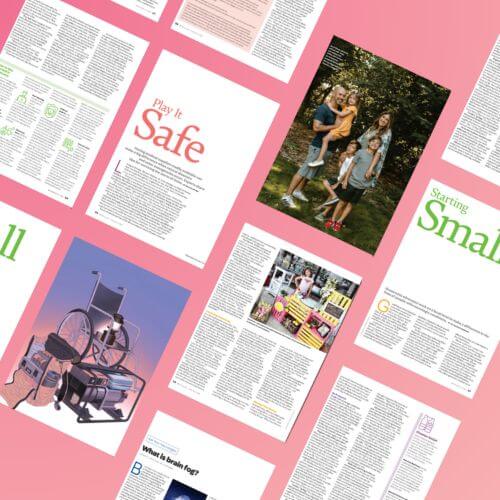
- How Families Are Leading the Charge in Rare Disease Advocacy
- Natural Disasters Can Be More Dangerous for People with Neurological Conditions—Here’s How You Can Prepare
- What Is Brain Fog?
- How a Brain Injury Survivor is Offering Others Help and Hope
Other Brain & Life Episodes on These Topics
- Actor Cameron Boyce’s Legacy and Raising Awareness About SUDEP
- Raising Awareness for a Rare Cancer with Love4Lucas President Hide Harashima
- Advocacy and Assistive Technology with Former Representative Jennifer Wexton
- Actress Yvette Nicole Brown Discusses the Caregiving Journey
- We Are Brave Together with Jessica Patay
Follow us!
- Hosts: Dr. Daniel Correa @NeuroDrCorrea; Dr. Katy Peters @KatyPetersMDPhD
- X: @BrainandLifeMag
- Instagram: @BrainandLifeMag
- Facebook: Brain & Life Magazine
We want to hear from you!
Have a question or want to hear a topic featured on the Brain & Life Podcast?
Record a voicemail at 612-928-6206 or email us at BLpodcast@brainandlife.org.
Episode Transcript
Dr. Correa:
From the American Academy of Neurology. I'm Dr. Daniel Correa.
Speaker 2:
And I am Dr. Katie Peters and this is the Brand Life Podcast. Hello everyone, and it's great to be here today and it's great to see Daniel and to hear Daniel and also to see the new issue of Brain and Life Magazine. Our cover is Yvette Nicole Brown actress in TV and film and most importantly, she's the caregiver for her dad with Alzheimer's disease. So shout out to Yvette. Thank you so much for being on the cover and for doing our podcast. So Daniel, what are your favorites in the magazine recently?
Dr. Correa:
Well, I mean it would be in line with our interests and discussions with the podcasts and the interviews, but I always enjoy the feature of a community member that we call pictures of you. And in this issue we got to hear from Candace Gantt, a 65-year-old who struggled finding resources to help recover from her 2005 brain injury. And then in her recovery and finding the needs that there are in the community, she was inspired to found an organization called Mind Your Brain, particularly positioned to help people who are athletes.
And also I like the print version, but I also have just becoming to enjoy the online and website more because there's a lot of other ways that it helps you discover past articles and stories and at the bottom of every page, like when I got to the bottom of the article and the pictures of you segment on Candace, it suggests articles that are similar or related stories and it pointed me to two other pictures of you stories from the past and I was reminded of the amazing story of Bryson Lee.
He's a 62-year-old who is a research scientist and had sustained a traumatic brain injury years before and over the years has incorporated it in his own experience into the work and the science that he does. So that's kind of one of the first places I like to look at when the issue comes out.
Speaker 2:
Yeah, I agree with you. I think that's a great place and I find that I'll be talking to a patient in clinic and I'll just pull up the website, particularly if they have something that I am reminded of from the Brain and Life magazine that I could quickly bring up an article and sort of tell them where to find it on the web. And some of the articles that I liked this time were about how families are leading the charge in rare disease advocacy and we have had several podcasts that sort of focus on the awareness of rare neurologic conditions.
We spoke with Jessica Pate, she's the mother and advocate for an organization called We Are Brave Together. It highlights care for caregivers of patients with Prader-Willi syndrome. And then we recently talked to Hideo Hiroshima. He's father and advocate for a very rare but devastating brain tumor called Diffuse Intrinsic Pontic glioma, and he has an organization in honor of his son called Love for Lucas.
So it's nice to see that our podcast and the magazine really inspire others and also inspire articles to the magazine, particularly on how families are leading the charge in rare disease advocacy. So in the article they highlight Jeff Rein, he's a father and advocate for a really cool organization called iDefine, and he became an advocate after his daughter Ella was diagnosed with a really rare syndrome called Kleefstra Syndrome. I actually had to look it up because it is so rare and it's a genetic developmental disorder with a mutation in a gene called EHMT-I Gene and it can lead to seizures, motor disabilities, speech limitations, issues with sleep, low muscle tone, and sometimes autism.
So he founded this iDefine as a nonprofit for other parents and that's what I love other parents. So he's getting other parents involved just like how Jessica with her we are Brave together are doing to support research and to support each other. And so you really need to do this for those rare diseases.
Dr. Correa:
Yeah, I really like that both in the magazine, the website resources and our podcast we're able to really get a mix of a variety of conditions, rare conditions and many of the common medical conditions and neurologic conditions that people may experience in the community to tie how they might be similar but also not shy away from things that only affect a tiny number of people because there's so many ways that we share and the challenges and experiences and may also be able to learn from each other. I was happy to get at least an answer some to the question of do we pronounce it Praetor or Praetor or Praetor?
I think I've said Praetor really for so many years and to me it's just an example of we have all these different names for different neurologic conditions. Sometimes they're named after a combination of symptoms or what we call a syndrome. Sometimes they're named after what area of the brain is being affected and other times they're named after people who were involved in the initial science. It's challenging to us, and I totally understand it's challenging for everybody. It made me think of our recent episode and release with Representative Jennifer Wexton also standing up front in both advocacy and even being a former legislative leader working to help support Cure PSP and initiatives to improve our science and understanding and resources for Parkinson's and Parkinson-related conditions like PSP.
And we've had previous episodes that we worked on also with the Cure PSP organization who's a key advocate for that condition where we talked about different stories with family members impacted by PSP and cortical basilar degeneration. We also had a past episode with the SYNGAP1 Foundation and we talked about parents of children with very rare conditions. SYNGAP1, another combination word, it's actually the name of the condition is named after the gene.
But that foundation was founded by parents who saw an issue that wasn't really being addressed for that rare condition and the ways that maybe we could learn from that rare condition to help others. And there was a mother that we worked with who founded Bezuse for Leo or a translation from French or Kisses for Leo that helps raise funds to benefit the INAD Cure Foundation. And INAD is itself another rare condition and it's a type of childhood onset neurodegeneration for lack of another way of describing it. And as she describes it in the episode, it's almost like an Alzheimer's disease that affects kids.
There's so many places that we each can learn from those standing up front and moving forward. Advocacy for both rare conditions and throughout neurologic conditions.
Speaker 2:
Advocacy often starts from personal struggles, gut instincts about what can you do as a parent or a care partner and not from really formal expertise. And so we need to have, I think it's really important to have those people in the room when we're talking about how to advance research for these very rare conditions, and particularly for parents, they really transform feelings of feeling sort of powerless into a collective strength. And I really with Jessica Bate with We Are Brave Together, she was really able to really highlight that in what she's doing for other caregivers because they share stories, they educate themselves and others, they advocate for their child's care or maybe also a sibling's care and also for research progress. So I think kudos to our advocates
Dr. Correa:
Definitely. And the American Academy of Neurology does a lot to help advocate for science and for the doctors who help support those with neurologic conditions and they're actually planning and working to expand more of their coordination with patient advocacy groups to help push forward the importance of the care, the research, the science across these various conditions. So we hope to be bringing to you more opportunities where you can also raise your voice both at a local level, your state level and federally to make sure we're working together.
One of the other articles that I saw, and I really feel strongly about the importance of this. I grew up in a family from Puerto Rico. We regularly every year are impacted by natural disasters in that region, particularly flooding wind damage from hurricanes and other storms that come through the Caribbean, the Caribbean themselves and those islands. They themselves isolated from other areas, so they have more challenges in terms of resources and in this article, natural disasters can be more dangerous for people with neurologic conditions.
Here's how you can prepare. Then this issue we bring up, and this is a reality right now, that with the climate shifting and changes coming in our society and across the world, it's going to impact many of our communities in many ways. But it's important to also remember that there are unique challenges of the community that we live in and that live with neurologic conditions. In fact, we recently had had an episode with Dr. Michael O'Koon talking about Parkinson's disease and some of what we know about environmental factors and risk factors with that condition.
And we mentioned also some other neurodegenerative conditions that might be impacted. But in this article we actually get to highlight and see the many ways that natural disasters could impact even the structure and the access to key resources in our communities and neighborhoods that could significantly impact those who are living with neurologic conditions and the ways that impact them day to day that others may not really realize how much those individuals in our families, in our communities could be limited in disaster situations like this.
Speaker 2:
All the summer storms are happening right now and hurricane season is supposed to be tough again, and I just want to give my prayers to everyone in Puerto Rico and all the Caribbean because they can get so impacted by this. And of course what happened for us last year in North Carolina was it was Hurricane Helene. That's right. That really impacted a place that didn't know how to handle that much water and those hurricanes. So I think the first step is to be prepared and I was not a boy scout, but I agree with that motto and here are some tips from the article. It says natural disasters and air pollution can increase neurologic risks, so actually exposure to pollutants can actually raise your stroke risk or even may increase the chance of developing some type of neurologic conditions.
So you definitely need to know about those polluted areas. And then people with neurologic conditions should prepare for emergencies. You should consult your neurologist. Also talk about disease specific precautions, make sure you have a good supply of your medicines
Dr. Correa:
And after an episode of flooding or different natural disasters, sometimes there can be much more exposure to possible toxins. So we all have a little bit of reaction of the idea of masks from the post-COVID area, but having availability and access to masks at home just in case if there's an increase in infectious diseases or increased exposure to potential toxins after a disaster, that's something good to have around. And also register with your utility providers and emergency assistance programs in your region to ensure that priority and power restoration for your household is there.
If you are particularly dependent, whether that's refrigeration and power at your house so you can maintain certain medications like insulin and other medications for other conditions might actually need to be refrigerated. And so your utility provider being aware of these needs, if someone uses some sort of electronic assistive device, whether that's for breathing or for some other support, them being aware of those medical needs often puts you on a list to make sure that area, your neighborhood or at least your household has earlier access to restored power or maybe backup power and prepare a go bag that has at least 72 hours of some key essentials, including paper copies of important contacts and important files and documents that you may need to take with you and at 72 hours of food and other things.
But because sometimes 72 hours might be a little bit more challenging with some of the medicines that we need for longer period of times, a lot of times they also recommend you have at least a month of your medications set to the side. So those are other considerations maybe to discuss with your doctor in terms of your specific medications and if you have refrigerated medicines including a cooler bag. So then that way if power is out at least for a period of time, you can keep things cool and a cooler bag with maybe ice packs or something that you have to keep it at least a little bit cooler than the ambient area. Always carry medications and keep written medication information and doctor information handy to avoid interruptions in your treatment during an emergency so that even if you're not able to reach that doctor, the other medical professionals you encounter may be able to help and support you with your needs.
Speaker 2:
And then with that medicine, staying up to date on routine vaccinations, whether it's the flu, COVID, shingles also tetanus, you never know what kind of situation you're going to be in. Now some people may opt to purchase a generator. Those can be expensive, but there are some portable varieties that are more affordable. You have to sort of think about that if that fits into your lifestyle and your needs. I also think that so many people now have electric cars, they may not be able to charge them, so you want to think of another form of transportation. If you're someone who has just an EV, you may not be able to charge it or go through large bodies of water. So that's something to think of. And after a disaster, be very mindful about what is the water quality, is the food safe, and also just about what's going on with you.
Whenever I see people on TV that are going through these natural disasters, I always am amazed with how they're keeping it composed, but so much can happen whether you lost your house or lost even goods, but think about if you lose a loved one. There can be so many challenges in that. So think about that emotional stress and how we can practice mindfulness and keeping ourselves whole and managing stress. Now that brings me up to another article that was in the magazine and something that can happen when we're under stressful situations is we can describe what we're having as a brain fog. Have you ever heard that term?
Dr. Correa:
Yes, definitely. I've heard it both from community members, patients, family members. There's been times when I've been in situations where I'm kind of wondering if my experience is similar to some of the brain fog descriptions that others have described,
Speaker 2:
And even some of my patients, they get chemotherapy. We sometimes call it chemo fog. It's not really a medical term. We don't really have it as a diagnosis, but it's rather a symptom to sort of say you're having challenges with concentration memory. It's usually short-term memory, mental fatigue that you just sort get worn out thinking about tasks. Maybe your thinking has gotten slow difficulty with planning or word finding and they seem to, this can happen with a myriad of neurologic conditions, anywhere from migraine to somebody who's maybe had a stroke to people that have conditions like Parkinson's or dementia or even the autonomic disorders that we see.
We've talked about POTS before and also chronic fatigue syndrome. My patients who have brain tumors, they often see it because of they've had brain radiation or maybe they had chemotherapy. I like to think about it as our brain can get fatigued just like our muscles can be fatigued after Daniel's running his marathon, but our muscles can be fatigued, but we can also get fatigue of our mind, and this can be exacerbated by stress and mood challenges or even hormonal changes like pregnancy, menopause and thyroid issues, and also think about medication effects.
That can also be a very common thing that I hear from my patients, but also it's something you're like, aha, that could be what's going on? What are your thoughts?
Dr. Correa:
Yeah, I mean I think the other considerations are is some of the key things that we need for our own rest and recovery and the stress that we're having on our systems and sleep disturbances might be a big thing that impacts this, whether it's if you have sleep apnea or you're sleep deprived, not getting enough hours of sleep that you need for your body and for your rest or your activity levels or being on a different pattern for your day, whether it's shift work. I remember really, I think that my biggest and clearest perspective of how this might feel for others is being on the post night float week.
So that's when many physicians will work a whole week or two straight of nights and then kind of trying to switch back to a daytime schedule. Everything is completely off and then there are electrolyte imbalances that can really affect how someone's thinking, whether that is an extreme high or very low blood sugar, big fluctuations in sodium and other electrolytes.
I think the other place where I could relate to it is places where I'm very dehydrated after a long and hot run. I can really feel a cognitive difference once I'm able to rest and get fully rehydrated again and afterwards and I can't imagine to be in the situation where this is spontaneously occurring and then you're also not really sure about which is the cause and what is the way or the thing that you can do to help get better cognition or better response back in terms of your thinking.
And brain fog has really been described, and we talked about it earlier, we had an episode that talks some about long COVID and brain fog is a common symptom that has been described by many people living with long COVID or wondering if some of the conditions and symptoms that they've developed after having a COVID illness might be linked and it's been potentially associated to an immune dysfunction or potentially factors of the barrier between the external or systemic body and blood and the brain.
Your brain has special ways of preventing things from moving into the space around the brain to prevent infections, but things that disrupt that blood brain barrier may impact our thinking along with other processes or if there's something that affects how your brain and body regulates the blood flow in and out of your head can be things that might impact some of the symptoms associated with long COVID potentially brain fog. The treatments that have been focusing on within this area and they've been doing research and study in this space, work to identify and manage some of the underlying conditions and start there and then that way they can build forward.
So if someone is found to have sleep apnea, then using nighttime breathing device depending on what their needs are to help address the sleep apnea or the restricted breathing that they have in their sleep so they're getting enough oxygen to sustain their normal rest or if someone has migraine, then employing some of the medications that might modulate how severe or how frequent their migraines may occur, and then also potentially prevent migraines in the future.
One class of this that's being explored is called CGRP inhibitors or if someone has an attention deficit disorder or trait, then looking at psychostimulants that might impact or help their attention disorder. The other places that they're looking at in many of these research programs or in clinics is looking at all the different lifestyle changes that we might do that may help impact our focus and thinking to help reduce brain fog like we've talked about sleep, we've talked about hydration, really spending time and learning more about how our body's responding to the things that we eat and the nutrition that we have.
Adapting your exercise routine and schedule to help make sure that you're getting the rest that you need at the times you need it. But then also getting the physical activity and the benefits that has to your muscles and to a lot of the systemic processes that help our growth and improvement. And the challenge is avoiding excessive alcohol or other substances that may contribute to slowing in our thinking process or reducing the effect of some of our recovery processes for our body or maybe even impacting our mood. And mood management is another really key area, whether that's through counseling, therapy, stress control, medications, there are a variety of medications that can help with management of mood disorders, can improve many brain fog symptoms. So these are some places to take a look.
Please make sure to check out the article for more information and we'd also love to hear, do you see that in this issue and past issues or maybe online? Are there gaps? Are there things that you want to see more of? If we were and the team was starting to work forward and put together video content or maybe bring you other information and content here on the podcast, let us know. What do you want to hear? What do you want to see from us? We'd love to hear from each of you and our listeners whether you record a message or send in emails. These are things that are helpful for us to continue the conversation together.
Thank you again for joining us today on the Brain and Life Podcast. Follow and subscribe to this podcast so you don't miss our weekly episodes. You can also sign up to receive the Brain and Life magazine for free at brainandlife.org.
Speaker 2:
Also for each episode, you can find out how to connect with our team and our guests along with great resources in our show notes. We love it when we hear your ideas or questions. You can send these in an email to blpodcast@brainandlife.org and leave us a message at 612-928-6206.
Dr. Correa:
You can also find that information in our show notes and you can follow Katie and me and the Brain and Life magazine on many of your preferred social media channels. We are your hosts, Dr. Daniel Correa, connecting with you from New York City and online at Neuro Dr. Correa
Speaker 2:
And Dr. Katie Peters joining you from Durham, North Carolina and online @KatiePeters MD PhD.
Dr. Correa:
Most importantly, thank you and all of our community members that trust us with their health and everyone living with neurologic conditions.
Speaker 2:
We hope together we can take steps to better brain health and each thrive with our own abilities every day.
Dr. Correa:
Before you start the next episode, we would appreciate if you could give us five stars and leave a review. This helps others find a Brain and Life podcast. See you next week.