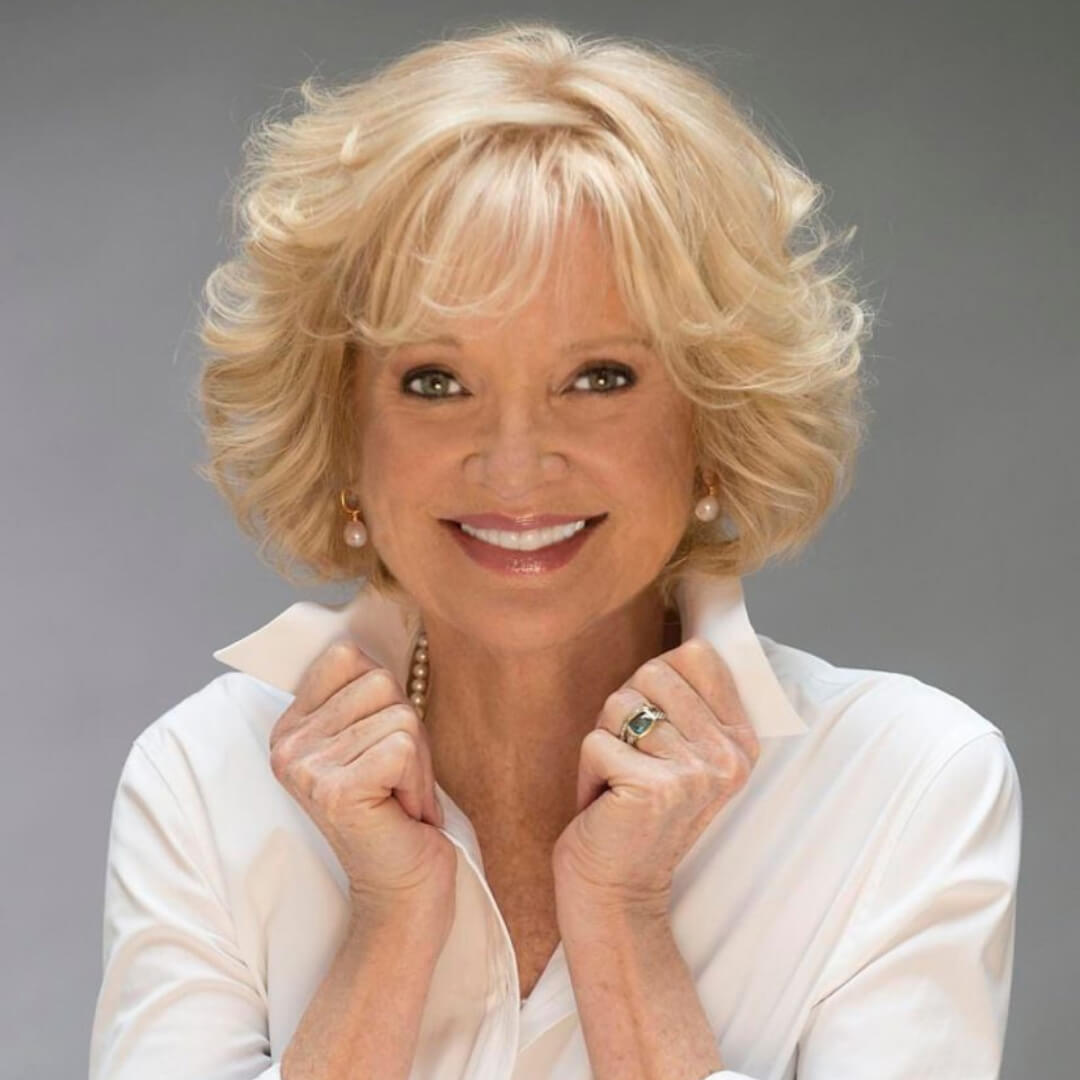
In this episode of the Brain & Life Podcast, co-host Dr. Katy Peters is joined by Emmy and Tony Award–winning actor Christine Ebersole. She shares a deeply personal side of her story: how caring for her husband during his recovery from an acoustic neuroma changed her life and her craft. Christine reflects on how that experience informed her approach to acting, deepening her empathy, emotional range, and understanding of vulnerability. Dr. Peters is then joined by Dr. David Kaylie, Professor of Head and Neck Surgery & Communication Sciences at Duke University. Dr. Kaylie explains what an acoustic neuroma is, how it differs from other similar conditions, treatment options, and the importance of hearing and vestibular rehabilitation.
Follow and subscribe wherever you get your podcasts!
Apple Podcasts Spotify Libsyn
Additional Resources
Other Brain & Life Episodes on this Topic
- Strength in Unity: Advocating and Advancing Research for Brain Tumors
- Lawyer, Model Victoria Vesce Uses Her Platform for Brain Tumor Advocacy
- Neurofibromatosis Advocacy and Community Building with the Gilbert Family Foundation
Follow us!
- Guest: Christine Ebersole @Christine.Ebersole.Official ; Dr. David Kaylie @DukeSchoolofMedicine
- Hosts: Dr. Daniel Correa @NeuroDrCorrea; Dr. Katy Peters @KatyPetersMDPhD
- X: @BrainandLifeMag
- Instagram: @BrainandLifeMag
- Facebook: Brain & Life Magazine
We want to hear from you!
Have a question or want to hear a topic featured on the Brain & Life Podcast?
Record a voicemail at 612-928-6206, or email us at BLpodcast@brainandlife.org.
Episode Transcript
Dr. Correa:
From the American Academy of Neurology, I'm Dr. Daniel Correa.
Dr. Peters:
And I am Dr. Katie Peters, and this is the Brain & Life Podcast. Well, hello, Brain & Life Podcast audience. Today I'm flying solo, without Dr. Correa because he is celebrating Match Day. And Match Day is actually when all the med students find out when they're going to go to their residencies and where they're going to go to it. And it's just so exciting because everybody's starting a new chapter in their career or taking on a new role. And as I think about people taking on a role, I'm really excited by the guest that we had on the podcast because she has had many roles because it is Christine Ebersole. She is the multifaceted actress who has been on film. She's been on TV. She's been on stage. She received two Tony awards, one for 42nd Street, and another one for Grey Gardens. She also was on One Life to Live and was nominated for a daytime Emmy.
And you know her from her standout performances on a screen and stage, but her work sometimes carries in the experiences that she's had, things that have been based on a personal experience. And we all ingrain our own personal experiences that are so important. So in her CBS series called Bob Hearts Abishola, she actually brought authenticity to her portrayal of a character recovering from stroke. And the reason why is that she drawed on that performance from her own real life experiences, supporting her husband who had a diagnosis of a tumor called an acoustic neuroma. It's also called a vestibular schwannoma.
So we'll talk to her about her acting and we'll talk to her about her husband and how she crafted that particular role to mirror the things that were occurring with him and how really caregiving reshaped her own perspectives and how lived experience can deepen your storytelling. And I just think that's a lot of fun to think about. And then next we'll speak with my colleague, Dr. David Kaylie. He's a professor of ENT, also known as otolaryngology here at Duke University. And he is an expert in surgeries and treatments for patients with acoustic neuroma, also known as vestibular schwannoma.
Hello podcast audience. And today is very special because of two things. One is you get to hear us, but then you also may get to see us. And we have a wonderful guest today. It's actress extraordinaire, Christine Ebersole. She is a multifaceted artist who has excelled as an actress, a singer, and a comedian. She's been on film, she's been on TV, she's been on stage, and she has received two Tony Awards, one for 42nd Street and another for Grey Gardens, and a Drama Desk Award also, and also a nomination for the daytime Emmys for her work on One Life to Live. She was recently in the CBS sitcom, Bob Hearts Abishola. And she also has her newest film is, Is This Thing On? And I wonder, is my microphone on? I think it is. But Christine, thank you so much for joining us on the Brain & Life Podcast.
Christine Ebersole:
Thanks, Katie, for having me. Really great to be here.
Dr. Peters:
Great. And I gave a short introduction. Can you just tell us a little more about yourself and where you're joining us from?
Christine Ebersole:
I'm joining you from Maplewood, New Jersey. That's from my home of 27 years. I'm here with my husband, Bill Maloney. We've been married for 38 years. We have three grown children, and we're down to seven pets.
Dr. Peters:
Oh, wow.
Christine Ebersole:
We were up to nine, but we've always had at least seven because we're partly ... I don't know. I don't know how to describe it. I guess partly suckers, but they know where to find us. Any stray animals, they know how to find us. So yeah, we have three cats, three dogs, and a cockatiel.
Dr. Peters:
Oh, that is just wonderful. I have four cats.
Christine Ebersole:
It is wonderful. You do?
Dr. Peters:
Yes, I have four cats. And I recently, Christine, I was a happily recipient of the cat distribution system. So one just showed up on the front doorstep. Her name is Taylor. She's absolutely gorgeous. I don't know if you can see. I have Golden Cat paper in my ...
Christine Ebersole:
I love it. Oh my gosh. That's fantastic.
Dr. Peters:
So yeah, what kind of animals are they? What kind of dogs?
Christine Ebersole:
Three dogs, two miniature dachshunds and a puggle, Lola, who's 16. And we have three cats right now. Two of them are tuxedos, one long hair, one short hair, one female, one male. And then we have an orange tabby that my son, Elijah, found behind a pizza parlor on a rainstorm in 2020 and just the biggest character. I mean, they all are, aren't they? They're all the biggest characters.
Dr. Peters:
Yes. And what about the cockatiel?
Christine Ebersole:
The cockatiel. I got the cockatiel when I was in Los Angeles, one of the many times I was on the road, doing a show and feeling so lonely and thinking ... I was alone in this apartment in downtown Los Angeles and every night was like the Ghost of Christmas Past. It was like something out of Scrooge where some of the Ghost of Christmas Past would parade by your thoughts and the reviews were never good.
So I thought, I've got to take care of something, not have the attention so much on my isolation. And so I went to Birds Plus in the San Fernando Valley and found this baby cockatiel and we've had him now for 12 years. He's an absolute, a very ornery bird, but an absolute endless source of delight, really. We do FaceTime. I know this puts me in the crazy department, but we do FaceTime and he keeps my voice in shape.
Dr. Peters:
Oh, I think that's absolutely wonderful. And I truly believe in the healing nature of pets.
Christine Ebersole:
It's amazing, isn't it?
Dr. Peters:
Yes. And I'm going to give a plug for our own podcast because we do an episode about neurology for pets on our podcast, if you can believe it. And we have a great neurologist that also is a pediatric neurologist, but also goes to the zoo and takes care of the zoo animals.
Christine Ebersole:
Oh.
Dr. Peters:
It's a big plug, so you have to check it out.
Christine Ebersole:
Oh, fantastic.
Dr. Peters:
Yeah. Now, you are just an amazing actress. You've done so much in acting and film. What is your favorite parts about acting?
Christine Ebersole:
I think it's mostly storytelling.
Dr. Peters:
Okay.
Christine Ebersole:
It's a chance to really tell a story in the guise of the character. It's a wonderful, free expression of that because you're not relying on yourself. You can just stand behind the costume, the hair, the makeup, the situation, the story, and tell it through the lens of the story.
Dr. Peters:
Yeah. And in your newest project, it's called Is This Thing On? It was directed by Bradley Cooper.
Christine Ebersole:
Right.
Dr. Peters:
So what was your story in that one?
Christine Ebersole:
Well, I was playing the mother of Will Arnett and the story goes that Will Arnett's marriage is coming apart. And so he wanders into this foray of standup comedy while his marriage is falling apart. But the great thing, I think, about this movie is not only the honesty about it, but it has a happy ending, which I think a lot of times these days, I don't know, maybe it's changing, but where marriages don't, they always fall apart. And so this was falling apart, but it was put back to ... It was be able to find its origins of love.
Dr. Peters:
Well, I like happy endings.
Christine Ebersole:
I do too. I think we need happy endings. I think we're in dire need of happy endings.
Dr. Peters:
And you mentioned being able to immerse yourself into a character. You got to play Dottie Wheeler in Bob Hearts Abishola.
Christine Ebersole:
Yeah.
Dr. Peters:
And your character actually has a stroke.
Christine Ebersole:
Episode four, the first season.
Dr. Peters:
Tell us about having to play a character with a neurologic condition.
Christine Ebersole:
Well, it's interesting because I had experience beforehand. Two and a half years into my marriage, I got married in 1988, and two and a half years, and actually on Valentine's Day of 1991, my husband was diagnosed with an acoustic neuroma, which was a tumor in this inner ear, pressing against his brain on his left side. And it was too large to go through the ear canal. So they had to drill a hole in his skull and retrieve it that way. And what they had to do was they had to striate the nerves and they removed the hearing mechanism and they removed the balance mechanism on the left side.
And so basically he had to learn how to walk again, to talk. He couldn't pucker. He couldn't smile. It was as if he had a stroke. It was that kind of a thing. So I think I was able to observe, I was able to draw from that experience with Bill in playing that, a stroke victim. And I made it on the left side, the same thing. I said, "Let's make it on the left side," because Bill's was on the left side as well. So I could relate to that experience. It was really intense.
Dr. Peters:
And that was really early on in your marriage. Did he have to [inaudible 00:11:20]-
Christine Ebersole:
Yeah. Most people don't survive it, but we've been together 38 years. So it's really a testament to dedication, hard work, and genuine love for this person.
Dr. Peters:
So I just wanted to say it's wonderful that he's a survivor and has recovered. I'm a neurologist in addition to also being a neuro-oncologist, so I take care of patients with brain tumors. So I know how serious acoustic neuroma can be. And so-
Christine Ebersole:
But they're usually benign, aren't they?
Dr. Peters:
Oh, they're benign. But again, it's not a place you should mess around in the brain with.
Christine Ebersole:
No, your whole life is permanently altered.
Dr. Peters:
Yeah. Brain surgery is not easy and it's not simplistic.
Christine Ebersole:
No. And he was also a drummer.
Dr. Peters:
Oh, wow.
Christine Ebersole:
So it ended his career because, first of all, if you put your finger in with that flap in your ear and just think that's how you're ... You're not hearing in stereophonic. It's mono, right? And not only that, but because they had to striate the nerves, he wasn't getting the signals to his arms and legs, which is a big part of drumming. So it just felt like there was a delay. He said it felt like it was underneath a wet army blanket. So that was really crushing because his career ended because of that.
Dr. Peters:
Did he have to go through some therapy to get better and do physical therapy?
Christine Ebersole:
Well, we didn't really have physical therapy. I guess I was the Nurse Ratched through the whole thing because he would just basically get a walking stick and walk around the backyard in circles, make these large circles and learn how to walk again. And he had to wear one of those eye patches that was a clear plastic because he couldn't blink. He still really can't, after 30 ... It's 35 years now.
Dr. Peters:
For people that have that kind of tumor, it comes off what we call the vestibulocochlear nerve and the facial nerve. So it affects your ability to move the side of your face, but it also affects your balance and your hearing.
Christine Ebersole:
Yes, exactly.
Dr. Peters:
Probably what he did was he created his own rehab for his vestibular system by doing those circles.
Christine Ebersole:
Yeah, because I remember him telling me, when I saw him ... And they don't know what to tell you, really, because they don't ... I mean, they can't really say, "This is going to be it for the rest of your life." I mean, they don't want to scare you to death and make you run away, I guess, but you don't really realize the severity of it because you've never had an experience like that.
But I remember after this surgery, which was seven hours, and the tumor was larger than they had anticipated, but it was a seven-hour surgery, and I remember going into the ICU afterwards, and his eyeballs were literally vibrating, like just vibrating. I'd never seen anything like it. And he said it was like having this terrible feeling of being drunk, but you can't get any relief because sometimes when you're drunk, you feel so off balance and you have to lie down to feel ... Even lying down, that's what he was, in that position of lying down. And it was just a constant nausea and there was no balance. It was really extraordinary.
Dr. Peters:
Sometimes my patients will talk about it as if, all of a sudden, they are on a ship and it's like you're just on a constant ship because that part of your brain is ...
Christine Ebersole:
Yes.
Dr. Peters:
But what I think is really important to note is that he did get better.
Christine Ebersole:
Yes, he definitely did. And I think that most people don't know. I mean, he'll say, "I'm deaf on the left side. So if you're sitting on my left and you want to say something to him, you just poke me with a fork," because he can't hear anything. But yeah, it was like having Bell's palsy in a way because he still can't smile completely. It's like that. It was like how Dottie was with the stroke, but you can't really notice it. If you see him, you don't really notice it.
Dr. Peters:
Exactly, because people do recover and they do compensate for their challenges. And I often tell my patients, "Your brain doesn't want to feel that out of control, out of balance space." And so he learned to recover. So I'm very happy for him. And it also gave you a chance to learn from him.
Christine Ebersole:
Yeah. Well, I think it was, it's not really, I mean, to me, tell me what you think, Katie, but recovery seems like it's a return to what it was before, but I think this is more of an adaptation.
Dr. Peters:
I agree with you.
Christine Ebersole:
Yeah. He adapted to the limits that were imposed on him with the surgery, and did beautifully.
Dr. Peters:
Well, that's great. And I agree. It is complete adaptation. And you have to focus on both your strengths and then figure out where your challenges lie. And so it is adaptation. And how did you like playing Dottie?
Christine Ebersole:
It was challenging. It was challenging. I thought it was a really great opportunity and I was thankful to Chuck for the opportunity to play a part like that and make it funny. It wasn't all funny. There was a lot of serious moments about it, but eventually, to make comedy out of it without making fun of it. Do you know what I mean?
Dr. Peters:
Yeah.
Christine Ebersole:
So it was a challenge for me and I hope that I rose to the occasion.
Dr. Peters:
Well, I think you did an absolutely wonderful job, a wonderful job.
Christine Ebersole:
Thank you.
Dr. Peters:
What is next for you in acting? What are you up to next?
Christine Ebersole:
Well, I'm taking a step back a little bit.
Dr. Peters:
Okay.
Christine Ebersole:
So I'm doing little things here and there. I'm excited because I'm going down to do a festival, a Tennessee Williams Festival in March and they're doing Suddenly, Last Summer. So I'm excited about that. And it's a reading. So it's all these things that are coming to me that are not stressful in any way. It's just fun, sheer fun. I went down to Palm Springs to ... A friend of mine wrote an adaptation of Oscar Wilde's The Importance of Being Earnest, playing Lady Bracknell, but it was The Importance of Being Earnest in New York.
So it was just, the references were changed to Trump Tower and stuff like that. And it was so much fun because we got to hold the script. So I didn't have the stress of having to memorize it, but just familiarize myself with the script. And it was to promote the theater down there, the Palace Theater that had gone into disrepair, and they spent a lot of years renovating it. So it was just bringing an audience back into the theater, which was really ... It was very exciting.
Dr. Peters:
That sounds like so much fun. And where are you doing the Tennessee Williams at?
Christine Ebersole:
Down in New Orleans.
Dr. Peters:
When is that?
Christine Ebersole:
It's in March, March 27th.
Dr. Peters:
Oh, I'm going to miss you by 10 days.
Christine Ebersole:
Darn.
Dr. Peters:
I'll be there on St. Patrick's Day. And I love Suddenly, Last Summer. And I did a reading of that play when I was in high school.
Christine Ebersole:
Really?
Dr. Peters:
And it's heavy.
Christine Ebersole:
Yeah. Yeah. His plays tend to be heavy.
Dr. Peters:
They're very, very-
Christine Ebersole:
It's so good. Such an incredible writer.
Dr. Peters:
I love all this stuff.
Christine Ebersole:
Yeah. So I'm excited about that. I'm singing in a private event down in New Orleans, so I'll already be there. And I've sang at the McCallum in Palm Springs. And so there's things here and there, but just fun things because it feels like, now at my age, I don't have the chase anymore, and that's a good thing. So it's less stressful.
Dr. Peters:
Well, that's good that it's less stressful. Are you going to get to bring your husband down with you and enjoy New Orleans?
Christine Ebersole:
We haven't talked about it, but it's definitely ... Could be part of the plan.
Dr. Peters:
Christine, I just want to say thank you so much for joining us today and for telling us about your acting career and about your husband's journey and about how you used his experience to create characters, and I really appreciate it.
Christine Ebersole:
Oh, well, thank you so much for having me.
Dr. Correa:
Can't get enough of the Brain & Life Podcast? Keep the conversation going on social media when you follow @brainandlifemag or visit brainandlife.org.
Dr. Peters:
Well, we're here again, Brain & Life Podcast audience, and we are so lucky to have this amazing expert. And he's in my neck of the woods, so I'm really excited about it. It's our medical expert is Dr. David Kaylie. He's professor of head and neck surgery and communication sciences here at my place, Duke University. He's chief of the Division of Otology and Neuro-Otology. Whew, that's a tongue twister. He is Vice Chair of the Clinical Operations and Medical Director of the Duke Vestibular Disorders Clinic and co-founder of the Duke Skull-Base Center. Dr. Kaylie's research involves balance disorders after cochlear implant surgery and hearing preservation in patients that undergo skull-based surgeries. And we are delighted to have him here today and explore his area of expertise. We're going to talk about acoustic neuroma, which is also known as vestibular schwannoma. Dr. Kaylie, it's a delight to have you here today.
Dr. Kaylie:
Thank you so much for inviting me. I really appreciate it.
Dr. Peters:
So I gave a brief introduction and I pronounced otology and neuro-otology incorrectly, I think. But can you tell us more about yourself and where you're joining us from today?
Dr. Kaylie:
Yeah. I am at Duke University with Katie, Dr. Peters. We have been working together for many years now and share many patients. So this is really a delight to be able to do this. And I am an otolaryngologist, which just is Greek for ear, nose, and throat. And so an ENT doctor at Duke, and we treat medical and surgical problems of the head and neck and our interfaces with the brain. And we work very closely with neurosurgery and a lot of cases of issues that come up at the base of the skull, where the ear and the brain or the sinuses in the brain meet.
So my subspecialty within ENT is otology, which means just all things related to the ear. So hearing and balance, ear infections and those problems. And then it's a separate fellowship for neuro-otology, which just means that we do problems of tumors at the base of the skull or all things related to balance disorders and implantation of cochlear implants at the base of the skull. And so it's really the interface of ENT and neurosurgery is what neuro-otology means. So it's otology and neuro combined.
Dr. Peters:
That just sounds so interesting and so fascinating. And thank you so much for being here today. It's nice because we do get to share patients because some of those cases involve tumors and I'm a neuro-oncologist. We're going to particularly talk about acoustic neuroma. And I also said that it's also known as vestibular schwannoma. Can you just tell us what that is and why are there two names?
Dr. Kaylie:
So it is a benign tumor. They are not cancer and they will not be cancer, but they grow in a steady fashion, generally, in a very difficult area. So even though they aren't cancer, they can grow to become very big and cause a lot of neurologic dysfunction, so they're something we take very seriously. The technical name is vestibular schwannoma, because that means it's a tumor made up of Schwann cells, which are insulating cells that wrap themselves around nerve fibers. And the nerve that they derive from is called the vestibular nerve, which is your balance nerve. So your brain has 12 nerves that leave the brainstem and go out to do different things in the head and neck, like give you vision, move your eyes, give sensation to the skin of your head and neck, move your face, give you hearing imbalance, move your vocal cords in your tongue, and they're numbered one through 12.
And the eighth nerve is the vestibulocochlear nerve. So that's the hearing and balance nerve. And when it leaves the brain, it splits into three nerves, one for hearing and two for balance. And the hearing nerve is called the cochlear nerve and the balanced nerve is called the vestibular nerve. All these nerves have to leave the skull through little holes in the base of the skull to get to where they're going in the head. And there's a little canal at the base of the skull called the internal auditory canal, which is directly in line with your external auditory canal. So the thing you stick Q-tips in, which you shouldn't do, but that's your external auditory canal. And if you go directly in line from the external auditory canal, just kept going in through the eardrum, you'd hit, eventually, the internal auditory canal, and that's where these tumors always start.
So that's how those nerves get to the inner ear, to the hearing, and to the balance part. So the balance part of the inner ear is called the vestibule, and the hearing part is called the cochlea or the labyrinth. And part of the inner ear, the balance is called the vestibule, and that's why it's called the vestibular nerve. And these tumors always start from the vestibular nerve. They never start on the cochlear nerve. And why? I don't know. But if you look at a nerve, if you cut it in half and look at it under a microscope, it looks like a big, thick telephone cable where there's hundreds of wires in a telephone cable, each wrapped in plastic. And all the little nerve fibers are those little wires. And the Schwann cells are the plastic that wraps themselves around the nerves that keeps the electrical activity in the nerves from shorting out on each other.
And so one of those cells, one of those Schwann cells, gets an error in it when it divided and it doesn't know when to stop growing. And it's a similar mechanism as cancer, why cancer keeps growing, but it's a different mechanism than cancer. So it doesn't grow out of control and spread throughout the body like cancers do. These do not spread or metastasize, but they will just keep growing. And that's why it's called the vestibular schwannoma. It's a Schwann cell tumor of the vestibular nerve.
Dr. Peters:
Yes. And again, because I'm a neuro-oncologist and I treat these, these are when they can't be surgerized anymore and that they need some other control. So again, they're not spreading to the other parts of the body. It's just really locally invasive. So if it's locally invasive, what are the symptoms that patients generally present with?
Dr. Kaylie:
The most common symptom people will get from this is hearing loss in one ear. And so that is the first thing we do, and it's a well-known dictum in ENT. If someone has hearing loss in just one ear or asymmetry, where one ear is significantly worse than the other, that mandates getting an MRI because 5% of patients with an asymmetric hearing loss will have one of these tumors.
Dr. Peters:
Wow, that's a lot.
Dr. Kaylie:
That number's been pretty well replicated in multiple studies. And we even looked at ours at Duke, and it was 4.9% that people with asymmetry had an acoustic neuroma. So if you have hearing loss in just one ear, that's really the big ... Number one symptom. Usually people don't, even though it's the balance nerve, you'd think the balance would be a problem that's much more common, but it's really not. People certainly can have mild balance problems, but the balance system has such an incredible capacity to accommodate for a loss and the loss happens so slowly that the brain can accommodate.
And so even, we have patients who when we test them, their balance, have 100% of loss. They have no balance function at all on that side and they don't even know it. Their balance seems, to them, completely fine because it happens so slowly. But a lot of people, when you ask them to say, "Yeah, well, I guess I thought I was just getting older. My balance just isn't as good as it used to be." But that's not really the main complaint. It's hearing loss in one ear.
Dr. Peters:
And are there particular risk factors for someone developing this?
Dr. Kaylie:
Generally not, no. There's been a lot of concern about cell phone use and there was some study earlier, years ago, that linked cell phone use to acoustic neuromas, but it really turned out to be we just, as cell phones became more prevalent, MRIs got much better. And so we started detecting these tumors much smaller. And so it looked like we were finding more tumors and it got causally linked to cell phones, but it's really not the case. So it's just a gene error. Yeah, right. Yeah. So don't throw out your cell phones, you can still use them.
Dr. Peters:
No, I know some genetic conditions can be associated with this. And you and I share some patients. Can you elaborate on that?
Dr. Kaylie:
Yeah. So there is a familial form of this, meaning it runs in families and that's called neurofibromatosis type two, NF2. And they have lots of other conditions associated with the acoustic neuromas and they end up getting acoustic neuromas in both ears, where the sporadic, the regular acoustic neuromas really is only one. It's only one ear. So if someone has acoustic neuromas in both ears, that is a diagnostic criteria for NF2. They run in families. So if someone else in your family, if a parent has NF2, then it's actually the way it's passed on, there's a 50% chance. It's called autosomal dominant, which means you just need one copy of the gene and you'll have the disease. So if one of your parents has it, then there's a 50% chance that you would have it. But there are also sporadic forms of it, where someone just happens to have a genetic mutation that happens early, as an embryo, within the one or two cell stage and they develop NF2.
Dr. Peters:
And it sounds like you mentioned MRI and imaging. Can you tell us a little bit more? Like someone has hearing loss, you suspect this problem. How are we detecting this condition?
Dr. Kaylie:
So the first thing we do is get a hearing test. And if there is an asymmetry in how well the nerve is functioning, an audiogram tests two different pathways of hearing. And we traditionally just think about hearing is going through the eardrum and then transmit it to the inner ear. And that's how we hear in everyday life. And so we test that, but we also test what's called bone conduction, where most people are familiar with these bone conducting headphones where there's nothing in your ear, but it's just puts on your temple and on the bone. And those are vibrating the bone of your skull. And those vibrations go right into your cochlea and stimulate it and you hear, even though it's not moving your eardrum.
So that tests how well the nerve is functioning. And in someone who has just plain old nerve hearing loss, their ability to hear is the same with bone conduction as it is through the eardrum. And so that's how we can tell if it's a nerve hearing loss and our autogram will tell us that. And people who have an asymmetry between the two ears, the gold standard is an MRI to detect this. And there's lots of ways of doing it. We traditionally have done MRIs with contrast material. It's something called gadolinium, but it's a contrast for MRI. And these tumors will become very bright on MRI when they give contrast. And if you don't give contrast, then the tumors look like just regular brain and you can't really tell. But there are new ways of doing MRIs that can do it without contrast that have shown to be much cheaper, quicker, and just as-
Dr. Peters:
[inaudible 00:33:22]-
Dr. Kaylie:
Yeah. So it's called a T2-weighted image, which is just a way that they do MRIs and they can do them in really, really, really fine detail. And that can actually show the tumors just as effectively as with contrast. And so we often use that as when we want to screen someone for an acoustic neuroma, we'll just get a very brief MRI. That's much cheaper, there's no IV needed and we can tell with very high sensitivity and specificity.
Dr. Peters:
That's great. And that's a great opportunity for patients. And the next step now is to go towards treatment. I agree with you. These are very complicated cases because the anatomy is very precious and fine. So what is the next step in treatment of that treatment journey for those patients with vestibular schwannoma?
Dr. Kaylie:
Yeah. So a lot of it depends on the size. And unfortunately, the size and the hearing loss don't correlate. So we see people with really, really tiny tumors that are only four or five millimeters that have lost all their hearing. And we see people with four centimeter, so 10 times bigger, who have perfectly normal hearing. So the hearing loss degree doesn't correlate with size very well. So the treatment really depends on the size of the tumor, the age of the patient, and the health of the patient.
And so really about 75% of tumors we diagnose, we observe because if someone has a very, very small tumor, like a four millimeter tumor, and they have normal hearing, and we test, we also do a balance test. So we can do a test to measure how much balance function they've lost. And if someone has a really small tumor and they have still really good hearing, useful hearing, meaning it may be not as good as the other ear, but a hearing aid could help them. So what we call aidable hearing. If their hearing is good enough that a hearing aid will help them and their balance is good, we don't have to do anything. So what the next step, I tell them that, that this is not an emergency. This is not a brain tumor. I say it's a next to brain tumor.
Dr. Peters:
I like that.
Dr. Kaylie:
Yeah. And they grow very slowly. And in fact, a cancer will just keep growing and growing and growing and doubling in size and getting bigger and bigger. And there's a lot of evidence that acoustic neuromas will grow for a little bit and then not grow for years and then grow again. So with a very, very small tumor and really normal function, then you don't have to do anything. I would get another MRI in six months and another hearing test and make sure that nothing's changed. And if nothing has changed, then we can do MRIs for a year, every year. And I have a lot of patients that I just have been seeing five, six, seven, eight plus years, and they really haven't changed, or it might have changed just a tiny bit, maybe a couple millimeter growth, but their hearing hasn't changed. So we don't have to take out every tumor. When I was a resident and fellow, basically if you came into the office with an acoustic neuroma, you left with a surgery date.
Dr. Peters:
Oh, wow.
Dr. Kaylie:
So every tumor got operated on and we realized you just don't have to. And so we're watching them a lot more. We know a lot more about the natural history of observed acoustic neuromas, and so they don't all need to be operated on. And there's a lot of evidence that, as people get older, the growth can slow down. So an 80-year old with okay hearing and a five millimeter tumor probably will never need anything done about it. So that's one end of the spectrum.
You get a 40-year old with a three centimeter tumor that will, it's not in the brain, but it's compressing the brain. Then that's someone's young and they have a tumor that is potentially dangerous because it's compressing their brainstem. And if it were to continue growing, they could get sick from having their brainstem compressed. So that would be someone we would say, "You really need to have this taken out surgically." Most people fall somewhere in between the very, very small and the very, very big, and that's where there's a lot of art to this, where let's say someone has a one and a half centimeter tumor. So it's basically filled the internal auditory canal and there's a space between the skull and the brain of about a centimeter, centimeter and a half that's filled with spinal fluid and the nerves are just floating in the spinal fluid between the brainstem and the internal auditory canal.
And so the tumor has a lot of space it can grow in. And so a tumor that's about a centimeter and a half is in that space, but it's not compressing the brain, it's not touching the brain, but they may have hearing loss and they may have lost balance function. So we look at their patient's health and we look at their age. And so if someone is, let's say, 35 years old and they have a one and a half centimeter tumor and they've already lost all their hearing and when we test their balance, they've lost most of their balance function. Then the conversation we have is, "You've already lost the main things that this tumor can do if you just watch it. So the natural history of observation is hearing will continue to worsen."
So I tell people with really small tumors, "If you were to disappear for 20 years and come back, I'm pretty sure you will have no hearing left in that ear. When that'll happen in that 20 years, I don't know, but given enough time, you will lose your hearing." So if someone's young and they've already lost all their hearing and they have a medium-sized tumor, it's something they're going to have to manage at some point in their life. So the smaller it is, the easier the surgery is for them. So we talk about, at that point, doing treatment. And I keep saying surgery, but radiation is also a very, very good option for this.
Dr. Peters:
Absolutely.
Dr. Kaylie:
Yeah. And so we absolutely talk about both options. And there are times where surgery is absolutely not appropriate for somebody who may have health risks that would make a long surgery problematic for them, or there's people who, the tumors may be too big. When tumors get to be a certain size, radiation isn't safe either. But for most people, surgery or radiation are really, really good options. And so we talk about both. So when I talk about treatment, I'm talking about both options, surgery and radiation.
Dr. Peters:
And Dr. Kelly, one of the things you mentioned that I was really struck by is really that discordance between size and degree of hearing loss. What has been teased out about that? Because I think that's a big question with some of the clinical trials that I've seen along with, we've talked about a drug called Avastin that has been studied in clinical trials, particularly in the NF population. And again, there was a discordance between size and hearing loss and control and hearing loss. Why is there that discordance and how can we understand that?
Dr. Kaylie:
It's a really tough question to answer because we can't sample the hearing nerve and we can't sample the tumor. So what we know is only after it's been taken out. And even though this is not a tumor of the hearing nerve, it grows from the vestibular nerve, it really compresses the hearing nerve. And so the thought is maybe just compressing the nerve and stretching the nerve causes hearing loss. That's one theory. Another is there has been histologic studies. So when the tumor's been taken out and the hearing nerve has been resected also, it does show that there is ingrowth of the tumor into the nerve, into the hearing nerve of various degrees. So that may have something to do with it.
The third thing is the inner ear has a design flaw. It only has one artery that goes to the inner ear that supplies all the blood to the cochlea and the balance system, and that runs right in the internal auditory canal with the nerves. And this is a really, really tiny blood vessel. And whereas the tumors grow, it can irritate that artery and cause it to spasm. And basically, because there's no backup blood supply, you can get like a mini stroke in the inner ear. So that can cause hearing loss. It could just physically compress that artery too, which could cause hearing loss. So we don't really know the mechanism, but if you think about all those three possibilities, you could see why maybe a small tumor might have irritated the artery and it spasmed and you lost your hearing or some reason it's just positioned in just the right spot and it compresses that artery or someone has a big tumor that, for some reason, that artery was in a favorable position and it's still working. So probably some combination of those three.
Dr. Peters:
That is so interesting. I find that fascinating. If you do a surgery in a patient, or even before they have a surgery, if they do have hearing loss, can you tell us a little bit more about cochlear implants? I know that's something you specialize in and [inaudible 00:43:25] it's appropriate for patients. I know that our patients will be interested in learning about it.
Dr. Kaylie:
Yeah. Yeah. So one thing we've been doing lately with really very encouraging results is cochlear implant after radiation for acoustic neuromas. There's a lot of research that's been done on cochlear implants after surgery for acoustic neuromas, and that's a little trickier because when you have a really, really big tumor, the cochlear nerve just gets very distorted and stretched out, and it's very difficult to remove the tumor and save the cochlear nerve. So usually, that's cut. And if there's no nerve between the inner ear and the brain, there's no connection and a cochlear implant won't work. A cochlear implant is electronic device that gets inserted into the cochlea, into the inner ear, that electronically stimulates the cochlear nerve and restores hearing in people who are deaf. And so the number one thing is there has to be a nerve to stimulate. The cochlea has to be hooked up.
If you have a lamp and a wall socket and you cut the cord, the lamp won't work even though the lamp's intact. So think of it that way. The cochlea has to be hooked up to the brain. And it's very difficult to do that and not damage the nerve in a surgery. It can be done in very, very small tumors under certain circumstances, but the results are not that encouraging. With radiation, even if people have good hearing with radiation, there's a very good chance that the hearing will deteriorate over a year to two years or maybe longer after radiation. And one thing we found is that if somebody has [inaudible 00:45:21] useful hearing and get radiated for an acoustic neuroma and they lose their hearing over a year or two, they've gotten very good results when we then do a cochlear implant.
So if their hearing deteriorates after radiation to a point where they can't even use a hearing aid anymore, when we do a cochlear implant, they get really good hearing results, which they would not be able to get after a surgery. And we're also finding people who had very poor hearing and get radiation also do well with a cochlear implant. The people who we have more trouble with are the people who have absolutely no hearing, really no sound perception at all before radiation. Our results show about 50% of them got useful benefit and 50% did not get benefit from the cochlear implant. So if there's some hearing, some perception of sound, then they do fairly well with cochlear implants.
Dr. Peters:
And it just highlights the importance that you really have to get those hearing tests and follow them appropriately. And we need someone with your expertise to help us do that. So we appreciate you.
Dr. Kaylie:
Right. So anyone who notices hearing loss in only one ear that's persisting, they need to have that checked and they need a full hearing test.
Dr. Peters:
And it's so much about brain health because if we lose our hearing, that changes our ability to communicate with others.
Dr. Kaylie:
Absolutely.
Dr. Peters:
So I would say definitely get your hearing tested because it's the way we communicate.
Dr. Kaylie:
Well, yeah. And what happens as you get older, elderly folks who start losing their hearing have difficulty communicating, difficulty being in social situations. And it has been determined that hearing loss is an independent risk factor for dementia. So it's really important to maintain your quality of life as you age to correct hearing loss.
Dr. Peters:
Plus they have to listen to this podcast.
Dr. Kaylie:
Exactly. Exactly.
Dr. Peters:
But we can also-
Dr. Kaylie:
[inaudible 00:47:31] how would we get to ...
Dr. Peters:
Yeah. But if we do have hearing impaired-
Dr. Kaylie:
[inaudible 00:47:35]-
Dr. Peters:
Clientele, we can always get transcripts. So we do want to include everyone, but we want people to hear our podcast. One other question I have for you is you are also involved with vestibular disorders and the vestibular nerve can also be damaged, even though it may not be damaged to a degree, like the cochlear nerve. What do you think about vestibular rehab after maybe somebody has surgery or maybe they have a vestibular injury? What are your thoughts on vestibular rehab?
Dr. Kaylie:
Vestibular rehabilitation therapy, VRT, is absolutely crucial for everybody who has acoustic neuroma surgery or radiation or even people who have balance problems and we're just watching the tumor. Vestibular rehab is the most important therapy for after surgery. Surprisingly, the surgery's not that hard to recover from. It's not the most fun thing at all. It's five days in the hospital and sure, it does not feel great, but as surgeries go, it's not that bad. The hardest part about recovery is getting your balance back. And we found that, when we tested patients before surgery and we tested their balance and we used a quality of life instrument specifically for acoustic neuromas, we found that patients who had greater than 50% loss of balance function prior to surgery had significantly better quality of life at one year than people who had less than 50%. So even if you have some function left, we can do rehabilitation and get your quality of life a lot better.
So what vestibular rehabilitation therapy does is it takes advantage of the brain's capacity to compensate for a unilateral loss. One of the examples I always use, and I think it's Alan Shepherd. I could be wrong about which astronaut it was, but there was one of the astronauts who went to the moon, had a condition called Ménière's disease, and he had a surgery to remove his inner ear to stop the vertigo, and he went to the moon. So I always tell patients, "He had the right stuff. We're not all astronauts, but the brain does have the capacity to recover." And the way it does that is the good ear can actually take over for the bad ear. And even though the hearing nerve is not inputting into the brainstem, there's connection between the two balanced centers called the vestibular nuclei in the brain, and they communicate, and there's a structure in the middle of the brainstem that sends signals to both sides.
And so the good side is filling up that ... It's like a capacitor in electronics, and it discharges to both balance nuclei, the vestibular nuclei. So even if only one side is inputting into it, it's outputting to both balance centers. And so the balanced therapy trains the brain how to do that more effectively. And so people can recover and have really very normal lives. Now, the super crazy roller coasters may not be fun for you after having this. And long walks on the beach in the dark may be difficult for you, but we have people ride motorcycles, we have people who ride bicycles, people play tennis, and your day-to-day life can be really, really good, but it's very important to start vestibular rehab. And we do it on the second day after surgery. We get people up and moving.
Dr. Peters:
Dr. Kaylie, this has not only been educational, but it's been a very hopeful discussion. And I will say, I just want everybody to hear this and don't, pardon the pun, if you have unilateral hearing loss, get your hearing checked. Don't you agree?
Dr. Kaylie:
Yes. 100%. 100%. And you don't need to see an ENT doctor to have your hearing checked. There are great audiologists in every community. And if you go to your primary doctor and you say, "I can't hear in one ear," you should ask them, send us, go to an audiologist. Audiologists are incredibly highly trained professionals. They have doctorate degrees. They do four years of school for audiology. They are incredibly important, major resource. I couldn't do my job without them. They're incredible partners. And if you have hearing loss, you need to have a hearing test by an audiologist.
Dr. Peters:
Again, Dr. Kaylie, thank you so much. And you heard here first. Get your hearing checked.
Dr. Kaylie:
Yes.
Dr. Correa:
Thank you again for joining us today on the Brain & Life Podcast. Follow and subscribe to this podcast so you don't miss our weekly episodes. You can also sign up to receive the Brain & Life Magazine for free at brainandlife.org.
Dr. Peters:
Also, for each episode, you can find out how to connect with our team and our guests, along with great resources in our show notes. We love it when we hear your ideas or questions. You can send these in an email to blpodcast@brainandlife.org and leave us a message at 612-928-6206.
Dr. Correa:
You can also find that information in our show notes and you can follow Katie and me and the Brain & Life Magazine on many of your preferred social media channels. We're your hosts, Dr. Daniel Correa, connecting with you from New York City and online @neurodrcorrea.
Dr. Peters:
And Dr. Katie Peters joining you from Durham, North Carolina and online @katiepetersmdphd.
Dr. Correa:
Most importantly, thank you and all of our community members that trust us with their health and everyone living with neurologic conditions.
Dr. Peters:
We hope together we can take steps to better brain health and each thrive with our own abilities every day.
Dr. Correa:
Before you start the next episode, we would appreciate if you could give us five stars and leave a review. This helps others find a Brain & Life Podcast. See you next week.