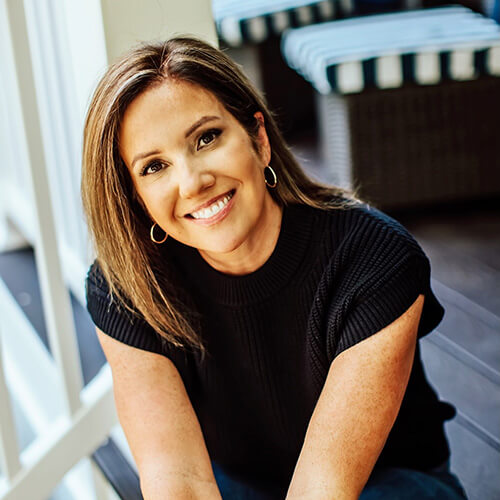
In part one of this two-part episode, Brain & Life Podcast host Dr. Daniel Correa is joined by influencer and podcaster Allie Signorelli. She shares her experience living with young-onset Parkinson’s disease, from noticing early symptoms to receiving a diagnosis at a time when she didn’t see people her age represented in the Parkinson’s conversation. Dr. Correa is then joined by Dr. Rodolfo Savica, who explains the importance of early diagnosis, non-motor symptoms, and environmental and genetic factors. Come back for part two next week to hear about Allie’s entrance into the world of advocacy and upcoming research.
Follow and subscribe wherever you get your podcasts!
Apple Podcasts Spotify Libsyn
Additional Resources
- Allie Signorelli: Living With Young Onset Parkinson’s
- What is Parkinson’s Disease?
- Factors That May Increase the Risk of Parkinson's Disease
Other Brain & Life Episodes on this Topic
- A Walk in the “Parkinson’s” with Author Annmarie O’Connor
- Ed Begley Jr. on Utilizing a Healthy Lifestyle to Thrive with Parkinson’s Disease
- How American Ninja Warrior Jimmy Choi Rose Above Parkinson’s
Follow us!
- Guest: Allie Signorelli @ImStillAllie; Dr. Rodolfo Savica @MayoClinic
- Hosts: Dr. Daniel Correa @NeuroDrCorrea; Dr. Katy Peters @KatyPetersMDPhD
- X: @BrainandLifeMag
- Instagram: @BrainandLifeMag
- Facebook: Brain & Life Magazine
We want to hear from you!
Have a question or want to hear a topic featured on the Brain & Life Podcast?
Record a voicemail at 612-928-6206, or email us at BLpodcast@brainandlife.org.
Episode Transcript
Dr. Correa:
From the American Academy of Neurology, I'm Dr. Daniel Correa.
Dr. Peters:
And I am Dr. Katie Peters, and this is the Brain & Life podcast.
Dr. Correa:
We're glad you're back with us here on the Brain & Life podcast. We're in the middle of the week. Katie, how was your weekend?
Dr. Peters:
I had a great weekend. I went to the wedding of one of my patients' daughters, and he's been my patient really since I've been here at Duke, over 15 years. And it's just so amazing to be invited for such an important milestone. He was able to walk his daughter down the aisle. It was such a heartwarming wedding. I had little tears in my eyes as I saw it. It was just amazing.
Actually, my nurse, Alicia, and I actually got to attend together, so it was just really special. It's so important to be part of those key moments of our patients' lives. It was a lot of fun.
Dr. Correa:
Well, we had some double birthdays this weekend with friends, both a two-year-old and a 28-year-old. But here in New York, we also had a gray Sunday, and we didn't really want to get out that day. So what did we do? We started our taxes.
Of course, that was a bit of a slog, but it was also kind of fun to go back through a memory journey of the last year and thinking of the different nonprofits and health organizations we've been able to support. It's great to have that opportunity and then to think about some of the work that they're doing.
Dr. Peters:
Well, I consider you far behind because I've had my taxes done for a while. If I could get them done as soon as January 1st hits. I finally got all the documents, so I've actually been done for a while and I got my mom's filed.
I'm sort of the lay tax person for my family because my husband is in private practice, so I have to do all of his taxes and then the nuances of that, and then also doing taxes for my mom. I don't know if this is a little crazy. I actually enjoy doing it and getting it organized. I'm the queen of spreadsheets, Excel spreadsheets.
Dr. Correa:
Well, yeah, I think you probably would get along with my wife, who always wants us to get started. I find maybe you're just a little boring. You don't leave it to a last-minute April deadline, a big night.
So our guest today straddles both of these worlds, nonprofits and patient advocacy organizations, in her work and helping raise millions for important causes like Parkinson's, but also living with Parkinson's herself. This episode, we get to hear her frank experience about a diagnosis of early-onset Parkinson's and how she's kept purpose and time with her family at a center of her life.
I hope also you enjoy this episode, and please stay tuned for the second half. We have a great discussion with our medical expert, Dr. Rodolfo Savica from Mayo Clinic. Thank you for joining us.
So as we mentioned before, I'm really glad today to be joined by Allie Signorelli, who is a Parkinson's disease advocate, a writer, speaker, community builder, who herself lives with young-onset Parkinson's disease. After experiencing symptoms early for several years, she was diagnosed in 2022 at age 47.
Before her diagnosis, Allie has worked for two decades as a nonprofit fundraiser, an event producer, and helping organizations raise millions of dollars for many important causes. And today she uses that same passion, that work, and dedication to community, to the storytelling and advocacy, to raise awareness about Parkinson's disease and support research and community building in that area.
Through her writing, speaking, and social media presence, you'll see that Allie shares an honest and often humorous perspective on living with Parkinson's. And we're excited to have her here joining us on the podcast. Thank you, Allie, for joining us.
Allie Signorelli:
Thank you.
Dr. Correa:
Look, I really have enjoyed your storytelling. I'm looking forward to our discussion.
Allie Signorelli:
Yeah, me too.
Dr. Correa:
So I like to start before any diagnosis so that it doesn't define who Allie is and your story. So can we go back? In your 30s, your early 40s, your previous life experiences, tell us about Allie.
Allie Signorelli:
Well, I was a typical overworked working mom. I had spent my entire career in nonprofit, as you said, and ironically had ended up in Alzheimer's fundraising for the last decade of my career right before I was diagnosed. So I was well aware of neurodegenerative diseases, but specifically dementia and Alzheimer's.
And raising two kids, we live right outside of Washington DC, my husband Mike and I. And my son is a freshman in college now, and my daughter's a senior. And so we were just living the normal, crazy, busy high-schooling, teenage-years, parenting life. I really loved it. And I learned a lot.
My background had been in music and in the arts, and then worked for NPR for a few years, kind of bounced around the nonprofit world, but like I said, ended up ironically in the Alzheimer's space.
Dr. Correa:
And I think you've described that you talked some of these first signs seemed very small, little symptoms, twitching in your ankle. What do you remember about these little signs that kept showing up or kept persisting to you in a way that made you think that you had to do or realize that something was wrong?
Allie Signorelli:
Yeah. It started as very, I call it "innocent," a little tiny flicker in my right ankle. It started happening sometime in 2018 when I was 43. I don't remember exactly, but I do know, I do have a vivid memory of sitting at my daughter's high school soccer tryouts, like a good helicopter soccer mom. And it was very hot in Washington, DC area that day. And there was this little twitch in my ankle, and I thought, "God, that's been there for a couple of weeks, maybe even longer."
And I fired off a message to my endocrinologist. I, many, many years before, had had a large tumor on my thyroid, so I have no thyroid. And fired off a message to my endocrinologist and said, "Next time I see you, I think maybe I'm overmedicated. Maybe my medication is too high because I'm having weird little tremor things." And he said, "Okay, let's take a look at it, but also mention it at your annual physical."
So I did. And at that point it'd probably been four or five months that it was happening. And my GP said, "Don't worry about it. It's probably nothing." She labeled it a benign nuisance. She said, "It could be stress, it could be potassium, it could be a pinched nerve, it could be your medication." She assured me it would likely go away, but it never did.
And over the course of the next three, or actually two, years, into COVID times, it switched from being just this little flicker to my big toe on that foot, rhythmically thumping. We used to joke about it. I remember watching lots of movies, like everyone did in COVID, and my kids would joke; they called it Thumper. And it was kind of, again, seemingly innocent. It didn't really bother me. It kind of came and went. And at that time, we weren't obviously going into doctor's offices unless they were emergency-related.
So for two years, it just continued and then slowly moved up my whole right side, eventually, until it was a full tremor in my arm, in my hand. I was having trouble walking. I was having a lot of esophageal spasms, which I look back now and think were probably related, which were really quite terrifying.
And eventually one night I was watching TV with my daughter and saw what looked like a kaleidoscope in my vision. And I thought, "Am I losing my mind? What is happening right now?" And it went away, and we were on our way out to dinner, and I opened the car door and it hit me in the temple. I had no peripheral vision, and it kind of left a gash, and we ended up at the ER. And I saw a neurologist, and he said, "I think that was an ocular migraine. I think you're fine. I think your vision will come back, but tell me about the tremor in your foot."
And at that point, I'd had it so long, I didn't even really think about it anymore. He said, "Come see me." And so I did. And for two years I saw him. We did CAT scans, we did MRIs, we did stuff for essential tremor, we tried medications, nothing. And then finally, two years later, so four years after my first symptom, he said, "Has anyone talked to you about Parkinson's disease?"
So that is a very long answer to my question.
Dr. Correa:
And there were so many aspects that went along these ways, as symptoms weren't necessarily going away. Of course, we always love and even attach ourselves to the possibility of it being a benign nuisance and that, with the right time, the right rest, or the right combination of food, sleep, et cetera, that it will change or go away.
But it sounded like, for you, you were experiencing not only was it not going away, but that it was progressing. Were you in the space where you were still just hoping that it was still a nuisance and not sharing, or you were telling your doctors, but maybe it was too many separated things and it wasn't put together?
Allie Signorelli:
Yeah, I think there's a little bit of both. I look back at some of the texts I shared with my sister, and I was like, "What if I had Parkinson's?" There were definitely flashes in my mind. I think I had very, very deep trust of my providers, and when they never brought it up as a solution or an answer to the problem, it never really crossed my mind.
I think, to their credit, or to their benefit, I should say, they were running tests, and they were all coming back normal. I had a swallow test, like I said, had two MRIs; both came back completely normal and clear. Do I think that maybe they should have tested me for Parkinson's or done, like I call it, the DUI test sooner? Maybe.
I understand now that early interventions are important, and I look back at the suffering that I kind of put my own body through in those four years and wish that I hadn't. I did not necessarily feel like I wasn't being believed. I really did get all the care that I sought.
I think it's a combination of timing with COVID, and no one really wants to believe that a 43-year-old woman, I think, has Parkinson's. It's not the first thing that comes to mind, I think, even for doctors.
Dr. Correa:
Yeah, I can imagine. Yeah, it's that concept of some of the limitations in timing, age, and the reasons that they think you may or may not fit in that, especially the telehealth challenges early in COVID of figuring out how to do an exam and observe someone when we're very much trained to do it in a different setting.
Allie Signorelli:
Yeah, 100%. I remember doing one. I remember that my kids were both at home for school, my husband was working, and I was in our bedroom trying to Zoom with one of the doctors and he had me sticking out my hands, and he could see that there was a tremor, but he had no indication of stiffness, or it was hard for him to see my walk.
So yeah, I think it was just the perfect storm of all things. And I eventually got to the point where it was undeniable, and then I had a DaT scan, and the DaT scan confirmed it.
Dr. Correa:
Okay. And earlier on, the neurologists or the providers you were seeing, were there any of them that had some expertise in movement disorders and they just couldn't observe everything or?
Allie Signorelli:
I was seeing a general neurologist. I didn't see an MDS until after... we went to visit my daughter on campus at college for freshman year, and I literally couldn't walk. I was struggling to walk, and I came home and I went back to the neurologist and said, "I don't know what this is, but there is something wrong."
And that was the first time he did the physical Parkinson's exam. He referred us to an MDS that day, and she took one look at me and diagnosed me on the spot. In two minutes, she was like, "Yeah, you definitely have Parkinson's, but let's do a DaT scan just in case." And so once I did see an MDS, there was no question in her mind.
But until that point, no, he was general, and he's fantastic. I don't harbor any ill will. I just don't think he... I do have essential tremor. My grandmother had essential tremor, so I think he was very confident that was what it was until it was clear that it wasn't.
Dr. Correa:
Yeah. And like you said, probably also hopeful because they don't want to give the other label.
Allie Signorelli:
Nope, they sure don't.
Dr. Correa:
So this, as you said, took several years. Of course, there were all the interruptions on the typical standard care around the COVID timing. For you, your family, what were some of the most difficult parts of this period of uncertainty as you were having progression and what's going on, but not a diagnosis?
Allie Signorelli:
Yeah. I think working was really hard for me, not being able to type, especially during a virtual time period of work. I do a lot of writing, and so not being able to type was scary and difficult and frustrating.
Other than that, I think the esophageal spasms were the thing that really were the true terrifying, awful part for me and for my family. They would come out of nowhere, they would render me unable to swallow, and I felt like I was choking, but I wasn't, and I was sweating. They were awful, and they seemed to always happen in the most unfortunate places.
Like, we were at the gate at LAX waiting to get on the red-eye to come home to DC, and I had one, and the entire gate area was like, "Someone do the Heimlich maneuver." And I was like, "No, no, no." Or one time it happened in Disney World in front of this huge crowd of people in line.
And so those moments were scary, and it was kind of like, "What is happening?" But we were so busy and so focused on everything else that was happening in the world in those days, it was sort of secondary, until it wasn't.
Dr. Correa:
Yeah. You brought up, even when it was suspected as maybe a benign nuisance or that it was a culmination of different things, the stress and other things going on, let alone that stress that we called COVID. I'm wondering, once you started to see progression or even had a name for the diagnosis, did you go through some period of time wondering if you had done enough of the right sleeping, wellness things to prevent it or to slow it down or to stop it?
Allie Signorelli:
Oh, such a good question. I have a love-hate relationship with the term "brain health." Obviously, it's something I worked in and I promoted, and I understand deeply the importance of brain-healthy lifestyles in the same way that we engage in them for diabetes or heart disease. I know the science, and I know that it shows that those interventions are really important.
I think what gets lost in translation when you flip from the outside to the patient side is that sometimes you can do all of those things and still get Parkinson's, or still get Alzheimer's, or still get cancer even. And I think, yes, when I sat in my office with our movement disorder the very first day, through tears, I said to her, "Do you have any idea how this happened? How does someone my age get it? Because the neurologist I had seen before said it was, in his words, exceptionally rare for a woman my age." And I said, "How?" And she said, "We don't know yet. We can run a genetic report. It could be environmental. You could have been exposed to something." She's like, "Or very likely lifestyle choices."
And 1,000,000 alarm bells went off in the office in that moment, like, "Did she just say I did this to myself?" Obviously that's not what she was saying, but that's how I interpreted it. And I did, I went through a deep period of grief where I thought, "My gosh, if I had worked out more, if I had stressed less, if I had slept better, maybe I wouldn't have done this. Maybe I wouldn't have reaped this havoc on my family for the rest of our lives."
I've gotten over that, and I know now that it's important to adopt a brain-healthy lifestyle before, during, and throughout your disease progression. Do I think I've brought this on myself? No. I think I probably could have been better at taking care of myself, but the idea that somehow I did it and it's my fault, it just doesn't fly with me anymore, because I just don't think the science backs that up. I don't think we know that. Because if we knew that, then we would know how people truly get Parkinson's, right?
So I definitely think it's important, but like I said, kind of have a love-hate relationship with the concept.
Dr. Correa:
I agree. It's such a mix of the risk factors, the possible exposures, but it's so many things, it's all possible. We all know that less of a lot of things is healthier and more of certain things is healthier, but they don't tie specifically to, "Oh, you will or will likely get a set condition," but we can do all of these things to help ourselves.
Allie Signorelli:
And I advocate heavily for them, but I'm also a big believer in the messaging around it. It has to include a caveat to say, "You should and can do all of these things." It doesn't necessarily mean it's going to be a get-out-of-jail-free card. And if you are unfortunately diagnosed with one of these things, those brain-healthy lifestyle implications still very much matter, but you shouldn't own it as if you've done something wrong.
Dr. Correa:
Yeah. I like the idea of being present and making those choices in where you are now, not making it a perspective or judgment of something in the past or what got you to where you are with your health now.
Allie Signorelli:
Exactly.
Dr. Correa:
And I think many people find the time that they get an answer to what's been going on, whether it's the name of a diagnosis or an explanation of the process that's going on, as, in many ways, potentially life-altering. What do you remember about really hearing from her, in those two minutes of a very quick observation, that your movement disorder specialist said, "Yeah, no, this is Parkinson's disease"?
Allie Signorelli:
Yeah, there was a little bit of relief that I wasn't completely losing my mind, because for a while, when you're told there's nothing wrong, you start to wonder, "Am I making this up?" I remember vividly lying in one of the MRIs, or maybe it was the DaT scan, and thinking to myself, "If this one comes back normal, I'm not coming back. Then I need to seek mental health counseling, because it can't..." At that point, everything else had been ruled out, and I thought, "Maybe it just is anxiety. Maybe it is just stress."
And so there was a moment where I was like, "Oh my gosh, I'm not nuts." But we quickly moved from that moment into, "Oh my gosh, what does this mean for the rest of my life?" And I think I definitely had, I would say, maybe a week or two, I know people are going to laugh when they hear that, like, "Oh, a week or two." But I'm a doer. I don't like sitting around. I don't like... My favorite quote is, "Action is the antidote to despair."
And I, for about, I would say maybe two weeks, let myself feel very, very sad and scared. And then my older sister sent me a list of to-dos to get myself out of bed, and she was like, "That's enough. Get up." She's the same as I am. And the first one on it was join a clinical trial or a research study. The second one on it was find other people with the disease. The third was start working out, find yourself some kind of fundraiser, you're good at that.
And so I did. I literally went down the list, and I joined the Fox Foundation's PPMI study. I signed up for the PD Foundation's Revolution Ride, and we raised $12,000 from my family and friends. So immediately I started to feel better. And truthfully, once I started taking the first medication that I was on, physically I felt so much better than I had in years that I was like, "Okay." I was like, "This is fine. I can deal with this." I felt better. I had a better outlook. My mental health was better.
So in those early, I would say first six months or so, I was thrilled. I was like, "We have an answer. I can handle this." As it progresses, you slowly slide backwards down the hill, and you're like, "Oh, okay. It's not going to be like this forever." But those first few months, maybe even the first year, I was very relieved and I felt much better for sure.
Dr. Correa:
That's good. And I just wanted to briefly address, we talked about your experience with receiving the diagnosis, your anxiety about what if everything is normal and that this is not necessarily a set or diagnosed neurodegenerative process. And maybe it's what we would call a functional neurologic disorder. And lightheartedly in our discussion that comes out as you were worried that you were crazy, you're not nuts, but we want to just put in context: it's a whole very different context.
We have some episodes where we've talked about functional neurologic disorders and functional movement disorders, and there's great resources about those conditions, both through Brain & Life and the Michael J. Fox Foundation.
Allie Signorelli:
I try very hard not to use terminology like that, so I paused when I said it. But I think the bottom line is that if you're told that there's nothing wrong with you, and I think so many women especially can relate to this, when you're told so often that you are "normal" or "fine," or your test results are normal or fine or clear, or whatever the terminology is, you start to question whether you really are imagining it or...
I'll be honest with you: it never even occurred to me that there, and I'm glad you said this, because it never even occurred to me that there would be physical manifestations of any kind of neurological condition. It was either I was making it up or there was something very wrong with me. So to know that you can have physical manifestations of something that's going on neurologically, it just never even occurred to me.
I remember lying there thinking, "If this comes back clear, you need to stop. You need to stop these things from happening," like I could. You know what I mean? Like I had any control over it, but that's what you start to think when you're told long enough that you're fine.
Dr. Correa:
Yeah. And I wonder, it's like your previous experience, at least within this space, was working within the context of dementia, and probably, I imagine, a lot of your thought and context of that was things that affect the brain affect our thinking and cognition. And sometimes that means we forget, "Oh, there's also coordination and movement and exercise, all these other functions." So we often will define things by the experiences that we have.
Allie Signorelli:
Yeah. And I actually didn't know anything about movement disorders. I actually didn't even know anything about Parkinson's, to be honest with you. My work was in Alzheimer's, and I was a fundraiser. I completely understood it, but I did not have any lived experience. I did not really... I wasn't around care partners or people living with it.
But yeah, my first thought was neurodegeneration is Alzheimer's. I definitely knew of ALS, and I knew of Parkinson's. I knew who Michael J. Fox was, obviously, but I certainly didn't know that it affected people my age and I didn't know it was a movement disorder. I didn't even know what that was.
Dr. Correa:
Allie, I really appreciate you joining us and thank you so much for everything that you've shared. I'm really looking forward to as we continue this conversation next week.
Allie Signorelli:
Yeah, me too.
Dr. Correa:
Want to learn more about the conditions discussed in this episode and other factors that could impact your brain health? For the latest on causes, symptoms, diagnosis, treatment, and management of more than 250 of some of the most common and rare neurologic conditions, please visit brainandlife.org/disorders.
Welcome back. So Allie's story really highlights how complex and personal Parkinson's can be. To help me unpack some of the science behind what she's experienced, and the growing momentum in Parkinson's research and early diagnosis, we're joined today by a movement disorder specialist to help us understand what's changing in the field: Dr. Rodolfo Savica.
Dr. Savica is internationally recognized for his work in Parkinson's disease and research on early diagnosis, risk factors, and how Parkinson's develops over time. His work has helped us better understand how symptoms can begin before diagnosis and why conditions like an early-onset Parkinson's can sometimes be more difficult to recognize. He brings both clinical and research perspectives to this.
Thank you so much, Rodolfo, for joining us today.
Dr. Savica:
It is a pleasure to be here. Thanks a lot, Dr. Correa, to having me here. Thanks.
Dr. Correa:
So we'll keep it on the same level as with Allie, so just please use Daniel if it's okay for me to use Rodolfo.
Dr. Savica:
Absolutely. No worries.
Dr. Correa:
So we heard from Allie to describe her several-year journey for diagnosis from her symptoms, and she initially saw a general neurologist, saw a few different doctors with different aspects of movements or muscle twitches, and it wasn't really identified very clearly. So why can Parkinson's disease, especially in younger patients, be so difficult to diagnose early on?
Dr. Savica:
Oh, that's a great question. And indeed, that's a very common, unfortunately, that's a very common, experience that very many patients are having. This, I think, this problem has its roots in some aspects that we have.
First of all, unfortunately, currently, to make a diagnosis of Parkinson's disease, we have to rely on symptoms, and mostly on motor symptoms. So even to these days, even in 2026, we're still dealing with the presence of the cardinal clinical criteria for Parkinson's disease in order to make a diagnosis, which means presence of tremor, presence of stiffness, presence of bradykinesia, so slowness of movements, and presence of falls.
And generally speaking, our generation, your generation neurologists, have been thinking, this is the other problem, have been thinking that Parkinson's disease is a disease affecting the older individuals. If somebody is younger and experience some tremor, some stiffness, we do not think, physicians do not think directly, that it can be Parkinson's disease.
The journey of Mrs. Signorelli is very common in the sense that sometimes you have patients that are going to orthopedic surgeons; they're thinking that they have a broken foot or a muscle sprain because some of the symptoms started after exercise. After exhaustion, after a major marathon run, for example, they're training for a marathon, they notice that the right foot is inverting halfway during their training, which is dystonia, nothing but dystonia. But initially it's interpreted as a muscle sprain, and this delays dramatically the arrival to the neurologist.
And then the neurologist not always have the expertise or think that this can be a possibility. Also because, if in our diagnostic criteria, if the criteria do not match the book, it's difficult for some people to think this way.
Whereas in early-onset Parkinson's, people that have young-onset, people that have disease starting before the age of 50, according to the current criteria, the symptoms are much more vague. They are not necessarily as evident as we see when we are dealing with older people, when there's tremor, there's stiffness, the shuffling gait. These people are younger, are active, they have an active life. They may have simply stiffness in the shoulder. And obviously everybody after the age of 40 is having a labral tear in the shoulder. So you go to the surgeon, the surgeon says, "Oh, you have a frozen shoulder. Let me repair that." And nothing happens.
That's unfortunately a very common thing, also because we don't have a clear surrogate marker to make a diagnosis. Despite what is being claimed in the recent years, we don't have a clear diagnostic tool that can confirm the final diagnosis, unless all the different clinical criteria and other biomarkers are aligning.
But that's a very common and frustrating journey that many patients are having.
Dr. Correa:
Yeah. And Allie was diagnosed at 47, and as you described, it falls within that young-onset Parkinson's criteria. Does it differ from the more typical later onset in terms of symptoms, progression, or even what people experience day-to-day? Or is it just the timing?
Dr. Savica:
That's a fantastic question, because indeed, in the past, and some people are still think that, and think that it's just a matter of timing and everybody's the same. This is one of the original sins of the field. We are thinking that Parkinson's disease is one condition, and it's not. Everybody is having very much difference at any age.
There are some macro differences that we are knowing, not only for symptom presentation, but also for biologically underlying mechanisms that differentiate between early and late-onset. Also, they are different between men and women. They're different between phenotype of disease, people that have tremor versus people that have rigidity. There's many different things that are different.
There's only one commonality that is the same across the different conditions is a dysfunction of the dopamine level in the brain. The patients are having a reduction of the dopamine activity in the basal ganglia and in all the dopaminergic pathways of the brain. So being lower, some of the symptoms can arise, and the typical symptoms are in the tremor, rigidity, stiffness, slowness. But other pathways can be involved as well. Therefore, you may have depression, anxiety, memory loss, secondary to a lower level of dopamine; insomnia second to a lower level of dopamine, because there are other circuits that are involved.
Fortunately, now we start to understand more about these differences. The entire famous hypothesis that is heavily disputed of the Braak and Braak hypothesis when there's an accumulation of alpha-synuclein that become Lewy bodies, and the Lewy bodies accumulate in an ascending pattern from the gut or the nose, then to the brainstem, then to the midbrain, and to the cortex, that is a valid model, but is specifically to people that are older.
Therefore, even the non-motor symptoms such as constipation, dream-enactment behaviors, anosmia, they have a latency of 20, 30, 40 years before the onset starts when you're in your 70s, because there's a progressive degeneration. In younger individuals, this is not valid. In younger individuals, alpha-synuclein can be sometimes a bystander, not necessarily the main driver of the problem.
And the entire idea of a long latency between a possible progression of accumulation of a degeneration through 20, 30 years is not necessarily there all the time, because biologically, the mechanism that caused the dysfunction of the dopamine that we know comes from different sources, not necessarily for an accumulation of alpha-synuclein. Which is an important thing to say, because this is revising and restructuring the entire field of even biomarker discovery. Because one biomarker might not fit all. One biomarker, one treatment, one medication may not fit all.
And everybody's having slightly different in terms of, for example, non-motor symptoms between young and older patients, early patients or late patients. We know, for example, that the non-motor symptoms of early-onset patients are a little bit different: insomnia, depression, anxiety, anxiety and depression that does not respond to medication because it's dopamine, it's not serotonin, can be something that precede of many years the onset of the disease. The presence of dream-enactment and behavioral disorder, that is a very strong marker of alpha-synuclein accumulation, may not even be present in younger individuals.
So clearly, we know there is not just an age cutoff, but it's also biological difference. Obviously, in terms of age cutoff has some societal and social implications. Dealing with a condition when we are in our 20s, 30s, and 40s compared to when you're in your 70s, in the age of retirement. When you're in 20, 30, and 40s, and even 50s, you're still an active member of society, you work, you have family, you have to deal with your partner, your spouse, your kids. But even if you're not that, you are an active member of society.
So clearly, there's implications that are beyond the biology, beyond artificial difference about age, really about also society and about some of the challenges that the younger individuals are having compared to older individuals. They're still having challenges, don't get me wrong, but it's completely different, I would say.
Dr. Correa:
But Rodolfo, I'm going to ask you maybe a difficult question that may not have an answer. All of the community and society is hearing more and more about Parkinson's, both early-onset and late-onset, and hopefully a lot of that is also an effect of the advocacy and awareness efforts that many organizations are doing.
But since we're also hearing more and more, and many of us may know more people around us that are getting diagnosed with young-onset Parkinson's or later-onset Parkinson's, is there an increase of this condition in our society, and what do you see as maybe reasons why that might be occurring?
Dr. Savica:
Absolutely. That's a fantastic question for a reason, because Parkinson's disease as a whole, at any age, is increasing. We are expecting a triplication about the cases of all Parkinson's disease by 2030. So that's an important case to say: we are dealing with a condition that is increasing, and not only because we are better in making a diagnosis, identifying the cases, but clearly we do see a real increment of the cases.
There's many reasons. There's a number of studies that are showing on how environmental changes that we, as a society, are making to ourself are increasing the risk of Parkinson's disease as a whole. And the younger individuals, early-onset patients, seem to be affected by that.
Clearly, in the past when I studied, I was thinking we were told that it was a rare disease always running in the family, and it's not true. Family history is present in about 40% of patients with Parkinson's disease, not in everyone. A genetic mutation that is present in about 20%, and is increasing. Just few years ago, I would tell you 5%, and now it's about 20. Why? Because we are better in detecting mutations that we were not able before.
And we know that we are dealing with a condition that is the results of a very labile combination between environmental agents and genes. Sometimes gene mutation may have a higher weight in developing the disease; sometimes environmental agents are having a higher weight. But clearly, there's a combination between the two.
And we know the role of pesticides. We know the role of pollution. We know the role of some of the fumes. We don't know too much, but clearly the role of microplastics, the role of lifelong exposure to radon, to radiation. Lifelong means ever since we were born, and actually before. So I always say to my patients, without getting into the political aspect of that, scientifically, the disease started minus eight, nine months. So in other words, the moment that the egg and the sperm of the patient start, the life starts, that is where you start to be exposed to environmental agent, through your mom. And that's the moment when you can start to develop a different way to react to the environment, and in this case, develop a condition that allows you to have more Parkinson's features.
The problem that we have is that you hear me saying that's a lifelong exposure. So it's not necessarily a single discrete event, an intoxication with DDT, or a single head trauma, or a major car accident. Those are not a discrete event. These are accumulative factors that is occurring throughout life. That's why it's very difficult to study, because it's not a single cause-and-effect; it's multiple things that are happening through our lifetime.
But clearly, we're expecting an increase, and we are seeing an increase, a trend of increase, especially in younger individuals. Again, not because we are better to make a diagnosis, because I don't think we are any better. It's just that maybe there's actually a true increase.
And you're right, advocacy, knowing more about Parkinson's disease, have patients, modern-day patients, people involved and talk about, that's so important. Because in the past, when maybe I was younger, the only thing we know about Parkinson's disease was this is affecting the old people, and we had movies like Awakenings, and that was the only one that we have an idea of what was about.
Nowadays, we know it's not the case, thanks to the beautiful work that many foundations have been done through the years, and they're continuously doing, which is fantastic.
Dr. Correa:
Thanks, Dr. Savica, and I really look forward to our continued discussion about this next week.
Dr. Savica:
Thanks so much. It's a pleasure to be here.
Dr. Correa:
Thank you again for joining us today on the Brain & Life podcast. Follow and subscribe to this podcast so you don't miss our weekly episodes. You can also sign up to receive the Brain & Life magazine for free at brainandlife.org.
Dr. Peters:
Also, for each episode, you can find out how to connect with our team and our guests, along with great resources, in our show notes. We love it when we hear your ideas or questions. You can send these in an email to blpodcast@brainandlife.org, and leave us a message at 612-928-6206.
Dr. Correa:
You can also find that information in our show notes, and you can follow Katie and me and the Brain & Life magazine on any of your preferred social media channels. We're your hosts, Dr. Daniel Correa, connecting with you from New York City and online at NeurodoctorCorrea.
Dr. Peters:
And Dr. Katie Peters joining you from Durham, North Carolina and online at KatiePetersMDPhD.
Dr. Correa:
Most importantly, thank you and all of our community members that trust us with their health and everyone living with neurologic conditions.
Dr. Peters:
We hope together we can take steps to better brain health and each thrive with our own abilities every day.
Dr. Correa:
Before you start the next episode, we would appreciate if you could give us five stars and leave a review. This helps others find the Brain & Life podcast. See you next week.