Steve Gwiasda thought that he had his myasthenia gravis (MG) symptoms mostly under control with standard therapies like corticosteroids, occasionally working with his neurologist to adjust the dosages. But over time, he began to notice his condition deteriorating.
“I would have these ups and downs with my symptoms but felt like I would always build back up and get better,” says Gwiasda, 60, a sales representative for an Iowa lighting company who was diagnosed with MG in 2017. “I'd go through a stage where I was doing really well, and then I'd have a symptom flare-up, and then I'd improve again. What I didn't realize was that I was like the frog in the pot—things were getting gradually worse, but I didn't notice it. I would build up but not as high, and then I would dip down lower.”
By mid-2023, Gwiasda found himself struggling to breathe more often in addition to growing weaker. “I'd have to walk my hands up the shower wall to wash under my arms,” he recalls. On the morning of Nov. 3, 2023, he woke up barely able to move or talk and was admitted to the hospital in full myasthenic crisis, ending up on a ventilator. After a long hospitalization, he returned home near the end of the month, and his neurologist placed Gwiasda on what was then a fairly new treatment for MG: efgartigimod (Vyvgart), an infusion therapy that has changed his life. “I feel as good as I can remember feeling in quite a long time,” he says.
Revamping Treatment
Over the past few years, an array of new targeted treatments for MG, a chronic neuromuscular autoimmune disorder, have transformed treatment options. If your neurologist has suggested that you could benefit from one of them, what should you expect?
First, you must know how these drugs work. In MG, impulses from the brain travel down the nerves, but antibodies block them before they can reach muscles, causing extreme fatigable weakness in the voluntary muscles, including those that control breathing, swallowing, and facial movements. In the most common type of MG, involving about 85 percent of cases, the immune system attacks (via autoantibodies) a protein on the muscle surface called the acetylcholine receptor (AChR), which is needed for muscles to contract, according to a 2020 report in Frontiers in Immunology. This weakens the muscles over time. Of the remaining patients with MG, about half have autoantibodies to another protein, muscle-specific kinase (MuSK).
New therapies fall into two main categories. Complement inhibitors include ravulizumab (Ultomiris), eculizumab (Soliris), and zilucoplan (Zilbrysq) and block “complement” proteins involved in damaging the muscle surface. The other category, FcRn antagonists, including efgartigimod and rozanolixizumab (Rystiggo), block FcRn receptors that can extend the life of certain antibodies leading to the damaged muscle surface. Rystiggo and nipocalimab (Imaavy) are the only types of these agents the U.S. Food and Drug Administration has approved for both AChR antibody-positive (AChR+) and MuSK antibody-positive (MuSK+) MG.
Amanda Guidon, MD, MPH, assistant professor of neurology at Harvard Medical School and chief of Massachusetts General Hospital's neuromuscular division, typically recommends one of these therapies if a patient already tried options such as prednisone and an immunosuppressive agent but did not have a sufficient benefit from that combination. She also might suggest one if a patient has tried multiple treatments and a thymectomy—surgery to remove the thymus gland, which can sometimes produce abnormal antibodies that lead to MG symptoms—and still has a high symptom burden. “These treatments can also be beneficial for people who can't tolerate the standard therapies due to side effects,” she adds.
Infusion Options
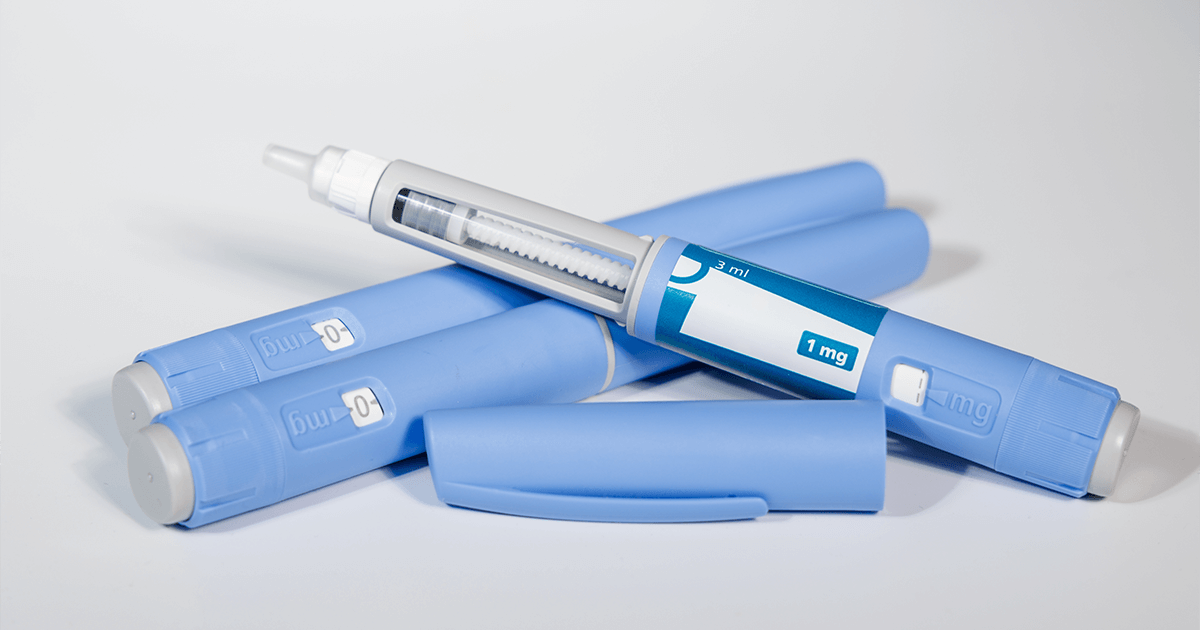
Patients receive these newer therapies either through intravenous infusion, often at a neurologist's office or infusion center, or by injections under the skin that may be given at home. Depending on the drug, the dosing schedule may be regular or may vary.
“These infusions are typically shorter than IVIG [intravenous immunoglobulin] infusions that some patients with MG may be familiar with, or what you might think of with something like chemotherapy,” Dr. Guidon says. “The infusion itself is usually complete within an hour, and there is a recommended observation period afterward. So the total time at the infusion center is usually less than two hours. Sometimes, depending on the patient's insurance coverage, the infusion can even be done by a nurse who comes to the home.”
Gwiasda has experienced both the IV infusions and home self-injections. “When I was first on Vyvgart, I would go to an outpatient center connected to the hospital for my infusions,” he recalls. “I was on a 42-day cycle, so I would get an infusion once a week for four weeks, and then I'd have about three weeks off.” The appointment included time for the provider to mix the drug plus a waiting period after the infusion to ensure he did not have a reaction. “But it was pretty easy,” Gwiasda says, “and afterward I could go back to work or do whatever I needed to do.”
After his third cycle, Gwiasda's neurologist informed him that he could switch to Vyvgart Hytrulo, an injection a nurse could administer at his home. He agreed to try it. “It wasn't the end of the world to go to the infusion center every week for a couple of hours, but it would be a lot more convenient to just get a shot at home,” Gwiasda says.
Gwiasda started receiving the at-home, medically supervised injections in May 2024 (prefilled syringes patients can administer on their own have just been released). “They have all the supplies shipped to me ahead of time, and the nurse calls ahead to let me know what time she'll be here,” he says. “It's a very thick medicine, so they have to push it in slowly, and there's a little discomfort like a pins-and-needles sensation for like 60 seconds when they're pushing it through, but then it's done.”
Points to Discuss
No biomarkers or other tests exist that could help clinicians predict which new drug a patient might benefit from the most (other than the fact that Rystiggo and Imaavy are the only ones with an FDA indication for MuSK+ MG). When considering which therapy might be best for you, here are some other issues to discuss with your neurologist:
What are the potential side effects?
“The FcRn inhibitors have a fairly mild side effect profile whether they're given intravenously or by subcutaneous injection,” says Miriam Freimer, MD, clinical professor of neurology and co-director of the MG clinic at the Ohio State University Wexner Medical Center in Columbus. Patients may have minor headaches and a slightly increased risk of urinary tract and upper respiratory infections, she says, but most tolerate the treatment well. The complement inhibitors also are usually well tolerated but increase the risk for meningococcal infections, so patients must receive a full vaccine series to receive those. Patients then must “be vigilant about getting those vaccines updated on schedule,” Dr. Freimer adds.
What schedule works best for me?
“These drugs have varying schedules for administration,” Dr. Guidon says. “Some are given in weekly infusions, grouped into four weeks on, four weeks off. Others are one infusion every other week, and others are daily self-injection.”
Do I prefer an infusion, an injection from a clinician, or self-injection?
“Some of my patients really don't want to give themselves an injection, while others don't mind it and really prefer it to an IV infusion,” Dr. Freimer says.
What will my insurance cover?
That, Dr. Freimer says, often is a moving target. “I've had patients get approved for these drugs right away, and others who thought they had very good insurance get denial after denial. I can't predict from day to day which insurance company is going to do what.”
Who Is Eligible?
The FDA has approved most of these drugs only for adults 18 and older, but in March 2025, the agency also approved Soliris for children 6 and older after receiving data on its efficacy and safety in that population.
For Gwiasda, the new drugs have improved his life. “I've been tapering down on the prednisone, and the goal is to try and get off that completely,” he says. “My breathing is pretty good now, I walk 2 miles every day with the dog, and I try to get out and golf a lot.”
Dr. Freimer estimates that 80 to 90 percent of patients experience a noticeable benefit with one of the new therapies. While not for everyone, “they really do make a difference for many people,” she says. “They also allow us to dramatically decrease the dosing of prednisone and other steroids, which have such horrendous side effects. And these aren't the end. There will be more and hopefully even better products coming down the road, and that is very exciting.”
More Options Ahead
After evidence from a large phase 3 clinical trial showed that the monoclonal antibody inebilizumab (Uplizna) significantly improves the severity of disease symptoms in myasthenia gravis (MG)—both the AChR+ and MuSK+ subtypes of the disease—many expect that this drug will be the next new MG treatment to receive approval from the U.S. Food and Drug Administration.
The drug has a different mechanism of action than other newer therapies, with a more “upstream” target: CD19+ B-cells, the “factories” of antibody production in MG, says global principal study investigator Richard Nowak, MD, MS, associate professor of neurology at Yale University School of Medicine and director of the Yale Myasthenia Gravis Clinic in New Haven, CT, who presented the results at the American Academy of Neurology Annual Meeting in San Diego in April 2025. “Not only do these findings show that inebilizumab is safe and effective in improving MG disease severity at our primary endpoint at 26 weeks for the combined population, but they also indicate that it can help people with MG reduce steroid use,” he says.
At that 26-week mark, patients taking inebilizumab had a significant improvement on the MG activities of daily living (MG-ADL) score—which measures the impact of symptoms on different aspects of a patient's daily life, such as breathing, talking, chewing, swallowing, and brushing their teeth—compared with those taking placebo (-4.2 vs. -2.2, respectively). The inebilizumab group also did significantly better on the quantitative MG (QMG) score (-4.8 vs. -2.3), which assesses a patient's respiratory and limb functions, among other factors, to determine the severity of their disease.
“And what is additionally exciting is that the recent 52-week data further supports the durable efficacy of inebilizumab over time,” Dr. Nowak says. At 52 weeks of treatment, the AChR+ population continued to demonstrate improved MG-ADL (-4.7 vs. -1.9) and QMG (-5.8 vs. -1.4) scores compared with placebo. “Based on the trial findings,” he adds, “inebilizumab represents a potential new therapeutic class of CD19+ B-cell targeting therapy for treating myasthenia gravis patients.”
Inebilizumab also has a convenient dosing schedule: after two initial loading doses, patients only need two additional doses per year.
New Myasthenia Gravis Therapies and How They're Given
Complement Inhibitors
Medication: Eculizumab (Soliris)
- Indication: AChR+ MG
- Administration: IV infusion
- Schedule: Weekly for the first five weeks; once every two weeks thereafter
Ravulizumab (Ultomiris)
- Indication: AChR+ MG
- Administration: IV infusion
- Schedule: After first loading dose, once every eight weeks for most patients and every four weeks for children <44 lbs
Zilucoplan (Zilbrysq)
- Indication: AChR+ MG
- Administration: Self-administered injection
- Schedule: Daily
FcRn Antagonists
Efgartigimod (Vyvgart)
- Indication: AChR+ MG
- Administration: IV infusion
- Schedule: Once weekly for four weeks, followed by a personalized break, then another four-week cycle
Efgartigimod (Vyvgart Hytrulo)
- Indication: AChR+ MG
- Administration: Self- or caregiver-administered injection
- Scheduled: Once weekly for four weeks, followed by a personalized break, then another four-week cycle
Nipocalimab (Imaavy)
- Indication: AChR+ MG; MuSK+ MG
- Administration: Intravenous infusion
- Schedule: Every two weeks
Rozanolixizumab (Rystiggo)
- Indication: AcHR+ MG; MuSK+ MG
- Administration: Subcutaneous infusion (administered by a clinician)
- Schedule: Once weekly for six weeks, followed by a personalized break, then another six-week cycle