Former NFL Player Eric Stevens Is Fighting to Change What an ALS Diagnosis Means
Nearly seven years after his diagnosis, the former St. Louis Ram and Los Angeles firefighter is using his platform to fund research, support caregivers, and demand faster access to the experimental therapies ALS patients are sometimes denied.
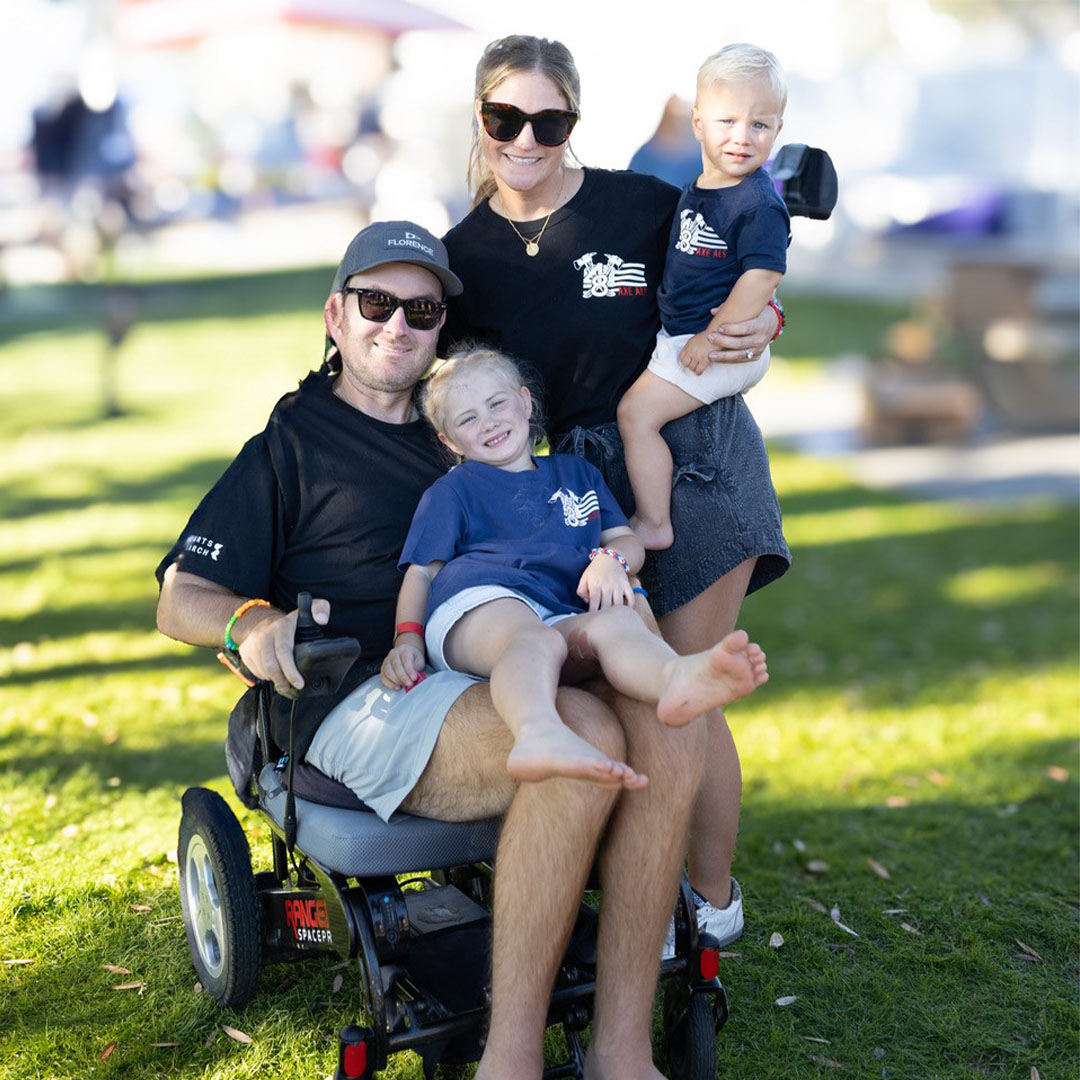
Stevens with his wife and two children. Photo courtesy Eric Stevens.
Before ALS, Eric Stevens lived a life built around his physical abilities. He played college football at University of California, Berkeley, where he was a fullback and team captain, then signed briefly with the St. Louis Rams in 2013. After that, he followed the career path of his two older brothers and spent five years fighting fires with the Los Angeles Fire Department. Off the clock, he worked out, mountain biked, surfed, fly-fished, and spent time with his girlfriend, Amanda—whom he’d met in college—and their dog, Duke. He and Amanda married. They were planning to buy a home and start a family.
But in March 2019, something changed.
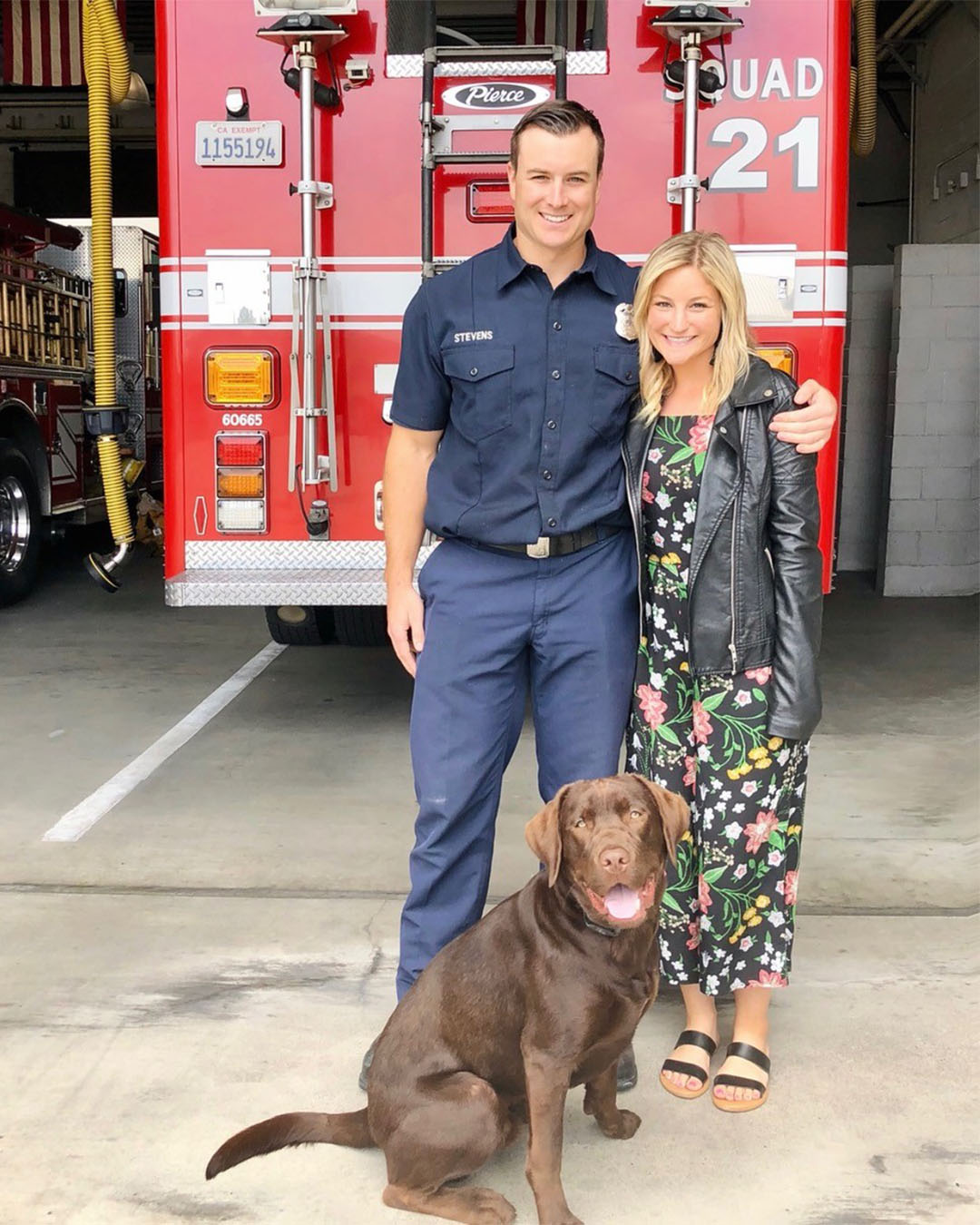
Stevens and his wife, Amanda, with their dog at the Los Angeles Fire Department. Photo courtesy Eric Stevens.
Early ALS Symptoms and a Path to Diagnosis
“I noticed several symptoms,” Stevens recalls, “overall fatigue, left hand weakness, and slowing of my speech.” He thought it might be from an old football injury or maybe a pinched nerve. But just a few weeks after his wedding and honeymoon, fasciculations—involuntary muscle twitching—began in his biceps and triceps and didn’t go away. Combined with the other symptoms, he knew something was wrong. He skipped his primary care doctor and went straight to a neurologist. “I had a gut feeling that this was a more serious neurological issue,” he recalls.
“ALS symptoms can be very subtle early on—slightly slurred speech, running more slowly, dropping a cup, for example,” says Catherine Lomen-Hoerth, MD, PhD, FAAN, a neurologist and director of the ALS Center at the University of California San Francisco Medical Center.
What followed was, in many ways, the standard ALS diagnostic odyssey, though Stevens moved through it faster than most. “The path to diagnosis often takes over a year because of all the other conditions doctors need to exclude,” notes Dr. Lomen-Hoerth.
There is no single test for ALS. Diagnosis requires ruling out other causes through a variety of tests, including MRI, blood work, sometimes lumbar puncture, and an electromyography (EMG) study. Kelly G. Gwathmey, MD, FAAN, a neuromuscular expert at Columbia University, notes that the average person with ALS sees three or four health care providers—often otolaryngologists, gastroenterologists, or spine surgeons—before seeing an ALS specialist.
For Stevens, the EMG confirmed it. He was diagnosed with ALS in August 2019. He was only 29 years old. His age made the diagnosis especially jarring—but research suggests that athletes, particularly those in contact and endurance sports, develop ALS at higher rates than the general population, though the reasons remain unclear.
“Emotionally, it felt like all of the sacrifices and hard work it took to get to that point were suddenly thrown out the window,” he says. “I had a steady career that I enjoyed, I had just married an incredible woman who is the love of my life, and we were planning to buy a home and start a family. All of that changed in an instant.”
What is ALS?
Amyotrophic lateral sclerosis, also known as Lou Gehrig’s disease (for the New York Yankees first baseman whose ALS diagnosis helped raise awareness of the disease nearly a century ago), is a progressive neurodegenerative disease that attacks motor neurons—nerve cells that tell your brain and spinal cord muscles when and how to move.
Roughly 70% of patients, Dr. Gwathmey notes, present with painless, progressive weakness in an arm or leg, which is referred to as “limb-onset” or “spinal onset” ALS. About 20% to 25% present with difficulties with speech or swallowing. This is known as bulbar-onset symptoms. A small percentage present with respiratory symptoms first. Approximately 85% to 90% of cases are “sporadic,” which means there is no family history of the disease; 10% to 15% of cases are genetic. And nearly half of ALS patients experience some degree of cognitive impairment, with 15% developing frontotemporal dementia—a condition that affects behavior, personality, and language more than memory.
Stevens describes ALS in less clinical terms. “ALS is absolutely brutal. It slowly chips away at everything that makes you human, starting with your physical ability, then your ability to communicate verbally, and eventually your ability to breathe. You slowly become more dependent on others for everything. One day it’s brushing your teeth, the next it’s getting help out of bed. Eventually you can’t move at all. As this is all happening, your mind remains sharp and clear.”
Most people with ALS pass away from respiratory failure within two to five years of symptom onset, though about 10% live longer than a decade.
Living with ALS Day-to-Day
Nearly seven years after his diagnosis, Stevens is still here. But his daily life looks nothing like it once did. Amanda helps him out of bed each morning and into the recliner where he spends most of his day. He receives all his nutrition through a feeding tube, since he can no longer eat or drink by mouth. He gets outside as much as possible—grateful, he says, that they live in Southern California, where the weather is often well suited to spending time outdoors. “I enjoy being able to get fresh air, go on walks through the neighborhood, and make it to my daughter’s tee-ball and soccer games whenever I can.” He watches YouTube videos about topics that interest him, including regenerative farming and ranching, fishing, and roller pigeons—a breed of pigeon that rolls or tumbles in the air.
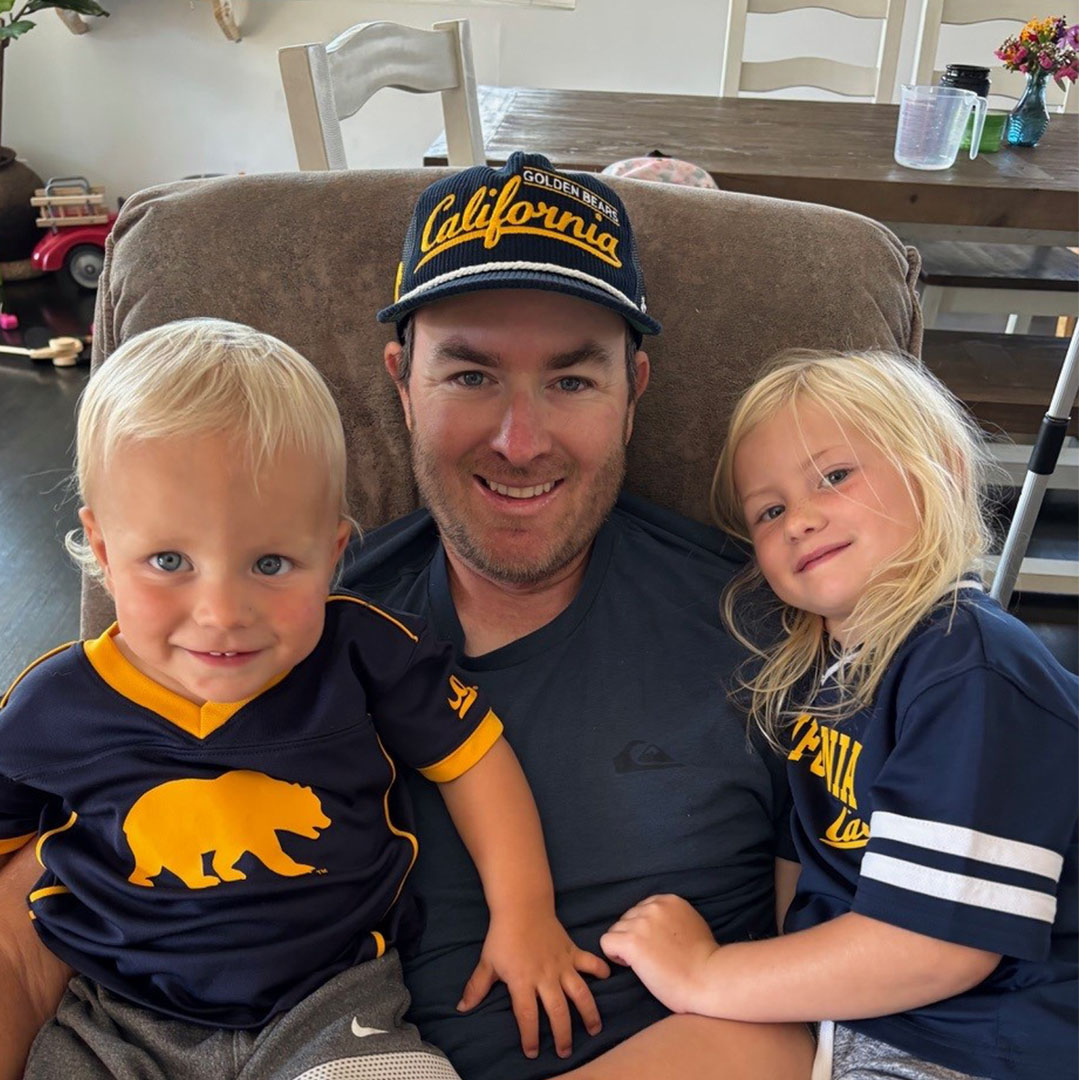
Stevens and his two children. Photo courtesy Eric Stevens.
What ALS has changed, he says, is everything about how he moves through the world. What has it not changed? “My heart, my love for my wife and our two kids, Peyton and Dean, and my passion for being a father and the leader of my family. It’s not, in any way, shape, or form, what I imagined this life would look like, but we are doing our best to make the most of it—creating as many memories as possible and giving our kids the most normal and fulfilling life we can.”
ALS Care and Support
Ideally, a person with ALS would have a multidisciplinary care team. As Midori Eckenstein, MD, a neuromuscular expert and assistant professor at the Larner College of Medicine at the University of Vermont, describes, these teams include neurologists, nurses, physical and occupational therapists, respiratory therapists, speech-language pathologists, dietitians, social workers, and local ALS Association representatives. Multidisciplinary care has been shown to improve quality of life and prolong survival, and it is recognized as a standard of care by the American Academy of Neurology.
But many people cannot access the care they need. Clinics are expensive to operate and rely heavily on donations and institutional support, which limits how many exist and how many patients can access one. For people in rural areas, the barriers are even greater. “It can be difficult to find companies that are able to come into homes that are more remote,” says Dr. Eckenstein, who works with patients in Vermont and upstate New York.
The financial gaps widen as the disease progresses. Dr. Lomen-Hoerth notes that only about 1% of patients with ALS choose a tracheostomy and life on a ventilator—in part because continuous care can cost roughly a quarter-million dollars a year and is not typically covered by insurance. Even without a tracheostomy, a caregiver can cost $50 an hour and is also not usually covered by insurance.
Terry Heiman-Patterson, MD, professor of neurology at Temple University’s Lewis Katz School of Medicine, notes, “There are major gaps in provision of health aides and nursing care for people living with ALS in the home...you want to be with your family but often you end up in a nursing home.” Home renovations—ramps, accessible bathrooms, ceiling lifts—are usually not covered by insurance unless ALS is connected to military service, in which case the Veterans Administration (VA) helps to cover the cost.
For Stevens, having a complete multidisciplinary team—to help manage symptoms, maintain independence and mobility for as long as possible, navigate decisions about nutrition and breathing support, and coordinate the equipment and care he needs as the disease progresses—has been incredibly beneficial. Amanda, he says, is the most important person through it all. “I truly don’t think I would be here without her.” He has found support from his kids, his parents, his elementary-school friends who became like brothers, his fellow firefighters at the LA Fire Department, and what he calls one of the biggest surprises of the journey: the kindness of strangers, some of whom have become like family.
From Patient to Advocate: ALS Advocacy and Awareness
What pushed Stevens from living with ALS to becoming an advocate was the realization of how broken the system is. “You are essentially told to get your affairs in order, start checking items off your bucket list, and prepare to die. That never sat right with me.”
In 2021, he, Amanda, and his family founded the axeALS Foundation. Their mission is to raise awareness, fund critical research and clinical trials, and support families. The foundation recently completed a three-year, $486,000 commitment to Massachusetts General Hospital and University of California, Irvine to help establish an Expanded Access Program that allows up to 30 patients access to treatments that have not yet been approved for general use. The foundation also gifted $100,000 to Augie’s Quest’s Champion Insight Program, which studies why veterans, athletes, and first responders appear more susceptible to ALS. The axeALS Foundation provides direct grants to families for home renovations, accessible vehicles, medical equipment, caregiving, and the cost of pursuing experimental therapies.
Stevens himself participated in a clinical trial for NurOwn, a stem-cell treatment he believes significantly slowed his progression. His last dose was four years ago. Since then, he says, his progression has accelerated. The FDA declined to approve NurOwn in 2023 after its Phase 3 trial did not provide enough evidence that people with ALS who received NurOwn experienced slower disease progression than those who received a placebo. Trial participants disagreed during the public hearing, describing improvements in breathing and motor function, but advisors did not want to rely too much on personal stories.
That gap—between what patients say they experienced and what the data can prove—is something Stevens is working to change. “After being given what feels like a death sentence, your tolerance for risk changes completely,” he says. “We already know the outcome if we do nothing. So let us sign the waiver, accept the risk, and have the chance to fight for our life.”
What to Know About ALS Research
There is reason for hope. Tofersen (Qalsody®) received FDA conditional approval in early 2023 as the first treatment targeting a specific genetic form of ALS. It works in patients whose disease is caused by mutations in a gene called SOD1, which accounts for roughly 1% of ALS cases. Dr. Lomen-Hoerth calls it transformative: patients have actually regained strength. Researchers are working on similar treatments for other genetic forms of ALS. They are also developing better ways to track the disease through blood and spinal-fluid markers and exploring brain-computer interfaces that could help patients communicate and control their environment even after they lose the ability to move.
The slow pace of research is the problem. “ALS has been around for more than 150 years,” Stevens says, “yet there are still no effective treatments or a cure.” He wants people to understand the gap between what ALS does to a body and what tools currently exist to fight it. “For those of us living with ALS, this isn’t just science or policy—it’s our lives, our families, and our time. We don’t have the luxury of waiting decades for progress.”
Still, he keeps fighting—for himself, for Amanda and their children, Peyton and Dean, and for the thousands of others facing the same diagnosis. “My goal has always been to shine a light on ALS, support other families, contribute to research, and advocate for increased access,” he says.