Point guard Nisha Zemlin, 17, of San Francisco, led her high school basketball team to a championship victory in 2025, scoring an average of 27 points per game.
“The better you get at basketball, the more fun it is,” she says. “You feel free.”
Just five years ago, her parents wondered whether Nisha could even play sports safely after her diagnosis of absence seizures—a form of epilepsy in which patients experience brief lapses in consciousness multiple times a day. Sometimes, Nisha “blanked out” and missed instructions from her coaches. Her parents worried about seizures occurring on the court, too.
“We asked Nisha's neurologist about head injuries, whether she needed a special helmet, what to tell her coaches,” says her father, Jim Zemlin. “Fortunately, her medication was really effective.”
Two years ago, after a test showed she had outgrown her seizures, Nisha was able to stop medication with careful oversight by her neurologist. With a friend, she started an awareness campaign, Athletes for Epilepsy.
“Research shows that most people with epilepsy are able to participate in sports, but there's a lot of fear,” she says. “There's not much education out there about how to practice and play safely.”
Benefits, Fears, and Reality
Most kids, teens, and young adults with neurologic conditions—including autism spectrum disorder, epilepsy, and chronic migraine—can play recreational or competitive sports without extra risk of head injury and can reap a wide range of benefits, says Stephanie Alessi-LaRosa, MD, MPH, medical director of the Hartford HealthCare sports neurology program and assistant professor of neurology at University of Connecticut.
“Physical activity is important for overall brain health,” she says. “Children absolutely should participate in sports if it's safe for their neurologic condition. Sports help with development of social and emotional skills, physical coordination and balance, and visual tracking as well.”
But the reality is that head injuries can happen to any athlete in almost any sport. In the United States, about 70 percent of emergency room visits for brain injuries and concussions related to sports are for kids 17 and younger, according to the U.S. Centers for Disease Control and Prevention (CDC). Risk is highest in tackle football, soccer, lacrosse, ice and field hockeys, and girls’ softball, the CDC says.
While young athletes with neurologic conditions do not have a higher risk of having a sports-related head injury, a concussion could exacerbate their condition if not treated aggressively and effectively, says Javier Cárdenas, MD, FAAN, sports neurology division chief and director of the Concussion & Brain Injury Center at West Virginia University's Rockefeller Neuroscience Institute. Helping your child choose the right sport and working with their neurologist and coach can lower the risk and optimize recovery, says Dr. Cárdenas, a co-author of the AAN's 2020 Sports Concussion Position Statement.
Talk to the Neurologist
Experts recommend asking your child's neurologist about these points:
The right sports for your child. “No sport is completely safe from concussion,” says Nicole Reams, MD, FAAN, a general and sports neurologist with Endeavor Health in the Chicago area. “But we do see lower concussion rates in golf, track, cross-country, swimming, and volleyball compared to football, ice hockey, soccer, and lacrosse.”
But don't count anything out, she adds. “Patients with well-controlled seizures can generally participate in sports, including contact sports such as football as well as water sports such as swimming and water polo,” Dr. Reams says. “There are a lot of nuances.”
Baseline concussion testing. This testing can be a helpful benchmark for gauging recovery if your child does have a sports-related concussion later, says José Posas, MD, FAAN, an associate professor of neurology at University of Virginia School of Medicine with training in sports neurology. Ask the team athletic trainer, coach, or the child's neurologist about local free or low-cost testing options, he suggests.
Healthy steps for mental and physical fitness. “Safe on-field performance starts the night before and the week before,” Dr. Posas says. “Are you getting enough sleep? Did you eat breakfast? Are you staying hydrated? Are you taking your medications as directed? These steps help athletes stay alert and go a long way toward injury prevention.”
A concussion treatment and recovery plan. If an athlete shows signs of concussion, protocols include abstaining from play, undergoing an evaluation by a neurologist or qualified healthcare provider, and returning to school and sports only when symptoms have subsided. A child with a neurologic condition may need extra medication and recovery time. Contact their neurologist right away if a concussion occurs.
“We want to treat concussion aggressively,” Dr. Cárdenas says. “A concussion can worsen symptoms of ADHD, epilepsy, migraine, and other conditions. And recovery may be longer. But these athletes do recover and participate in sports again.”
Get the Coach's Insight
While brain protection awareness is growing in youth sports, parents can't assume every team follows all concussion protocols and other rules that aim to reduce head injuries in sports, Dr. Alessi-LaRosa says. When considering a team, talk with coaches about:
The team and league's concussion management and return-to-play policies. While some coaches still encourage kids to play through injuries, many “take injuries seriously and encourage athletes to report symptoms to a teammate or athletic trainer or the coaches or parents,” Dr. Alessi-LaRosa says. “It is important for parents to ask coaches about their philosophy on injuries.” Coaches also should have certified HEADS UP to Youth Sports Coaches: Online Concussion Training provided by the CDC, Dr. Posas says.
Training rules that promote brain protection. “A lot of concussion risk comes from improper technique,” Dr. Posas says. “Tackling in football, for example, should be ‘heads-up.’” Ask if the team avoids drills that could pose a risk of head injury and if they follow U.S. Soccer Federation rules that ban or limit ball-heading in young players.
Your child's own brain health needs. If your child has a neurologic condition, provide a note from their neurologist and discuss their risks and symptoms with the coach, Dr. Posas says. Kids with seizures or migraines may need action plans for skipping or leaving practice if their condition flares up or worsens, for example. They may need to keep medication on hand as well. Develop a plan with your neurologist and share it with the coach before the first practice.
Choose Protective Headgear
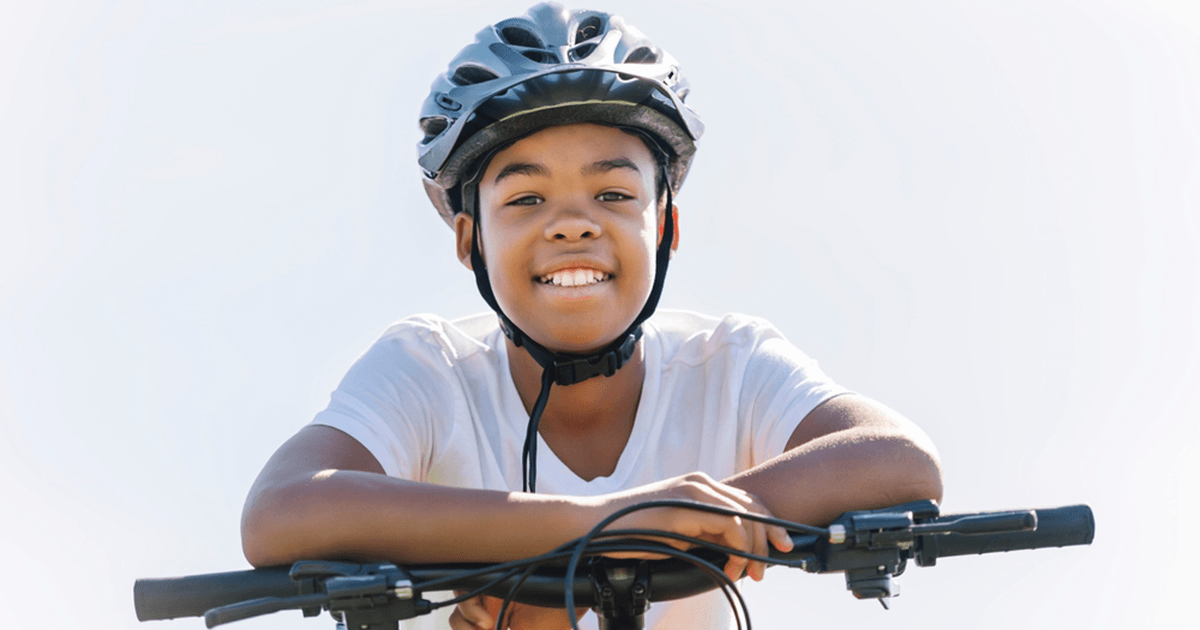
Helmets can reduce the risk for a sports-related head injury by 34 to 88 percent, according to a 2022 American Academy of Pediatrics (AAP) position statement on their use. Helmets are required for tackle football, ice hockey, and men's lacrosse and strongly encouraged by the CDC and AAP for bicycling, skiing, skateboarding, and equestrian sports, among others. For best protection, parents should consider:
Proper helmet fit. In a 2016 study of high school football players, poorly fitting helmets were associated with more severe and longer-lasting concussion symptoms. In general, sports helmets and chin straps should fit snugly. The CDC offers details about helmet fit for individual sports, and parents can consult the Virginia Tech Helmet Ratings website for independent safety ratings.
“Recent data shows that newer helmets provide much better protection in part because they can be custom fit to the individual better than older helmets,” Dr. Cárdenas says.
Padded helmet covers. Soft-sided helmet covers, such as Guardian Caps, add extra padding to the exterior of hard-shell helmets. But a recent study of high school football players found the covers were not associated with a reduction in concussion rates and may instead give players and parents a false sense of security. Virginia Tech testers, meanwhile, noted that adding a padded cover to a poorly fitted helmet may be less protective than wearing a properly fitted hard-shell helmet.
Headgear for other sports. While not required, “headgear in soccer is no longer discouraged and could be considered,” Dr. Cárdenas says. And while headgear is not universally mandated in girls’ and women's lacrosse (except for goalies), recent research found that types that fully cover the head can reduce concussion risk significantly.