What is Alzheimer’s Disease? What are the symptoms and causes?
An overview of the neurologic disorder that affects more than 5 million Americans.
An overview of the neurologic disorder that affects more than 5 million Americans.
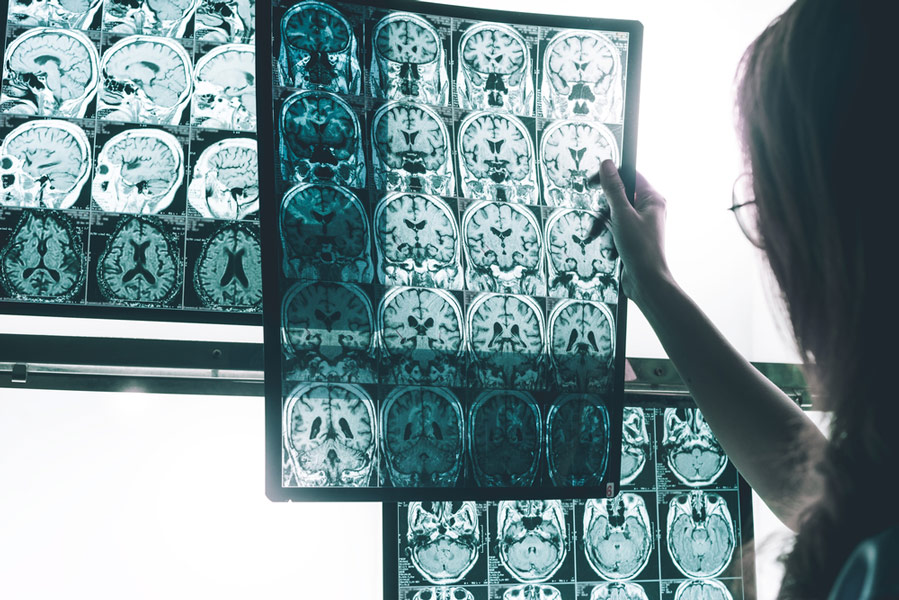
Alzheimer’s disease is an irreversible, progressive brain disease that slowly destroys memory, thinking skills, and, eventually, the ability to carry out even simple tasks of daily living. It is the leading cause of dementia—the loss of memory and thinking ability that interferes with everyday function—and is fatal, usually within 10 years of onset. Cognitive function declines as brain cells (neurons) malfunction and eventually die. It is estimated that more than 5 million Americans have Alzheimer’s disease.
Symptoms typically include memory loss beyond what is expected for normal aging. Some examples include forgetting recent events or repeating questions that were answered a few minutes ago; difficulty carrying out usual tasks, such as driving or balancing a checkbook; and, as the disease progresses, the potential for irritability and suspiciousness. People with Alzheimer’s disease gradually lose their independence such that they require increasing care—the end stage of the illness results in total dependence.
Currently, there is no treatment that stops the progression of Alzheimer’s disease. Drugs can be prescribed to manage symptoms and slow the course of Alzheimer’s dementia. Other medications may be used to treat related symptoms, such as depression, irritability, or anxiety. Following a heart-healthy diet, exercising, remaining socially engaged, and getting adequate sleep are also important in managing Alzheimer’s disease.
In most cases, Alzheimer’s symptoms are first seen around age 65. Very rarely (less than 1 percent of all cases of Alzheimer’s disease), a genetic mutation may be responsible for causing the disorder at an age younger than 65. Alzheimer’s is considered “early onset” when patients develops in their thirties, forties, and fifties.
Older age is the number one risk factor. After the age of 65, the chance of developing Alzheimer’s disease doubles every five years. The disease also may have a genetic component. A person with a parent or sibling with the disease has double the lifetime likelihood of developing it. Cardiovascular factors, such as high blood pressure, diabetes, and high cholesterol, may be additional risk factors. Many individuals with Alzheimer’s disease may have other illnesses, such as stroke, that can contribute to the dementia.
Dementia is a cognitive decline that degrades the ability to think, remember, problem solve, or reason to the extent that it interferes with a person’s daily life and activities. Signs and symptoms of dementia result when once-healthy neurons (nerve cells) in the brain stop working, lose connections with other brain cells, and die. Alzheimer’s is a very common form of dementia, but there are several types of dementia.
No single test exists to diagnose Alzheimer’s disease. Although new diagnostic methods are being developed, diagnosis still relies on a doctor spending time with the patient and a family member to get a detailed medical history as well as conducting a neurologic examination and evaluation of memory, concentration, and other cognitive functions. A doctor can also help determine if cognitive problems are being caused by something else. For instance, depression could account for problems with concentration, and sleep apnea (a treatable condition that deprives the brain of oxygen for short periods of time) may cause difficulties in thinking.
Student’s Prizewinning Project Works to Predict Alzheimer’s Disease
When Jack Albright’s grandmother was diagnosed with Alzheimer’s, he was inspired to make the disease the focus of a yearlong science project for his eighth-grade class.
Actress Rita Wilson Became an Alzheimer’s Advocate to Honor Her Mother
After her mother died of the disease, Wilson volunteered to raise awareness and funds on behalf of others with the illness.
What’s Ahead for Alzheimer’s Research
For decades, researchers have doggedly studied various drugs and therapies to treat Alzheimer’s disease, which affects more than 5 million people in the United States. Despite years of study, no effective treatment has emerged. Here’s what’s on the horizon in the field.
How Improvisational Techniques Help Engage Dementia Patients
Improv workshop tools for caregivers include an introduction to Alzheimer's, information about verbal and nonverbal communication and listening skills, and behavior and caregiver tips, as well as suggested exercises and resources.
Important Tips for Alzheimer’s Disease Caregivers
To get families ready for what is to come, it’s best for them to educate themselves about the disease, stay focused on the person, cultivate patience, and set up a care plan that provides continuous supervision so the person with dementia is never left unattended.
A Choir for People with Dementia Inspires Hope
Across St. Paul and Minneapolis, the Giving Voice Chorus has offered Elaine and Marvin and hundreds of other people with dementia and their caregivers a newfound sense of purpose and belonging.
New Brain-Imaging Techniques Help Diagnose Neurologic Conditions
Imaging is opening up new ways to diagnose, interpret, and treat many neurologic conditions.
A Robotic Pet Brings Joy to a Patient Who Has Dementia
The author finds that a furry robotic cat comforts her mother and assuage her loneliness.
Alzheimer’s: The Basics
A downloadable, printable quick-hit guide to the basic facts about Alzheimer’s symptoms, risk factors, and treatments.
Patient Organizations
Advocacy and support groups for those who have Alzheimer’s or are caring for someone with Alzheimer’s.