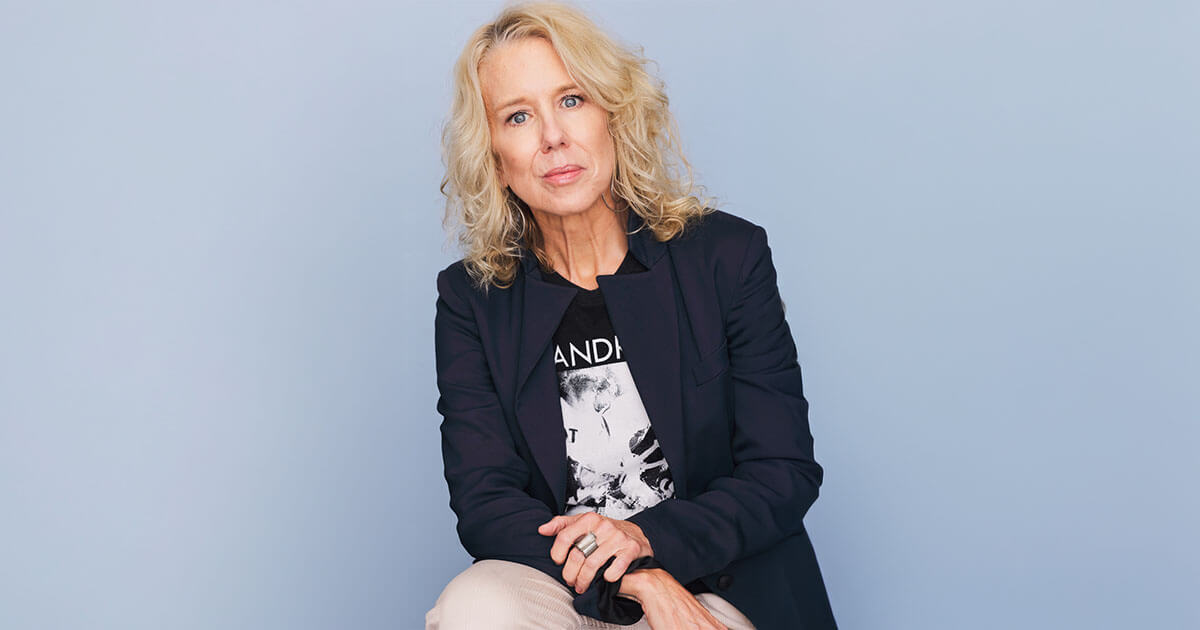
Singer Vikki Carr Shares Lessons in Caregiving and Love
When her husband was diagnosed with dementia, Vikki Carr interrupted her career to become his full-time caregiver.
When her husband was diagnosed with dementia, Vikki Carr interrupted her career to become his full-time caregiver.

For nearly 20 years, three-time Grammy winner Vikki Carr enjoyed a blissfully ordinary domestic life with her husband, Pedro De Leon, a family doctor. “We had an unbelievable time together,” says the singer. “He’d work all day caring for his patients, from 5 a.m. to 7 p.m., and then we’d have an event [to go to] and he’d say, ‘I’ll just shower, honey, and I’ll be ready.’ And he always was. He took care of me.”
Until he couldn’t, and then Carr stepped in. It was De Leon’s sister who first noticed changes in his behavior—becoming confused and forgetful and having trouble writing prescriptions—in 2010 and 2011. “She was a nurse in his practice and had been with him for almost 50 years, and they were in the same room all the time, so she saw it early on,” Carr says.
In early 2012, at the age of 82, De Leon was officially diagnosed with dementia. But Carr says she was still in denial about what was happening. “I didn’t really realize what was coming until he sat down with me in the breakfast room one day, looked at me, and said, ‘I love you.’ I just said, ‘I love you too, darling.’ But he slammed his fist down on the table emphatically and said, ‘I love you. Whatever happens to me, I want you to never forget that I love you.’”
Carr, who received a Lifetime Achievement Grammy from the Latin Recording Academy in 2008, took a break from performing to care for her husband, who died last year. “A lot of people thought I had retired, but I wanted to help him stay at home,” she says. “For a time, he could still shower by himself, but I would have to shave him and help him get dressed. He always wore a coat and tie—he was such a sharp dresser—and I would tie his tie for him. He was proud. He fought so hard.”
Their happy union almost never happened. The two first met in the early ’70s when Carr returned to her native Texas to headline a series of fundraising concerts for Holy Cross High School, a Catholic boys’ school in an impoverished neighborhood of San Antonio. De Leon was the school’s sports physician, and he had been asked to host a dinner for Carr after one of the concerts. He had never heard of Carr, who rose to fame in 1962 with “He’s a Rebel” and has since released more than 60 singles, including “It Must Be Him” and “With Pen in Hand.”
Although both were married at the time, Carr and De Leon felt an immediate chemistry. “I fell in love with a stranger from across a crowded room, just like ‘Some Enchanted Evening’ from South Pacific,” Carr says. “I went home and told my friend, ‘I finally met the man I love, and there’s nothing I can do about it,’” says Carr, now 80.

For the next 20 years, they reconnected at those annual after-concert suppers. ”We didn’t have much time together at all, but everyone in our families could see what was happening between us—even his mother.” She remembers one year when De Leon dropped off his mother’s homemade nopales, Carr’s favorite Mexican food, at her hotel beforehand. “Then at the concert, I embarrassed the heck out of him, this proper Mexican conservative gentleman, when I invited him up on stage so I could give him his plate back.”
Carr, who is of Mexican heritage and was born Florencia Bisenta de Casillas-Martinez Cardona in El Paso, had toured the world, performed for presidents and the Queen of England, appeared frequently on The Tonight Show, and become a powerhouse in the Latin American market with albums such as Simplemente Mujer, Dos Corazones, and Cosas del Amor. But none of that mattered to her when she returned to San Antonio for another concert in September 1992. She had recently been divorced, and she knew that Pedro De Leon was now a widower.
“I was on the plane and looking out the window, and all I could see was his face. I thought, ‘Now’s my chance,’” she says. “As soon as I got to San Antonio I called. I was so brave. I said, ‘May I please speak with Dr. De Leon?’ The nurse said, ‘I’m sorry, he’s with patients.’ I chickened out and just said, ‘Okay, then.’ She said, ‘Wait, who’s calling?’ When I said my name, she said, ‘No, stop, he’s been waiting for your call!’”
That night, Carr and De Leon went out to dinner. “He came to pick me up at my hotel, and we had a glass of white wine,” she says. “I just kept looking at him. I finally said, ‘Do you mind if I kiss you? I’ve waited 20 years.’”
The next month they announced their engagement, and in June 1993 they were married. She moved from Beverly Hills to San Antonio. “All I can tell you is, I finally learned what it was like to be loved for me. Not because I was ‘Vikki Carr,’ but because I was the woman that he wanted.”
For the first three years after De Leon’s diagnosis, Carr was able to manage her husband’s care on her own. But the stress took its toll. “I lost my patience once so much that I yelled at him, and then I got on my knees and I said, ‘Oh God, please forgive me.’ It was so difficult with only the two of us in the house at the time. He once fell on his face in the street and was bruised and bloody all over, and a man driving by stopped to help pick him up and drive us to the hospital.”
Then came a day in 2015 when Carr realized she could no longer cope alone. “I tried to help him get out of bed and I hurt my arm, and I looked at him and said, ‘I’m so sorry, honey, I can’t pick you up anymore. I’m too little.’ He just looked at me with understanding. He knew.”
She hired a team of long-term caregivers with experience in memory care, who came to their home daily to get De Leon showered and dressed and take him places like the mall and to watch soccer games and ping-pong matches. “He had always been going, all his life. This was not a man who could stay in bed,” Carr says.
Hiring professionals to help care for her husband was good for Carr as well. She was able to meet friends for dinner or the movies or just get out of the house and take a walk. It also allowed her to accept speaking engagements and perform at a benefit concert for victims of the August 2019 Walmart shooting in El Paso. “But I still slept with him every night until the very end,” she says. “I’d hold his hand so he would know he was there.” On December 15, 2019, Pedro De Leon died, with Carr and his grown children at his side. “I am at peace. I know he sees the face of God, and I know he’s watching out for me,” she says.
Today, Carr is planning her first gospel album. “That will be my gift to God for his gifts to me,” she says. And she hopes to return to working on behalf of United Healthcare’s Hay Mas Adelante (There Is More Ahead) program, talking about topics facing older adults such as caregiving and staying active. “I tell my audiences—most of whom are Hispanic women—about what I have gone through, and then ask if anyone is a caregiver now,” she says. “Practically everyone will raise their hands. And I’ll scold them lovingly, telling them that we must take care of ourselves. If we don’t, we can’t care for our loved ones. And that is what they would want us to do.”

People like Vikki Carr who care for a relative with dementia sometimes end up developing their own health problems. In a 2019 report from the Alzheimer’s Association, 35 percent of caregivers of people with dementia reported worse health compared with 19 percent of caregivers of people without dementia.
“In study after study, we have found that caring for someone with dementia takes a toll on your health in many different ways,” says Barry Oken, MD, PhD, FAAN, professor of neurology at Oregon Health & Science University in Portland. “We see increases in blood pressure, diminished immune function, poor wound healing, sleep changes, cognitive changes, higher incidences of depression. In fact, just about anything we can measure is affected negatively. But we also know that the more support caregivers have, the better they do.”
It’s important to ask for help, says Geoffrey Tremont, PhD, associate professor of psychiatry and human behavior at Brown University, who develops and studies programs that can help ease the burden on people who care for loved ones with dementia. “In order to be a good caregiver, you have to put your own needs on an equal level of those of the person you’re tending to,” he says. “If you neglect your own needs, you can’t help your loved one.”
The COVID-19 pandemic has made caregiving even more challenging, requiring more creative ways of asking for and receiving help. Brainstorm with family and friends on how to share the burden safely. Check community resources such as churches and synagogues, caregiver support groups, and adult day care programs for advice.
These additional strategies may help make caregiving more manageable.