How I Survived an Essential Visit During COVID-19
The author’s monthly infusions for multiple sclerosis required a trip to a hospital. She describes what it was like to go during the pandemic.
The author’s monthly infusions for multiple sclerosis required a trip to a hospital. She describes what it was like to go during the pandemic.

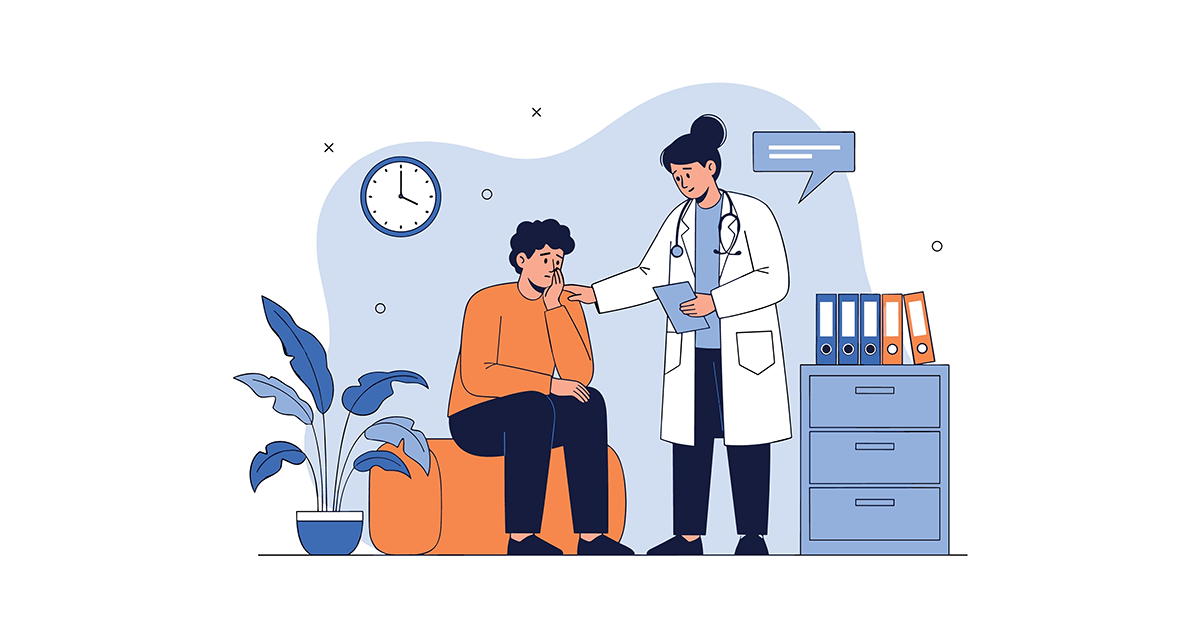
I’ve had multiple sclerosis for almost 20 years, and my treatment includes monthly infusions of a disease-modifying therapy at a hospital. After the state of New York went into lockdown and health officials instructed residents to stay at home for everything but essential visits to avoid spreading COVID-19, my neurologist confirmed that these monthly infusion visits were essential.
I knew my doctor was right, but the thought of going outside, especially since the medications I take for my disease put me in the vulnerable category, was nerve-wracking. How risky would it be for me to take an extended trip that might expose me to other people? Fortunately, the hospital had already removed some of the risk by relocating the entire infusion center to a smaller medical building in the city.
The morning of the infusion, I pondered whether to don a mask even though experts weren’t recommending them yet. It was a moot point anyway since I didn’t have one. At least I had broken the habit of touching my face constantly. Armed with this new skill and antibacterial wipes, I felt prepared for my outing.
While waiting for my paratransit ride, I noticed that most people were indeed masked, which made me panic until I remembered that experts said staying six feet from people was an effective way to avoid exposure. I was standing in open air, and anyone walking by would be at least six feet away. My anxiety dropped down a notch.
My driver was wearing gloves and had a bottle of hand sanitizer. I gave him one of my extra packets of antibacterial wipes for his added security. We chatted about the lack of traffic—almost zero cars—which is unheard of in Manhattan, and the lack of people. It was comforting to see that New Yorkers seemed to be taking the stay-at-home orders seriously.
At the building’s entrance, I was greeted by a nurse in full protective gear who took my temperature. Everyone inside—security, staff, and the two other people in the waiting room—was wearing a mask. Inside the infusion center, all nurses were wearing masks, which I expected, but it made me feel self-conscious about breathing on them. When I told this to the nurse, she cheerily said I didn’t need to wear one but gave me a spare. I tucked it into my purse like a security blanket for the ride home.
After my infusion, I was helped into the paratransit vehicle by the staff member who’d taken my temperature when I first walked in. I thanked her, and we said our goodbyes, concluding with the “Stay safe!” that has now become part of our lexicon.
On the drive back to my apartment, I reflected on the experience. The sparsely populated streets indicated that the polls were right that about 90 percent of people were staying home as much as possible. I felt better knowing that health care professionals and my fellow citizens were doing their part to keep us all safe.
When I got home, I did my part: I went straight to the sink to wash my hands for 20 seconds, singing “Happy Birthday” to myself twice. For my next infusion, I will continue to do my part by wearing a mask now that recommendations have changed.
Lisa Cohen was diagnosed with multiple sclerosis (MS) in 2001. She’s the author of Overcoming the BS of MS and founder of Rockstar Women with MS, a website that offers programs and resources designed to empower women with MS.
COVID-19 (Coronavirus) and Neurologic Disease Resource Center