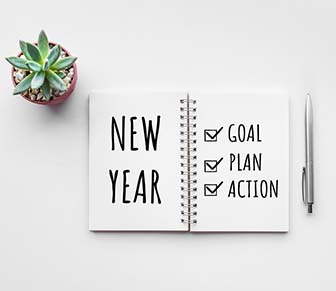
Everywhere I turn, I’m besieged with messages about New Year’s resolutions. On TV, Facebook, my email inbox, and in the magazines I read, people are sharing goals for the New Year, which are mostly about eating a more balanced diet and sticking to an exercise routine.
shutterstock.com
As someone with myotonic dystrophy, I don’t have the luxury of waiting 365 days to start anew. I tweak my dietary and exercise goals every day. I do that to ensure a quality day and a good night’s sleep.
But I’m not entirely opposed to setting goals for the New Year. The key, for me, is setting specific ones and achieving them with small, baby steps. For example, a goal might be eating more nutritiously and a baby step might be keeping a food journal. Here are some other examples that work for me and might work for you.
Resolution: Eat less sugar
Baby step: Take inventory. Keep track of the food and drinks you consume. Do you drink sugary beverages? Do you add sugar to your coffee or tea? Does your yogurt contain added sugar? Baby step: Make better choices. During the first week switch from soda to sparking, unadulterated water. For more flavor, I add fresh lemon or lime juice or bitters. The next week or month, drink your tea or coffee without added sugar. Maybe add milk or a nondairy substitute to compensate for the reduced sweetness. After success with that challenge, buy unsweetened yogurt and add fresh fruit. I often add unsweetened nut butter as well. When I first cut out sugar, I craved more sweets but it didn’t take long to get used to the change. Now just a little sugar goes a long way.
Resolution: Exercise more
Baby step: Choose an activity you enjoy. If running isn’t your thing, don’t force yourself to do it. Maybe you prefer riding a bike, dancing, or water exercise. Figure out what you like and you’re bound to stick to it. Yoga is my go-to activity. An hour-long gentle yoga class fits the bill for me. Baby step: Start with just 5 or 10 minutes. Start out with dancing or stretching for 10 minutes each day in your home. You’re bound to feel different after a week of these daily sessions. Baby step: Increase your time or join a gym. Once you’ve mastered a home routine, consider joining a gym or signing up for an accessible exercise class. If you attend class regularly, you’ll bond with classmates, which may motivate you to continue the routine. I met many of my new friends in a yoga class.
Resolution: Sleep better
Baby step: Understand sleep hygiene. Creating a pre-bed routine and the ideal sleeping environment can increase the chances of a good night’s rest. I always stop eating two to three hours before bedtime. About an hour before bedtime, I turn off computer and television screens. I keep my bedroom cool and use low lighting. Baby step: Buy a good mattress. Now that I use a ventilation device for respiratory weakness, I’m researching adjustable beds. I know that Medicare will provide one for me, but I want to be sure it offers the best option. If not, it may be worth the extra money—and good night’s sleep—to find a bed on my own.
Resolution: Take a trip
Baby step: Research ahead of time. This year may be my last opportunity to travel internationally due to increased muscle weakening and low energy. Before every trip, I spend a lot of time researching hotels, restaurants, and tourist sites to be sure they can accommodate my special needs. Baby step: Think about what-if scenarios. Once I have investigated sights I want to see and reserved hotels and transportation, I spend some time thinking through potential difficult situations. Because of my dysphagia, I often won’t find the right food at a restaurant. Is there a grocery store close to the hotel? If I need to borrow a wheelchair, is there a patient advocacy organization, like the Muscular Dystrophy Association, with a loaner closet or will the landmark museum or park have wheelchairs available?
No matter the goal, I craft my path with small, achievable steps so each success motivates me to continue. That’s what I resolve to do in 2019.
Leslie Krongold, EdD, lives in Alameda, CA, where she leads support group meetings for the Myotonic Dystrophy Foundation. She also writes a blog and produces a podcast series called Glass Half Full.