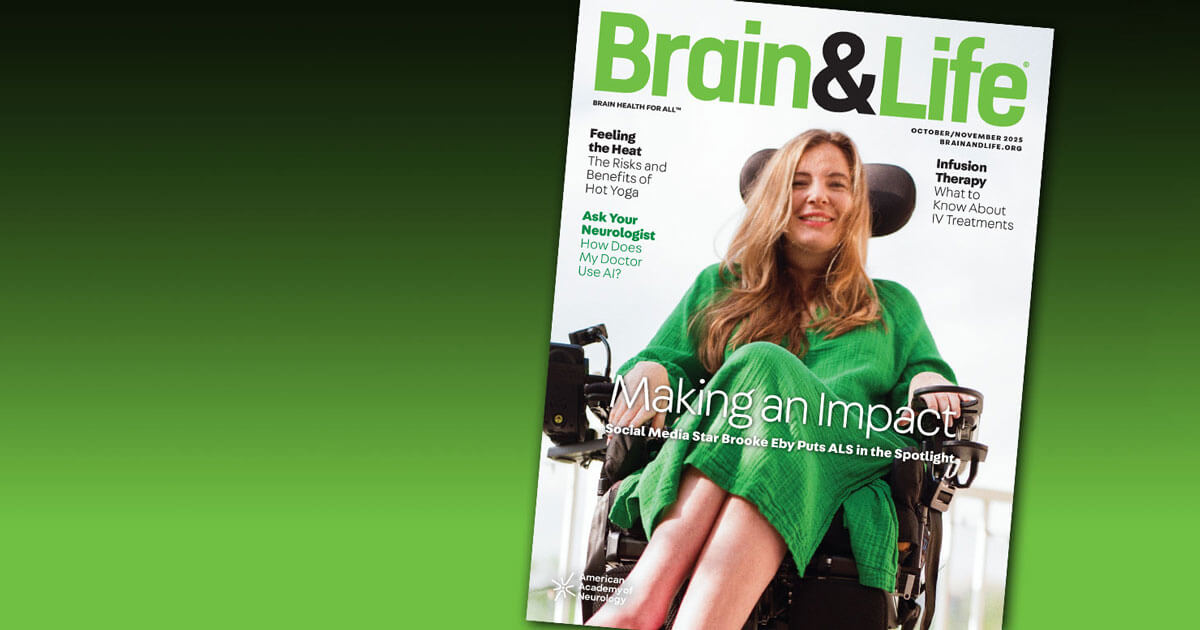
The Long Reach of Grief
I'm responding to your invitation to share a memory of grief (From the Editor, April/May 2019). Soon after my father was diagnosed with Alzheimer's disease, my mother had a vascular stroke and was unable to speak. Her cognitive function also declined. Then my father had a fatal heart attack. My mother's function quickly spiraled down, and my siblings and I had to move her to a locked facility to keep her safe. For the next three years, my mother's situation consumed me, and my own health deteriorated. When reflecting on that time, I identified three things that helped: first, my faith; second, writing in a journal; and third, a close support system. Grief doesn't come and go. It comes and stays and changes life. Moving forward requires tools, time, and patience. Writing has truly helped me "grapple with grief," allowing me to express deep feelings and heal in miraculous ways. -Susan Holder, RN, Evansville, IN
I would like to thank you for your article on grief ("The Long Reach of Grief," April/May 2019). I shared it with my eight siblings and their spouses to help us continue the process of healing from the death of our brother. It was so accurate, and the message so important. I deeply appreciate it. - Martha Kowalak Perez, RN, Austin, TX
When I was 42, my teenage son died in a car crash. My husband and I grieved while caring for our 7-year-old son at home and supporting three other children in college. Eighteen years later, my youngest son died by suicide. Six years after that, my husband died of sepsis when we were visiting two of our children in Arizona. My whole life has been marked by grief. Somehow I persevere, but with half my family in heaven, I never forget. - Carmen Marcogliese, Phoenix
Your article on grief was superb. I have one thing to add: Many of us with progressive conditions grieve the loss of our former lives. In many ways, the grieving process is the same. When I hear disabled people say they are despondent or depressed, I suggest they seek grief counseling. Not enough has been written about this type of grieving and how to move on in your new life. - Paul Maziarz, Auburn, IN
It was good to see the article on the important topic of grief. Besides grief over losing loved ones, we also grieve who we were before our illness. I do wish the article had not perpetuated the myth that we should be over a loss in six months. Grief is very individual. It does a disservice to make people feel they must stuff their grief to fit in with the culture. In addition, Elisabeth Kubler-Ross' work is descriptive for end of life and should not be "debunked." - Mary Ann Henderson, Seattle
Your article on grief leaves the impression that if you are grieving longer than six months, you have "prolonged grief disorder." As a person grieving the loss of her spouse, I can tell you that grief doesn't ever go away. One learns to live with it. That's a healthy response. Since losing my husband of 30 years, I have attended grief groups, spoken to professionals, and read many books on grief. It can take years to learn to live with a "new normal," a new identity, and the physiological changes to the brain. - I.B., San Luis Obispo, CA
Grief is a strange creature. You never know when it will strike and wrap its arms around you. When my wife died of cancer, I not only had to deal with my own grief, but my two teenage girls' grief. The first year was the longest because every day was the first day without her. I had to work hard to get joy back into my life. I have it now, but grief will always be around. - Don Vanderwood, West Valley City, UT
You did a really great job on this issue, specifically the articles on the nature of grieving, Rita Wilson, finding the right assisted living facility, and the robotic cat-all such timely topics for me personally. - Dawn Handschuh Newtown, CT
Your recent article on grief (The Long Reach of Grief, April/May 2019) was of particular interest to me because I lost my husband of nearly 58 years a year ago, on April 25, 2018, the night before his 79th birthday. He’d had some chest discomfort off and on for three days, but would not see the doctor, thinking it would go away on its own. I tried to ascertain his symptoms and discomfort level, and urged him to see his doctor, but he refused. The day he died we were playing a game at the kitchen table when he had a heart attack, toppling to the floor with no signs of discomfort or distress. Paramedics arrived within minutes but were unable to get a response. My grief was mixed with anger that my husband refused to see a doctor and guilt that I didn’t insist on it. Friends and family, especially my daughter, provided emotional support and food. I am fortunate to have worked as a bereavement assistant at a nearby hospice, so I understand the grief process. Being able to tap in to that reservoir of knowledge has helped me cope and adjust. So have family, friends, and my faith. They give me hope for a new tomorrow. - Marilyn Coffey, Millersville, MD
I found your article on grief very informative and was inspired to read Dr. Shulman’s book, Before and After Loss: A Neurologist's Perspective on Loss, Grief, and Our Brain (Johns Hopkins University Press, 2018). I have been grieving for my son who died in 2007 of melanoma and my husband who died in 2016 from Parkinson’s disease. I keep myself busy by volunteering, but it hasn’t been easy. A line in a Willie Nelson song—“It’s not something you get over, but something you get through”—has helped. - Gladys Agricola, Stuart, FL
Thank you for your article on grief. My daughter took her own life in February. “Devastating” does not begin to describe my feelings. No one can understand until they go through it. Your statement about grief that it’s a roller coaster of emotions without a set timetable for when it ends speaks volumes. - PJ Rodriguez, Pahrump, NV
The article on grief did not, in my estimation, address grief other than the loss of a spouse. I was expecting to learn about other reasons for grief, for example, the death of a child or sibling, and the effect on the brain. - Josephine Schneider, Bernardsville, NJ
My wife was diagnosed with terminal cancer on our 31st wedding anniversary. We were in the hospital gazing out the window watching the sunset when she started talking about how beautiful it was. She always liked the sunset on our many excursions to the coast. It was late at night when the phone call came from the hospital where my wife was in hospice care. I knew it was time. When I arrived, my wife asked for some morphine and I was consulted on how much to give her. It was in the early morning hours as I held her hand and her breathing became shallow. I told her we would walk down our favorite stretch of beach and watch the gulls. I suggested we sit on the warm sand and listen to the waves as they gently slapped the beach and wait for the sun to set. I said we could stay the night on the beach and wake to see the sun rise. Sadly, my wife never saw the sun rise. - Thomas Hayes, Pittsburgh, PA
My oldest son took his own life on December 17, 2018, the day before he turned 40. He had been hospitalized several times, and finally seemed to have his life in order: a girlfriend, a job he liked, and the proper medications. He was participating in family activities again. It wasn’t enough. My children are now consoling me. Our roles are reversed. - Jill M. Jones, Alexandria, VA
THE EDITOR RESPONDS: We thank you for your thoughtful and candid letters about grief. As many of you noted, everyone's experience of grief is personal and unique. To read Jill M. Jones’ poem about her son, please see My Son below.
Wilson and Alzheimer’s
I could totally relate to Rita Wilson’s experience (“Inspired Advocate,” April/May 2019). I lost my mother from Alzheimer’s in February of this year. I’ve always been so impressed with Rita Wilson’s life and her music. Oddly, I had coped with mom’s loss by listening to her music even before I read the article. My favorite song is “Go on Through It.” The words are so meaningful as we process our grief. I have also set up little memorials in my home in honor of my mother. I plan to put her antique bedroom set in one of my bedrooms and cover it with a quilt I made for her. I miss my mother dearly. I will keep your magazine close and refer to it regularly. And of course, I will be asking my Amazon Alexa to play Rita Wilson to give me the strength I need to get through this. - Charlotte Kimbrough, Manchester, MO
I appreciated the April/May 2019 issue of Brain & Life. I read it and donated it to our community library. I especially appreciated the articles on Alzheimer’s disease. I facilitate a support group at the retirement community where my wife and I live, and I visit residents with Alzheimer’s and other dementias. I am 90 years old and have neuropathy and Roussy-Lévy syndrome [a neuromuscular disorder like Charcot-Marie-Tooth disease]. This has limited my mobility, but I stay active as an advocate and author. - Richard L. Morgan, PhD, Irwin, PA
My husband has Alzheimer’s disease, and I’ve been his caregiver all day every day for about six and a half years. I write in my journal often. It’s an exercise I practice to stay grounded in something other than his illness. - Linda Tucker, Glasgow, KY
THE EDITOR RESPONDS: To read Linda Tucker’s journal entry, see An Unexpected Kind of Lonesome below. For more about journaling, visit How to Manage Grief through Journaling.
Tai Chi for You and Me
I was interested in the recent article on tai chi (Tai Chi May Improve Balance and Quality of Life, April/May 2019) because my husband and I have participated for the past couple months in the Tai Ji Quan: Moving for Better Balance (MBB) program at Frisbee Memorial Hospital in Rochester, NH. My husband has Parkinson’s disease, and I have balance issues after I had a meningioma removed from my spinal column. As a longtime tai chi and karate student, I have found the program very beneficial. Dr. Fuzhong Li’s program uses several tai chi forms. Hopefully, the availability of these classes will grow. It is a fantastic program. - Genie Jennings, South Berwick, ME
The Doctor Is In
I enjoyed the article about patient-doctor relationships (Better Connections, April/May 2019) and thought my doctor should read it. The one thing I wish my doctor would do is address my questions and concerns unrelated to my Parkinson’s disease. - Joslyn Portmann, Harker Heights, TX
Pain Treatment Alternatives
I’d like to give you kudos for mentioning alternative therapies such as massage, biofeedback, and acupuncture in response to the question about chronic pain (Ask Your Neurologist, February/March 2019). I have advocated for these therapies frequently over the years, as I have seen the devastation caused by overuse of opioids, especially in the geriatric population. Keep up the amazing work you are doing. - Sandra Cumming, RN, Buffalo, NY
Stroke Request
I like your magazine, but it is no longer clear that stroke is one of your primary concerns. In trying to cover a wide array of “injured brain” topics (dementia, for example), stroke has been relegated to just one of many topics. I suggest that in the table of contents, you maintain a standard list of key topics, then feature a story or stories each month on a designated topic. Under each regular category could be a research finding, feature story, key facts about various issues, or comment about future coverage. In the electronic version, you might place links to previous entries, and maybe even advertisers. I think each bimonthly issue should include something for every target audience, even if it is little more than a comment. - Jim Loyd, Cappac, MI
THE EDITOR RESPONDS: Thank you for your suggestion. For a story on stroke, please read “The Many Faces of Stroke” in the current issue.
An Unexpected Kind of Lonesome
BY LINDA TUCKER
As I sit in my easy chair, iPad on lap, checking today’s headlines, I look over and there is my husband in his easy chair. And I experience an unexpected kind of lonesome.
For 47-plus years, we’ve been together, through thick and thin. But now there’s a man I don’t know sitting opposite me. We’ve both aged, but not together. He has started to go back in time, but I need him here and now. It’s an unexpected kind of lonesome.
His amazing intelligence and his razor-sharp wit are gone now. They sit alongside the pile of never-to-be read books we pick up at book sales here and there. He still enjoys the looking and the buying, but he just reads the same few books, over and over again. We used to read the same books and share opinions. Now it’s just me, reading to escape. It’s an unexpected kind of lonesome.
There are no conversations now. Just a constant repetition of “I love you” and “you’re the best thing that ever happened to me,” which I thought I would never tire of hearing, but I have. I am tired of this unexpected kind of lonesome, but this is where I hang on to what was and what used to be.
I am a non-widow in mourning every day. I miss him, his personality, his sense of humor, his intelligence. This man is not my husband. He’s a thief who came in during the night and robbed me of my lover, my soul mate, my partner. He left behind an unexpected kind of lonesome.
Everyone says, “You’re so strong, so good with him.” No one can understand how I can’t give in to the sorrow I feel, for I will surely lose myself. I’m his caregiver, his mainstay, his life. I want to howl at the moon. It’s not fair, this unexpected kind of lonesome.
My Son
BY JILL M. JONES
I see him every day.
His photo is the wallpaper on my phone.
He is always on my mind and forever in my heart.
He was loved by so many, but never felt worthy of that love.
He loved everyone, but he couldn’t love himself.
My heart aches.
He took his own life, my beautiful, troubled son.