Caregiver Relief
The story about My Time for Free Time ("Relief for Caregivers," February/March 2018) was a wonderful article on the importance of cognitive stimulation and social interaction for individuals with Alzheimer's disease or dementia, as well as respite for their caregivers. Alzheimer's Services of the Capital Area in Baton Rouge, LA, has similar programs called Charlie's Place Activity and Respite Centers. Like My Time for Free Time, Charlie's Place offers a home-like experience for participants to enjoy activities, as well as periods of rest and relaxation. Also like My Time for Free Time, Charlie's Place allows caregivers a chance to do things for themselves. Caregiving can be difficult. Programs like My Time for Free Time and Charlie's Place make it a little easier. - Leigh Bradford, Public Relations Coordinator, Alzheimer's Services of the Capital Area, Baton Rouge, LA
I found solace when I read "Relief for Caregivers." I am a caregiver with multiple sclerosis who works part-time as a nursing assistant in home health. The many work shifts took a toll and forced me to deal with my own health. Helping others has been healing and takes my mind off my disease. Caregivers across the board, whether a family member, a layperson from church, a volunteer, or a nurse, could use a break from time to time. When we take care of ourselves, we are better equipped to care for others. - Anthony Clark, Lynchburg, VA
Diagnosis Reaction
I did not like how you made Virginia Cofer sound so horrified when she was diagnosed with multiple sclerosis at the age of 54 in 2013 ("Take Control," February/March 2018). When I was diagnosed in 1997 at age 24, only three drugs were available. I feel bad for anyone diagnosed with this horrid disease, but even young children are being diagnosed now. Please be mindful of how you phrase things. - Deborah L. Ramsey
THE EDITOR RESPONDS: Thank you for your letter. We try to be mindful of how we phrase things. In this case, we were reflecting Virginia Cofer's reaction to her diagnosis, which she initially found devastating. After learning about the concept of self-efficacy, she felt more in control of her disease and was able to manage it better and no longer felt overwhelmed.
Mainstream Advice
Regarding your article about mainstreaming children with special needs ("Fitting In," February/March 2018), I'd like to include additional information about finding the best school district based on the 30 years I worked for the US Department of Education's Office for Civil Rights (OCR) before I retired. The federal government provides money to every state's education department. In exchange for this money, every state must follow all federal laws (including Section 504 and the Americans with Disabilities Act) in all their schools, public and private. Not accommodating every child's need would be a violation of federal law by the school district. Either the school must provide needed accommodations, or the school district must pay a student's tuition for a school that does. If you think your child's or college student's school does not comply, you may file a complaint at the OCR at ed.gov or call 800-421-3481. - Jan Pottker, PhD, Coral Gables, FL
Resonant Cover
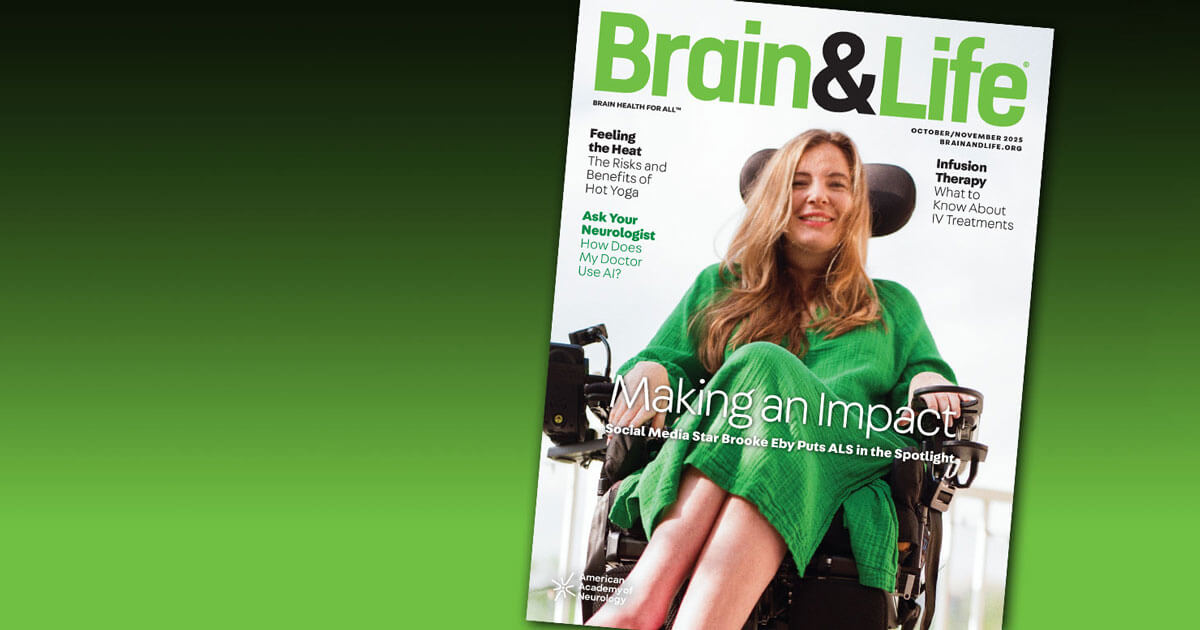
I have been reading your magazine for about 12 years. It gave me great pleasure to see B. Smith and her husband Dan Gasby on the cover of the October/November 2017 issue. Their story ("Unforgettable,") is very dear to me. I've used some of B. Smith's products, and I can relate to some of her challenges. I was diagnosed with Guillain-Barre syndrome (GBS), an acute inflammatory attack on the nerves by the immune system, about 13 years ago and still walk with a cane. - Frances A. Sanderlin
THE EDITOR RESPONDS: Thank you for your letter. Please look for our article on this rare disease.
Pet Shopping
Thank you for your article about grocery shopping on a budget ("Affordable Options for Grocery Delivery," December 2017/January 2018). I have a suggestion to add to it. If you have pets, I recommend shopping online for deals. I've been able to find sites that deliver 100 pounds of cat litter to my door for no shipping charge. - Martha Neukrug, Walnut Creek, CA
Muppet Magic
Your article about Christopher Jackson and Veronica Vazquez-Jackson and their autistic son ("The Story of CJ," August/September 2017) really caught my eye, especially the sidebar about Julia, the new autistic Muppet from Sesame Street. I am on the high-functioning end of the autism spectrum and I love the Muppets. I think the way Sesame Street promotes autism awareness is wonderful. - Cassidy Lewis, Neenan, WI
Training Tool
I am a student member of the American Academy of Neurology and an MD/PhD student at the University of Florida. I collaborate with neurologists, neurosurgeons, and biomedical engineers to discover better treatments for neurologic disorders. I read each issue of your publication front to back. As an aspiring academic neurologist, I feel it equips me with tools, resources, and ideas to help advocate for the patients I may one day treat or devote my research toward. I appreciate the breadth of topics and perspectives: It's inspiring to read about a patient's story, or a physician's story. Thank you for your efforts and the impact the magazine has had on me. - Robert Eisinger, Gainesville, FL
Helpful Resource
I take care of my husband, who has Parkinson's disease and some dementia. I leave the magazine at our local library after I've finished reading it so that other people can read it. Several of my friends have family members who have neurologic problems, so your magazine has been a good resource. - Joanne Draper, Mt. Pleasant, SC
Neuropathy Nudge
I realize that many diseases are more serious than neuropathy, but I have been reading this magazine for months and have not seen any articles on the topic. It would be nice to know if there are any new breakthroughs or other things going on.
THE EDITOR RESPONDS: You're in luck! Please see "Walk Away from Pain," our feature on neuropathy.
Outrageous Drug Prices
I want to thank you for your recent article on the high price of prescription medication ("The Price Isn’t Right," February/March 2018). At a recent town hall meeting, I referenced this article when asking my senator a question about drug pricing. When I brought up the ever-increasing drug prices and the disturbing practice of "shadow pricing," it seemed like a revelation to some meeting attendees. Thanks to this article, I was able to enlighten some people of drug pricing issues that those with chronic illnesses often face, including steady and outrageous drug pricing increases over the past 20 years. - Helen Zazulak, Natick, MA
The Power of Music
I am a subscriber to your magazine and have a 32-year-old son on the autism spectrum. I have especially enjoyed recent articles on choirs for people with neurologic disorders ("Noise Makers," August/September 2017; "Tuned In," October/November 2016). At Beacon, a school in Ohio supported by the County Board of Developmental Disabilities, I conduct a choir that consists of the three oldest classes of students who are in transition between school and adult services, and I have observed the benefits firsthand. - Stephanie H. Morris, Athens, Ohio
MS Meds Too Late for My Daughter
I subscribed to your magazine when my husband had his second meningioma removed. Now it seems that your magazine is full of the wonderful new medicines available for treating relapsing-remitting multiple sclerosis (MS). I am delighted that such strides are being made to fight this debilitating disease, but it breaks my heart that these advances are too late for my beautiful daughter, who died in 2007 from fulminant MS at age 41. Your magazine serves a very important function, and I am sure it helps many people deal with their problems. I hope my letter will help others appreciate how fast the world of medicine is working to improve the fight against many diseases, especially MS. - Marion Whitney Martin, Lexington, SC