What is Vagus Nerve Stimulation Therapy?
Understand how vagus nerve stimulation is used to improve epilepsy and depression, as well as side effects, and what to expect.
Understand how vagus nerve stimulation is used to improve epilepsy and depression, as well as side effects, and what to expect.
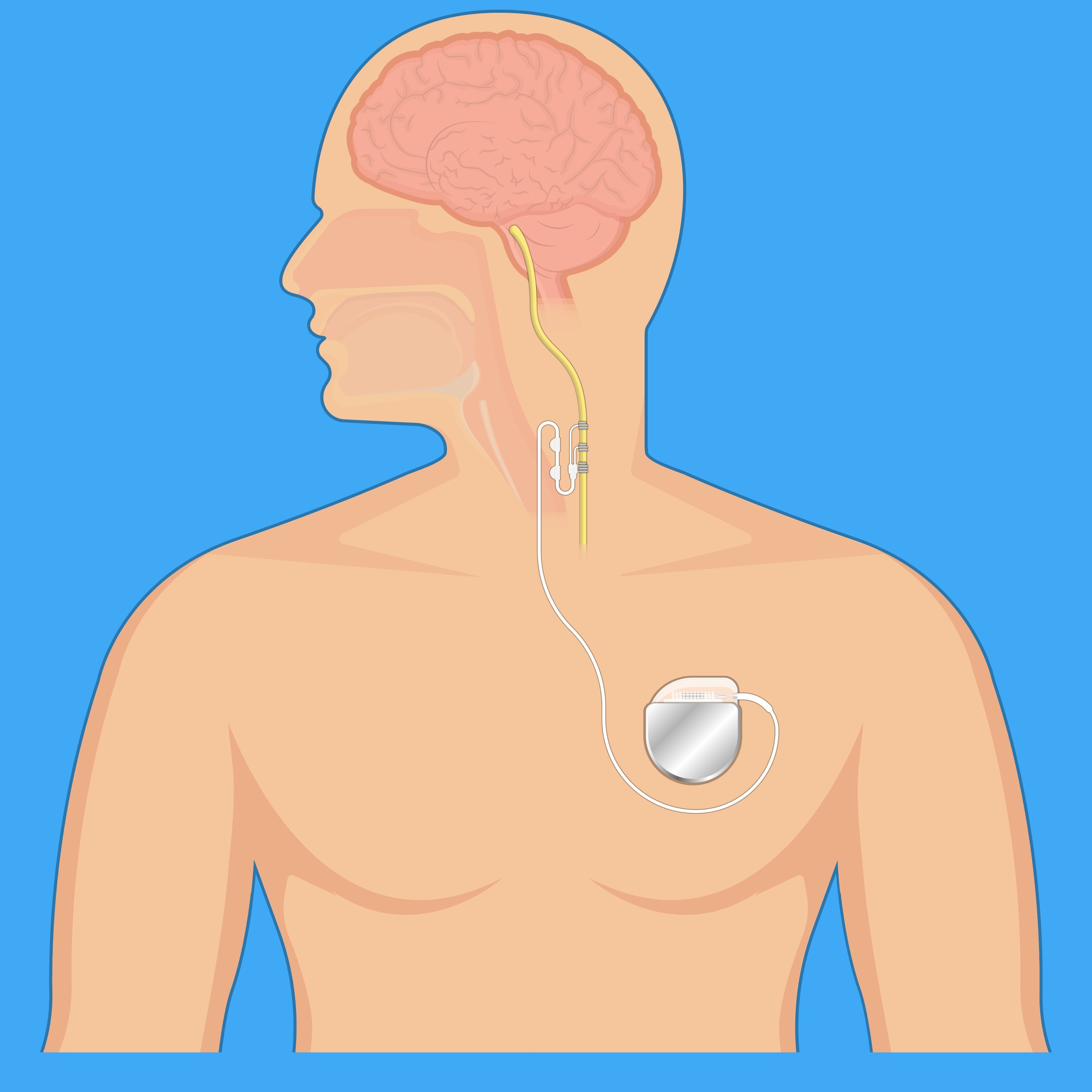
Vagus nerve stimulation is a treatment for epilepsy and depression. It uses a small, implanted device to send electrical signals through the vagus nerve, the body’s longest cranial nerve. This nerve travels all over the body and plays an important role in many bodily functions, like regulating your heart rate, digestion, and breathing. It also connects with parts of the brain that release chemicals that help reduce seizures and depression.
Vagus nerve stimulation therapy can be very helpful for people who haven’t had good results with medications. After consultation with a surgeon, the implantation itself is quite simple and usually takes just one to two hours. It’s done under general anesthesia, meaning you’ll be in a deep, sleep-like state. The device is implanted in the upper chest or armpit area, with a wire under the skin connecting to the vagus nerve in the lower left side of the neck. The surgeon makes two small cuts, called incisions, and tunnels the wire between them.
After going home to heal, you’ll typically visit your neurologist about two weeks later to have the device turned on. Some newer devices can even be programmed in the operating room to start right away. The therapy typically begins with low settings that increase according to a set schedule. The device sends short bursts of stimulation; it’s on for 30 seconds and off for five minutes. When it’s stimulating the nerve, you may notice slight throat discomfort, and your voice might sound hoarse. This goes away over hours to days after a programming change and isn’t usually noticeable to other people. Tell your neurologist how you’re feeling—they’ll gradually adjust the settings to get good results without too much discomfort.
Once implanted, the device’s battery usually lasts five to 10 years. This varies from person to person—those who have “rapid cycling,” where the device stimulates more often, may have to replace it more often, while others who use low settings find it lasts much longer. Replacement is relatively quick and easy. The wire wrapped around the vagus nerve stays in place; your surgeon will just need to replace the device. This is done under local anesthesia, meaning the area will be numbed but you’ll be awake.
Vagus nerve stimulation is FDA-approved for people over age four with focal epilepsy—seizures that start in one or more specific areas of the brain—who’ve tried at least two medications and are not seizure-free. It’s also approved for adults with depression who’ve tried at least three antidepressants without success and plan to use it on top of another treatment. We often use it off-label, meaning for a use the FDA hasn’t approved, to treat related conditions like generalized epilepsy and mixed focal and generalized epilepsies.
People with epilepsy usually start to see the best results from this therapy at around six months to a year, with continuing improvement after that. A 2023 review of multiple studies showed a 33 percent reduction in seizures at one year, 44 percent at two years, and an impressive 54 percent at three years. More importantly, people continue to see improvement over years with ongoing therapy, which contrasts what is often seen with medications, where seizure reduction rates don’t always last.
Additionally, a recent study on people with depression found similar positive results. Among those who responded to treatment, 80 percent continued to see improvements in their mood, daily functioning, and quality of life a year later. Because depression often comes and goes, the fact that these benefits lasted over time is especially important.
As with nearly all treatments, there are some side effects. Aside from the slight voice changes noted above, there can be discomfort at the incision sites post-surgery, a risk of infection, and possible worsening of sleep apnea. These typically resolve on their own or can be helped with adjusting the device settings.
All in all, I find that very few of my patients who’ve gotten vagus nerve stimulation therapy regret it. Any side effects they experience don’t disrupt their daily life, especially when compared to medication side effects they have experienced. And the benefits speak for themselves, making this therapy an important option to consider and offer.
Dr. Falco-Walter is a clinical associate professor of adult neurology and epilepsy specialist at Stanford University School of Medicine.
-As told to Val Lick