Updated ALS Book Offers Help for Patients and Caregivers
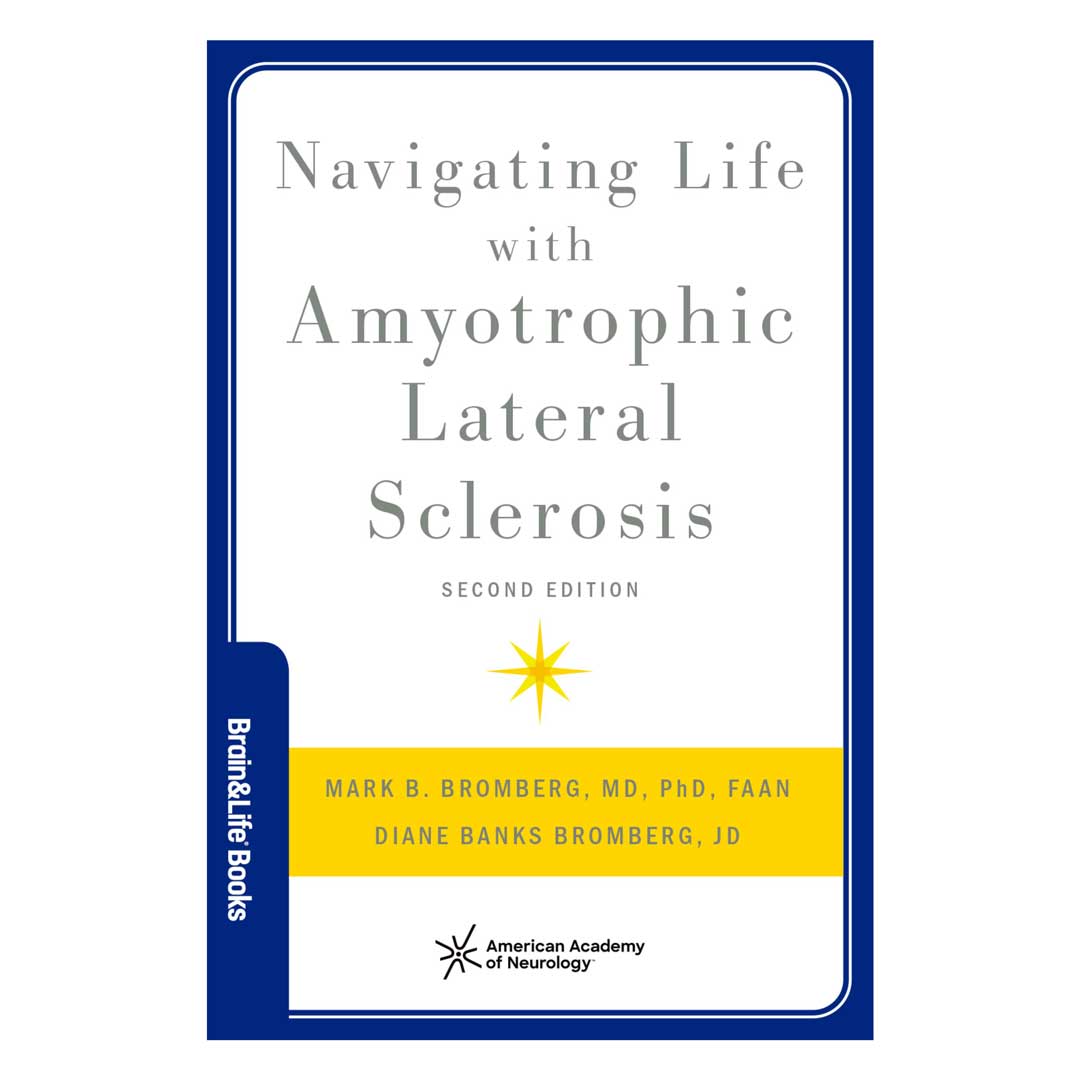
Written by a neurologist and a family caregiver, Navigating Life with Amyotrophic Lateral Sclerosis: Second Edition covers treatment advances and offers practical advice for living well with ALS.
Mark B. Bromberg, MD, PhD, FAAN, and Diane Banks Bromberg, JD, are very familiar with amyotrophic lateral sclerosis (ALS). Dr. Bromberg, an emeritus professor of neurology at the University of Utah, has been involved in ALS research and patient care for more than 30 years. Ms. Bromberg is a lawyer whose mother died from the disease in 1996.
The husband-and-wife team worked together to write Navigating Life with Amyotrophic Lateral Sclerosis as part of the American Academy of Neurology’s Neurology Now Books™series in 2017. Now, almost a decade later, they are publishing an updated, second edition of this book. The new edition will give patients and caregivers a thorough guide to this progressive neurodegenerative disease that affects approximately 35,000 Americans.
Navigating Life with Amyotrophic Lateral Sclerosis(2nd edition) is unique because it covers the perspectives of both an ALS specialist and an ALS caregiver. (The two met when Ms. Bromberg took her mother to Dr. Bromberg’s first ALS clinic at the University of Michigan.) “We wanted to create a book that was accessible, not just to the patient, but to their entire family,” says Ms. Bromberg.
The book is divided into 17 chapters that address all aspects of life with ALS. It’s mainly written in a question-and-answer format to make it easy to read. It begins with coping with the initial diagnosis of ALS and its causes, before explaining what to expect as the condition progresses. It also offers a practical look at living with ALS, including the latest in treatment and ways to manage everyday challenges like walking, talking, and eating with the disease. The last part of the book focuses on end-of-life planning, including when to start home health care or hospice, as well as the promising new research in the field.
“We tried to make it feel as personal as possible, with a number of patient scenarios weaved throughout the book,” says Dr. Bromberg. One series of stories focuses on Ms. Bromberg’s mother, Lois, starting with initial symptoms and moving to diagnosis and disease progression. “We thought it was a good way to explain to both patients and caregivers some of the situations they might encounter throughout their ALS journey,” explains Ms. Bromberg.
One reason the book was updated was to highlight new advances in ALS treatment. In 2023, the FDA approved tofersen (Qalsody) to treat ALS associated with a specific mutation in the SODI gene. “It’s a very impressive drug that significantly slows ALS progression, but the gene mutation itself is very rare, affecting only about 2% of patients,” says Dr. Bromberg. Another drug, edaravone (Radicava), was approved by the FDA in 2017, after the first edition of the book was published. It prevents nerve damage that causes loss of physical function with ALS. “It has a more modest effect than [tofersen], but it’s available for anyone with ALS,” explains Dr. Bromberg. “We wanted to give patients and their loved ones a degree of hope that there are medications available.”
The new edition also focuses on the rise of multidisciplinary clinics to help patients and their caregivers manage ALS. They provide comprehensive care, where people with ALS can meet with a team of specially trained health care professionals, including a neurologist, physical therapist, occupational therapist, respiratory therapist, dietitian, and social worker during a single visit. “These sorts of resources weren’t available when my mother was diagnosed with ALS in the 1990s, and I think it would have made a big difference in her quality of life,” says Ms. Bromberg. “Oftentimes, people with ALS travel long distances to get to see a specialist. It’s very helpful to be able to get everything they need done at once, so they don’t have to make repeat trips.”
Throughout the book, caregiver needs are addressed. “ALS can be stressful for the patient, but it can be equally challenging for caregivers,” says Ms. Bromberg. “I saw the toll it took on my own father, who was there for my mother 24/7. When you take care of someone with ALS, it can become all-consuming. But it’s imperative that you also focus on your own needs.”
Most importantly, Navigating Life with Amyotrophic Lateral Sclerosis (2nd edition) strives to be positive. “Whenever a patient tells someone that they have ALS, the response is usually, ‘Oh my gosh, that’s terrible,’” notes Ms. Bromberg. “But most people with ALS feel that they have a fairly good quality of life.”
That’s why the book provides practical advice on how people with ALS can maintain function and purpose for as long as possible. “We want patients to feel that they have agency over their own lives,” says Dr. Bromberg. “Every day, there’s more reason to feel hope, especially with clinical trials that look at promising new therapies. There’s no doubt that ALS is a progressive, fatal disease, but there’s also plenty of reasons for patients diagnosed with it to remain optimistic that they can still lead a meaningful, full life.”
Navigating Life with Amyotrophic Lateral Sclerosis (2nd edition) is available for purchase through Oxford University Press and Amazon.