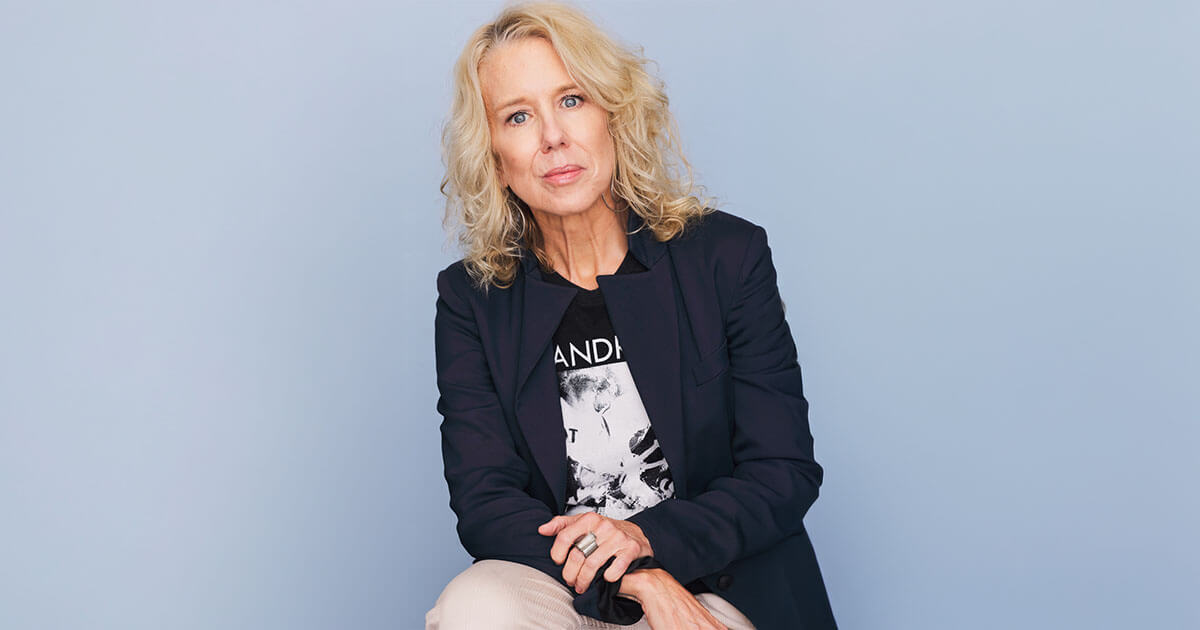
Robin Williams’ Widow Advocates for Those with Lewy Body Dementia
Susan Schneider Williams didn’t learn about Lewy body dementia until after her husband’s death. She describes how she raises awareness and advances research.
Susan Schneider Williams didn’t learn about Lewy body dementia until after her husband’s death. She describes how she raises awareness and advances research.

In the months before he died in 2014, Robin Williams began exhibiting troubling and perplexing symptoms such as mood swings, trouble walking, and hallucinations. The most intractable problem was anxiety, says Susan Schneider Williams, who married Robin in 2011. “We all have baseline moods and anxieties, and we get to know our spouse’s and loved one’s normal anxiety levels and triggers,” Schneider Williams says. “But Robin would remain in a heightened state of fear and anxiety that led to irrational paranoia. It was painful to watch, especially when it got to the point where nothing I could say or do would help.”
After seeing a raft of doctors, Robin was diagnosed with Parkinson’s disease, which explained the shuffling gait, tremor in his left hand, and parkinsonian mask that froze the features of his face. But it wasn’t the whole picture. “On one hand, I felt relief that the symptoms had a name. The neurologist talked about treatment options for Parkinson’s disease and mentioned that Robin had at least another 10 good years ahead of him,” Schneider Williams says. But Robin wasn’t convinced and asked if he had Alzheimer’s disease or schizophrenia. The doctor assured Robin that it was Parkinson’s disease and that he’d be fine.
“Looking back,” Schneider Williams says, “the diagnosis didn’t explain his other symptoms like visual hallucinations, sudden behavioral changes, delusional thinking, and paranoia.” Robin’s constellation of symptoms only made sense after an autopsy revealed that his brain was riddled with Lewy bodies. The neuropathologist who performed the autopsy said it was one of the worst cases of Lewy body dementia he’d ever seen. “Lewy bodies were just about everywhere in Robin’s brain and brainstem with a huge proliferation in the amygdala region,” says Schneider Williams.
Almost immediately, Schneider Williams began educating herself about the condition, which is the second most common cause of neurodegenerative dementia after Alzheimer’s disease. Lewy bodies are clumps of abnormal protein, primarily alpha-synuclein, which affects chemicals in the brain that can cause thinking, movement, mood, and behavioral problems. The disorder is named after Dr. Frederic Lewy, a German-born American neurologist who first identified these abnormal proteins. A major risk factor for the condition is Parkinson’s disease.
Once she felt knowledgeable about Lewy body dementia, Schneider Williams began educating others through interviews, speeches, articles, and visits to Capitol Hill to lobby for more research funds. In 2016, she joined the board of directors of the American Brain Foundation, a nonprofit organization in Minneapolis. Founded by the American Academy of Neurology in 1992, the foundation matches donors with researchers to cure brain disease. Schneider Williams has since ended her six-year term—she was vice chair during the last four years—and will continue to act as an advisor to the foundation’s Lewy Body Dementia Research Fund.
Schneider Williams also worked with director Tylor Norwood on the documentary, Robin’s Wish, which portrays the actor’s experience with the disease. Norwood collaborated with the Lewy Body Dementia Association to create a 45-minute adaptation called Spark: Robin Williams and his Battle with Lewy Body Dementia to help educate the neurology community about the disease.
During her term on the board of the American Brain Foundation, Schneider Williams helped launch a campaign to fund research into diagnosing and treating Lewy body dementia. Currently, there are no highly accurate diagnostic tests or accepted biomarkers for Lewy body dementia. A definitive diagnosis can only be made during an autopsy. Breakthroughs in diagnosing other diseases may lead to one for Lewy body dementia. Just two years ago, for example, scientists developed a blood test, which measures levels of amyloid beta, to help diagnose Alzheimer’s disease.
That kind of progress is what Schneider Williams hopes the campaign will help bring about. Through funding from the Alzheimer’s Association, the Michael J. Fox Foundation for Parkinson’s Research, the Mary E. Groff Charitable Trust, the William Siegel Foundation, and the American Academy of Neurology, the foundation established a $3 million multi-year research award.
In February, Owen A. Ross, PhD—associate professor at Mayo Clinic and head of its Parkinson’s disease and stroke and vascular disease laboratory in Jacksonville, FL—received the 2022 Cure One, Cure Many award. Through his lab, Dr. Ross and his colleagues will study the development and validation of a blood-based biomarker to identify overt and early dementia with Lewy bodies.
“Dr. Ross will test postmortem blood samples to see if the patients were correctly diagnosed with Lewy body dementia while alive and then expand that testing to a broader selection of samples that include people living with the disorder for continued research into diagnostic markers,” Schneider Williams says.
Since she started speaking out about her husband’s disease, Schneider Williams has heard from people around the world who are dealing with the disorder. “It’s been a privilege to share with them what I know from my own experience and from what I’ve learned through my interactions with the neurology community,” she says.
One family stands out. They had spent years trying to get a correct diagnosis for their father who later killed himself. Their father’s brother had read Schneider Williams’ 2016 editorial in Neurology about Robin’s experience with Lewy body dementia and shared that with their father’s doctor. Soon after, the father got an accurate diagnosis. The family told Schneider Williams that her work to raise awareness helped their father get a diagnosis and diminished any shame they might have felt about his subsequent suicide.
Families shouldn’t have to struggle to get answers and they shouldn’t feel ashamed, Schneider Williams says. “This disease is more common than we think and there are many undiagnosed cases out there.” She encourages families to seek out neurologists who specialize in Lewy body dementia. A list of experts can be found through the Lewy Body Dementia Association.
“Surround your loved one with a team of doctors and therapists who know about Lewy body dementia, Parkinson’s disease, and Alzheimer’s disease,” she says. Schneider Williams also encourages patients to participate in clinical trials. “I know many people feel powerless; being in a study that advances research is empowering.”
To learn more about the American Brain Foundation’s research award for early diagnosis of Lewy body dementia, visit AmericanBrainFoundation.org.