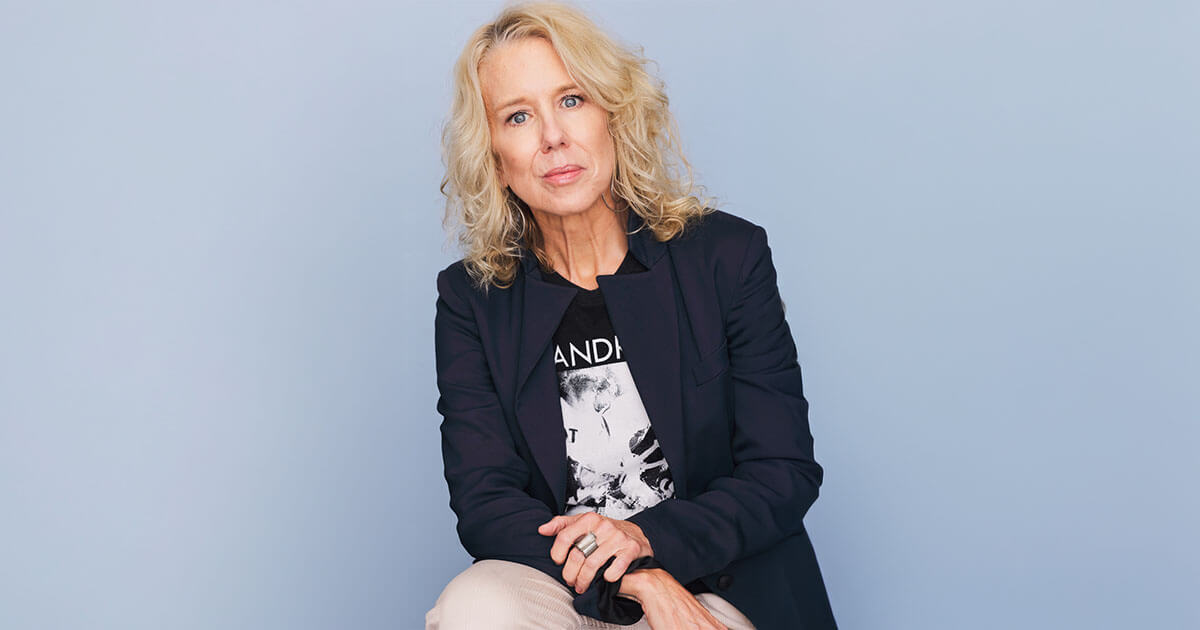
Photograph by Alyssa Greenberg/Condé Nast
There are few mountains Lindsey Vonn hasn't conquered. She had a record 82 World Cup victories, more than any other female skier in history, and won four World Cup overall championships. She is one of only seven women to have won World Cup races in all five events of Alpine skiing—downhill, super G, giant slalom, slalom, and super combined. Her gold medal in downhill at the 2010 Winter Olympics in Vancouver was the first for an American woman.
Just before she retired from competition, she became the oldest woman to win a medal at an Alpine world championship, clinching a bronze in the women's downhill at the 2019 world championships in Sweden at the age of 34.
Throughout her career, Vonn tore ligaments, broke bones, and was involved in horrific crashes, one of which resulted in a knee injury that kept her out of the 2014 Sochi Olympics and another in the super G during the 2013 world championships in Austria that ended her season. Each time, Vonn says, she was inspired to ski again by one person: her mother, Linda Krohn. “Anytime there is anything negative or a setback, she brings a level of perspective to our family,” Vonn says.
For Vonn's entire life, her mother has been dealing with the aftereffects of a stroke she experienced 38 weeks into her pregnancy. Initially given a 50-50 chance of survival, Krohn went on to recover far beyond her doctors' expectations, become a lawyer, and have four more children.
In her new memoir, Rise: My Story (HarperCollins, 2022), Vonn writes about a mother “who'd made such a tremendous sacrifice just giving birth to me, who'd driven from Minnesota to Colorado, 18 hours each way, so I could ski, and who'd spent the next 25 years surrendering whatever she had left for the good of my career, for the good of us kids, for the good of our family.”
Whenever Vonn was injured, she'd think about her mom and the stroke. “She couldn't come all the way back from her stroke, but she always had a positive outlook,” says Vonn. “I'd think, if all I need to do is work hard to get back from this, well, she didn't have that luxury. That shaped a lot of my outlook, trying to seize every opportunity.”
Krohn (then Linda Kildow) was 32 years old and nearly nine months pregnant with her first child and apparently healthy when she went to the emergency department on October 17, 1984, at 10:30 p.m. for what she thought was a bad headache. In fact, she was having a stroke. Four hours later, Lindsey was born by emergency cesarean section. Krohn spent days in a coma, and when she woke up, she was told she'd had a girl—an event of which she had no memory.
Maternal stroke, which refers to stroke during pregnancy, birth, or the postpartum period, is rare. But its occurrence—in about 30 of every 100,000 deliveries—appears to be on the rise. A 2020 analysis in the Journal of the American College of Cardiology found a significant increase in the incidence of stroke in pregnancy-related hospitalizations between 2007 and 2015, from 30 to 33 per 100,000 hospitalizations. And a 2017 study published in the International Journal of Stroke found that pregnant women have a three times higher risk of having a stroke than nonpregnant women of the same age.
“Women in their last trimester of pregnancy and during the immediate postpartum period are at greater risk for stroke than at any other time in their lives until they are in their sixties,” says Louise McCullough, MD, PhD, FAAN, endowed chair of the department of neurology at the University of Texas Health Science Center in Houston.
Several reasons may explain the increase. One is that more women are getting pregnant later in life. A 2020 Blue Cross/Blue Shield report said that between 2014 and 2018, the pregnancy rate for women ages 18 to 24 declined by 12 percent while the rate for women ages 35 to 44 increased by 9 percent. “Studies suggest that women in their forties face about twice the risk of stroke during pregnancy as women in their twenties,” says Seemant Chaturvedi, MD, FAAN, endowed professor of stroke neurology at the University of Maryland School of Medicine in Baltimore.
Another is that pregnancy itself poses a risk. “When a woman is pregnant, she is in a hypercoagulable state, meaning there is an increased tendency to clot, especially in the last trimester as the body prepares for childbirth,” says Dr. Chaturvedi. This tendency to clot has likely evolved to protect the body from dangerous postpartum hemorrhage, experts believe, but clots in veins can lead to cerebral venous thrombosis and clots in arteries may lead to ischemic stroke, rare but serious risks in pregnancy.
In addition, many women develop high blood pressure or diabetes during pregnancy, which can increase stroke risk. High blood pressure during pregnancy is known as gestational hypertension and may be due to several factors, including increasing blood volume, the left side of the heart becoming thicker and larger, and the kidneys releasing vasopressin, a hormone that promotes water retention. During pregnancy, women gain weight and produce more hormones, which can cause insulin resistance and lead to gestational diabetes. These factors can lead to a higher risk of ischemic stroke or bleeding into the brain, also known as a hemorrhagic stroke.
About one in every 25 pregnant women develops a more severe hypertensive condition called preeclampsia, a sudden spike in blood pressure later in pregnancy that is also associated with significant ischemic and hemorrhagic stroke risk, according to the US Centers for Disease Control and Prevention. “Studies show that even 10 to 15 years after giving birth, women who have had preeclampsia during pregnancy are at higher risk of stroke than those who have not,” says Dr. Chaturvedi. In rare instances, blood pressure can remain dangerously elevated after delivery as well, a condition called postpartum preeclampsia.
Stroke during and after pregnancy can be deadly. “The United States has
the worst maternal mortality rate of all Western nations, and it’s increasing” says Dr. McCullough. A 2021 study in Hypertension found that more than 3,000 pregnant or postpartum women died of blood pressure-related causes between 1979 and 2018. The risk is particularly high for Black women and older women. According to the same study, Black women had two to four times the risk of dying from stroke and other blood pressure-related causes during pregnancy than White women, underscoring the importance of addressing social and racial inequities in health care.
Even when a pregnancy-related stroke is not fatal, it can have devastating and lifelong consequences, from mobility impairments to more widespread and permanent brain damage. In Krohn's case, she was left with a permanently weakened right ankle and drop foot. She walks with a limp and has never been able to ski with Vonn. “She tried to go skiing once, but it was really dangerous so we scrapped that,” Vonn says.
Seemingly undaunted by her stroke, Krohn gave birth to another daughter, Karin, four years after Lindsey, and then in 1992 to triplets Dylan, Reed, and Laura after she underwent fertility treatments. “That was an incredibly high-risk pregnancy, and the doctors told her there was a 50 percent chance she wouldn't survive,” says Vonn. “My mom has a strength that's not always outwardly visible, but she has done incredible things.”
Although she couldn't ski with Lindsey or even run beside her kids' bicycles when they were young, Krohn was hugely supportive of her children's pursuits. She regularly drove Lindsey to Colorado from Minnesota for ski training and races before the family relocated to Vail when Vonn was a teenager. “She was always our cheerleader, the perpetual optimist, taking care of everyone and always believing in us,” Vonn says. Today, Krohn sends daily positive affirmations and poems to her grown kids via a group text.
An Example of Courage
Vonn's memoir illustrates the determination she got from her mother. When Vonn was just 10, she was skiing on Mount Hood in Oregon when it began to pour. Everyone quickly headed for the lodge—except Vonn, who saw it as the perfect opportunity to train alone on the mountain. Lightning had shut down the chairlifts, so she hiked up and skied down, over and over again. “It was raining so hard that if I took off one of my gloves and squeezed it, water would come pouring out. My feet were freezing, my fingers were pruned. But I didn't care. I just wanted to keep going,” she writes.
Years later, Vonn endured a spectacular crash during a training run at the 2006 Olympics in Turin, Italy, doing a full flip at 80 miles per hour and hurtling through the air in a split before landing on her back. She was helicoptered off the mountain, convinced she'd broken her back and would never ski again. Miraculously, she sustained only some bad bruising, and by the next day she was back on the mountain preparing for her race. She finished a disappointing eighth—but the crash gave her a well of motivation to draw on. “From here on out, I decided that if I was going to go down, I would go down trying to win, every time,” she writes in her memoir. “I would get back up and keep on trying. I didn't have unlimited chances, and it was up to me to make them count.”
Even though she's no longer skiing competitively, Vonn still makes the most of every opportunity. “I actually work a lot harder now, although in different ways,” she says. “I'm a lot busier, too. When I was skiing, I had to juggle workouts, training, and sleep; I could only do so much.”
Vonn's projects include launching Aprés Productions, which last January released its first major film, Picabo. Co-directed and co-produced by Vonn, it's a documentary about 1990s Alpine skiing icon Picabo Street, one of Vonn's idols and mentors. (Picabo is now streaming on Peacock.) She's also created a line of skiwear and goggles and is an official ambassador for a clothing collection by wrestler-turned-actor Dwayne “The Rock” Johnson—who, before they even met, had said in a Sports Illustrated interview that Vonn was the only person he thought could keep up with him in the gym.
Despite her passion for her business ventures, Vonn admits that retiring from racing required a period of mental and emotional adjustment. In Rise, she describes going through “all the stages of grief—denial, pain, anger, bargaining, depression, reconstruction, acceptance.” That seemed fitting, she says. “It was like part of me died. I needed to fully mourn the chapter that was closing before I could embrace whatever came next,” she says in the book.
Writing her memoir helped her grapple with some of those issues. “I actually started writing the book during my last season, but after about a year and a half I just didn't like the direction it was going and scrapped it and started all over again,” she says. “It took me a while to get into the right headspace, but I got there. I think I needed to have a different outlook than I had when I was competing. I wanted to share the lessons I've learned, why they were important, and how they might mean something to other people.” One of her mother's sayings that sticks with her is “If you don't want to be walked on like a doormat, get off the floor.”
Today, her relationship with skiing has changed in a positive way. “I truly enjoy being on the mountain,” she says. “I didn't think I'd like it as much when I couldn't go as fast, but a ski vacation in France with my family reminded me of the reason I started skiing in the first place. It's so much fun!”
Health Conscious
These days, instead of spending four to six hours working out, Vonn stays active doing whatever she wants. “If I want to play tennis, I'll play tennis. If I want to ski, I'll ski,” says Vonn, who splits her time between Utah and Los Angeles. “I have my Tempo machine set up at home. When I'm in Los Angeles for work, I meet with my personal trainer. Sometimes I'll do a high-intensity interval training workout, sometimes a core workout or boxing. It's all about finding joy in being physically active. The freedom of that is really refreshing for me.”
Vonn has always taken care of her health and is mindful of what happened to her mother. “Her stroke was unfortunate but not genetic as far as we can tell,” she says. “Still, whenever I see doctors for any reason, even when I've had my surgeries, I always mention it to them just in case.”
What's most important to her about her mother's experience is that sense of positivity and perspective. “I try to learn from whatever I'm facing and keep moving forward, and I get that from my mom. It was really hard for her, raising five kids,” Vonn says. “I remember the triplets running around and she couldn't chase after them. But she was still a lawyer; she went back to work and passed the bar in Colorado while taking care of us. I don't know how she had the patience. She showed me that life throws you a lot of curveballs, and it's all about learning, adapting, and moving forward. Hard work and perseverance always win.”
A Cautionary Tale About Preeclampsia
It can be easy to miss the signs of preeclampsia, a pregnancy complication that can cause seizures, heart failure, and stroke—and can happen seemingly out of nowhere. That's a fact Sarah Song, MD, FAAN, associate editor of Brain & Life and a stroke specialist who has done research on stroke during pregnancy, knows from personal experience.
Song became pregnant for the first time in June 2021 at age 43, and she says her checkups for the first eight months went smoothly. She showed no signs of complications, and her blood pressure was always normal. She had a cuff at home to test her blood pressure and was instructed to call immediately if it was high. After the batteries on the cuff died, Song stopped checking her blood pressure, even though she was at what's considered an advanced maternal age by obstetricians. “Because I felt fine, I just relied on the blood pressure checks at the doctor's office,” Song says.
During her last month, she started feeling fatigued and gained weight rapidly—nine pounds in one week—and her feet swelled badly. “But everyone, including my doctor, told me it could all be normal,” says Song, who is associate professor of neurology at Rush University in Chicago.
Then things took an alarming turn. A routine test when she was just past 36 weeks showed high levels of protein in her urine, which, when accompanied by high blood pressure, can be a sign of preeclampsia. When the obstetrician repeated the test and it was still high, she asked Song to check her blood pressure at home that night. Song's husband picked up new batteries on the way home. Once she replaced the batteries, Song checked her blood pressure, and it was 185/110. “I was so shocked I burst out crying,” she says. She knew that hypertension can manifest as headaches but also can have no symptoms at all.
When Song took her blood pressure again the next morning and afternoon, it was still dangerously elevated. Later that day, she was admitted to the hospital, where her systolic blood pressure was above 200, and eventually her labor was induced. Her daughter, Willa, was delivered by cesarean section at 37 weeks gestation.
“It was such a wakeup call,” says Song. “I know how serious preeclampsia is, and yet I didn't think it was happening to me. I had no idea my blood pressure could be that high. It was scary to think how close I'd come to putting myself and my baby at risk.”
Song urges all pregnant women to get a home blood pressure monitor and use it regularly, especially in the second and third trimesters. After purchasing home monitors, women should bring them to the doctor's office to compare readings. Song also recommends that women continue monitoring their blood pressure after they give birth, since there's a chance of postpartum preeclampsia. (Monitors are available online or in pharmacies for between $30 and $50.)
According to a May 2022 study in JAMA, pregnant women at high risk for preeclampsia who monitored their blood pressure did not detect hypertensive disorders faster than women who relied only on routine prenatal care. Song still encourages self-monitoring of blood pressure as a feasible and effective way to detect high blood pressure. She also urges all patients to follow the advice of their physicians, and always keep working batteries in blood pressure cuffs.
For patients who are at high risk for preeclampsia, the US Preventive Services Task Force recommends starting a low dose of aspirin at 12 weeks and continuing daily until delivery. High-risk patients are those with a history of preeclampsia; those who are carrying more than one fetus; and those who have chronic hypertension, pregestational diabetes, kidney disease, or an autoimmune disease.
“I'm so grateful my baby and I are healthy,” says Song. “If I'd waited another week and hadn't checked my blood pressure at home, I might have had a stroke in the very hospital where I'm a stroke doctor.”
Read More