Wanda Flora was running out of options. The special-ed teacher from Roanoke, VA, had dealt with frequent seizures since she was diagnosed with epilepsy at age 20. Every medication she tried eventually failed. And two brain surgeries couldn't control the seizures.
Ultimately, she sought help at Johns Hopkins Hospital in Baltimore. During her consultation she asked, “Could it be something I'm eating?” By chance, a neurologist at the hospital, Eric Kossoff, MD, was studying whether a ketogenic diet—which is high in fat but drastically limits carbohydrates and protein—benefited children with epilepsy who didn't respond to medication. Flora met with Dr. Kossoff and soon adopted the diet. The transition was challenging. “I was like, ‘Oh my god, no bread? No sugar?'” recalls Flora, 53. “But the miracle is that I haven't had a seizure since the day I started the diet.”
Using the ketogenic, or keto, diet to prevent seizures in patients with epilepsy is not new; doctors reported the first successful use in the early 1920s. It fell out of favor after new and better antiseizure drugs became more readily available. Interest in the diet resurfaced in the 1990s, with researchers first focusing on kids with hard-to-treat epilepsy and later looking at adults with other neurologic disorders.
Although the exact mechanism for how the diet controls seizures isn't known, Dr. Kossoff says the liver converts fat into fatty acids and ketone bodies, chemicals capable of crossing into the brain that are used as fuel and may act as anticonvulsants.
Evidence for the diet's effectiveness continues to mount. A 2015 meta-analysis of 12 studies, published in the Journal of Clinical Neurology, found that about half of adult patients who follow the classic keto diet (where they eat four grams of fat for every gram of carbohydrates and/or protein) experience at least a 50 percent reduction in seizures, while modified versions of the diet (which modestly increase portions of carbs and protein) work for a slightly smaller percentage.
Any type of diet that produces ketone bodies is considered ketogenic, says Mackenzie Cervenka, MD, director of the Johns Hopkins Adult Epilepsy Diet Center and associate professor of neurology at the Johns Hopkins University School of Medicine. She tells her patients to think of ketones as an alternative form of energy. Normally, she says, the body's primary fuel source is glucose, and it comes from carbohydrates—fruit, vegetables, and grains, as well as soda and sweets.
The typical American adult gets about half of his or her calories from carbohydrates. When we fast, our bodies—specifically our livers—produce their own fuel by converting stored fat into ketones as energy to keep cells running. Scientists discovered that a diet where 90 percent (or more, in some cases) of calories come from fat but only 4 percent and 6 percent from carbohydrates and protein, respectively, can create a state known as ketosis.
Scientists are also looking at the keto diet for people with postconcussion syndrome, malignant gliomas, alcohol-withdrawal syndrome, and other neurologic conditions. According to a 2021 review in Nutrients, a ketogenic diet may reduce the frequency and intensity of migraine attacks; other research, from 2018, indicates that the diets ease cluster headaches. In a small study published in Alzheimer's Research & Therapy in 2021, investigators in New Zealand demonstrated for the first time that ketogenic diets can have a positive impact on Alzheimer's symptoms. “In just 12 weeks, a modified ketogenic diet appeared to improve daily function and quality of life in people with Alzheimer's disease,” says Matthew Phillips, MSc, a neurologist at Waikato Hospital in Hamilton, New Zealand, and lead author of the study. “This is exciting, given that Alzheimer's has no compellingly effective medical treatments.”
Other research by Dr. Phillips and his colleagues indicates that the diet could improve symptoms of Parkinson's disease. In a study of 44 patients, published in Movement Disorders in 2018, those who followed the diet for two months saw a 41 percent improvement in nonmotor symptoms, such as urinary problems, pain, fatigue, daytime sleepiness, and cognitive impairment. (Patients in a comparison group who ate a low-fat diet improved too, but by only 11 percent.)
While it's unclear how a ketogenic diet might benefit such a diverse group of neurologic conditions, “what ties all these disorders together is mitochondrial dysfunction,” says Dr. Phillips. Mitochondria are the “batteries” that produce energy in cells, including neurons. Damage to mitochondria is found in the neurons of people with Alzheimer's disease and other neurologic disorders, he notes. Yet ketones appear to help create new mitochondria and repair old and damaged cells. “In essence, ketogenic diets restore mitochondrial health, which might be beneficial for Alzheimer's and any disorder in which mitochondria are dysfunctional,” says Dr. Phillips.
Another theory suggests that ketones serve as replacement fuel when neurons can no longer burn glucose efficiently to produce energy, a phenomenon that may contribute to Alzheimer's disease and some other neurologic disorders, says Matthew K. Taylor, PhD, RD, assistant professor of dietetics and nutrition at the University of Kansas Medical Center in Kansas City. He's currently researching the keto diet for patients with Alzheimer's and postconcussion syndrome. The diet also seems to reduce inflammation and prevent cell damage in the brain, which can occur in and worsen neurologic diseases, says Dr. Taylor.
Not for Everybody
Typically, about half of adult patients who try a keto diet give up within six months, says Dr. Cervenka. Some stop because of side effects, such as constipation, gastroesophageal reflux disease, or kidney stones. Others give up if the outcome isn't worth the effort or if the diet has no effect on symptoms. Some patients with epilepsy, for example, may expect to eliminate their seizures entirely so they can drive again, but reduce them only by half.
The upsides of the diet can include weight loss. Wanda Flora dropped 100 pounds. Patients often experience an initial rise in LDL (“bad”) cholesterol, but their levels soon normalize—or improve, says Dr. Taylor.
Before starting a ketogenic diet, discuss it with your neurologist or a registered dietitian, says Molly Kimball, RD, CSSD, who manages the nutrition program at Ochsner Fitness Center in New Orleans. Most of the diets promoted in popular books are low-carb and not ketogenic, she says. Many contain too much protein: Since the body can break down protein and convert it to glucose, “you're probably not going to be in a state of ketosis,” says Kimball.
In the classic version of keto, 90 percent of calories come from fat, often through generous use of mayonnaise, butter, and heavy cream. Another iteration, the modified Atkins diet (MAD), also limits carbs but involves less fat and no restrictions on protein. (This can make it more appealing to adults and easier for them to adhere to.) Dr. Cervenka says patients in her clinic usually start on the MAD, but if they don't achieve ketosis, she'll make adjustments, including switching to the classic version.
Another option is the medium-chain triglyceride diet; it is less restrictive of carbohydrates and protein but requires people to take supplements containing medium-chain fatty acids, which the body can rapidly convert to ketones. (“Medium chain” refers to the fats' chemical structure.) The low-glycemic-index keto diet allows for more carbs but less variety.
Wanda Flora, who follows the MAD, says her favorite meal is hot chicken wings minus the barbecue sauce, which contains sugar. And while she misses certain foods, Flora plans to remain on the diet for life. “After all I've been through,” she says, “I wish I had gone on this diet a lot sooner.”
A Sample Ketogenic Menu
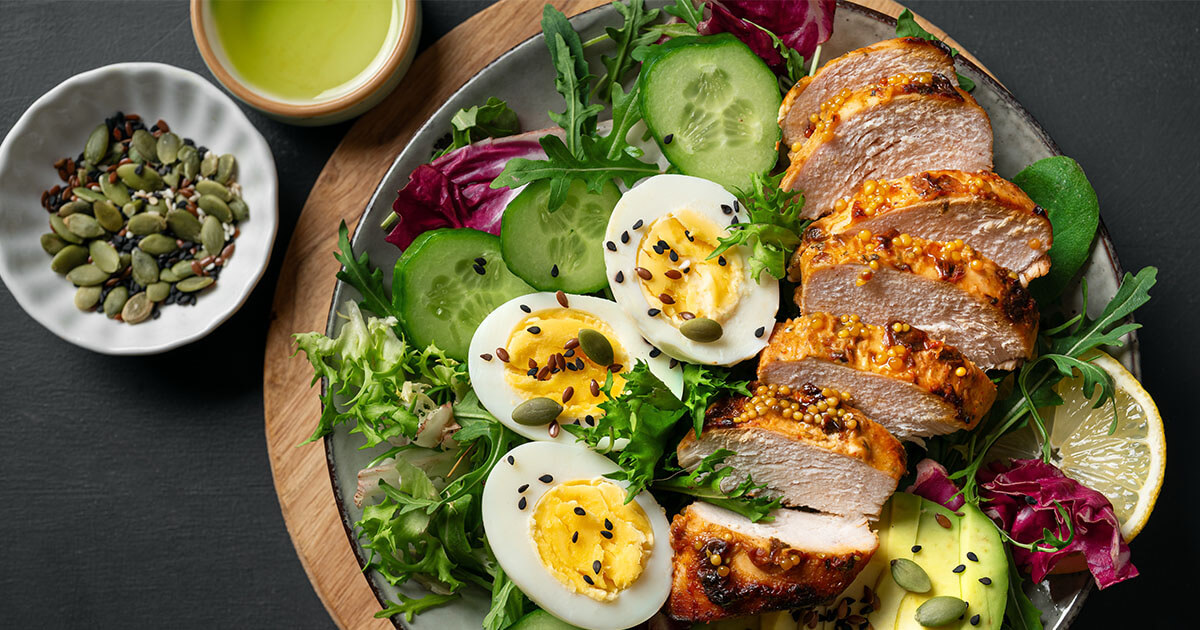
Before starting any version of the ketogenic diet, discuss it with your neurologist first, including the pros and cons and your expectations. This sample menu of a modified Atkins diet comes from Bobbie Barron, a registered dietitian at the Johns Hopkins University Institute for Clinical and Translational Research in Baltimore. Patients on the classic ketogenic diet follow plans individually tailored to their needs, although dishes similar to these can be included.
- Breakfast: Cream cheese and lox on cucumber slices
- Lunch: Canned tuna in olive oil over salad greens with jalapeños, chipotle, and sun-dried tomatoes
- Dinner: Ham steak sautéed in butter with chopped zucchini, either sautéed in butter or steamed with added butter or olive oil
- Snack: Sliced bell peppers with mayonnaise
- Dessert: Low-carb meringue cookies
Tips for Dining Out on the Keto Diet
Evidence suggests that the ketogenic diet may reduce seizures for people with epilepsy. New research is studying whether it can help people with Parkinson’s disease, migraine, post-concussion syndrome, and even Alzheimer’s disease.
Talk to your doctor and a nutritionist before starting a keto diet; they can help tailor it to suit your condition. Because of its restrictiveness, staying on it may be challenging, especially when eating at somebody else’s home or a restaurant. Follow these strategies to help stick with it.
- Choose carefully. Before going to a restaurant, check its website to be sure the menu has something allowed on your ketogenic plan.
- Calculate for the day. Look at each day as a whole, suggests registered dietitian Molly Kimball. “If you know you’re going to have salmon or a lean steak for dinner, have less protein at lunch.”
- Go Mediterranean. French, Italian, Greek, and other cuisines from the Mediterranean region are good choices, says neurologist Matthew Phillips, MSc, since they include liberal use of olive oil and butter.
- Ask about ingredients. If you’re unsure if something contains sugar, ask your host or server.
- Pack essentials. Bring your own oil and vinegar in a small container to use on salad instead of a dressing that may contain sugar. Avoid dessert unless it’s a cheese plate. Bring along a keto-friendly snack bar instead.