When Kevin O'Donnell was diagnosed with amyotrophic lateral sclerosis (ALS) in 1994, he was married and had a daughter who was almost 3. He and his wife, Jodi O'Donnell-Ames, told close friends immediately. “We got together with them and prayed about it,” recalls O'Donnell-Ames. They then decided to let everyone know and soon went public to advocate for more awareness of the disease.
The couple's disclosure paid off. When it became clear that major adjustments would be needed for Kevin to stay home, a posse of friends and family rallied. “Sixty volunteers put an addition onto our home, all handicapped-accessible, over three months,” says O'Donnell-Ames, who lives in Titusville, NJ. Her husband was able to stay at home until three months before he died in 2001 at age 30. “A lot of people wait too late to tell others.”
Karen Jaffe, an obstetrician-gynecologist from Cleveland, OH, reacted to her 2008 diagnosis of Parkinson's disease very differently. She told her husband that night but didn't tell their daughters for months. She kept it secret from siblings for a year and many friends and colleagues for three years. It was easy to do, as her condition was well controlled with medication and she had no tremors. She was worried about being forced to leave her practice (she eventually retired in 2013) and was haunted by a drawing from the 1800s of an old, stooped man with Parkinson's disease—she didn't want people to think of her that way.
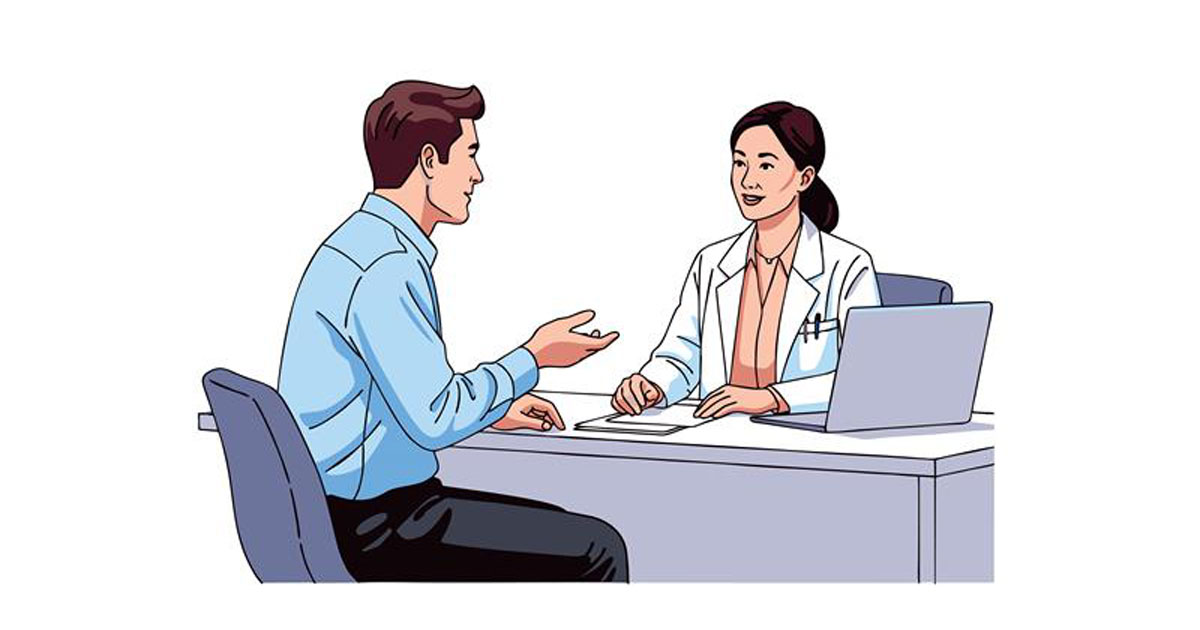
Receiving a diagnosis of a serious neurologic condition is an intensely personal experience. People may feel shock, confusion, and a sense of loss. There's so much to process, intellectually and emotionally. One of the first decisions people often confront is whom to tell and when. Most likely they'll tell their life partners early on, but what about young children living at home or adult children? Then there are siblings, parents, other relatives, close friends, casual acquaintances, friends at work or clubs or school, and connections on social media.
You don't have to decide right away about disclosing your condition. “You are in control,” says Gary McClain, PhD, a mental health counselor in New York City and author of After the Diagnosis: How Patients React and How to Help Them Cope. “You own it.”
“Pause,” agrees Erin Cecchi, LCSW, a clinical social worker at Northwestern University in Chicago and the University of Michigan in Ann Arbor, who works with people with Parkinson's disease and other movement disorders. “Take inventory of what you need. Psychologists recommend that you wait until you come to terms with your diagnosis and feel emotionally ready to tell others.”
That's not to say you should keep it a secret, especially for a long time. Opening up requires vulnerability, but letting friends and family know what's happening has many benefits.
“People can't help you if they don't know what you're facing,” says O'Donnell-Ames. And hiding a diagnosis may perpetuate the stigma around the condition, says Jaffe, who wishes she had reached out to others earlier. “I should have told people up front,” she says. “There's no shame in having Parkinson's.” And she now realizes it would have been good to befriend another person with Parkinson's a lot sooner. “I understand why people keep secrets, but they are difficult to keep,” she says. “I was lucky. Everyone accepted me.”
Jaffe started InMotion, a nonprofit organization where anyone with Parkinson's can take fitness and other classes. “The rule is, ‘Stigma gets left at the door,'” she says. When she's with other people with Parkinson's, she adds, “I feel like I don't have a disease.”
Proceed Cautiously
Three main risks of disclosure are stigma, exploitation, and overreaction, says Winston Chiong, MD, PhD, associate professor at the Memory and Aging Center at the University of California, San Francisco. “Many neurologic disorders are associated with a great deal of stigma and a loss of social standing in the eyes of family members and others who are important,” he says. “Patients may be worried about being treated differently.”
Sharing too widely can put someone at risk for exploitation, he adds. People with dementia, for example, can be susceptible to financial scams that drain their savings—before family members have any idea.
That's one reason why he recommends thinking twice about broadcasting a condition on social media. “There's a big difference between Facebook friends and real friends,” he says. “In the digital space, you have less control over how information spreads.” And you may get unwanted attention and unsolicited advice, says Dr. McClain.
Another fear is that family members or friends may become overprotective and limit a patient's freedom. “When you have a mobility disorder,” says Dr. Chiong, “your family may be terrified that you'll fall, and [they may] discourage you from walking or doing other things you can do. Patients who aren't active can become deconditioned or isolated, which affects their outcomes.”
Cultivate Support
The best solution is to tell people close to you relatively early. “While disclosing too broadly can add to the stigma, telling family and friends can mitigate stigma—especially self-stigma, which can be worse if patients feel they can't talk about their diagnoses with people they know and trust,” says Dr. Chiong. “Opening up can break down barriers, and you may find that others around you are facing similar things. One point often made in the disability community is that it is a normal part of being human to need help at different points in our lives.”
The sooner people build their support networks, the sooner they can have essential conversations. If they're concerned about losing their independence, for example, they should discuss this with family and friends so everyone understands and respects their circumstances but still offers assistance where needed. “Safety and monitoring are important parts of support,” says Dr. Chiong. “Sometimes people can't judge for themselves whether they are still able to pay bills, drive, cook, or manage medications. It's important to maintain what you are able to do, but you do want other people watching out for you.”
For certain conditions, especially those that develop rapidly or may impair judgment, finding a few dependable relatives or friends is urgent. “People with early dementia, for example, may have only a short window of time where they can still execute medical and legal documents,” says Dr. Chiong. “You need to talk to the person who will be your proxy to make sure that person understands your values and is prepared for that role.” In dementia, he notes, “as it progresses, patients themselves are often poor judges of whether they can safely continue to do things.”
Share Genetic Information
If the condition has a genetic component, says Cecchi, “it's your responsibility to disclose it to family members so they can make their own independent and informed decisions about whether to get tested, which may affect what careers they pursue, whether they start families, whether they make large purchases, and when to retire.” She says it can help to work with a genetic counselor, who would assess the need for genetic testing and advise about telling family members.
Many people may refrain from talking about their conditions because they don't want to be burdens to, say, adult children with their own stresses. But that can backfire. “Some people will feel unappreciated if you don't tell them,” says Dr. McClain, “and you're limiting the support you'll get during an important emotional time.” Knowing about a loved one's condition, and helping, may make others feel better, too. “Your family benefits by being able to help you,” he says. “It benefits us to give—when you give, you receive.”
Letting others in on your medical condition could benefit your health. “Patients who have emotional support do better in treatment,” says Dr. McClain. “Social support improves optimism and peace of mind, lowers stress, and leads to better outcomes.”
To disclose a diagnosis, some people may want to gather family members together and let them all know at once, while others may feel more comfortable reaching out individually. “It doesn't need to be a big production,” says Cecchi. “You might decide to let a friend know the next time you get together for coffee, for example.” Or if you have a trip planned with friends, you may let them know beforehand, even if your symptoms are not noticeable.
You also could use a digital platform such as Caring Bridge (http://caringbridge.org), a website where people create health journals to share with specific individuals. That saves having to text or email or call everyone with updates, says Cecchi. “You also can post ideas about ways that your family and friends can help.” Support groups are another venue for opening up, finding resources, and getting emotional support.
Dr. McClain often suggests a script for people who are still adjusting to their diagnoses. They could tell others: “I am going to talk to you about something I'm dealing with. I don't need advice, and you don't need to fix it or share words of wisdom. I just need you to listen. If I need help, I'll ask for it, so just be there for me.” If you aren't ready to get into a full discussion about your condition, Cecchi recommends saying, “I'm really not in a place where I'm comfortable talking about this. I was just diagnosed. Please respect my wish not to talk about it, but please do check in with me within the month.”
Be aware that not all reactions will be helpful. Some people may say inappropriate things or rush to solve the problem with advice about self-help or alternative medicine. Others may feel overwhelmed and not want to engage. They may say something like “You'll be fine; let's not talk about this anymore,” or lecture about not being negative. Don't let it get to you, says Dr. McClain. “You are the one living with the condition,” he says. “You don't have to turn yourself inside out to take care of other people.”
And it's okay to ask for help—the more specific the better. “You can say, ‘I want you to go grocery shopping for me or to make me dinner—pick one,'” suggests Cecchi. One friend or relative may be good for sending an uplifting text each day; another might do research; a third might just cry with you on the phone once in a while.
“When you have a really strong network of friends and family, they can strike a balance between being attentive and protecting you and allowing you your independence,” says Dr. Chiong. “It's an important element of trust.”
Read More
Telling Young Children a Loved One Has a Neurologic Disorder