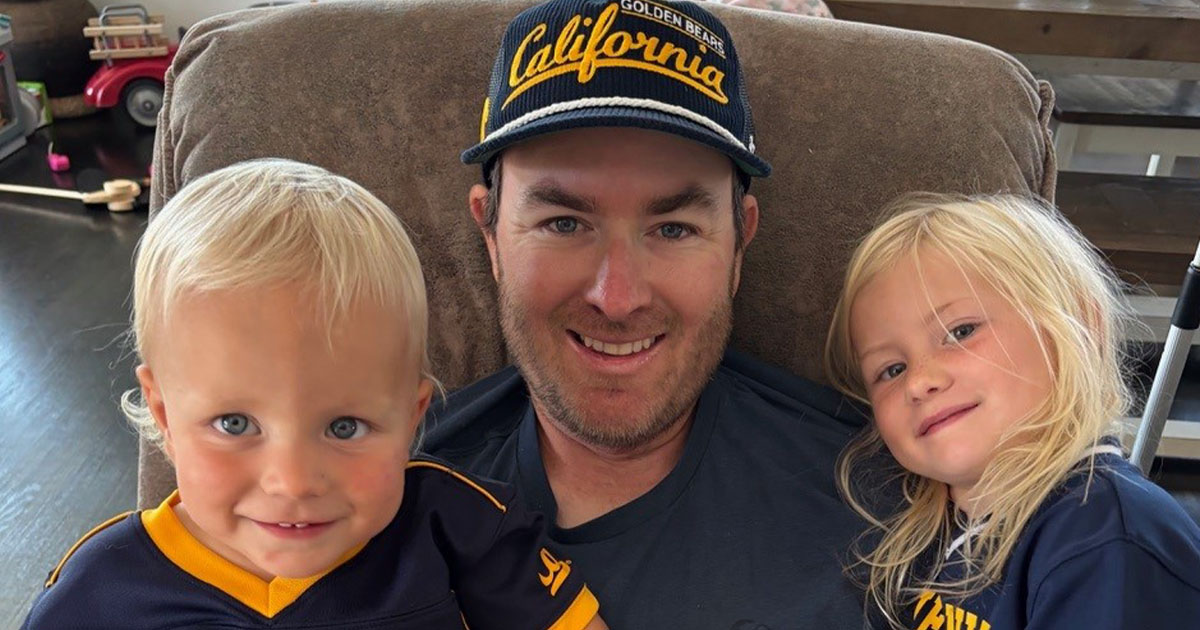
Dan Jacobs caught the cooking bug in 1987 after his father lost his job and began experimenting in the kitchen. Jacobs would hang out with his dad, and they'd toss ingredients into pots and see what would happen. His first restaurant experience was in 1997, when he took a summer job as a short-order cook at a breakfast place in Fish Creek, WI.
Over the next 15 years, Jacobs honed his skills through increasingly demanding and satisfying positions as well as mentorships with well-known chefs in the Chicago area. In 2011, he and his wife, Kate Riley, moved from Chicago to Milwaukee, where he became the executive chef at a farm-to-table restaurant. He followed that with a two-year stint at Odd Duck, where the constantly changing menu allowed for more creative expression.
Then in 2016, Jacobs and his good friend and fellow chef Dan Van Rite opened DanDan, named for the two owners and a Sichuan noodle dish. The restaurant quickly became known for its inventive take on Chinese dishes with Midwestern influences, such as spicy Sichuan pork dumplings and General Tso cauliflower. Following its success, the owners opened EsterEv, which serves a tasting menu. Both restaurants caught the eye of the producers of Top Chef, who were prepping for season 21, which would take place in Wisconsin.
To get cast, Jacobs had to show significant culinary experience, demonstrate his personality and cooking style, and participate in in-depth interviews with the producers. Once the season started, Jacobs knew it would be a grueling ordeal that would require quick thinking, physical exertion, and steady nerves. For any chef, competing is challenging, but for Jacobs, who was diagnosed in 2016 with Kennedy's disease, or spinal-bulbar muscular atrophy—a rare, inherited muscular disorder that causes progressive weakness with muscle cramps, fatigue, and mobility problems—it was particularly demanding.
Getting a Diagnosis
Jacobs was 37 when he first experienced fatigue followed by muscle cramps and twitches during a workout with Kate and a trainer. “I'm bigger than Kate, but I noticed she was progressing much further than I was in our strength-training workouts. That seemed weird,” he says. Things only got weirder. He had trouble climbing stairs, and his whole right side got weaker. When Jacobs and Riley moved into a new home, he struggled to lift and carry boxes.
Other early signs of Kennedy's disease can include shaky hands, weakness, and muscle pain, says Alejandro Tobon, MD, FAAN, chief of neurology at South Texas Veterans Health Care System in San Antonio. Muscle weakness usually begins in the upper legs and manifests on both sides.
When Jacobs mentioned his symptoms to a friend, the friend thought the problem might be neurologic. “I began to have scary thoughts about Parkinson's, multiple sclerosis [MS], or ALS [amyotrophic lateral sclerosis],” says Jacobs. Because Kennedy's disease is rare, affecting about one in 40,000 people, according to the Kennedy's Disease Association, it can be difficult or take a long time to get an official diagnosis.
Listen Now!
In this episode of the Brain & Life podcast, Dan Jacobs shares his Kennedy's disease diagnosis and how despite his symptoms, he found his way to the Top Chef kitchen. He also discusses what led him to pursue a career in cooking and how he is planning for his future
Concerned and nervous, Jacobs traveled to the University of Chicago for a series of diagnostic tests whose results might explain his symptoms. After a neurologist conducted a physical examination and took his medical history, Jacobs underwent electromyography (EMG) to assess the condition of his muscles and nerves. “It was uncomfortable and a little scary,” he says. “Medical students were observing my EMG, and as the doctor inserted a small needle in my arm, I could hear the students chattering—I could tell there was something about the results that was getting their attention, and I was irritated.” The EMG revealed ongoing nerve damage associated with Kennedy's disease. “Then the doctor ran a blood test that confirmed I had the genetic mutation,” Jacobs says.
The disease—named for William R. Kennedy, MD, who identified the disorder in 1968—mostly affects men and usually starts between ages 20 and 50, says Dr. Tobon, who is also associate professor of neurology at the University of Texas Health Science Center in San Antonio. “It's caused by a change in the androgen receptor gene on the X chromosome, which affects how certain cells respond to male hormones and leads to problems with muscles, especially those used for movement and speaking and swallowing.”
Early symptoms such as muscle cramps lead to progressive limb weakness, says Kenneth Fischbeck, MD, FAAN, scientist emeritus at the National Institute of Neurological Disorders and Stroke in Bethesda, MD. The progression is slow but eventually leads to severe muscle weakness and dysfunction in the bulbar region, resulting in trouble swallowing and speaking.
Making Accommodations
After his diagnosis, Jacobs committed to doing everything he could to reverse his symptoms. “At first I didn't think anything of it. I just assumed there'd be a treatment,” he says. “Believe me, it took a lot of explaining from the doctor for me to understand there is no cure. There was nothing I could do.” And some of the things he wanted to do made his symptoms worse. “Early on I was working with weights to try to gain muscle, and it turns out I was probably doing more damage than good,” he says. “You have to work with a trainer who can customize an exercise routine to prevent potential muscle damage.” Instead he took up swimming, which gives him a whole-body workout without too much strain on his muscles.
As the disease has progressed, Jacobs has had to accommodate his limitations. “I can't run. I can't play basketball. It's even hard to do small tasks in the kitchen,” he says. “Cleaning lobster, for example, used to be meditative for me. I would often get new recipe ideas as I let my mind wander. But I can't stand and pick lobster anymore. In many ways, I've had to change my entire process.” He has learned to pace himself and delegate tasks, and no longer lifts anything heavy or stands for prolonged periods. He focuses on developing recipes, overseeing the kitchen's operations, and guiding his team. His leadership style is more strategic, relying on communication with his staff and mentorship to keep the kitchen running smoothly. “DanDan is a machine. They don't need me to cut 50 pounds of Mongolian beef,” he says.
In addition to constant pain and weakness in his hands and hips, Jacobs has difficulty swallowing and has developed sleep apnea. His voice also has become raspy. When it's necessary, Jacobs may enlist the help of a speech-language pathologist to maintain clear speech and learn safe swallowing habits to prevent choking. Jacobs now wears braces on his legs, which make walking easier and less fatiguing and support his ankles and knees to keep them from bending too much. Some days he uses a cane for additional support and stability for walking, standing, or climbing stairs. To manage his pain, he takes anti-inflammatory medication. Using mobility aids can help prevent falls, which is essential for maintaining independence, says David M. Simpson, MD, FAAN, professor of neurology and director of the clinical neurophysiology laboratories and the neuromuscular diseases division at the Icahn School of Medicine at Mount Sinai in New York City.
Aspiring to Top Chef
Jacobs, who competed on the Food Network show Beat Bobby Flay and has been a James Beard Award finalist five times and a nominee once for his tasting menu at EsterEv, always harbored a desire to appear on Top Chef. He was encouraged by his friend Stephanie Izard, who won season 4 and thought he would do well on the show. “I tried out several times, but they kept turning me down, then calling me back for another tryout,” Jacobs says. “I knew the competition was physically demanding and wondered if they didn't want me because I couldn't run.”
Then in 2023, he decided to apply one more time. “They took me! Maybe it was because it was Top Chef: Wisconsin and I'm based in Milwaukee,” he says. Whatever the reason, Jacobs was excited to represent Milwaukee and to raise awareness of his condition. “It was the number one thing going in,” he says. “And the producers at Top Chef were very supportive.”
At first, Jacobs kept his disease a secret from his competitors. He managed his symptoms using his leg braces and cane. “I deliberately avoided rushing during tasks, opting for a methodical approach to maintain efficiency,” he says. He relied on a checklist to ensure that he stayed focused and met each task's requirements, and joked that, at 46, he was the “old man” among the cast. But after the second episode's elimination challenge, he decided to disclose his diagnosis, explaining to the other contestants that his slower movements were due to Kennedy's disease and not his age.
The contestants responded with encouragement, and that sense of camaraderie helped fuel Jacobs' determination. “I treated each competition as an athlete would, delivering my best despite my physical limitations,” he says. Judges Tom Colicchio and Gail Simmons noted that his slower, more methodical approach often led to superior results compared with those of his younger competitors. He especially impressed the judges with his contribution to his “supper club” team, preparing a Wisconsin-inspired relish tray with chicken liver mousse, steak tartare, and crudités with what he called “edible soil” (actually toasted breadcrumbs).
Jacobs' exceptional performance and openness about his condition inspired viewers who were facing their own health problems. “I received weekly messages on Instagram from people with MS and other diseases who said they were motivated by my story.” A teacher with MS who had given up her career said Jacobs' performance on the show inspired her to return to it.
Ultimately, chef Danny Garcia, a veteran of the legendary French Laundry and other upscale eateries, was named the winner of season 21. Jacobs, who made it to the final four, brought such a unique spirit and drive to the show and its audience that it impelled Tom Colicchio, a notoriously demanding and outspoken judge, to remark that Jacobs had “already won the season without winning the season.”
Raising Awareness
Following his triumph on Top Chef, Jacobs has talked about Kennedy's disease in interviews and public speeches and on social media. He aims to educate people about the symptoms and challenges of living with the disorder. Jacobs' outreach is important, says Dr. Tobon. “People with this disease often feel isolated after a diagnosis.”
The staff at DanDan established an annual fundraising event called Dim Sum + Give Some, which is held at different venues in Milwaukee and involves dozens of chefs from the Midwest and beyond, including James Beard and Michelin honorees. Attendees enjoy small-plate tastings, a cash bar, and a raffle with tickets priced at $100. Since its inception in 2017, it has raised more than $120,000 for the Kennedy's Disease Association in Coarsegold, CA.
Jacobs' efforts are especially meaningful to his brother, Mike, and his young niece, both of whom have since been diagnosed with Kennedy's disease. (Although it predominantly affects males, Kennedy's disease can affect females in rare cases. Women are carriers of the gene. Any symptoms they exhibit tend to be much milder.)
What's next for Jacobs? He works hard to maintain a good attitude, although he's had his low moments. “When I applied for handicapped parking,” Jacobs says, “I was genuinely upset that my disease had progressed to that point.” He also keeps an eye on other aspects of his health, since people with this disorder are at increased risk for diabetes and metabolic syndrome because of insulin resistance and elevated fat. But that doesn't mean a low-carbohydrate diet is in his future. “I love food too much,” he says with a laugh.
With a rare disease, it's hard to predict the future, says Jacobs. “For now, I'm going to continue to do the things that make me happy: spending time with Kate, swimming, riding my bike, and, of course, cooking.”
Read More